Charisma (gastropod)
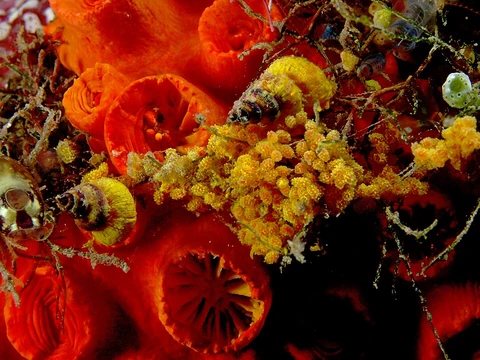
A genus of top snails related to Liotia, without a varix.

Gage Skidmore from Surprise, AZ, United States of America · CC BY-SA 2.0
Charisma is a genus of sea snails, specifically marine gastropod mollusks belonging to the family Trochidae, commonly known as top snails. This genus is closely related to *Liotia*, but differs in that its outer lip lacks a varix. The shells have few whorls and feature spiral sculpturing. The umbilicus contains an internal funicle, and the operculum is corneous, concave, and multispiral, with a spiral frilled lamella. Species in this genus include *Charisma arenacea*, *Charisma candida*, *Charisma carinata*, *Charisma compacta*, *Charisma josephi*, *Charisma latebrosa*, *Charisma radians*, and *Charisma simplex*.
Quick Facts
- Taxon
- Charisma
- Type Species
- Charisma compacta
- Type Species Authority
- Hedley, C., 1915
Facts from the source article.
Lore & Background
The genus Charisma is distinguished from its relative Liotia by the absence of a varix on the outer lip. Its species are few-whorled and spirally sculptured. The umbilicus contains an internal funicle, and the operculum is corneous, concave, multispiral, and bears a spiral frilled lamella.
Several species have been described, including Charisma arenacea, Charisma candida, Charisma carinata, Charisma compacta, Charisma josephi, Charisma latebrosa, Charisma radians, and Charisma simplex. These species were named by various authors such as Pritchard, Gatliff, A. Adams, Verco, Hedley, Tenison-Woods, and Laseron.
Reader's Guide
Charisma is a genus within the family Trochidae, commonly known as top snails. Its significance lies in its morphological distinction from the related genus Liotia, specifically the lack of a varix on the outer lip. The genus is characterized by few-whorled, spirally sculptured shells, an umbilicus with an internal funicle, and a distinctive operculum that is corneous, concave, multispiral, and features a spiral frilled lamella. These traits help define its place among marine gastropods. The species list includes eight named taxa, contributed by several malacologists, indicating a modest but recognized diversity. The genus is documented in references such as Cotton's 1959 work on South Australian Mollusca, Iredale and McMichael's 1962 reference list for New South Wales, Hickman and McLean's 1990 systematic revision, and Wilson's 1993 book on Australian marine shells. These sources establish Charisma as part of the trochacean gastropod fauna, particularly in Australian waters. Its legacy is that of a well-characterized but not widely known genus, preserved in taxonomic literature and museum records.
Did You Know?
- Charisma is a genus of sea snails in the family Trochidae.
- The genus is related to Liotia but lacks a varix on the outer lip.
- Its operculum is corneous, concave, multispiral, and has a spiral frilled lamella.
- Eight species are listed, including Charisma arenacea and Charisma candida.
Gallery




Frequently Asked Questions
What is Charisma (gastropod)?
Charisma is a genus of small marine gastropod mollusks, commonly referred to as top snails, classified within the family Trochidae. It encompasses several species of sea snails that share a compact shell with few whorls and spiral sculpturing.
How is Charisma different from the closely related genus Liotia?
The key distinguishing trait is that Charisma lacks a varix on its outer lip, whereas Liotia possesses one. Beyond that, the two genera share a very similar overall shell architecture and spiral sculpture.
What does the operculum of Charisma snails look like?
It is a corneous, concave, multispiral structure that also bears a spiral frilled lamella. This combination of features is a reliable diagnostic character for the genus.
Which species are recognized under the genus Charisma?
The genus includes Charisma arenacea, C. candida, C. carinata, C. compacta, C. josephi, C. latebrosa, and C. radians. All are small marine top snails sharing the genus's characteristic shell and operculum traits.
What is the umbilicus like in Charisma species?
The umbilicus houses an internal funicle, a small thread-like structure. This detail, together with the varix-free outer lip and the frilled multispiral operculum, helps taxonomists separate Charisma from its close relatives.
More in Marine Snails 1-24
Spotted an error? Know more?
Reader corrections go straight into our review queue. Suggest an edit · How this site is sourced