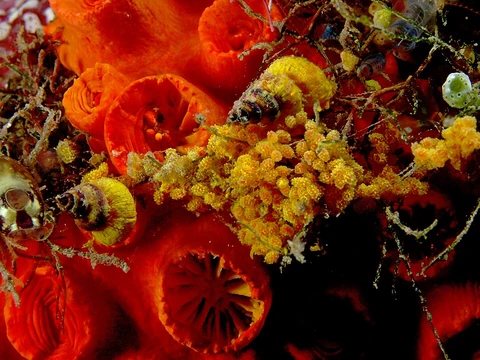
Cantharidella
A genus of small, polished top snails resembling tiny Cantharidus.

Cantharidella is a genus of small marine gastropod molluscs belonging to the top snail family Trochidae, specifically within the subfamily Trochinae. The shells are conical and elongated, with a polished surface and a narrow or absent opening at the base, giving them a strong resemblance to miniature versions of the related genus *Cantharidus*. These sea snails are found in the waters off India, Sri Lanka, the Philippines, and several Australian states, including New South Wales, South Australia, Tasmania, Victoria, and Western Australia. Recognized species include *Cantharidella balteata*, *C. beachportensis*, *C. ocellina*, *C. picturata*, *C. rottnestensis*, and *C. tiberiana*. Two former species, *C. aurea* and *C. tesselata* (Tenison-Woods, 1878), are now considered synonyms of *C. tiberiana*, while another *C. tesselata* (A. Adams, 1853) is a synonym of *Cantharidus tessellatus*.
Quick Facts
- Taxon
- Cantharidella
- Type Species
- Gibbula picturata
- Type Species Authority
- A. Adams & Angas, 1864
Facts from the source article.
Lore & Background
The genus Cantharidella comprises small sea snails with a polished, conical shell that is often narrowly perforate or imperforate. Their appearance is much like that of tiny Cantharidus, and they are classified within the subfamily Trochinae of the family Trochidae. The shells are elongated and typically polished, giving them a distinctive luster.
Species within this genus occur in marine waters off India, Sri Lanka, the Philippines, and several Australian states including New South Wales, South Australia, Tasmania, Victoria, and Western Australia. The genus includes six accepted species, such as Cantharidella balteata, Cantharidella beachportensis, Cantharidella ocellina, Cantharidella picturata, Cantharidella rottnestensis, and Cantharidella tiberiana.
Several names have been brought into synonymy, including Cantharidella aurea and Cantharidella tesselata (Tenison-Woods, 1878), both now considered synonyms of Cantharidella tiberiana. Another species, Cantharidella tesselata (A. Adams, 1853), is a synonym of Cantharidus tessellatus.
Reader's Guide
The genus Cantharidella holds significance as a group of small, polished top snails that contribute to the diversity of the Trochidae family. Its species are distributed across a wide geographic range from India and Sri Lanka to the Philippines and multiple Australian states, indicating a broad Indo-Pacific presence. The genus is notable for its resemblance to Cantharidus, yet it is distinguished by its smaller size and polished, conical shell form. The inclusion of several species and the recognition of synonyms reflect ongoing taxonomic refinement within the group. The genus is referenced in standard malacological works such as Powell's New Zealand Mollusca and Miller & Batt's Reef and Beach Life of New Zealand, underscoring its place in regional marine biodiversity studies. While not commercially prominent, Cantharidella species are part of the ecological fabric of shallow marine environments, and their polished shells are of interest to collectors and researchers studying gastropod morphology and distribution.
Did You Know?
- Cantharidella is a genus of small sea snails in the subfamily Trochinae of the family Trochidae.
- The shells are polished, conical, and elongated, often with a narrow or absent perforation.
Taxonomic Identity & Classification
Cantharidella is a genus of small sea snails, classified as marine gastropod molluscs within the family Trochidae, the group commonly referred to as top snails. More specifically, it is placed in the subfamily Trochinae, a subdivision that groups together trochid gastropods sharing particular structural affinities. This taxonomic positioning situates the genus firmly within a well-defined lineage of marine gastropods, distinguishing it from other families of sea snails while acknowledging the broader traits that unite all members of the top snail family. The very name of the genus signals a close relationship to Cantharidus, a connection that extends beyond mere nomenclature into the physical resemblance of the shells themselves. As a genus restricted to marine species, Cantharidella contributes to the diversity of small gastropods encountered in the waters of the Indian and Pacific Oceans. The assignment to Trochinae further refines its identity, setting it apart from other subfamilies within Trochidae while preserving the shared characteristics that define the top snail group as a whole.
Shell Morphology & Physical Character
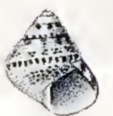
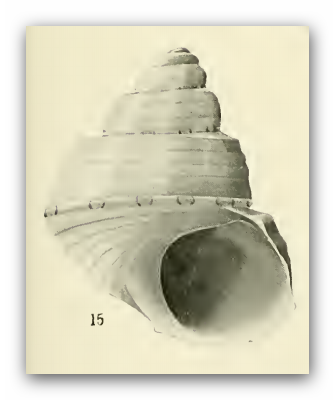
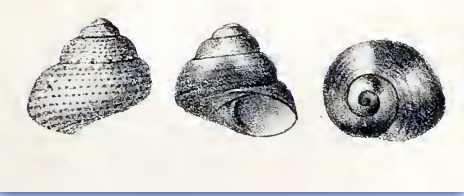
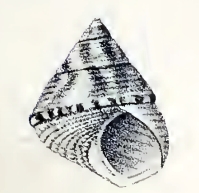
The shells produced by species of Cantharidella are small in overall size and take on a conical, elongated form that gives them a distinctive, tapering silhouette among marine gastropods. Their general appearance closely mirrors that of tiny Cantharidus specimens, underscoring the close morphological kinship between the two genera. The exterior surface is typically polished, lending a smooth and lustrous quality to the shell wall. In terms of aperture structure, the shells are either narrowly perforate or entirely imperforate, meaning the central opening at the base of the shell may appear as a small hole or be absent altogether. This combination of traits—the conical elongation, the polished finish, the modest dimensions, and the variable presence or absence of a basal perforation—creates a recognizable and consistent profile for the genus. These shared morphological features are sufficient to allow confident identification at the genus level, even as subtle variations among individual species provide the distinguishing details that malacologists use to separate one Cantharidella from another.
Geographic Range & Marine Habitat
Cantharidella is a genus of marine species whose documented distribution stretches across several regions of the Indian and Pacific Oceans. The known range encompasses waters off the coast of India, the island nation of Sri Lanka, the Philippines, and multiple jurisdictions within Australia. Within Australia specifically, the genus has been recorded in New South Wales, South Australia, Tasmania, Victoria, and Western Australia, indicating a broad presence along both the eastern and southern coasts as well as the island state. This pattern of occurrence suggests a preference for the warm and temperate marine environments that characterize these particular coastlines. The genus is not confined to a single ocean basin or a narrow latitudinal band; rather, it occupies a wide circumtropical to subtropical stretch of coastline. The fact that five separate Australian states and territories have yielded specimens of this genus highlights the ecological versatility of these small gastropods within a single national marine setting, from the subtropical waters of New South Wales to the cooler southern seas around Tasmania and South Australia.
Species Diversity & Taxonomic History
The genus Cantharidella currently encompasses six recognized valid species, each described by different taxonomists over more than a century of malacological research. The earliest valid name in the list is Cantharidella balteata, described by Philippi in 1849, while the most recent addition is Cantharidella rottnestensis, named by Verco in 1911. The remaining valid species include C. beachportensis (Cotton & Godfrey, 1934), C. ocellina (Hedley, 1911), C. picturata (A. Adams & Angas, 1864), and C. tiberiana (Crosse, 1863). The taxonomic record also reveals a notable pattern of synonymy: three names originally placed in this genus have since been subsumed into existing species. Cantharidella aurea (Tenison-Woods, 1876) and Cantharidella tesselata (Tenison-Woods, 1878) were both later determined to be synonyms of C. tiberiana, while a separate C. tesselata (A. Adams, 1853) was reclassified under the genus Cantharidus as C. tessellatus. This history of name consolidation and reassignment illustrates the ongoing refinement of genus boundaries in the study of small marine gastropods.
Gallery
Frequently Asked Questions
What is Cantharidella?
Cantharidella is a genus of small marine top snails placed in the subfamily Trochinae within the family Trochidae. It groups together six accepted species of gastropod molluscs.
What does a Cantharidella shell look like?
The shells are conical, elongated, and have a smooth polished finish. Their base opening is either very narrow or entirely absent, which sets them apart from many other trochids.
Where can you find Cantharidella in the wild?
These snails occur in coastal waters off India, Sri Lanka, and the Philippines, as well as along the coasts of New South Wales, South Australia, Tasmania, Victoria, and Western Australia.
How is Cantharidella related to Cantharidus?
The two genera look strikingly similar—both are small, polished, and conical—but Cantharidella is generally smaller and tends to have a narrower or missing basal perforation. They are close relatives within the same subfamily, Trochinae.
How many species are recognized in Cantharidella?
Six species have been formally accepted in the genus, with Cantharidella balteata being one of the better-known examples.
More in Marine Snails 1-24
Spotted an error? Know more?
Reader corrections go straight into our review queue. Suggest an edit · How this site is sourced