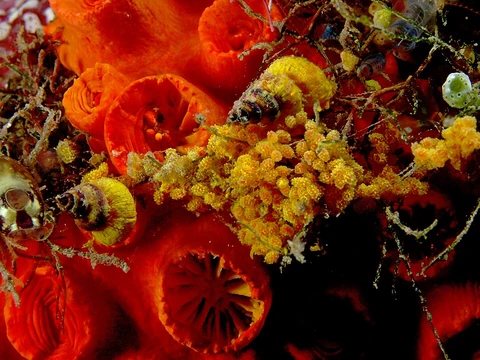
Agagus agagus
A marine gastropod mollusk in the family Trochidae.

Jan Delsing · Public domain
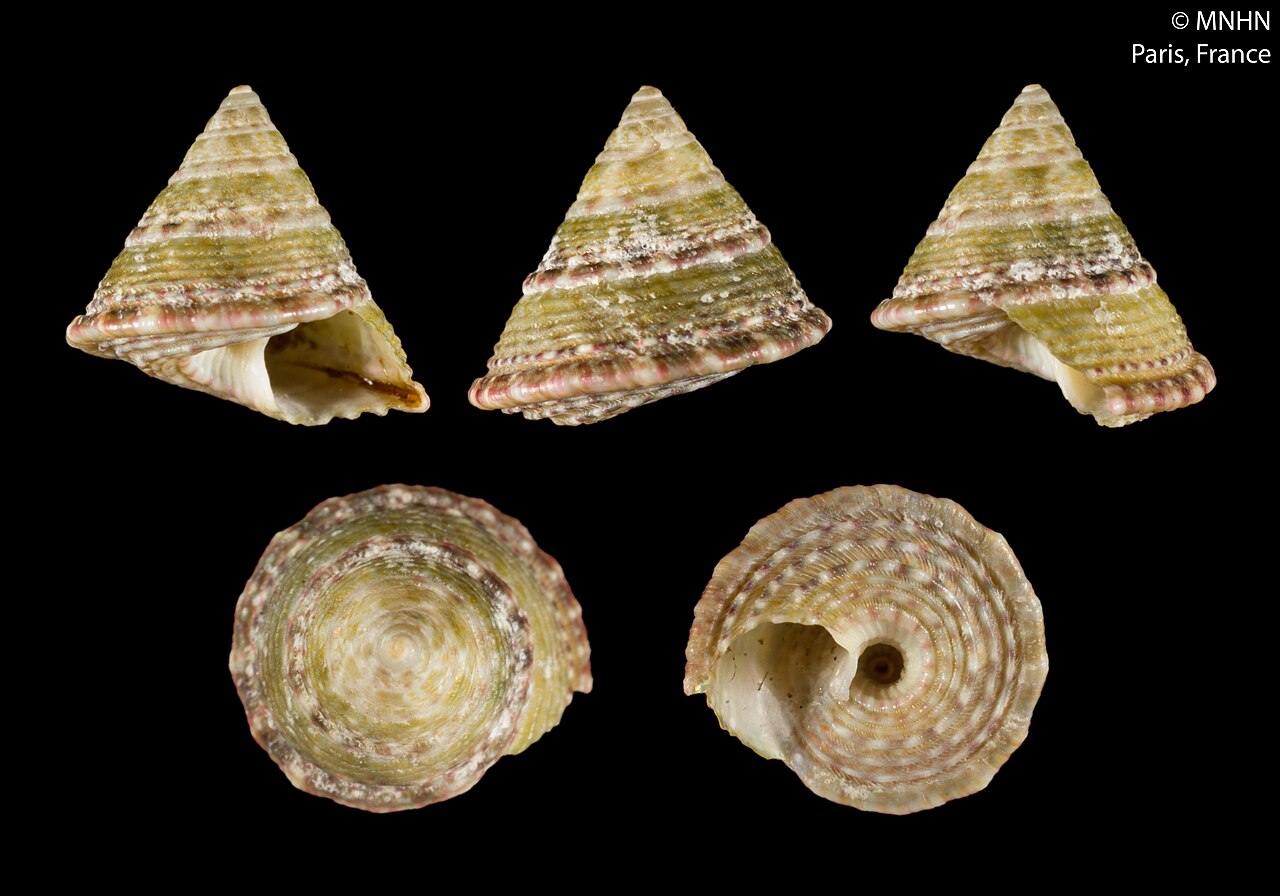
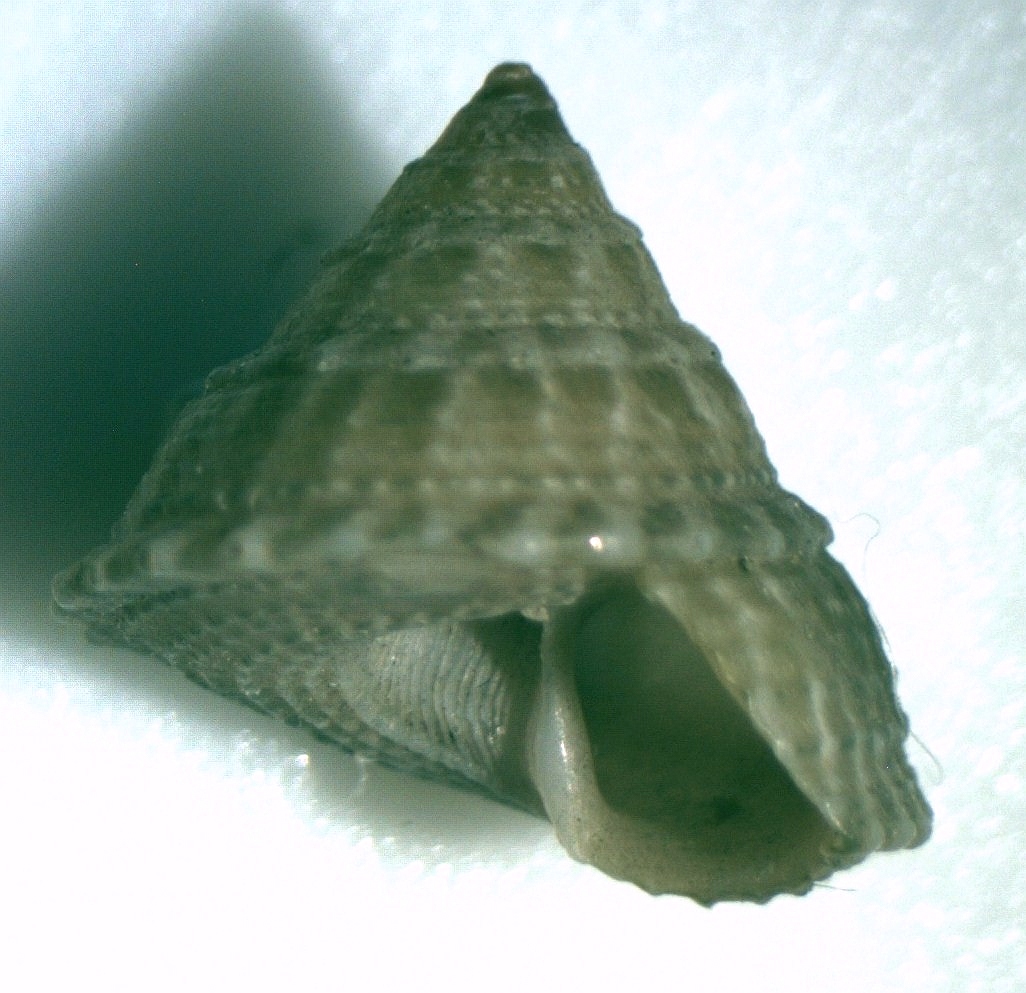
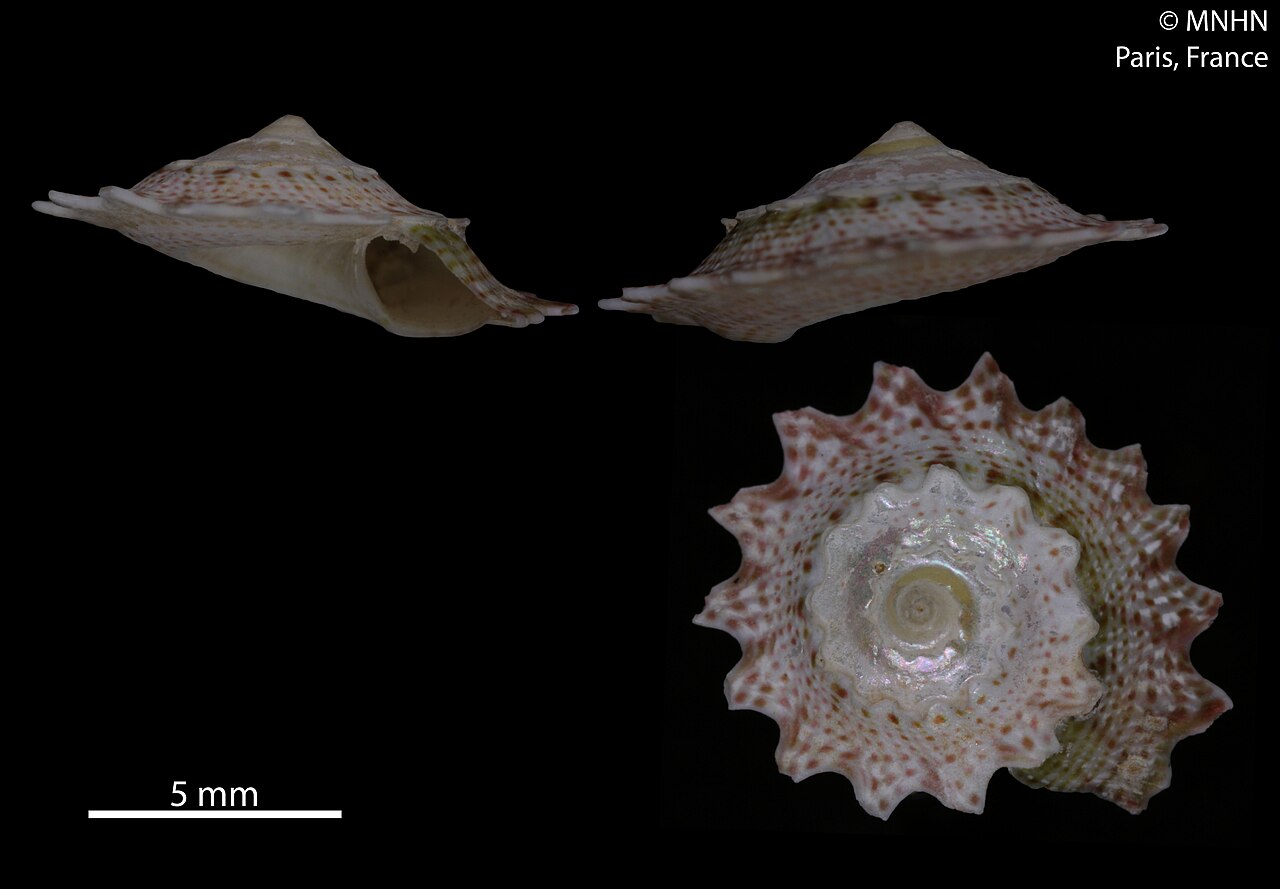
Agagus agagus is a marine gastropod mollusk belonging to the Trochidae family, commonly known as top snails. Its shell reaches 9 mm in length and 10 mm in diameter, with a depressed conical shape and a swollen base. The shell is vivid white with green spots and features an umbilicus. It has 6½ sharply declining whorls marked by longitudinal oblique striae and spiral ribs. The aperture is subquadrangular, and the outer lip is sharp. This species is found in the Red Sea and the Indian Ocean off the coasts of Tanzania and South Africa.
Quick Facts
- Taxon
- Agagus agagus
Facts from the source article.
Lore & Background
The shell of Agagus agagus grows to a length of 9 mm and a diameter of 10 mm. It is umbilicate, with a depressed conical shape and a swollen base. Its color is a vivid white with green spots. The shell contains 6½ sharp declining whorls with longitudinal oblique striae and spiral ribs. The aperture is subquadrangular, and the outer lip is sharp.
This species occurs in the Red Sea and in the Indian Ocean off Tanzania and South Africa. It was described in taxonomic works by Kilburn (1972) and Herbert (1991), among others.
The species is part of the genus Agagus, which was revised by Herbert D.G. in 1991 in the Journal of Natural History.
Reader's Guide
Agagus agagus is a species of sea snail documented in the scientific literature primarily through taxonomic studies. Its shell characteristics—such as the depressed conical shape, vivid white color with green spots, and 6½ whorls—are key identifying features. The species is recorded from the Red Sea and the Indian Ocean off Tanzania and South Africa, indicating a distribution in warm marine waters. The species has been referenced in works by Kilburn (1972) and Herbert (1991), the latter providing a revision of the genus Agagus. Its inclusion in guides such as 'Sea Shells of Southern Africa' and 'A guide to the seashores of Eastern Africa and the Western Indian Ocean islands' underscores its relevance to regional malacology. The species is not noted as having any commercial or cultural significance in the source article; its legacy lies in its taxonomic description and contribution to the understanding of trochid diversity in the western Indian Ocean.
Shell Morphology & Physical Form
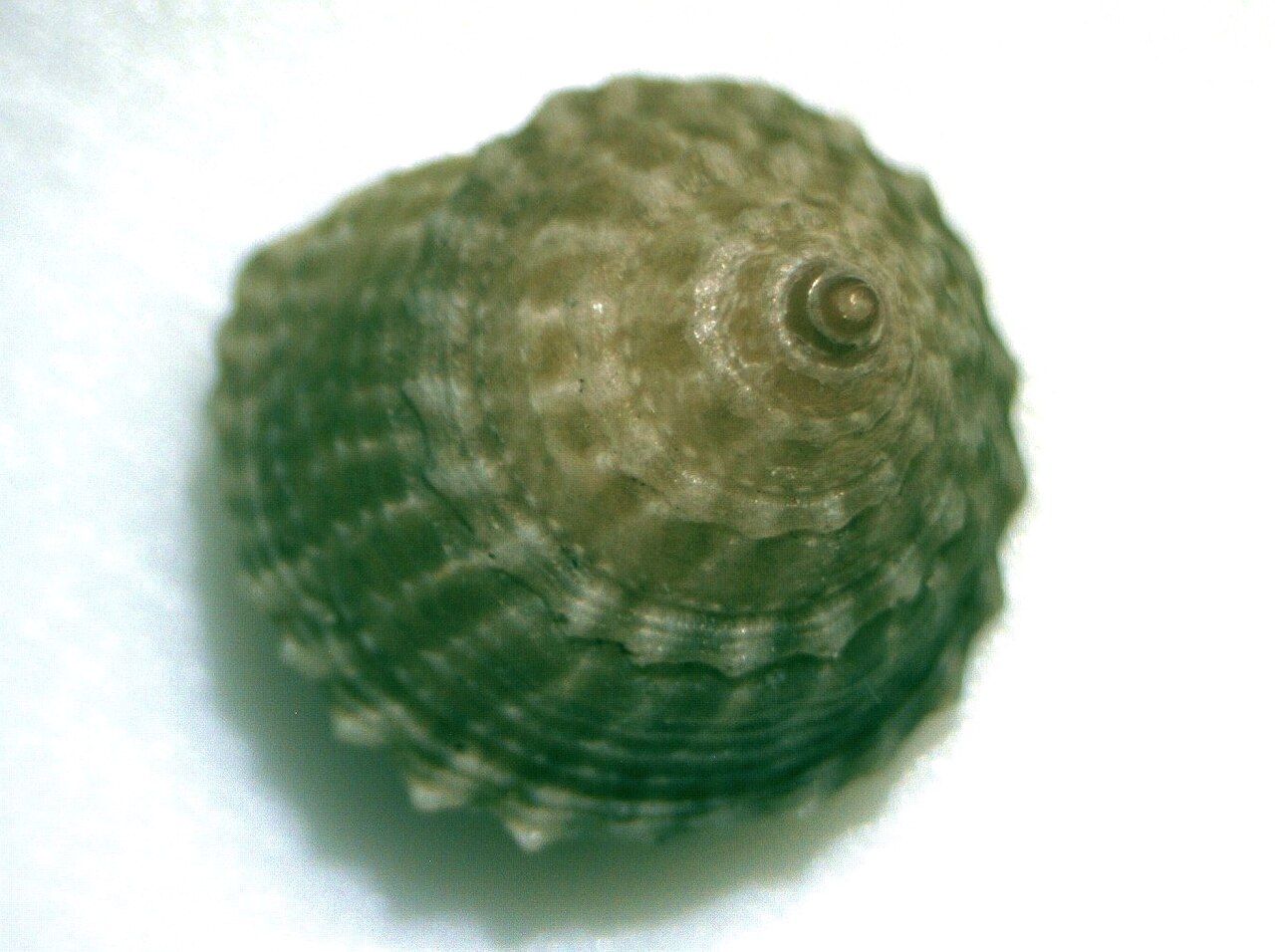
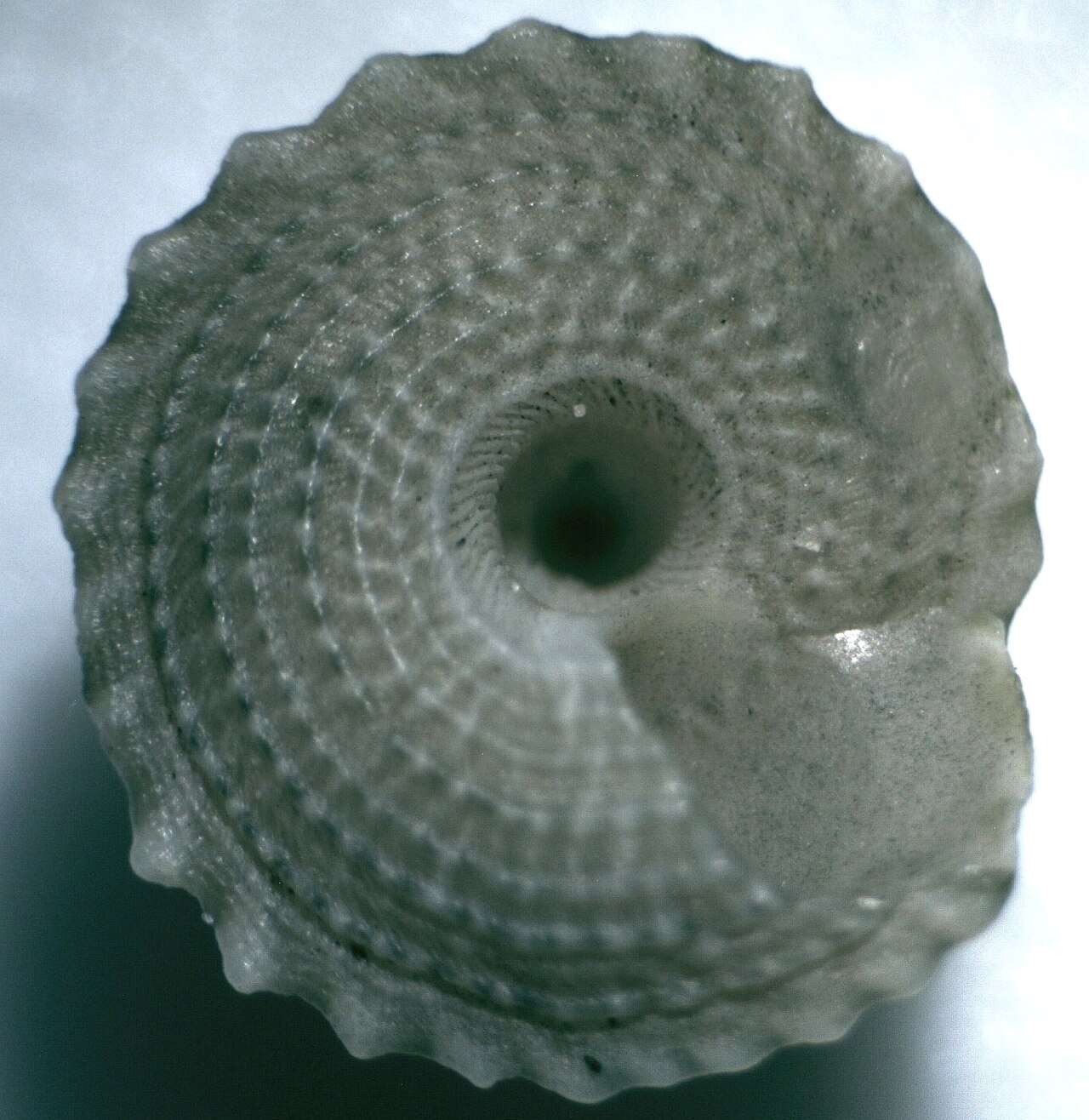
Agagus agagus presents a compact and strikingly patterned shell that measures roughly nine millimeters in length and ten millimeters in diameter. Its overall architecture is that of a depressed cone resting on a noticeably swollen base, a form characteristic of the top snail family. The shell bears an umbilicus, giving it an open, hollowed center. Six and a half whorls spiral downward in a sharp, declining progression, each adorned with both longitudinal oblique striae and spiral ribs that create a textured, multi-directional surface. The aperture takes a subquadrangular shape, and the outer lip is distinctly sharp rather than rounded or thickened. Perhaps most eye-catching is its coloration: a vivid white ground broken up by scattered green spots. Together, these features make the shell a small but intricately sculpted object, blending geometric precision with organic irregularity in a way typical of trochid gastropods.
Taxonomic Lineage & Classification
Agagus agagus belongs to the family Trochidae, commonly known as the top snails, a group of marine gastropod mollusks. The genus to which it is assigned traces its original description back to Jousseaume in 1894, when the name Agagaus was first applied. Over the decades, taxonomic understanding of this lineage evolved, culminating in a full revision of the genus by Herbert in 1991, published in the Journal of Natural History. That revision helped clarify the boundaries and composition of the group within Trochidae. The species itself has been documented in several key taxonomic works, including Kilburn's 1972 notes on South African marine mollusks, which described new species and subspecies across related genera such as Conus, Nassarius, Vexillum, and Demoulia. The 1982 volume by Kilburn and Rippey, Sea Shells of Southern Africa, further cemented the species' place in regional malacological literature, listing it on page 41 of that comprehensive guide.
Geographic Range & Marine Context
Agagus agagus is documented from two principal marine regions: the Red Sea and the Indian Ocean, with the latter occurrence specifically tied to the waters off Tanzania and South Africa. This geographic spread places the species within the broader Eastern African and Western Indian Ocean marine realm, a biogeographic zone that has been the subject of dedicated regional guides. The 1997 volume edited by Richmond, which surveys the seashores of Eastern Africa and the Western Indian Ocean islands, represents one such reference work in which this small top snail finds its place. The fact that the species occurs in both the Red Sea and the Indian Ocean indicates a distribution spanning a significant stretch of marine waters. As a member of the family Trochidae, the top snails, Agagus agagus shares its general ecological setting with numerous other gastropod species inhabiting these coastal and shallow-marine environments across the region.
Scientific Documentation & Research History
The scientific record of Agagus agagus spans several decades of malacological research, reflecting the gradual refinement of understanding in this group of top snails. The genus itself was originally established under the name Agagaus by Jousseaume in 1894, and it was not until 1991 that Herbert published a full revision of the genus in the Journal of Natural History, a work that reorganized and clarified the species composition within Trochidae. In 1972, Kilburn contributed taxonomic notes on South African marine mollusks to the Annals of the Natal Museum, a paper that included descriptions of new species and subspecies across several related genera—Conus, Nassarius, Vexillum, and Demoulia—providing important comparative context for the broader group. In 1982, Kilburn and Rippey published Sea Shells of Southern Africa through Macmillan South Africa in Johannesburg, a 249-page volume in which Agagus agagus is listed on page 41. The species has also been catalogued on Gastropods.com, an online reference for mollusk data, ensuring its continued accessibility to researchers and enthusiasts around the world.
Gallery
Frequently Asked Questions
What is Agagus agagus?
It is a small marine gastropod mollusk classified in the Trochidae family, the group commonly called top snails. This species is a warm-water sea snail with a distinctive shell pattern.
What does Agagus agagus's shell look like?
The shell is a vivid white covered in green spots and has a depressed-conical shape with a swollen base. Roughly six and a half sharply sloping whorls are decorated with oblique striae and spiral ribs, and the aperture is subquadrangular with a sharp outer lip.
Where can I find Agagus agagus in the wild?
This snail is native to the Red Sea and the Indian Ocean waters along the coasts of Tanzania and South Africa. It does not appear to range beyond those warm-water regions.
How big does Agagus agagus get?
The shell reaches about 9 mm in length and roughly 10 mm in diameter, placing it firmly in the small-gastropod category. Despite its modest size, it has a well-formed umbilicus and clearly defined whorls.
What makes Agagus agagus stand out among other top snails?
Its bright white-and-green coloration is unusual within Trochidae and makes it easy to spot on a collection tray. The specific combination of a depressed-conical profile, an umbilicus, and six and a half whorls bearing oblique striae separates it from similar-looking species.
More in Marine Snails 1-24
Spotted an error? Know more?
Reader corrections go straight into our review queue. Suggest an edit · How this site is sourced