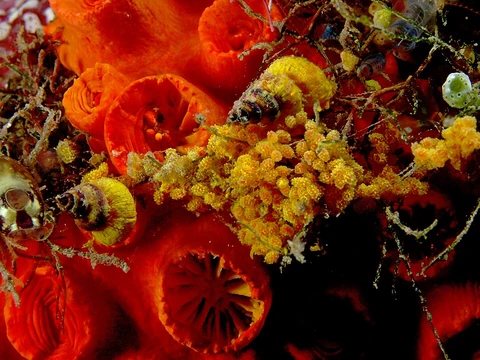
Austrocochlea
A genus of medium-sized marine top snails from Australia and the Philippines.

Marie HENNION · CC BY 4.0
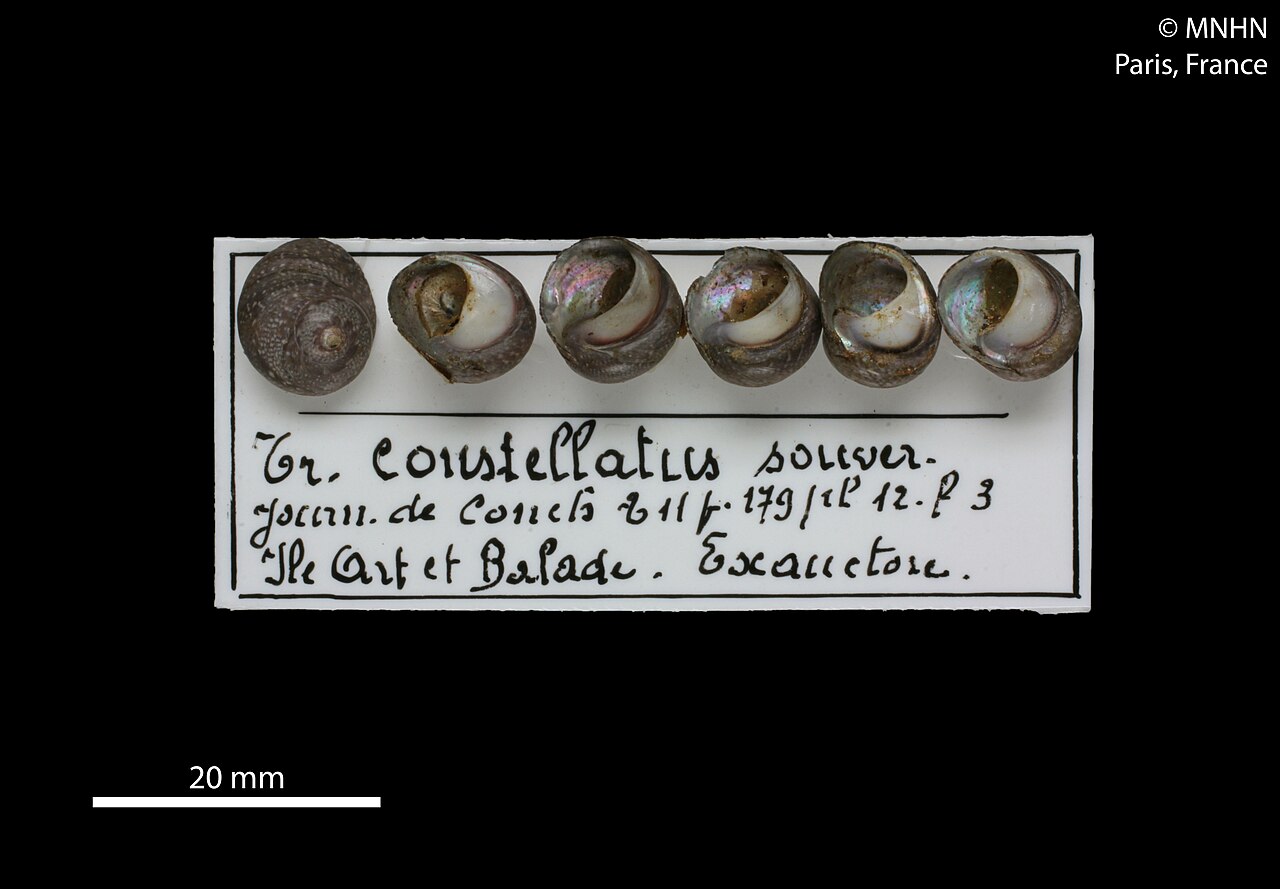
Austrocochlea is a genus of medium-sized marine gastropods belonging to the Trochidae family, commonly called top snails or top shells. The genus was originally established as a subgenus by Fisher in 1885, grouping a small set of Australian species that had previously been placed in the genus Monodonta. Before that, these snails were classified under Trochocochlea Klein, 1753 (also known as Osilinus Philippi, 1847), a section later restricted to Mediterranean species. A key characteristic is the tubercle at the base of the columella, which is not truncated and only slightly prominent. These sea snails are found off the Philippines and mainly off Australia. Species within Austrocochlea include: Austrocochlea brevis, Austrocochlea constellata, Austrocochlea constricta (the southern ribbed top snail), Austrocochlea diminuta, Austrocochlea porcata (the zebra top snail), Austrocochlea rudis, and Austrocochlea zeus. Several species have been moved into synonymy: Austrocochlea adelaidae is now Chlorodiloma adelaidae; Austrocochlea concamerata is now Diloma concamerata; Austrocochlea obtusa, Austrocochlea porcata (Iredale, T. & McMichael, D.F. 1962), Austrocochlea torri, and Austrocochlea zebra are all synonyms of Austrocochlea constricta; Austrocochlea odontis is now Chlorodiloma odontis; Austrocochlea piperina is now Diloma piperinum; Austrocochlea quadrasi is now Monodonta (Austrocochlea) quadrasi; and Austrocochlea tricingulata is a synonym of Austrocochlea quadrasi.
Quick Facts
- Taxon
- Austrocochlea
- Type Species
- Monodonta constricta
- Type Species Authority
- Lamarck, J.B.P.A. de, 1822
Facts from the source article.
Lore & Background
The genus Austrocochlea was established as a subgenus by Fisher in 1885, encompassing a small group of Australian species that had previously been placed in the genus Monodonta. Before that, these snails had been included in Trochocochlea Klein, 1753 (= Osilinus Philippi, 1847), a section that was then restricted to the Mediterranean group. A key characteristic of the genus is that the tubercle at the base of the columella is non-truncated and only slightly prominent. The species within Austrocochlea occur off the Philippines and mainly off Australia.
Reader's Guide
Austrocochlea represents a taxonomic grouping within the Trochidae family that was originally defined as a subgenus by Fisher in 1885. Its history reflects shifting classifications: the snails were first placed in Trochocochlea (a section later restricted to Mediterranean species), then in Monodonta, before being separated into their own subgenus. The genus is notable for its distribution, occurring off the Philippines and mainly off Australia. The article provides a list of accepted species and a longer list of species that have been brought into synonymy, indicating ongoing taxonomic revision. For example, Austrocochlea obtusa and Austrocochlea torri are both considered synonyms of Austrochlea constricta. The morphological characteristic of a non-truncated, only slightly prominent tubercle at the base of the columella helps distinguish the genus. The article also references a 2005 DNA-based phylogenetic study by Donald, Kennedy, and Spencer that contributed to the taxonomy of austral monodontine topshells, though the specific findings are not detailed in the source.
Did You Know?
- Austrocochlea was founded as a subgenus by Fisher in 1885.
- The tubercle at the base of the columella in Austrocochlea is non-truncated and only slightly prominent.
- This genus occurs off the Philippines and mainly off Australia.
- Austrocochlea constricta is known as the southern ribbed top snail.
Taxonomic Identity and Classification
Austrocochlea quadrasi is a small marine gastropod mollusk belonging to the family Trochidae, the group commonly referred to as top snails. This species carries the specific epithet quadrasi and is classified within the genus Austrocochlea. As a member of the trochid family, it shares the general body plan and ecological niche of other top snails: conical, operculate shells adapted to life on hard substrates in saltwater. The species is a true sea snail, breathing through gills and spending its entire life in marine environments. Its placement within Trochidae connects it to a diverse and widespread group of gastropods found in tropical and temperate seas around the globe. The genus Austrocochlea itself represents a lineage of small, often richly ornamented shells that have attracted sustained attention from malacologists and shell collectors alike. Understanding where A. quadrasi sits within this taxonomic framework helps researchers appreciate both the traits it shares with fellow trochids and the unique characteristics that set it apart within its own genus.
Shell Architecture and Morphology
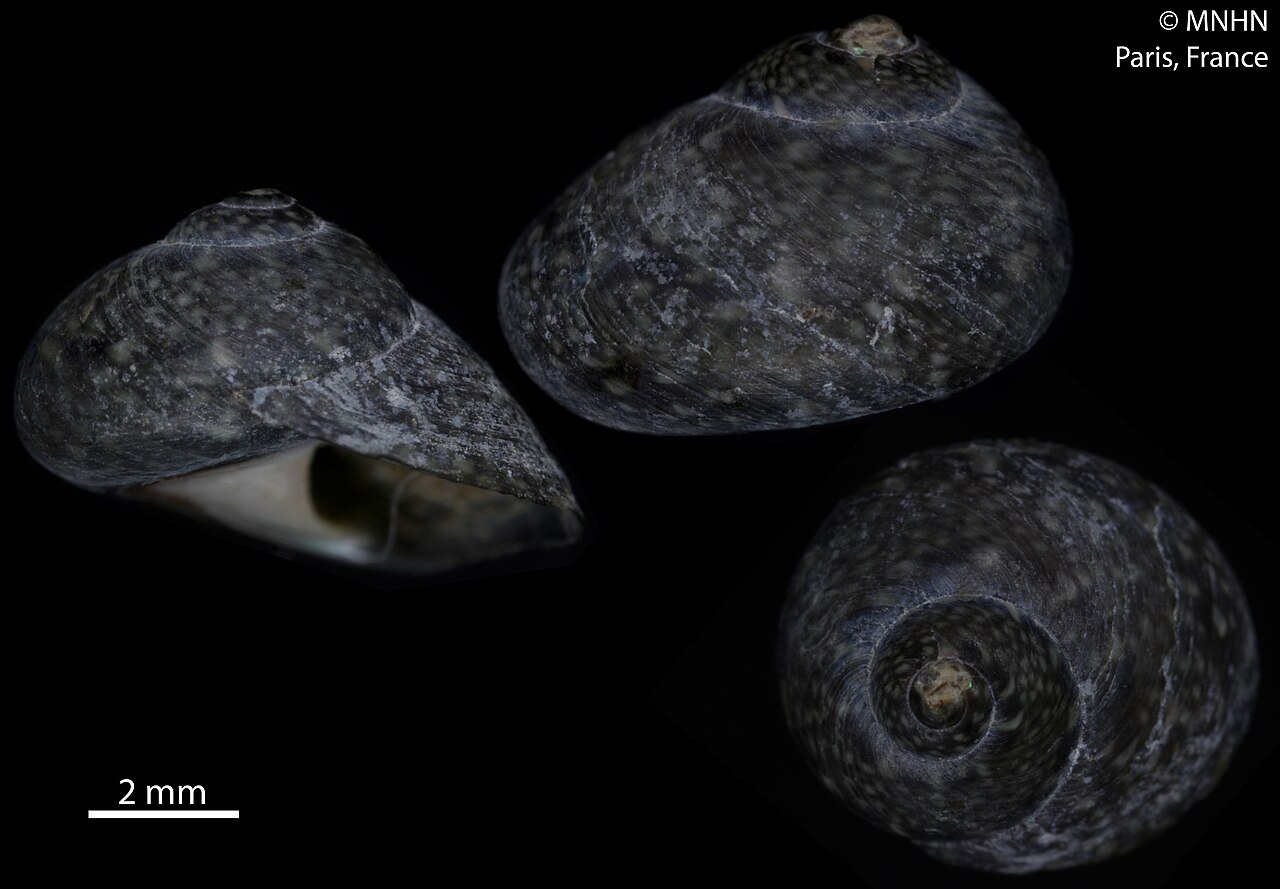
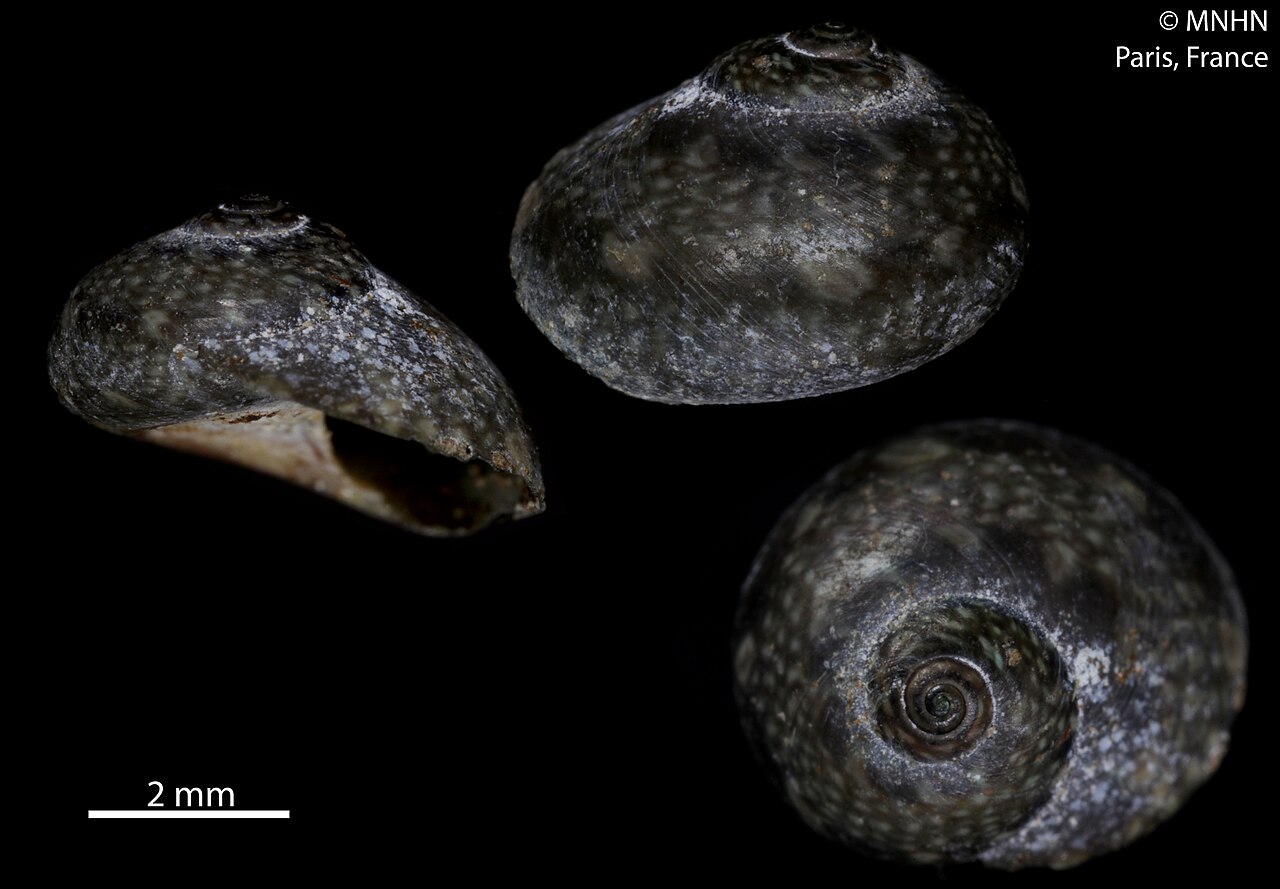
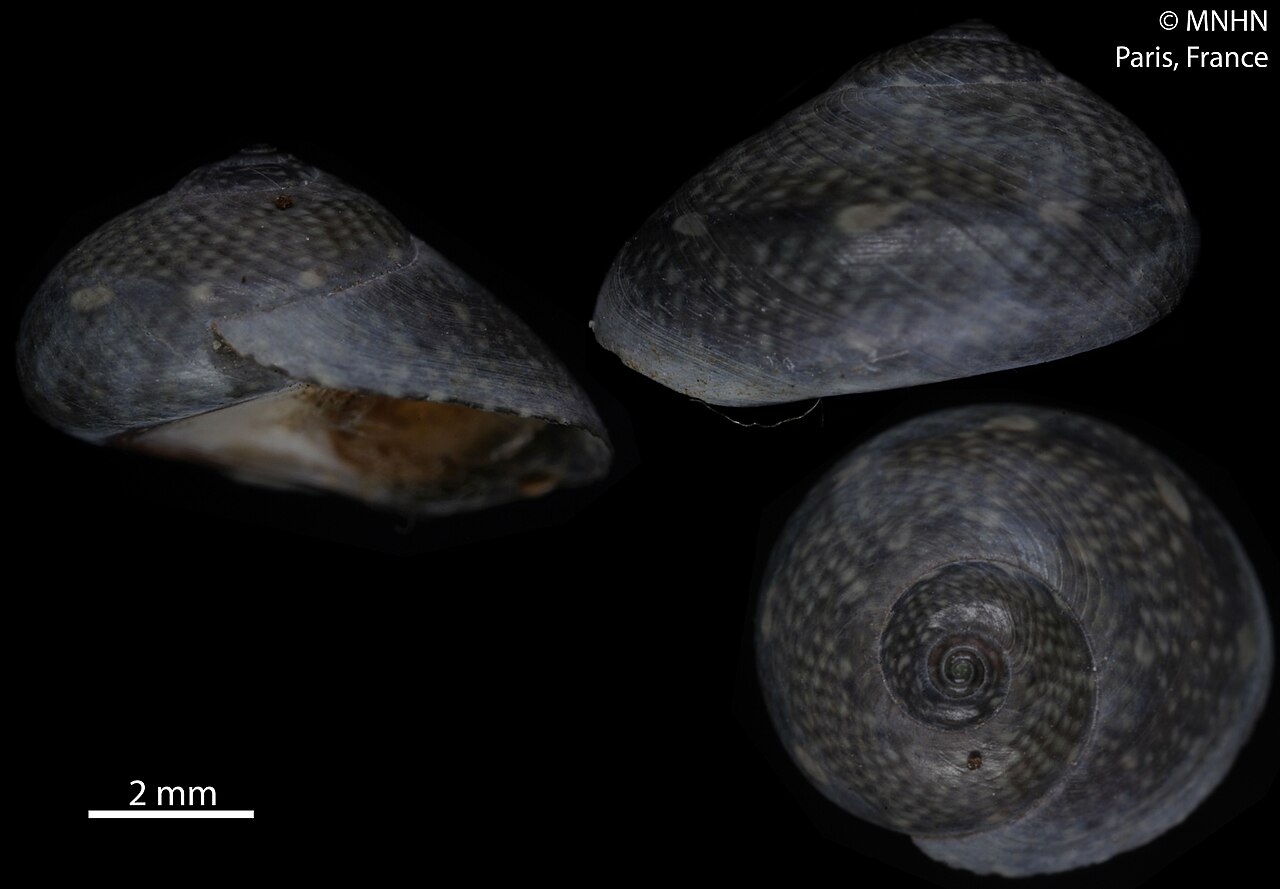
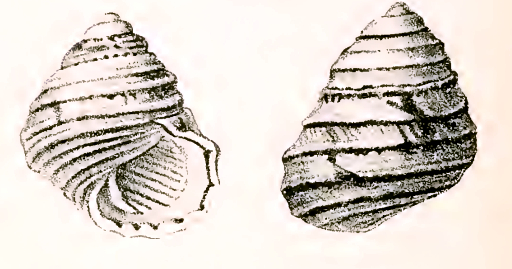
The adult shell of Austrocochlea quadrasi measures between 7 and 12 millimeters in length, making it a genuinely diminutive specimen. Its overall form is conical, built from five whorls that spiral upward to a pointed apex. The shell is imperforate, meaning the base is fully closed rather than open, a trait common among trochids. The sutures separating the whorls are impressed in an irregular pattern, giving the shell a slightly uneven profile rather than a perfectly smooth transition. The surface is richly ornamented: numerous revolving lirae, fine spiral ridges, cross the whorls, and three distinct keels run along them, all bearing a granulose texture. The convex base is strongly ridged and decorated with bright spots. At the base of the callous, minute tubercles are present, and the slightly oblique columella adds to the shell's intricate internal architecture. The aperture is subquadrate in shape, its silvery-white interior lined with seven lirae, while the peristome edge is sharp and marked with maculations.
Distinguishing Features Among Close Relatives
Among the many small trochid snails, Austrocochlea quadrasi can be visually confused with its close relative Austrocochlea porcata, as the two species share a broadly similar overall silhouette and ornamentation. However, careful examination reveals key differences that allow a skilled malacologist to separate them. The most notable distinguishing feature lies at the base of the callous: A. quadrasi bears minute tubercles that are noticeably more conspicuous than those found on A. porcata. This subtle but consistent difference in tubercle prominence provides a reliable diagnostic character. Additionally, the specific combination of granulose lirae, three keels, the strongly ridged and brightly spotted convex base, and the subquadrate aperture with its seven internal lirae collectively form a morphological signature unique to this species. The sharp, maculated peristome further reinforces its identity. For collectors and researchers working with small shells from the western Pacific, these fine structural details are essential for accurate identification, particularly when specimens are worn or partially damaged.
Geographic Range and Marine Habitat
The known distribution of Austrocochlea quadrasi is confined to the waters off the Philippines, where this small marine gastropod has been collected. As a marine species within the trochid family, it inhabits saltwater environments, likely on hard substrates such as rocks or coral where top snails typically feed and shelter. The Philippine archipelago, situated in the western Pacific, is renowned for its extraordinary marine biodiversity, hosting countless species of mollusks many of which are found nowhere else on Earth. A. quadrasi is one such localized species, its range restricted to this particular geographic region. The relatively narrow distribution suggests it may be a relatively recent evolutionary offshoot or a species that has not yet dispersed widely across the broader Indo-Pacific. For malacologists studying trochid diversity in the region, documenting the precise locality and depth at which A. quadrasi is found remains important for understanding its ecological niche and assessing its long-term conservation outlook.
Gallery
Frequently Asked Questions
What is Austrochlea?
Austrochlea is a genus of medium-sized marine top snails (family Trochidae) found in Australian and Philippine waters. It groups a small set of species that were once lumped under other genera before being recognized as their own distinct lineage.
Who described Austrochlea and when?
The taxonomist Fisher established Austrochlea in 1885, though he originally set it up as a subgenus rather than a full genus. He carved it out of a handful of Australian species that had previously been assigned to Monodonta.
Where can you find Austrochlea in the wild?
These top snails inhabit marine environments off the coast of Australia and the Philippines. Their range is essentially limited to those two regions, making them a distinctly Australasian and Philippine group.
What shell feature sets Austrochlea apart from similar top snails?
A key identifying trait is the small, slightly prominent tubercle at the base of the columella, which is not truncated. That subtle detail is one of the main ways shell collectors and malacologists separate it from closely related genera.
How did Austrochlea's classification evolve over time?
Before Fisher's 1885 work, these snails sat inside Monodonta, and even earlier they were tucked under Trochocochlea (later called Osilinus), a name eventually narrowed to Mediterranean species. The reclassification pulled the Australian and Philippine forms out into their own recognized group.
More in Marine Snails 1-24
Spotted an error? Know more?
Reader corrections go straight into our review queue. Suggest an edit · How this site is sourced