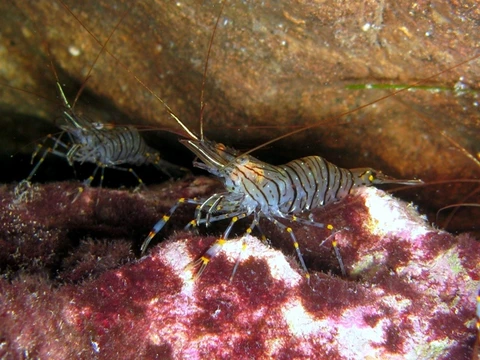
Rimicaris kairei
Hydrothermal vent shrimp with chemosynthetic symbionts and color morphs.

Rimicaris kairei is a species of hydrothermal vent shrimp discovered in August 2000 by the operators of the ROV Kaiko from the R/V Kairei. It is notable for its chemosynthetic symbiotic bacteria, protogynous reproduction, and color polymorphism based on iron mineral deposits.
Quick Facts
- Genus
- Rimicaris
- Species
- kairei
Facts from the source article.
Lore & Background
Rimicaris kairei was first discovered in August 2000 by the operators of the ROV Kaiko from the R/V Kairei, and named for both the ship and the Kairei vent field. The shrimp have entirely white bodies with blackened branchial chambers, possibly from symbiotic bacteria, and their third to fifth pleopods have brown nails. They exhibit two distinct color morphs—black and brown—due to differences in mineral deposits within the cephalothorax: the brown morph has more iron oxides (goethite, ferrihydrite), while the black morph contains more iron sulfides (pyrrhotite) and organic sulfur compounds. Their eyestalks are reduced as an adaptation to the harsh hydrothermal vent environment, but the peptides that make the eyestalks are retained, with secretion moving to the brain.
Reader's Guide
Rimicaris kairei is significant as a primary consumer in hydrothermal vent ecosystems along the Central Indian Ridge, being the most populous invertebrate on the Dodo, Solitaire, Edmond, and Kairei vent fields. It provides an important food source for Marianactis anemones and Archinome polychaete worms, and is the most important part of Marianactis anemone diets. The shrimp's symbiotic bacteria, which undergo chemosynthesis, live in their intestines and manufacture energy by reducing sulfur from hydrothermal vents. Adult shrimp have richer, more diverse bacterial populations than juveniles, with the most abundant phylum in adults being Campilobacterota and in juveniles Deferribacterota. Unlike its Atlantic congener Rimicaris exoculata, R. kairei hosts the same symbiotic bacteria that alter their metabolism based on vent chemistry, allowing adaptation to varying hydrogen and sulfide concentrations. Populations across all vent fields are genetically identical, with data suggesting larvae from the Edmond vent sites colonized the other three sites. The shrimp are protogynous, reproduce during the austral summer, and have lower fecundities but larger eggs than other Alvinocarididae, reflecting a tradeoff. Their larval stage can elongate, allowing dispersal up to 100 meters from vents.
Did You Know?
- The shrimp have two color morphs—black and brown—based on different iron mineral deposits under the carapace.
- They are protogynous and have epipelagic larvae that feed on photosynthetic organisms.
- Populations across all four vent fields are genetically identical, with larvae from Edmond likely colonizing the others.
More in Marine Shrimp 1-24
Spotted an error? Know more?
Reader corrections go straight into our review queue. Suggest an edit · How this site is sourced