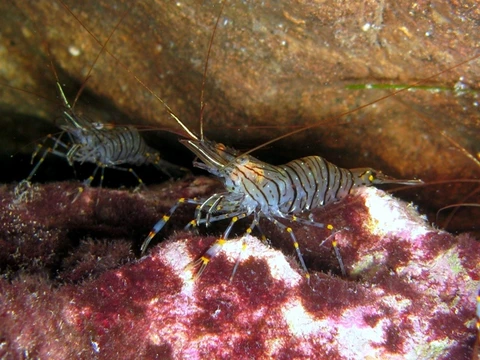
Pasiphaea
A widespread genus of deep-sea shrimp including the fished Japanese glass shrimp.

Pasiphaea is a genus of true shrimp, part of the family Pasiphaeidae. These shrimp are found in oceans worldwide, from the Arctic to the Antarctic, and inhabit the mesopelagic and bathypelagic zones. One notable species is the Japanese glass shrimp (*P. japonica*), which has been commercially fished for more than 150 years.
The genus was first established in 1816 by M. J. C. Savigny, based on the species *Alphaeus sivado*, which Antoine Risso had described that same year from a specimen collected in Nice. During the 19th and 20th centuries, many new species were added, but by the late 1900s, the classification of several species had become confused. Taxonomic work has been hindered by numerous synonymies, vague original descriptions, and very subtle morphological differences between species. In the 1990s, Ken-Ichi Hayashi revised several species groups and redefined the genus by treating the genus *Phye* as a synonym. He divided *Pasiphaea* into three informal groups, plus a fourth category containing over a dozen species with mixed physical traits. However, a 2026 study found that these morphology-based groups did not align well with genetic data; the groups were scattered almost randomly across the genetic clades. Hayashi and other researchers added new species in the 1990s and 2000s, and further species were described from the West Pacific in 2012 and 2026. The 2026 paper, which also revised the taxonomy of *Pasiphaea* in the southwest tropical Pacific, noted that even moderately abundant new collections can reveal a significant number of undescribed species, though some of these are known from only a single specimen. In the New Caledonia region, the study found species that are genetically very distinct yet nearly identical in physical form. The authors suggested this pattern may result from rapid speciation driven by the area’s rugged seafloor, divided by numerous seamounts and rises.
As of 2026, the description of eight new species from the tropical Pacific brought the total number of recognized species to the figure listed by the World Register of Marine Species.
Quick Facts
- Taxon
- Pasiphaea
Facts from the source article.
Lore & Background
The genus Pasiphaea was created in 1816 by M. J. C. Savigny to accommodate the species Alphaeus sivado, described the same year by Antoine Risso from a specimen from Nice. Numerous species were described in the 19th and 20th centuries, and by the end of the latter century, the taxonomic status of several species was quite muddled. Taxonomic work has been made difficult by numerous synonymies, names based on inadequate and brief original descriptions, and species separated by very minor morphological differences.
In the 1990s, Ken-Ichi Hayashi revised several groups of species within the genus and redefined the genus as a whole by considering the genus Phye as a synonym. Hayashi divided Pasiphaea into three informal groups, plus a fourth category of over a dozen species of more miscellaneous physical characteristics. However, a 2026 study found that the morphology-based groups were quite at odds with molecular evidence, with the groups scattered near-randomly across genetic clades. New species were added by Hayashi in the 1990s and 2000s and by authors working in the West Pacific region in 2012 and 2026.
The 2026 paper, which revised the taxonomy of Pasiphaea in the southwest tropical Pacific Ocean, found that even moderately abundant new collections can yield a significant number of undescribed species, though some are represented by only a single specimen. It also found species in the New Caledonia area that are very genetically distinct but nearly indistinguishable morphologically, possibly due to rapid speciation caused by rugged terrain divided by numerous seamounts and rises.
Reader's Guide
Pasiphaea is notable for its broad geographic range from the Arctic to the Antarctic and its occupation of mesopelagic to bathypelagic depths. The genus includes the Japanese glass shrimp (P. japonica), which has been fished for over a century and a half, giving it economic significance. Taxonomically, the genus has a complicated history: early descriptions were often brief and inadequate, leading to numerous synonymies and confusion. The 1990s work of Ken-Ichi Hayashi brought some order by redefining the genus and creating informal groups, but a 2026 molecular study revealed that those morphology-based groups do not align with genetic evidence, suggesting that traditional classification may be unreliable. The same 2026 study highlighted that new collections in the southwest tropical Pacific continue to yield undescribed species, and that some morphologically similar species are genetically distinct, possibly due to rapid speciation in a complex seafloor environment of seamounts and rises. This ongoing discovery and taxonomic revision underscore that Pasiphaea remains a challenging genus for researchers, with its true diversity likely still underestimated.
Did You Know?
- A 2026 study found that morphology-based groups of Pasiphaea are near-randomly scattered across genetic clades.
- Some Pasiphaea species from the New Caledonia area are genetically distinct but nearly indistinguishable morphologically.
Frequently Asked Questions
What is Pasiphaea?
Pasiphaea is a genus of true shrimp within the family Pasiphaeidae. It was formally established in 1816 by M. J. C. Savigny, who based the group on the species Alpheus sivado that Antoine Risso had described that same year from a specimen collected off Nice.
Where do Pasiphaea shrimp live?
These shrimp occur in oceans worldwide, ranging from Arctic seas all the way to Antarctic waters. They typically inhabit the mesopelagic and bathypelagic zones, placing them in the mid-to-deep layers of the open ocean.
Why is the Japanese glass shrimp (P. japonica) so well known?
The Japanese glass shrimp is the genus's most commercially important member, having been harvested for human consumption for more than 150 years. This makes it one of the longest-running deep-sea shrimp fisheries in the world.
How many species belong to the Pasiphaea genus?
The exact total has not been definitively pinned down, but the roster grew considerably through the 19th and 20th centuries as new species were added. Eight additional species were described in 2026, further expanding the count.
Who originally named the genus Pasiphaea?
M. J. C. Savigny erected the genus in 1816, using Alpheus sivado (Risso, 1816) as the type species. Risso had described that species earlier the same year from a specimen gathered in Nice.
More in Marine Shrimp 1-24
Spotted an error? Know more?
Reader corrections go straight into our review queue. Suggest an edit · How this site is sourced