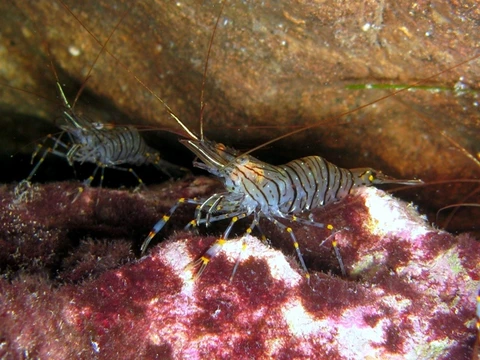
Rhynchocinetes uritai
A hardy, non-aggressive saltwater shrimp common in aquariums.

Rhynchocinetes uritai, called the camel shrimp, camelback shrimp, or dancing shrimp, is a peaceful saltwater crustacean in the family Rhynchocinetidae. It is a resilient species often kept in marine aquariums.
The body of the camel shrimp is covered in red and white stripes that extend from head to tail. It has a movable rostrum, or beak, that typically points upward. Males develop larger claws than females once they reach adulthood. This shrimp is hardy and adapts well to captive conditions.
In the wild, R. uritai hides in cracks, crevices, coral deposits, and rock caves to avoid predators such as herring, salmon, sculpin, and flatfishes. It is often found in groups with other camel shrimp. As a carnivore, it feeds on detritus, phytoplankton, zooplankton, and frozen or freeze-dried seafood bits. In aquariums, it accepts a varied diet of prepared fresh and frozen carnivore foods, including vitamin-enriched flakes, freeze-dried krill, and live adult brine shrimp or nauplii.
Camel shrimp hunt by sifting through sand, separating food from particles, which also aerates the aquarium substrate. They molt several times throughout their lives, shedding their old exoskeleton for a harder new one. They have a tendency to damage soft corals and anemones. Like many shrimp, they are nocturnal, hiding during the day and emerging at night to feed.
Quick Facts
- Taxon
- Rhynchocinetes uritai
Facts from the source article.
Lore & Background
The camel shrimp is covered with red and white stripes that run across its entire body. It has a movable rostrum or beak that generally faces upward. Male camel shrimp have larger chelipeds (claws) than females, and the claw forms when the shrimp reaches maturity. This species is found under cracks and crevasses, coral deposits, and rock caves, which provide safe cover from predators. It is often seen with other camel shrimp in its habitat. Common predators include herring, salmon, sculpin, and flatfishes. As a carnivore, it feeds on detritus, phytoplankton, zooplankton, and frozen or freeze-dried bits of seafood. In captivity, it accepts a varied diet of prepared fresh and frozen foods suitable for carnivores, such as vitamin-enriched flakes, freeze-dried krill, or live adult brine shrimp or nauplii. Camel shrimp look for food by plowing through sand, separating food and sand particles, which aerates the aquarium environment. As it grows, it undergoes a moulting process that replaces its old exoskeleton with a harder one, and it may molt several times during its life. It has a tendency to damage soft corals and anemones. Like most shrimp, it is nocturnal and usually hides during daylight hours, coming out at night to feed.
Reader's Guide
Rhynchocinetes uritai is significant in the context of saltwater aquariums due to its hardiness and non-aggressive nature, making it a common choice for hobbyists. Its feeding behavior of plowing through sand helps aerate the aquarium substrate, improving the environment. However, its tendency to damage soft corals and anemones is a consideration for reef tanks. The species' nocturnal habits and preference for hiding under cracks and rock caves influence aquarium setup, requiring ample hiding places. Its carnivorous diet is easily met with prepared foods, and its moulting process is a natural part of its growth. The presence of larger chelipeds in males and the movable rostrum are distinctive physical traits. The species is often found in groups in the wild, which may inform captive care. Its common names—camel shrimp, camelback shrimp, and dancing shrimp—reflect its appearance and behavior. The article does not provide any historical or legacy details beyond its ecological and aquarium-related characteristics.
Did You Know?
- Camel shrimp have a movable rostrum that generally faces upward.
- They are nocturnal and hide during daylight hours.
- Their feeding behavior aerates the aquarium substrate.
More in Marine Shrimp 1-24
Spotted an error? Know more?
Reader corrections go straight into our review queue. Suggest an edit · How this site is sourced