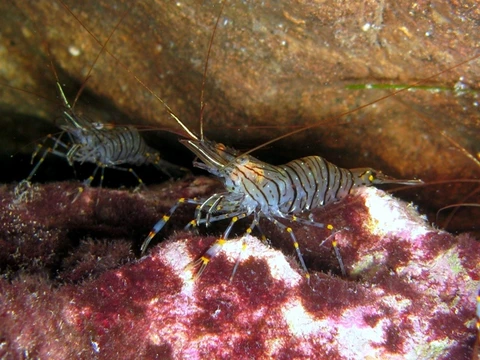
Palaemonidae
A diverse shrimp family found in all aquatic habitats except the deep sea.

Palaemonidae is a family of shrimp in the order Decapoda. It contains more than 1200 species in 160 genera, found in any aquatic habitat except the deep sea. The family is notable for including the genus Macrobrachium, which contains commercially fished species, as well as many species that inhabit coral reefs and associate with invertebrates such as sponges, cnidarians, mollusks, and echinoderms.
Quick Facts
- Taxon
- Palaemonidae
Facts from the source article.
Lore & Background
The family Palaemonidae was formerly split into two subfamilies, but molecular and morphological research in 2015 determined that those subfamily groupings were invalid. At the same time, the members of the families Gnathophyllidae and Hymenoceridae were incorporated into the Palaemonidae. Many species are carnivores that eat small invertebrates, though others generally feed on detritus. Some species inhabit coral reefs, where they associate with certain invertebrates as cleaner shrimps, parasites, or commensals. The genus Macrobrachium is significant for containing commercially fished species. The former family Gnathophyllidae, now placed within Palaemonidae, consisted of about 14 species in five genera: Gnathophylleptum, Gnathophylloides, Gnathophyllum, Levicaris, and Pycnocaris. These shrimp were often associated with echinoderms.
Reader's Guide
Palaemonidae is a large and ecologically significant family of shrimp, with more than 1200 species across 160 genera. Its members occupy virtually all aquatic habitats except the deep sea, from freshwater to coral reefs. The family includes the commercially important genus Macrobrachium, which is fished for human consumption. Many Palaemonidae species play key roles in coral reef ecosystems, forming associations with sponges, cnidarians, mollusks, and echinoderms as cleaner shrimps, parasites, or commensals. Their feeding habits vary: some are carnivores that hunt tiny animals, while others feed on detritus. The family's classification was revised in 2015, when molecular and morphological research invalidated the former two-subfamily division and incorporated the families Gnathophyllidae and Hymenoceridae into Palaemonidae. The former Gnathophyllidae, consisting of about 14 species in five genera, were often associated with echinoderms. This taxonomic revision reflects ongoing scientific understanding of shrimp relationships.
Did You Know?
- The genus Macrobrachium contains commercially fished species.
- In 2015, molecular and morphological research invalidated the former two-subfamily groupings and incorporated Gnathophyllidae and Hymenoceridae into Palaemonidae.
More in Marine Shrimp 1-24
Spotted an error? Know more?
Reader corrections go straight into our review queue. Suggest an edit · How this site is sourced