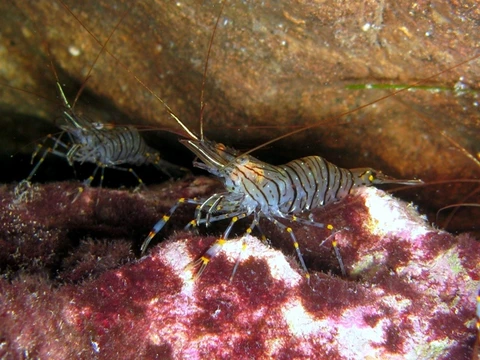
Macrobrachium grandimanus
Endemic Hawaiian shrimp with asymmetric claws and amphidromous life cycle.

Macrobrachium grandimanus, known in Hawaiian as ʻopae ʻoeahaʻa and commonly called the Hawaiian river shrimp, is a shrimp species found only in the Hawaiian Islands. Its life cycle is amphidromous, and it is the only shrimp in Hawaiʻi with asymmetrical pincer claws.
This shrimp ranges in color from light to dark brown and can reach up to eight centimeters in length. It feeds by scavenging the bottoms of slow-moving streams for both plant and animal matter. Breeding occurs throughout the year, with eggs incubating for about three to four weeks. After hatching, the larvae are carried downstream to the ocean, where they develop for roughly a month before returning to freshwater streams to mature.
Historically, the species lived on all major Hawaiian islands with permanent streams. Today, it is found in high-quality streams on Kauaʻi, Oʻahu, Molokaʻi, Maui, and Hawaiʻi, as well as in wetlands, small ponds, and other enclosed water bodies. Hawaiian river shrimp are not harvested for food or used for any other purpose.
Quick Facts
- Genus
- Macrobrachium
- Species
- grandimanus
Facts from the source article.
Lore & Background
The Hawaiian river shrimp is light to dark brown in color and grows to eight centimeters in length. It has asymmetric pincer claws unlike any other shrimps in Hawaiʻi. They scavenge at the bottom of slow flowing streams for animal and plant material. They reproduce year round with an incubation period lasting approximately three to four weeks. After hatching, the larvae get washed down into the ocean where they spend a month developing before they return to streams to mature.
Historic distribution includes all the main islands in Hawaiʻi that consist of everlasting streams. They currently can be found in high quality streams in Kaua'i, O'ahu, Moloka'i, Maui, and Hawaiʻi as well as wetlands, small ponds, and closed off body of waters. Hawaiian river shrimp are not caught for food or used in any way.
Reader's Guide
Macrobrachium grandimanus holds significance as an endemic species of the Hawaiʻi islands, with a life cycle that connects freshwater streams to the ocean. Its amphidromous life cycle—where larvae are washed to the sea and later return to streams—highlights the ecological link between terrestrial and marine environments. The species is distinguished by its asymmetric pincer claws, a unique trait among Hawaiian shrimps. Historically found on all main islands with permanent streams, it now persists only in high-quality streams on Kaua'i, O'ahu, Moloka'i, Maui, and Hawaiʻi, as well as in wetlands, small ponds, and closed-off water bodies. Despite its presence, the shrimp is not harvested for food or any human use, which may contribute to its continued survival in suitable habitats. Its reliance on clean, slow-flowing streams makes it an indicator of freshwater ecosystem health in Hawaiʻi.
Did You Know?
- Its larvae are washed down into the ocean and spend a month developing before returning to streams.
- The incubation period for eggs lasts approximately three to four weeks.
More in Marine Shrimp 1-24
Spotted an error? Know more?
Reader corrections go straight into our review queue. Suggest an edit · How this site is sourced