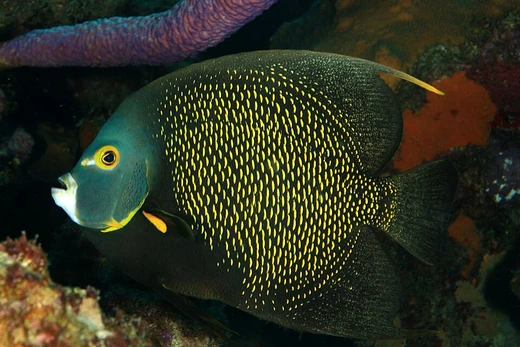
Rock beauty
A tricolored angelfish of western Atlantic reefs.

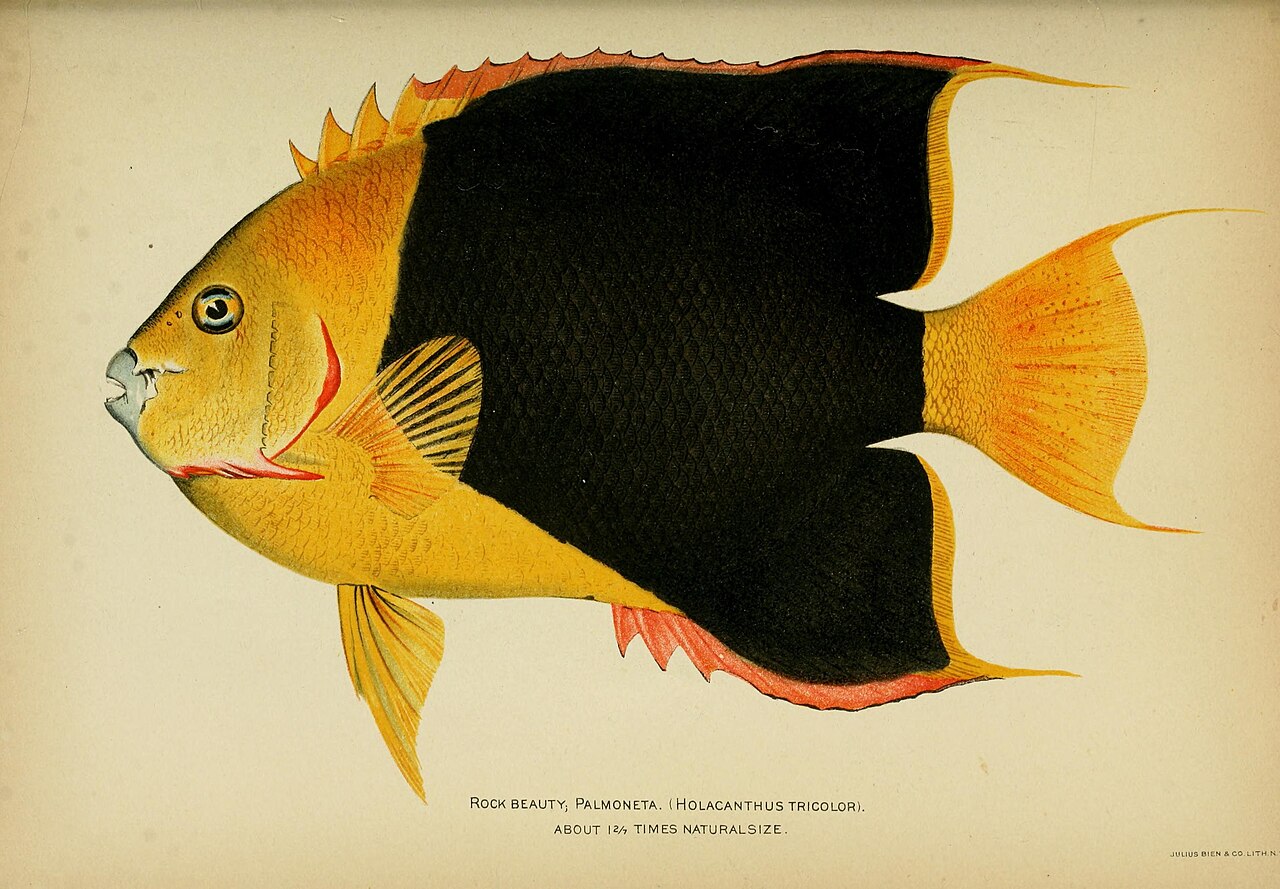
Barton Warren Evermann / Millard Caleb Marsh · Public domain
The rock beauty (Holacanthus tricolor) is a species of marine ray-finned fish in the angelfish family Pomacanthidae, found in the western Atlantic Ocean. It is also known as corn sugar, coshubba, rock beasty, catalineta, or yellow nanny. The rock beauty is notable for its striking tricolor adult coloration and its popularity in the Caribbean marine aquarium trade, which was supplied exclusively by wild-caught specimens until captive breeding emerged in the 2020s.
Quick Facts
- Taxon
- Holacanthus tricolor
Facts from the source article.
Lore & Background
The rock beauty was first formally described in 1795 as Chaetodon tricolor by the German physician and naturalist Marcus Elieser Bloch, with the type locality given as Brazil. When Lacépède erected the genus Holacanthus in 1802, he moved this species to it; it was later designated as the type species of Holacanthus by Desmarest in 1856. The generic name Holacanthus derives from Ancient Greek words meaning 'full' and 'spine', though the allusion was not explained by Lacépède. The specific name tricolor means 'three-colored' in Latin, referring to the adult's predominantly yellow, black, and red coloration, though the red is not prominent and appears only on some fins and the operculum margin of certain specimens. Some authorities split Holacanthus into two subgenera, placing the rock beauty alone in the subgenus Holacanthus and all other species in Angelichthys.
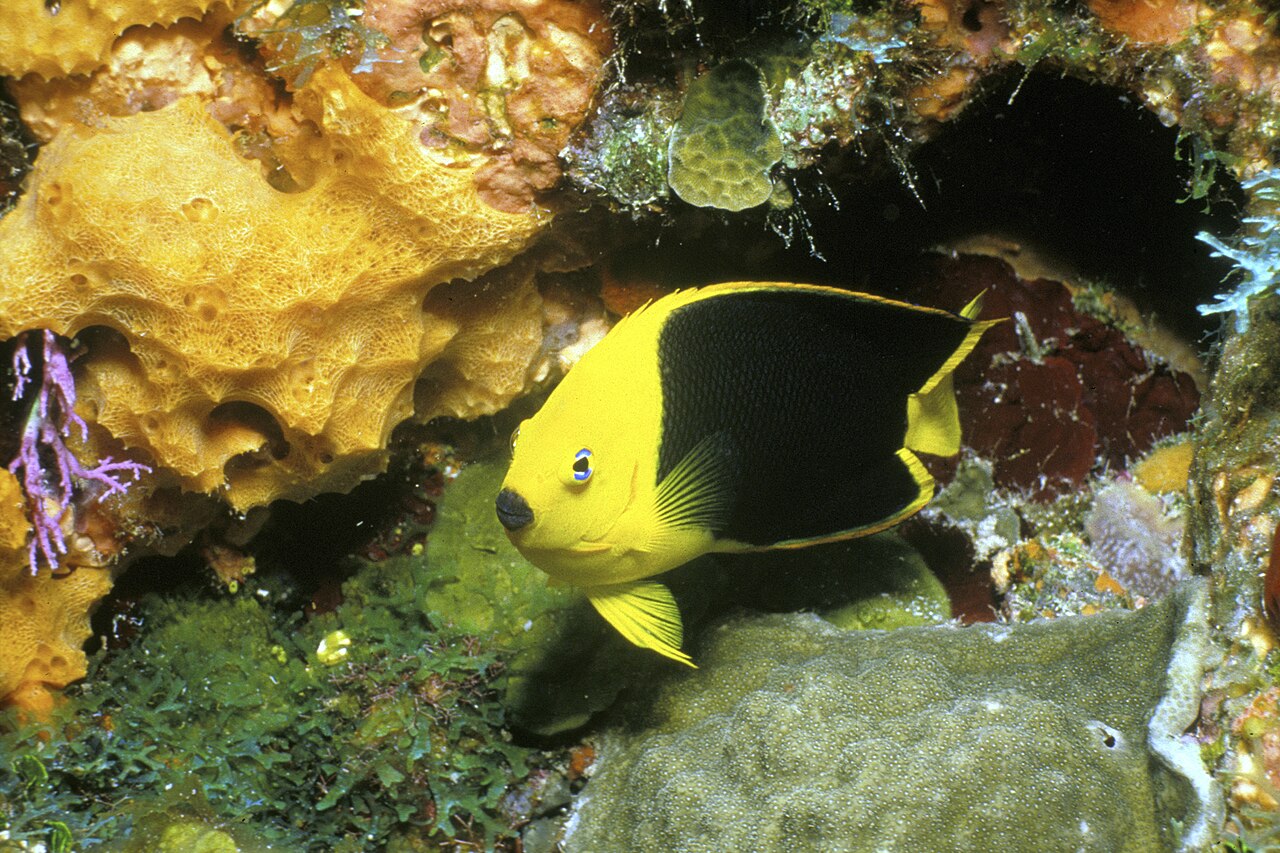
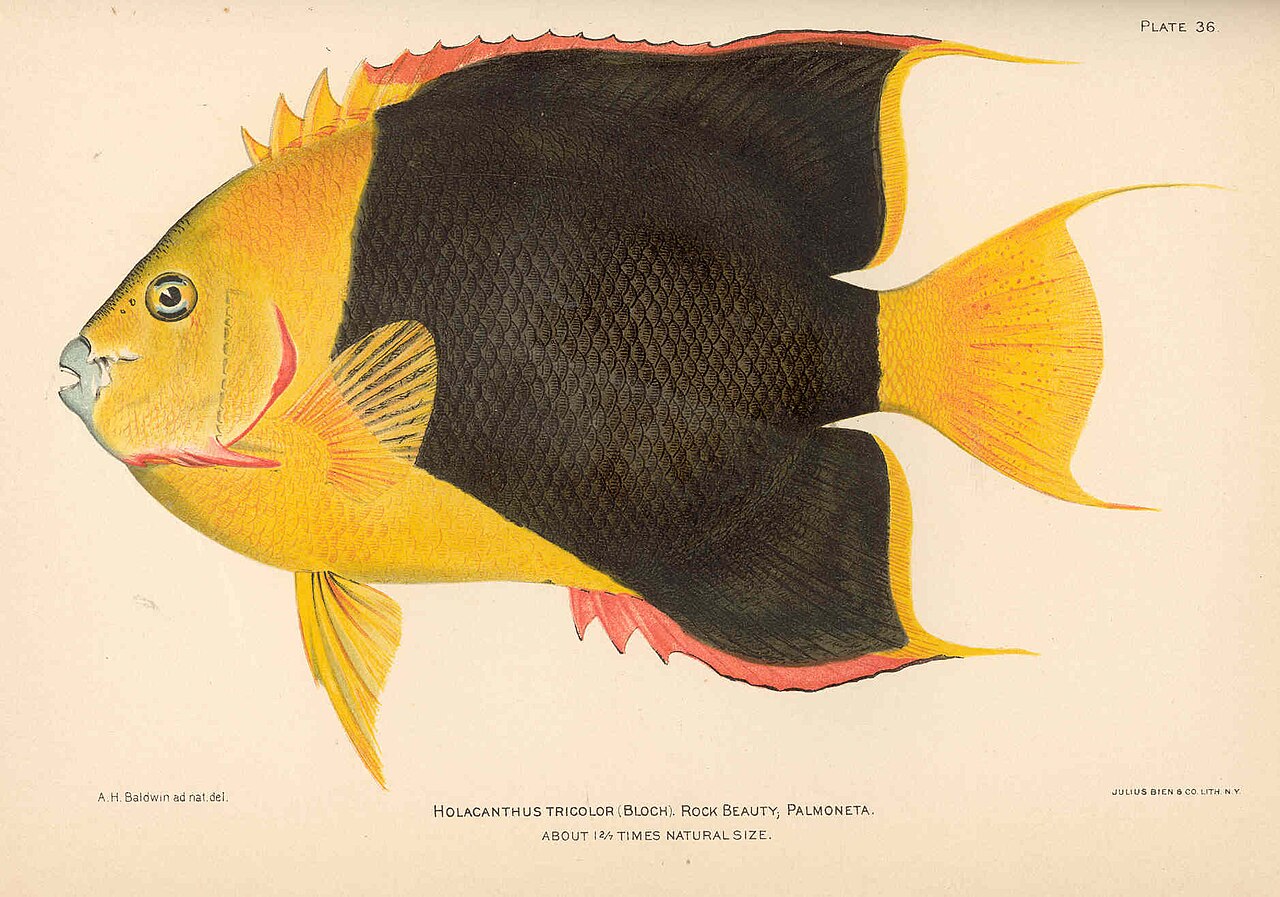
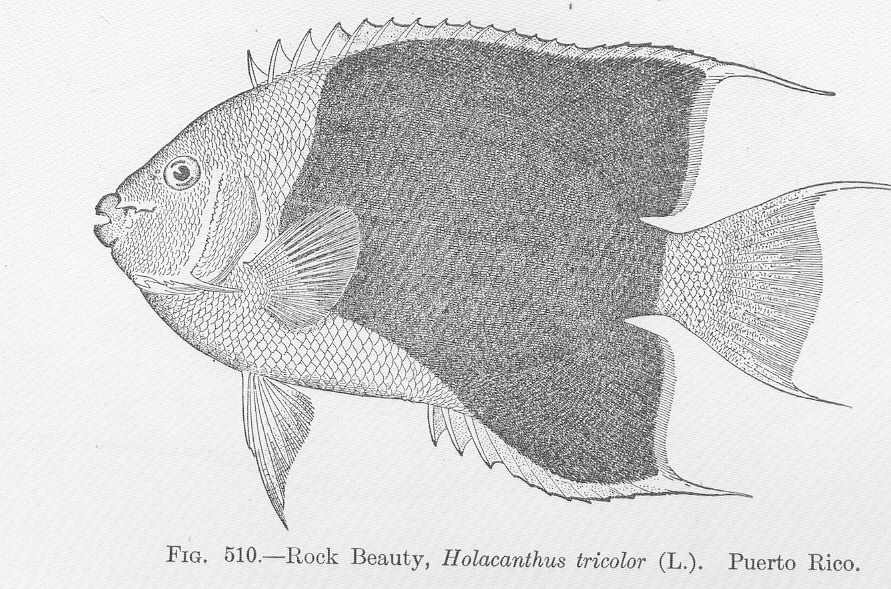
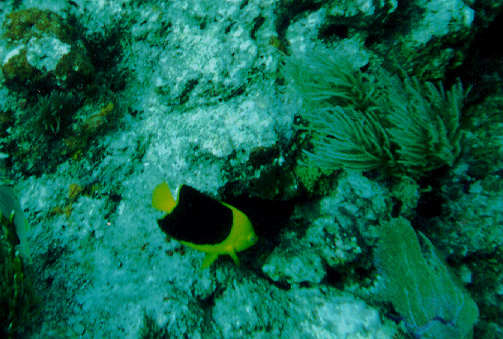
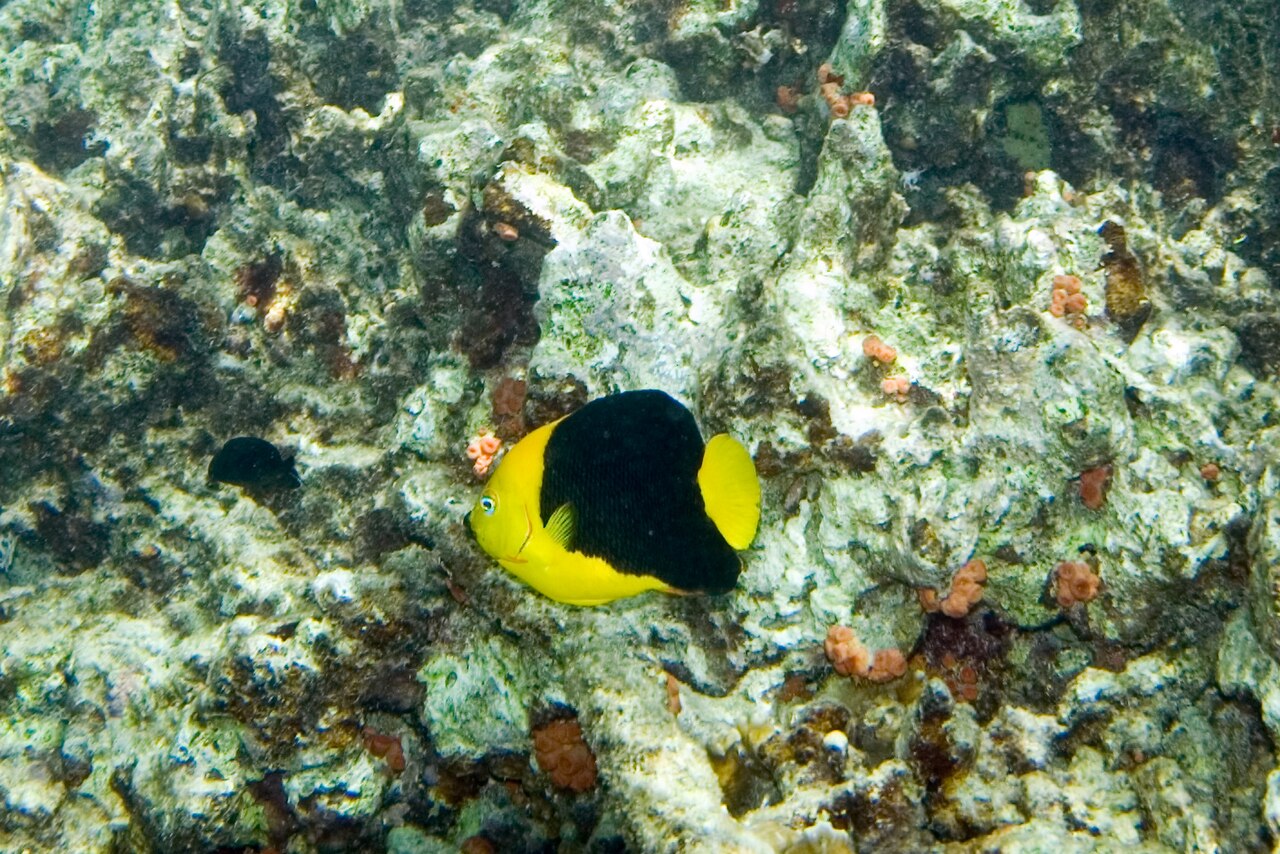
The rock beauty has a deep, oval, strongly compressed body with a short snout and a small mouth equipped with bristle-like teeth. The preoperculum has a large spine at its angle, and the bone between the preoperculum and operculum has 1–4 large spines. Juveniles are yellowish with a blue-margined black spot on the upper posterior body; as they mature, the spot grows to cover most of the body, while the head and anterior quarter remain yellow, along with the pectoral, pelvic, and caudal fins. The mouth is purple, and the distal edge of the anal fin and operculum margin are red or orange. The upper and lower portions of the iris are vividly blue.
Adults are found at depths between 3 and 92 m around jetties, rocky reefs, and coral reefs, while juveniles are often seen in areas of fire coral. The rock beauty is found from Bermuda and waters off Georgia and Florida through the Caribbean Sea and South American coasts to as far south as Rio de Janeiro; it is uncommon and localized in the Gulf of Mexico, occurring only at the Flower Gardens Banks National Marine Sanctuary off Texas and off Veracruz and on the Campeche Bank in Mexico.
Reader's Guide
The rock beauty is one of the more popular Caribbean marine angelfish species in the aquarium trade. For many years, the trade relied exclusively on wild-caught specimens, but captive breeding of this species appeared in the 2020s, marking a significant shift in its availability and conservation potential. The species does not act as a cleaner fish, unlike some related species. Adults are normally encountered as pairs and appear to form long-term monogamous pairs, often consisting of a larger and a smaller individual, possibly indicating sexual dimorphism, though there is no sexual dichromatism. During mating, the pair ascends in the water column with abdomens close together, releasing eggs and milt into the water. A female can lay between 25,000 and 75,000 eggs in an evening and up to 10 million in a season. The transparent, pelagic eggs hatch after 15–20 hours; larvae initially have a large yolk sac and lack functional eyes, gut, or fins, but after 48 hours the yolk is absorbed and they resemble normal fish. They feed on plankton and settle on the substrate after about 3–4 weeks from hatching. Adult rock beauties feed largely on sponges but also eat corals, zoantharians, bryozoans, gorgonians, tunicates, and algae, and are thought to consume mucus secreted by other fish.
Did You Know?
- The rock beauty was first described in 1795 as Chaetodon tricolor by Marcus Elieser Bloch, with the type locality given as Brazil.
- A female rock beauty can lay up to 10 million eggs in a single season.
Taxonomy & Naming
The rock beauty's scientific identity carries a layered history stretching back nearly two and a half centuries. In 1795, the German physician and naturalist Marcus Elieser Bloch first formally described the species under the name Chaetodon tricolor, citing Brazil as the type locality. A few years later, in 1802, Lacépède erected the genus Holacanthus and transferred the species into it. By 1856, Desmarest had designated it the type species of that genus. The generic name draws on Ancient Greek, combining holos (full) with akantha (spine), though Lacépède never explained the reasoning behind the allusion. The specific epithet tricolor, meaning "three-colored" in Latin, nods to the adult's palette of yellow, black, and red—though the red is subtle, appearing only on select fins and the operculum margin in certain individuals. In modern taxonomy, some authorities split Holacanthus into two subgenera, placing the rock beauty as the sole representative of the subgenus Holacanthus while grouping all other species under Angelichthys. Beyond its scientific name, this angelfish is known by a colorful array of common names including corn sugar, coshubba, rock beasty, catalineta, and yellow nanny.
Physical Form & Color Transformation
The rock beauty presents a strikingly compressed, deep oval silhouette, reaching a maximum total length of 30 centimeters. Its short snout terminates in a small mouth lined with bristle-like teeth, while the preoperculum bears a prominent spine at its angle with a serrated vertical edge. An additional bony structure between the preoperculum and operculum carries one to four large spines. The dorsal fin is armed with 14 spines and 17 to 19 soft rays, and the anal fin with 3 spines and 18 to 20 soft rays. Perhaps most captivating is the dramatic transformation in coloration as the fish matures. Juveniles display a predominantly yellowish body and fins, marked by a single blue-margined black spot on the upper posterior region. As the fish grows, that dark patch expands to engulf most of the body, the lower portion of the dorsal fin, and the upper part of the anal fin. The head, the front quarter of the body, and the pectoral, pelvic, and caudal fins retain their yellow hue. The mouth takes on a purple tint, the distal edge of the anal fin and the operculum margin flush red or orange, and both the upper and lower portions of the iris blaze with vivid blue.
Range, Habitat & Feeding
Ranging across the western Atlantic, the rock beauty inhabits waters stretching from Bermuda and the coastal shelves of Georgia and Florida, through the Caribbean Sea, and down the South American coast as far south as Rio de Janeiro. Within the Gulf of Mexico, however, the species is uncommon and restricted to a handful of localized sites, including the Flower Gardens Banks National Marine Sanctuary off Texas, waters off Veracruz, and the Campeche Bank in Mexico. The fish occupies a broad depth band from 3 to 92 meters, with adults favoring jetties, rocky reefs, and coral formations, while juveniles are frequently observed among patches of fire coral. At the core of its diet lies sponge tissue, though the rock beauty is by no means a strict specialist; it also consumes corals, zoantharians, bryozoans, gorgonians, tunicates, and algae. Researchers have additionally suggested that it may feed on the mucus secreted by other fish. Notably, unlike several of its angelfish relatives, the rock beauty does not serve as a cleaner fish, meaning it does not establish the symbiotic cleaning stations familiar in reef ecosystems.
Reproduction, Larval Development & the Aquarium Trade
Rock beauties are among the more socially distinctive of marine angelfish, typically encountered as long-term monogamous pairs. These pairings often consist of one noticeably larger individual and one smaller, hinting at sexual dimorphism, though the two sexes show no difference in coloration. When the time comes to reproduce, the pair rises together through the water column, pressing their abdomens close as they simultaneously release eggs and milt into the current. A single female may produce between 25,000 and 75,000 eggs in one evening, with seasonal totals reaching as high as ten million. The transparent, pelagic eggs hatch within 15 to 20 hours, yielding larvae that possess a large yolk sac but lack functional eyes, a developed gut, or formed fins. After roughly 48 hours the yolk is fully absorbed and the young begin to resemble recognizable fish. They feed on plankton and grow rapidly, settling onto the substrate approximately three to four weeks after hatching. In the aquarium trade, the rock beauty has long been a popular Caribbean angelfish, historically supplied entirely by wild-caught specimens until captive breeding of the species emerged in the 2020s.
Gallery
Frequently Asked Questions
What is a rock beauty?
The rock beauty (Holacanthus tricolor) is a vividly colored marine angelfish native to western Atlantic coral reefs, a member of the Pomacanthidae family. Adults are instantly recognizable by their bold three-color body pattern, which sets them apart from many other reef fish.
Where in the wild can you find rock beauty?
They inhabit reef habitats throughout the western Atlantic Ocean, from shallow zones down to roughly 92 meters (about 300 feet). Caribbean reef systems are their most well-known range.
How big does a rock beauty get as an adult?
A fully grown specimen reaches around 30 centimeters (12 inches) in total length. That mid-size build makes it a striking focal fish in a well-set-up marine display tank.
Why do people call it 'corn sugar,' 'coshubba,' or 'yellow nanny'?
Those are simply regional nicknames used by Caribbean fishers and hobbyists for the same species. Other local names include 'rock beasty' and 'catalineta,' reflecting how different coastal communities have their own colloquial terms for this angelfish.
Can rock beauty now be bred in captivity?
Until the 2020s, every rock beauty in the aquarium trade came from wild Caribbean catches. Captive breeding programs finally became practical in that decade, offering a more sustainable source for hobbyists.
More in Marine Angelfish, Part 3 1-24
Spotted an error? Know more?
Reader corrections go straight into our review queue. Suggest an edit · How this site is sourced