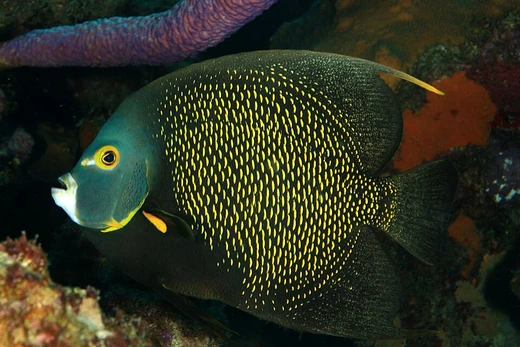
Holacanthus bermudensis
A western Atlantic angelfish that hybridizes with the queen angelfish.

Cliff from Arlington, Virginia, USA · CC BY 2.0
Holacanthus bermudensis, called the blue angelfish or Bermuda blue angelfish, is a marine ray-finned fish from the family Pomacanthidae. It lives in the western Atlantic Ocean.
This species was first described in 1876 by American ichthyologist George Brown Goode as a subspecies, *Holacanthus ciliaris bermudensis*. The original type specimens from Bermuda were later replaced by a neotype, which was the holotype of *Angelichthys isabelita*, described by David Starr Jordan and Cloudsley Louis Ritter from Key West, Florida. That arrangement is listed in the Official List of Specific Names in Zoology. The blue angelfish often hybridizes with the queen angelfish (*Holacanthus ciliaris*), which shares its range. The name *H. isabelita* was once considered a separate species but is now treated as a synonym of *H. bermudensis*.
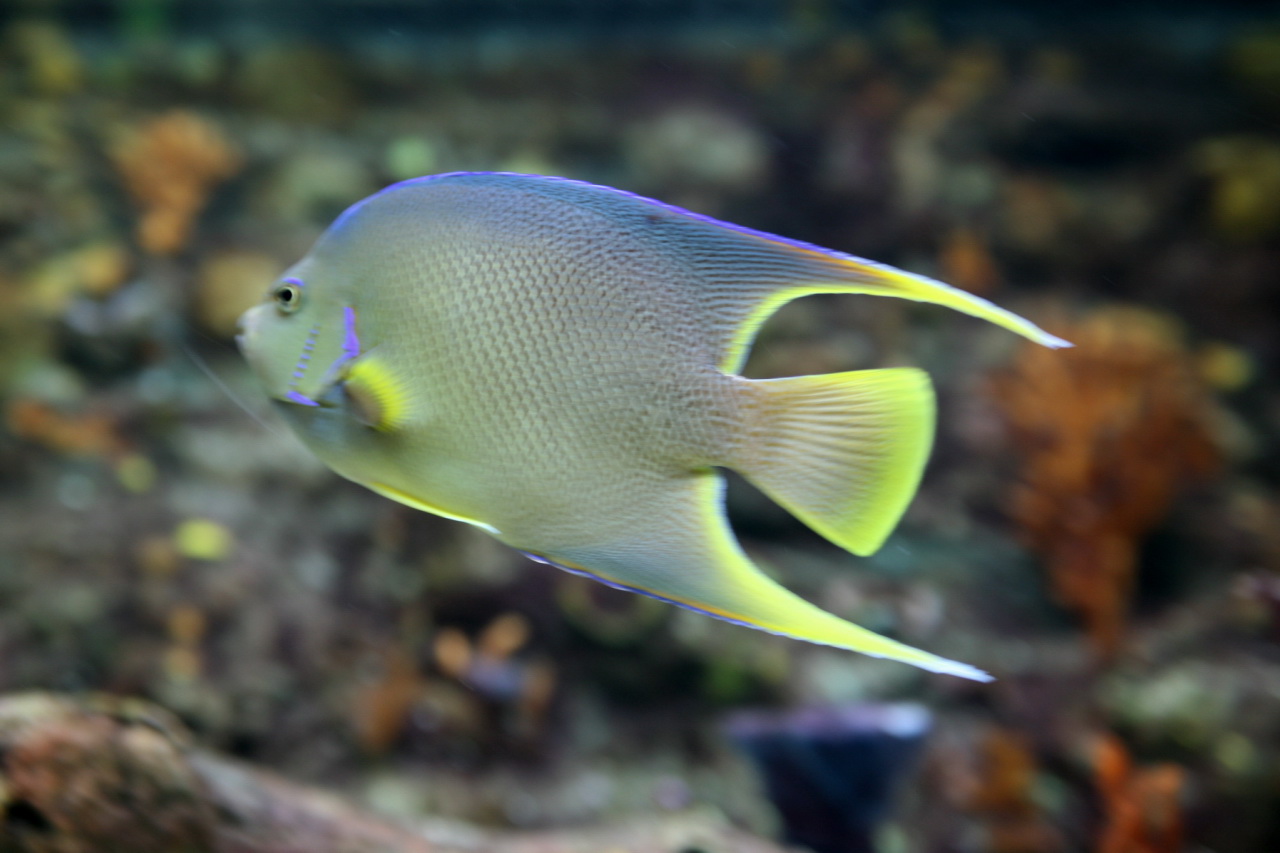
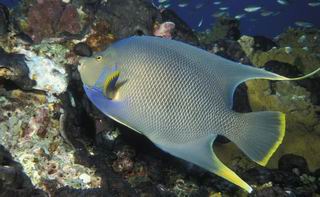
The fish has a deep, oval body that is strongly compressed from side to side. Its snout is short, and its small mouth holds tiny, brush-like teeth. Juveniles are yellowish on the front half of the body and brownish-yellow toward the rear. They have bright yellow tail, pectoral, and pelvic fins, along with several vertical white bars on the body and blue margins on the dorsal and anal fins. Adults are bluish-yellow on the body with a vivid yellow face, blue highlights on the chest and forehead, and blue-and-yellow pectoral fins. The tail fin has yellow edges, and the dorsal and anal fins also have yellow margins and long yellow streamers. The dorsal fin has 15 spines and 19–21 soft rays; the anal fin has 3 spines and 20–21 soft rays. The maximum total length is 45 centimeters.
The blue angelfish ranges from North Carolina to Bermuda, into the Bahamas and Florida, the Gulf of Mexico, west to Yucatán, Mexico, and east to Puerto Rico and the Virgin Islands. It is a benthic species, staying close to the seabed where sponges, coral, or rock are present, at depths from 2 to 93 meters. It is diurnal, active during the day and hiding in the reef at night. Juveniles prefer sheltered areas like bays, channels, and inshore reefs. Its diet consists mainly of sponges, though it occasionally eats tunicates, corals, and algae. Juveniles act as cleaner fish, feeding on ectoparasites from other fish at cleaning stations. They can produce loud thumping sounds, thought to startle predators and attract other blue angelfish.
Quick Facts
- Genus
- Holacanthus
- Species
- bermudensis
Facts from the source article.
Lore & Background
Holacanthus bermudensis was first formally described in 1876 by American ichthyologist George Brown Goode as a subspecies of Holacanthus ciliaris. The original syntypes from Bermuda were later replaced by a neotype, which was the holotype of Angelichthys isabelita described by David Starr Jordan and Cloudsley Louis Ritter from Key West, Florida. This species frequently hybridizes with the sympatric queen angelfish (Holacanthus ciliaris). H. isabelita was formerly considered a separate species but is now regarded as a synonym of H. bermudensis.
Juveniles are yellowish anteriorly, changing to brownish-yellow posteriorly, with vivid yellow fins and vertical white bars on the body. Adults are bluish-yellow with a vivid yellow face, blue highlights on the chest and forehead, and yellow margins on the fins. The dorsal and anal fins have long yellow streamers. This species attains a maximum total length of 45 cm.
It is a benthic, diurnal species found from North Carolina to Bermuda, the Bahamas, Florida, the Gulf of Mexico, Yucatan, and east to Puerto Rico and the Virgin Islands. It lives close to the seabed among sponges, coral, or rock at depths between 2 and 93 meters. Juveniles prefer sheltered areas such as bays and inshore reefs.
Reader's Guide
Holacanthus bermudensis is not commercially important but is common in the aquarium trade. Its diet consists largely of sponges, occasionally supplemented by tunicates, corals, and algae. Juveniles act as cleaner fish, feeding on ectoparasites from other fishes at communal cleaning stations. They can produce loud thumping sounds thought to startle predators and attract conspecifics. Adults are usually encountered in pairs year-round, suggesting monogamy. During spawning, they swim slowly upward in the water column, releasing copious ova and milt. A female may lay between 25,000 and 75,000 eggs at a time and up to 10 million eggs per season. The transparent, pelagic eggs contain a small oil droplet for buoyancy and hatch in 15 to 20 hours. After about 48 hours the yolk is absorbed, and the larvae begin feeding on plankton. Juveniles settle on the seabed 3 to 4 weeks after hatching and are highly territorial, defending cleaning stations. Their vivid, contrasting colors may signal the presence of a cleaning station to potential clients.
Did You Know?
- Holacanthus bermudensis was originally described as a subspecies of Holacanthus ciliaris by George Brown Goode in 1876.
- The neotype for this species is the former holotype of Angelichthys isabelita, described from Key West, Florida.
- This species can produce loud thumping sounds to startle predators and attract other blue angelfish.
- A female may lay up to 10 million eggs in a single spawning season.
Taxonomy & the Puzzle of Identity
The blue angelfish's scientific identity carries a surprisingly tangled history. In 1876, American ichthyologist George Brown Goode formally named the species as a subspecies of the queen angelfish, calling it Holacanthus ciliaris bermudensis, based on specimens collected in Bermuda. Decades later, the taxonomic landscape shifted when David Starr Jordan and Cloudsley Louis Ritter described what they believed to be a distinct species, Angelichthys isabelita, from Key West, Florida. What began as a separate name was eventually folded back into the blue angelfish as a synonym. The original Bermuda syntypes were formally replaced by a neotype—specifically the holotype of that old isabelita name—under a ruling recorded in the ICZN's Official List of Specific Names in Zoology, Opinion 2003. Adding further complexity, the blue angelfish routinely interbreeds with its close relative, the queen angelfish, blurring the genetic boundaries between the two. Despite this fluidity, the species now sits firmly within the family Pomacanthidae as a recognised marine angelfish of the western Atlantic.
A Living Palette: Form and Color
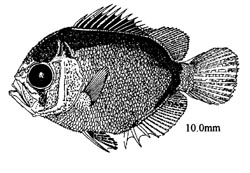
The blue angelfish presents a striking visual transformation as it matures. Its body is deep and oval, heavily compressed from side to side, giving it a disc-like silhouette. The snout is short and the mouth small, lined with fine, brush-like teeth suited to its sponge-heavy diet. Juveniles wear a bold palette: the front of the body glows yellowish, shifting to brownish-yellow toward the rear, while the tail, pectoral, and pelvic fins blaze in vivid yellow. Vertical white bars stripe the flanks, and the dorsal and anal fins are edged in bright blue. Adults take on a different character—the body settles into a bluish-yellow wash, the face turns a brilliant yellow, and blue accents highlight the chest and forehead. Pectoral fins blend blue and yellow, the caudal fin carries yellow margins, and the dorsal and anal fins sport long, trailing yellow streamers along their edges. The dorsal fin bears fifteen spines and between nineteen and twenty-one soft rays, while the anal fin carries three spines and twenty to twenty-one soft rays. At full size, the fish reaches a maximum total length of forty-five centimetres.
Reef Life and the Cleaner's Trade
Ranging from the coast of North Carolina south through Bermuda, the Bahamas, and Florida, and stretching west to the Yucatán and east to Puerto Rico and the Virgin Islands, the blue angelfish occupies a broad swath of the western Atlantic. It is a benthic creature, spending its days hovering close to the seabed among sponges, coral formations, and rocky outcrops at depths from just two metres down to ninety-three metres. Strictly diurnal, it retreats into reef crevices each night. Young fish gravitate toward more sheltered habitats—bays, channels, and inshore reefs—where they take on a remarkable ecological role. Juveniles establish cleaning stations, picking ectoparasites off the skin of other fish that visit, and they fiercely defend these territories. Their diet is dominated by sponges, though tunicates, corals, and algae are occasionally consumed. Perhaps most notably, the species can generate loud thumping sounds, believed to serve a dual purpose: startling nearby predators and summoning the attention of other blue angelfish in the vicinity.
Courtship, Spawning, and the Long Drift
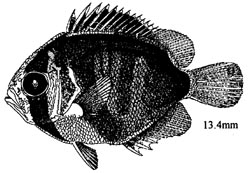
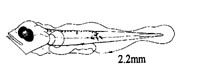
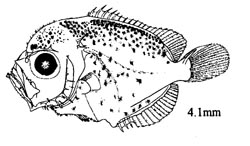
Adult blue angelfish are typically encountered as bonded pairs that persist throughout the year, a pattern widely interpreted as evidence of monogamy. When the moment for spawning arrives, the pair ascends slowly through the water column, pressing their abdomens together to release vast quantities of eggs and milt simultaneously. A single female may deposit between twenty-five and seventy-five thousand eggs in one event, and across a full spawning season the total can reach as many as ten million. Each egg is transparent and pelagic, containing a small droplet of oil that provides buoyancy. Fifteen to twenty hours after fertilisation, the eggs hatch into a pre-larval stage: a tiny organism clinging to a large yolk sac, lacking functional fins, eyes, or a working gut. After roughly forty-eight hours the yolk is fully absorbed, the pro-larva transitions into a true larva, and plankton feeding begins. Growth is rapid, and within three to four weeks the young settle onto the seabed, where they immediately assert territorial control over their chosen cleaning-station site.
Gallery
Frequently Asked Questions
What is Holacanthus bermudensis?
Holacanthus bermudensis, commonly known as the blue angelfish or Bermuda blue angelfish, is a marine ray-finned fish in the family Pomacanthidae. It is native to the western Atlantic Ocean.
How big does Holacanthus bermudensis get and at what depths is it found?
The species can grow to a maximum total length of 45 cm (roughly 18 inches) and occupies a depth range from 2 to 93 meters (about 6.6 to 305 feet). It is a western Atlantic dweller with a fairly broad vertical range.
Who first described Holacanthus bermudensis and what was its original name?
American ichthyologist George Brown Goode formally described the species in 1876, initially publishing it as a subspecies under the name Holacanthus ciliaris bermudensis. The original Bermuda type specimens were later replaced by a neotype taken from Key West, Florida.
How does Holacanthus bermudensis relate to the queen angelfish?
It is a known hybridizing partner of the queen angelfish, meaning the two can interbreed in the wild. Its dorsal fin carries 15 spines plus 19 to 21 soft rays, a feature that helps separate it visually from its close relatives.
Why is Holacanthus bermudensis noteworthy in fish taxonomy?
Its taxonomic history is complicated because the neotype that now anchors the species was originally the holotype of a different described name, Angelichthys isabelita, from Key West. This unusual arrangement is formally recognized in the official list of valid specific names in zoology.
More in Marine Angelfish, Part 3 1-24
Spotted an error? Know more?
Reader corrections go straight into our review queue. Suggest an edit · How this site is sourced