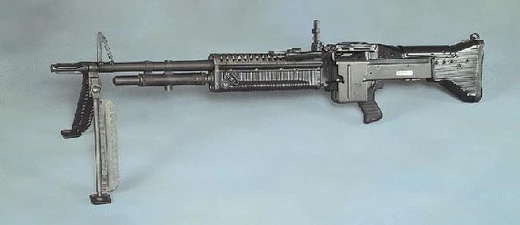
7.62 ITKK 31 VKT
Finland's primary World War II anti-aircraft machine gun.

The Finnish Army’s main anti-aircraft machine gun in World War II was the 7.62 ITKK 31 VKT, a weapon designed by Aimo Lahti. Between 1933 and 1944, 507 units were built in two forms: the original 7.62 ItKk/31 VKT and the upgraded 7.62 ItKk/31-40 VKT.
Finland, independent from Russia only in the 1920s, inherited mostly old Tsarist equipment. Its air defenses were scarce and outdated. Since standard infantry Maxim guns couldn’t handle the job, the army decided to create dedicated anti-aircraft machine guns. A 1930–1934 plan called for 125 heavy 13.2 mm guns and 125 7.62 mm guns. Aimo Lahti got the design assignment.
The prototype for the 7.62 mm version was ready in 1931 and accepted as the 7.62 mm kaksoisilmatorjuntakonekivääri m 31 (7.62 ItKk 31). In 1933, 130 units were ordered from Valtion Kivääritehdas (VKT, the State Rifle Factory). The first batch reached units on 22 June 1934. A small additional run of 10 guns in 1940 brought the total to 140.
Technically, the 7.62 ItKk/31 VKT is a modified Maxim machine gun. An accelerator boosted the rate of fire, and it used 250-round disintegrating metal belts instead of canvas ones. Each gun could fire 900 rounds per minute. It was air-cooled, not water-cooled, with a barrel jacket similar to the Lahti-Saloranta M/26 light machine gun. Conical flash suppressors sat at the barrel ends. In the twin configuration, two guns sat side by side. Belt boxes flanked the pair, and square boxes under each gun collected spent shells and links. Both guns had cocking handles on the right and recoil springs on the left; the left gun’s feed system was modified so the belt fed from the left. Each gun had its own handle—a mix of pistol grip and the usual Maxim shovel-handle type—with a trigger for the forefinger. Support bars at the rear let the gunner lean into the weapon to aim. The gun sat on a 135 cm high cone mount (M/31), which worked but was heavy and awkward to move. Sights were typical for the era: an oval front sight with two concentric rings and a small rear peg inside a protective ring. The intended crew was six: commander, gunner, two loaders, and two ammunition handlers. Equipment included a transport case, spare barrels, locks, springs, a toolkit, and a wooden case for ten spare belt boxes.
By the 1930s, the 7.62 ItKk/31 VKT showed flaws. Recoil caused muzzle climb, hurting accuracy.
Quick Facts
- Origin
- Finland
- Is Ranged
- yes
- Service
- 1933–1986
- Wars
- Winter War / Continuation War / Lapland War
- Designer
- Aimo Lahti
- Design Date
- 1931
- Manufacturer
- VKT (Valtion Kivääritehdas)
- Production Date
- 1933–1944
- Number
- 507
- Variants
- 7,62 ItKk/31-40 VKT
- Spec Label
- 7,62 ItKk/31 VKT
- Weight
- 104 kg with mount / 47 kg weapon only
Facts from the source article.
Lore & Background
In the 1920s, Finland, having recently gained independence from the Russian Empire, relied largely on obsolete Tsarist Russian equipment, with few and outdated air defence weapons. To improve anti-aircraft armament, a development plan for 1930–1934 called for 125 heavy 13.2 mm machine guns and 125 7.62 mm machine guns. The task of designing the weapons was given to Aimo Lahti. The prototype of the 7.62 mm anti-aircraft machine gun was finished in 1931 and accepted as the 7.62 mm kaksoisilmatorjuntakonekivääri m 31, or 7.62 ItKk 31. An initial order of 130 weapons was placed with Valtion Kivääritehdas (VKT) in 1933, with the first batch distributed on 22 June 1934; a further small batch of 10 guns in 1940 brought the total to 140.
Technically, the 7.62 ItKk/31 VKT is a Maxim machine gun modified for a higher rate of fire using an accelerator and 250-round disintegrating metallic belts instead of canvas belts. It is air-cooled, with a barrel jacket resembling that of the Lahti-Saloranta M/26 light machine gun, and conical flash suppressors at the barrel ends. In the twin configuration, two guns are mounted side by side with belt boxes on both sides and square boxes under each gun for empty shells and links. Both guns have cocking handles on the right and recoil springs on the left; the left gun has a modified feed system to accept belts from the left. Each gun has a combined pistol-grip and shovel-handle with a trigger operated by the forefinger. Support bars at the rear allowed the gunner to lean into the weapon. It was used on a 135 cm high cone mount M/31, which was heavy and cumbersome. The sight was a typical ring sight with an oval front sight having two concentric rings and a rear peg surrounded by a protective ring. The intended crew was six: commander, gunner, two loaders, and two ammunition handlers.
Already in the 1930s, the 7.62 ItKk/31 VKT showed shortcomings: recoil caused muzzle climb and poor accuracy. During the Winter War, further problems emerged—the mount was heavy and cumbersome, and the 7.62 mm caliber was not powerful enough. The design of a domestic 13.2 mm heavy anti-aircraft machine gun had not progressed beyond prototype and was soon stopped. Testing of improvements began in summer 1939. The muzzle climb was addressed by modifying the muzzle brake to direct propellant gases only upward, counteracting the climb, though this required reinforcing the barrels and barrel jackets. A new sight was added: a rectangular bar between rear and front sights allowed the front ring sight to be moved based on estimated aircraft speed, with an outer ring for 60° and an inner ring for 30° shooting angles. The conical mount was replaced with a tubular tripod mount M/40, later further lightened. On 17 March 1941, 240 weapons were ordered from VKT, with 82 more to follow; the Continuation War delayed production, and mass production did not begin in earnest until 1943. A total of 367 weapons were produced, mostly in 1944, with some unfinished by war's end. Some original models were modified to the new standard during repairs.
Reader's Guide
The 7.62 ItKk/31 VKT and its improved variant, the 7.62 ItKk/31-40 VKT, were the most numerous anti-aircraft machine guns used by the Finnish Army during World War II. They served in anti-aircraft machine gun companies and platoons, and later as close defence weapons for anti-aircraft gun batteries. After the war, the guns were used in training until the 1960s and were kept in storage until 1986, when they were declared obsolete. At that time, 467 weapons remained in inventory, 41 of which were in the original 7.62 ItKk/31 VKT configuration. A portion of the guns were given to museums, and the rest were scrapped in 1988. The weapon's significance lies in its role as Finland's primary dedicated anti-aircraft machine gun during a critical period, designed by Aimo Lahti to address the nation's urgent need for modern air defence. Despite limitations in caliber and the cumbersome mount, it was produced in substantial numbers and remained in service for decades, reflecting the practical compromises of a small nation's wartime armament efforts.
Did You Know?
- The 7.62 ItKk/31 VKT was designed by Finnish gunsmith Aimo Lahti.
- A total of 507 weapons were produced in two versions between 1933 and 1944.
- After being declared obsolete in 1986, 467 weapons remained in inventory, with 41 in the original configuration.
More in Machine Guns, Part 5 1-24
Spotted an error? Know more?
Reader corrections go straight into our review queue. Suggest an edit · How this site is sourced