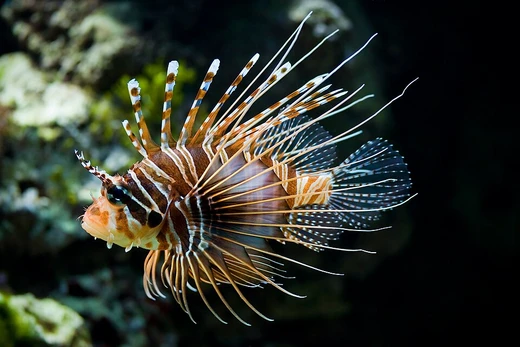
Thysanichthys
Monotypic scorpionfish genus with fringed skin filaments.

Thysanichthys is a monotypic genus of marine ray-finned fishes in the family Scorpaenidae, containing only the species Thysanichthys crossotus. It is notable for its distinctive fringed skin filaments and is found in the northwestern Pacific Ocean.
Quick Facts
- Taxon
- Thysanichthys crossotus
Facts from the source article.
Lore & Background
Thysanichthys was described as a genus in 1904 by American ichthyologists David Starr Jordan and Edwin Chapin Starks, who also described its sole species Thysanichthys crossotus from a type locality off Ose Point in Suruga Bay, Japan. In 1914, Jordan and William Francis Thompson described a second species, Thysanichthys evides, but this was shown in 2010 to be a senior synonym of Scorpaenodes littoralis and correctly placed in the genus Scorpaenodes, confirming Thysanichthys as monotypic. The genus name combines thysanos (fringe) and ichthys (fish), referring to the dermal cirri on the head and along the lateral line; the specific name crossotus means 'fringed'.
Thysanichthys crossotus is distinguished from related scorpionfishes by having 13 spines in its dorsal fin, teeth on the palatine, filaments growing from the skin on the head and lateral line, no enlarged spine or ridge on the operculum, and stronger spines on the head and suborbital bone. It attains a maximum published total length of 8.4 cm (3.3 in). This demersal species is found at depths between 120 and 130 m (390 and 430 ft) in the northwestern Pacific Ocean around Japan, Taiwan, and the East China Sea.
Reader's Guide
Thysanichthys holds significance as a monotypic genus within the family Scorpaenidae, confirmed after the 2010 reclassification of a previously described second species. Its taxonomic history illustrates the ongoing refinement of scorpionfish systematics, with Jordan and Starks' original 1904 description later clarified by the removal of Thysanichthys evides to the genus Scorpaenodes. The genus is characterized by distinctive morphological features, including 13 dorsal fin spines, palatine teeth, and fringed skin filaments on the head and lateral line, which are referenced in its scientific name. Its limited distribution in the northwestern Pacific, specifically around Japan, Taiwan, and the East China Sea, and its narrow depth range of 120 to 130 meters, define its ecological niche as a demersal fish. The species' small maximum size of 8.4 cm contributes to its relatively inconspicuous presence in marine biodiversity studies. The legacy of Thysanichthys lies in its role as a clear example of how taxonomic revisions can resolve genus-level classifications, and its unique physical traits continue to distinguish it among scorpionfishes.
Did You Know?
- Thysanichthys is a monotypic genus with only one species, Thysanichthys crossotus.
- The genus name Thysanichthys means 'fringed fish', referring to dermal cirri on the head and lateral line.
- A second species, Thysanichthys evides, was described in 1914 but reclassified into Scorpaenodes in 2010.
- Thysanichthys crossotus has 13 spines in its dorsal fin and attains a maximum length of 8.4 cm.
More in Lionfish and Scorpionfish, Part 2 1-24
Spotted an error? Know more?
Reader corrections go straight into our review queue. Suggest an edit · How this site is sourced