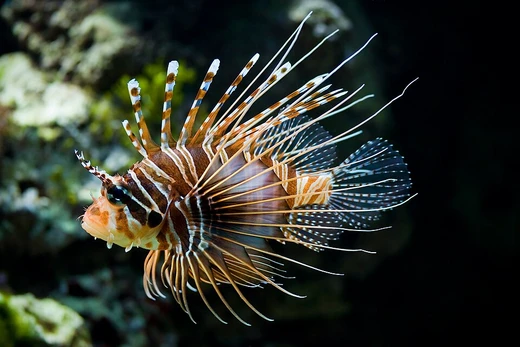
Sebastiscus
Sea ruffes resembling rockfishes but smaller, with distinct pattern.

The sea ruffes are a genus of marine fish called *Sebastiscus*. They belong to the subfamily Sebastinae within the family Scorpaenidae. These fish live in the western Pacific Ocean. They look similar to the rockfishes in the genus *Sebastes*, but sea ruffes are generally smaller and have a different pattern on their bodies.
The genus was first described in 1904 as a subcategory of *Sebastes* by David Starr Jordan and Edwin Chapin Starks. The type species is *Sebastes marmoratus*, which Georges Cuvier had described in 1829. For many years it was treated as a subgenus, but in 1984 it was proposed as a full genus. It still belongs to the same tribe, Sebastini, as the larger genus *Sebastes*. This tribe is part of the subfamily Sebastinae in the family Scorpaenidae, which is placed in the order Scorpaeniformes, though some authorities put it in the order Perciformes under the suborder Scorpaenoidei.
There are currently four recognized species in this genus.
When Jordan and Starks described *Sebastiscus*, they noted it was similar to the subgenus *Sebastodes* of *Sebastes* (the Pacific rockfishes, which were then considered separate from the Atlantic redfishes called *Sebastes*). They also said these fish closely resemble those in the subgenus *Pteropodus*, but differ in having 12 spines on the dorsal fin and a different number of vertebrae. These features were thought to be similar to the genus *Scorpaena*. *Sebastiscus* is distinguished from *Helicolenus* by having a well-developed swim bladder.
These fish are found in shallow coastal waters of the western Pacific, ranging from Japan and Korea south to the Philippines. Records of *S. marmoratus* from Australia and Norway are likely due to fish being carried there in ships' ballast water.
- Genus authority
- David Starr Jordan and Edwin Chapin Starks, 1904
- Type species
- Sebastes marmoratus (described by Georges Cuvier, 1829)
- Number of species
- 4
- Distribution
- Western Pacific Ocean from Japan and Korea south to the Philippines
- Habitat
- Shallow water coastal species
- Distinctive feature
- Possess 12 dorsal fin spines; have a well developed swim bladder
Lore & Background
Sebastiscus was first formally described as a subgenus of Sebastes by David Starr Jordan and Edwin Chapin Starks in 1904, with Sebastes marmoratus as its type species. It was regarded as a subgenus until 1984, when it was proposed as a valid genus, albeit within the same tribe Sebastini as the speciose genus Sebastes. This tribe is one of the tribes of the subfamily Sebastinae within the family Scorpaenidae and the order Scorpaeniformes, though other authorities place it in the Perciformes in the suborder Scorpaenoidei.
Jordan and Starks described Sebastiscus as similar to the subgenus Sebastodes of Sebastes, noting that Pacific rockfishes were considered separate from Atlantic redfishes bearing the name Sebastes. They stated that these fishes bear a close resemblance to fishes in the subgenus Pteropodus but differ in possessing 12 dorsal fin spines and in vertebrae count, characteristics thought similar to the genus Scorpaena. Sebastiscus was differentiated from Helicolenus by having a well developed swim bladder.
Sebastiscus species are found in the western Pacific Ocean from Japan and Korea south to the Philippines. Extralimital records of S. marmoratus in Australia and Norway are thought to probably be a result of fish being transported in the ballast water of ships. They are shallow water coastal species.
Reader's Guide
The genus Sebastiscus holds significance as a group of marine ray-finned fishes that were long considered a subgenus of Sebastes before being elevated to genus status in 1984. Its classification remains within the tribe Sebastini of the subfamily Sebastinae, though its placement in the order Scorpaeniformes versus Perciformes reflects ongoing taxonomic uncertainty. The genus is notable for its resemblance to Pacific rockfishes (Sebastes) but is distinguished by smaller size, a different pattern, 12 dorsal fin spines, and a well developed swim bladder—the latter separating it from Helicolenus. The four recognized species are restricted to shallow coastal waters of the western Pacific, with extralimital records in Australia and Norway attributed to ballast water transport. This suggests a potential for human-mediated dispersal, though the genus is primarily native to East Asian waters. The work of Jordan and Starks in 1904 established the taxonomic foundation, and the later recognition of Sebastiscus as a valid genus reflects evolving ichthyological understanding of scorpionfish relationships.
Did You Know?
- The type species is Sebastes marmoratus, described by Georges Cuvier in 1829.
- These fishes have 12 dorsal fin spines and a well developed swim bladder, which distinguishes them from Helicolenus.
More in Lionfish and Scorpionfish, Part 2 1-24
Spotted an error? Know more?
Reader corrections go straight into our review queue. Suggest an edit · How this site is sourced