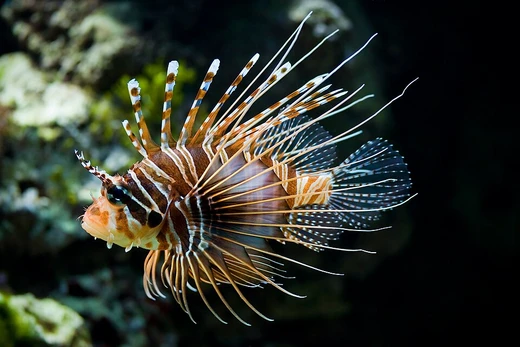
Scorpaenodes
A circum-tropical genus of spiny-headed scorpionfishes.

Scorpaenodes is a genus of marine ray-finned fish in the scorpionfish family, Scorpaenidae. These fish live in the Atlantic, Indian, and Pacific Oceans.
The genus was first described in 1857 by Dutch physician and ichthyologist Pieter Bleeker. He designated *Scorpaena polylepsis* as the type species, which he had originally described from Western Sumatra in 1851. That species later turned out to be a junior synonym of *Scorpaena guamensis*, described from Guam in 1824 by Quoy and Gaimard. The genus name *Scorpaenodes* means "having the form of *Scorpaena*," the genus where Bleeker first placed the type species. *Scorpaenodes* belongs to the tribe Scorpaenini, within the subfamily Scorpaeninae of Scorpaenidae.
There are currently 29 recognized species in the genus, including the Guam scorpionfish (*Scorpaenodes guamensis*), the reef scorpionfish (*Scorpaenodes caribbaeus*), and the rainbow scorpionfish (*Scorpaenodes xyris*).
These scorpionfishes have a very bony head covered in spines, with no occipital pit. A longitudinal ridge runs below the eye, bearing 1 to 4 spines, sometimes with another row beneath. They have teeth on the center of the roof of the mouth but not on the sides. The dorsal fin has 13 spines and 8 to 10 soft rays; the anal fin has 3 spines and 4 or 5 soft rays. The last soft rays of the dorsal and anal fins are branched. The pectoral fin has 15 to 20 rays, with the lower ones branched and the middle ones longest. The scales are rough and usually extend onto the head. Small spiny rays sit at the top and bottom of the base of the caudal fin. The largest species, *Scorpaenodes africanus*, reaches a total length of 90 cm (35 in), but most species are under 15 cm (5.9 in).
*Scorpaenodes* species have a circum-tropical distribution, found in coastal waters around coral and rocky reefs and other hard substrates.
Quick Facts
- Taxon
- Scorpaenodes
- Type Species
- Scorpaena polylepis
- Type Species Authority
- Bleeker, 1851
Facts from the source article.
Lore & Background
The genus Scorpaenodes was first formally described in 1857 by the Dutch physician, herpetologist and ichthyologist Pieter Bleeker. Bleeker designated Scorpaena polylepsis as its type species by monotypy, a species he had originally described from Western Sumatra in 1851. Scorpaena polylepsis was later shown to be a junior synonym of Scorpaena guamensis, which had been described from Guam by Jean René Constant Quoy and Joseph Paul Gaimard in 1824. The genus name Scorpaenodes means 'having the form of Scorpaena', the genus Bleeker originally placed the type species in. This genus is classified within the tribe Scorpaenini, in the subfamily Scorpaeninae of the family Scorpaenidae.
Scorpaenodes scorpionfishes have a very bony head defended by numerous spines and lack an occipital pit. They possess a longitudinal suborbital ridge with 1–4 spines, sometimes with an additional row of spines underneath. There are teeth on the centre of the roof of the mouth but not on its sides. The dorsal fin has 13 spines and between 8 and 10 soft rays, while the anal fin has 3 spines and 4 or 5 soft rays; the posteriormost dorsal and anal soft rays are branched. The pectoral fin has 15–20 fin rays, with the lower rays branched and the central rays the longest. The scales are rough and typically extend onto the head. Small spiny rays are present at the top and bottom of the base of the caudal fin. The largest species is S. africanus, with a maximum published total length of 90 cm, though most species are less than 15 cm in length.
Scorpaenodes scorpionfishes have a circum-tropical distribution and are found in the Atlantic, Indian and Pacific Oceans. They inhabit coastal waters on coral and rocky reefs and other hard substrates.
Reader's Guide
The genus Scorpaenodes represents a significant component of the scorpionfish family Scorpaenidae, with 29 recognized species distributed across tropical oceans worldwide. Its taxonomy was established by Pieter Bleeker in 1857, with the type species originally described from Western Sumatra and later synonymized with a species from Guam. The genus name reflects its morphological resemblance to Scorpaena. The bony, heavily spined head and the absence of an occipital pit are key diagnostic features, along with the specific fin-ray counts and the presence of teeth only on the centre of the roof of the mouth. The rough scales extending onto the head and the small spiny rays at the base of the caudal fin further distinguish these fishes. While the largest species, S. africanus, can reach 90 cm, the majority of species are small, under 15 cm. Their circum-tropical distribution and association with coral and rocky reefs make them a widespread and ecologically notable group within the scorpionfish lineage.
Did You Know?
- The type species was originally described from Western Sumatra in 1851.
- The largest species, S. africanus, reaches a maximum total length of 90 cm.
More in Lionfish and Scorpionfish, Part 2 1-24
Spotted an error? Know more?
Reader corrections go straight into our review queue. Suggest an edit · How this site is sourced