Toxic injury
Injury from toxin exposure with varied effects.

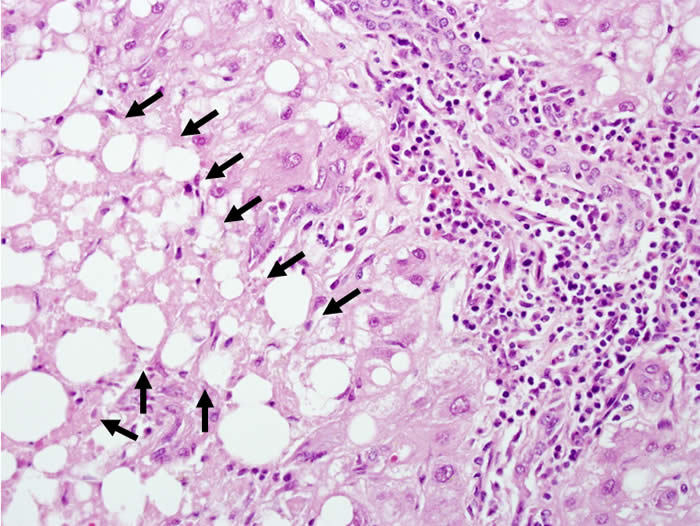
Case contributed by Dr. Linda Ferrell, UCSF Department of Pathology. · Public domain
When the body is harmed by contact with a poison, the result is called a toxic injury. These injuries can affect many different systems, such as the respiratory tract, the heart and blood vessels, the liver, the kidneys, the nervous system, or the digestive system. They can also cause harm to a developing fetus or lead to delayed problems like cancer or learning disabilities. Whether the damage happens after a single, short-term exposure or over a long period depends on the poison’s strength, the amount absorbed, and how it entered the body.
The signs of a toxic injury vary widely. Some effects are reversible and cause no lasting harm, while others are permanent. A poison might damage only one organ or cause widespread toxicity across multiple systems. For example, if the lungs are affected, symptoms often include coughing, a tight feeling in the chest, difficulty breathing, and irritation of the nose and throat. Damage to the reproductive organs can lead to infertility or miscarriage. When the brain or spinal cord is involved, a person may experience depression, severe headaches, or dizziness. Skin rashes, swelling, and red eyes are also common visible reactions. Asbestos exposure, for instance, can cause mesothelioma, a cancer that attacks the lining of the lungs and brings symptoms like shortness of breath, cough, night sweats, and fever.
Thousands of substances can cause a toxic injury, though some causes remain unknown or very rare. These injuries generally fall into two categories: those from environmental toxins and those from chemical exposure. Environmental toxins occur naturally in the surroundings, such as mold spores found indoors and outdoors. Even if a natural toxin is produced with human help—like pesticides—it is still considered environmental. Chemical exposures, often from consumer products, pharmaceuticals, or industrial materials, tend to be more severe because the substances are highly toxic.
To lower the risk of toxic injury, the key is to avoid direct contact with poisons. When working near environmental or chemical hazards, wearing personal protective equipment is essential. Many countries have systems, such as Canada’s Workplace Hazardous Materials Information System, that classify dangerous goods and explain their risks to keep workers safe. Keeping living and working spaces clean and dry also helps prevent toxic mold growth.
- Type
- Medical condition
- Causes
- Environmental toxins and chemical exposure
- Common symptoms
- Coughing, tight chest, difficulty breathing, skin rashes, headaches, dizziness
- Prevention
- Avoiding direct exposure, wearing personal protective equipment, maintaining clean environment
- Legal remedy
- Toxic tort lawsuits
Lore & Background
Toxic injuries have thousands of causes, generally falling into two categories: environmental toxins (naturally occurring substances such as molds) and chemical exposures (from consumer products, pharmaceuticals, and industrial products). Environmental toxins can be found in air, water, or food supply, and may be produced with human intervention, such as pesticides, yet are still considered natural. Chemical exposures are often more severe due to the highly toxic nature of the substances involved.
Reader's Guide
Toxic injuries represent a broad category of harm caused by contact with toxins, with effects ranging from reversible to permanent damage. The significance of understanding toxic injuries lies in their potential to affect multiple organ systems and produce delayed outcomes like cancer and learning disabilities. Prevention focuses on avoiding direct exposure and using personal protective equipment, with guides such as Canada's Workplace Hazardous Materials Information System helping to ensure worker safety. In the event of injury, victims may pursue legal action through a toxic tort. The variability of symptoms—from respiratory distress to reproductive issues—underscores the need for careful identification and management of exposures.
Did You Know?
- Toxic injuries can produce delayed effects including various forms of cancer and learning disability.
- Exposure to asbestos can lead to Mesothelioma, a cancer causing serious damage to the lining of the lungs.
- Some toxic effects do not necessarily cause permanent damage and can be reversible.
- Common toxins that may cause chemical toxic injury are found in consumer products, pharmaceuticals, and industrial products.
The Paradox of Restoration
Reperfusion injury, also referred to as ischemia-reperfusion injury or reoxygenation injury, describes a counterintuitive phenomenon in which the very act of restoring blood flow to starved tissue inflicts additional harm. During the ischemic phase, cells are deprived of oxygen and essential nutrients. When circulation is reestablished, the returning oxygen and blood components trigger a cascade of inflammation and oxidative stress rather than simply resuming normal cellular function. This damage can occur alongside, or even instead of, the expected recovery. It is important to distinguish this process from cerebral hyperperfusion syndrome, sometimes loosely called reperfusion syndrome, which involves abnormal vasodilation in the brain rather than the oxidative and inflammatory damage characteristic of true reperfusion injury. The core irony of the condition is that the therapeutic intervention—restoring perfusion—becomes a secondary source of tissue destruction.
Clinical Relevance Across Medicine
Reperfusion injury is not a single-condition problem but a recurring threat across multiple areas of medicine. In stroke, it is a major contributor to the biochemistry of hypoxic brain damage, and similar failure pathways appear when circulation is restored after cardiac arrest—both remain active research targets. In chronic wound care, repeated cycles of ischemia and reperfusion are implicated in the formation and persistent non-healing of pressure sores and diabetic foot ulcers; sustained pressure restricts blood supply, and the inflammatory burst during each reperfusion episode progressively damages tissue until a wound forms. Liver transplant surgeons must also contend with reperfusion injury as a primary intraoperative concern. Additionally, the sudden return of blood flow can provoke hyperkalemia, a dangerous elevation of potassium levels. The breadth of these connections underscores why understanding reperfusion injury is considered essential across neurology, surgery, and wound management.
Molecular Underpinnings
At the cellular level, reperfusion injury begins with the arrest of mitochondrial ATP production during oxygen deprivation. When oxygen returns, mitochondrial complex I—particularly vulnerable to ischemic stress—undergoes a shift in its enzymatic behavior. Ischemia drives a dramatic rise in succinate levels, and in the presence of oxygen, mitochondria catalyze reverse electron transfer, shunting electrons upstream to the flavin mononucleotide (FMN) cofactor of complex I. This reduces FMN, amplifies reactive oxygen species generation, and ultimately depletes the reduced cofactor, crippling energy production. Administering riboflavin, a precursor to FMN, has been shown to mitigate this specific damage. Simultaneously, reperfusion increases capillary and arteriolar permeability, while activated endothelial cells produce more ROS and less nitric oxide. White blood cells arriving with the restored blood release interleukins and free radicals, damaging proteins, DNA, and membranes. These reactive species can also trigger apoptosis through redox signaling, and leukocyte adhesion to capillary walls can obstruct flow, creating further ischemia.
Therapeutic Strategies
Several approaches aim to limit the damage that follows restored circulation. Therapeutic hypothermia has shown promise in animal models, where neurons can continue dying up to 24 hours after blood flow returns. Cooling appears to moderate intracranial pressure and reduce free radical production during reperfusion, thereby softening the inflammatory immune response that drives secondary cell death. Remote ischemic conditioning—briefly and repeatedly occluding blood flow to a limb before the main ischemic event—demonstrated protective effects in animal experiments, yet successive human trials through 2015 failed to confirm a benefit. Two large studies completed in 2023, however, produced positive results and have renewed clinical interest in the technique. In Japan, the antioxidant edaravone is approved as an adjunct to reperfusion therapy for stroke, with evidence suggesting it reduces reperfusion injury in both animal models and human patients. It can be administered intravenously or orally, and it is also combined with dextro-borneol in a formulation called edaravone dexborneol.
Gallery
Frequently Asked Questions
What is toxic injury?
Toxic injury refers to the harm that occurs when a person's body is damaged by exposure to a poison or toxic substance. It can strike multiple organ systems at once, from the lungs and heart to the liver, kidneys, and nervous system.
What causes toxic injury?
The primary causes are environmental toxins and chemical exposure, whether from a single acute encounter or prolonged, repeated contact. The severity depends on how strong the poison is, how much gets absorbed, and the route through which it enters the body.
What are the common symptoms of toxic injury?
Typical signs include coughing, a tight or constricted chest, difficulty breathing, skin rashes, headaches, and dizziness. In some cases, the damage can also affect a developing fetus or trigger delayed issues such as cancer or learning disabilities.
How can toxic injury be prevented?
The best prevention strategy is avoiding direct exposure to known toxins whenever possible. Wearing appropriate personal protective equipment and maintaining a clean, well-ventilated environment are also key steps to reduce risk.
What legal remedies are available for someone who suffers a toxic injury?
Affected individuals may pursue toxic tort lawsuits to seek compensation for medical costs and other damages. These legal actions hold responsible parties accountable for the harm caused by their release or mishandling of hazardous substances.
More in Injuries And Conditions 1-24
Spotted an error? Know more?
Reader corrections go straight into our review queue. Suggest an edit · How this site is sourced