Tennis elbow
Painful elbow condition often linked to overuse, not just tennis.

BruceBlaus · CC BY-SA 4.0
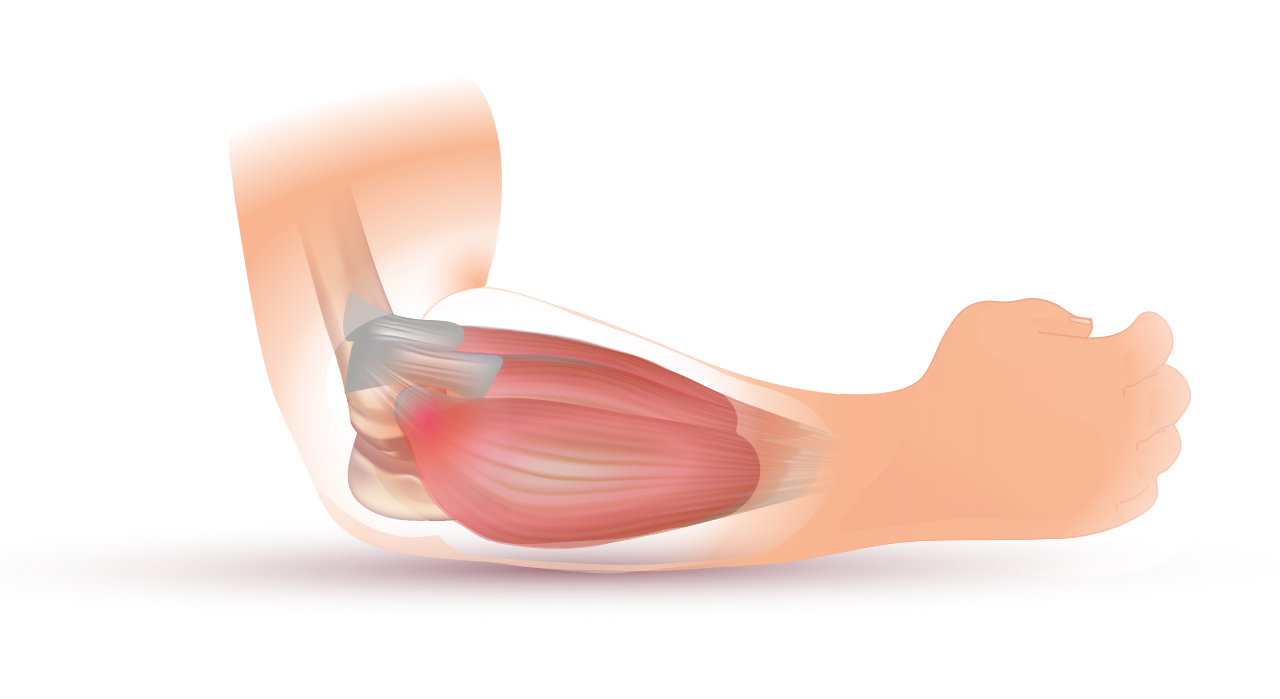
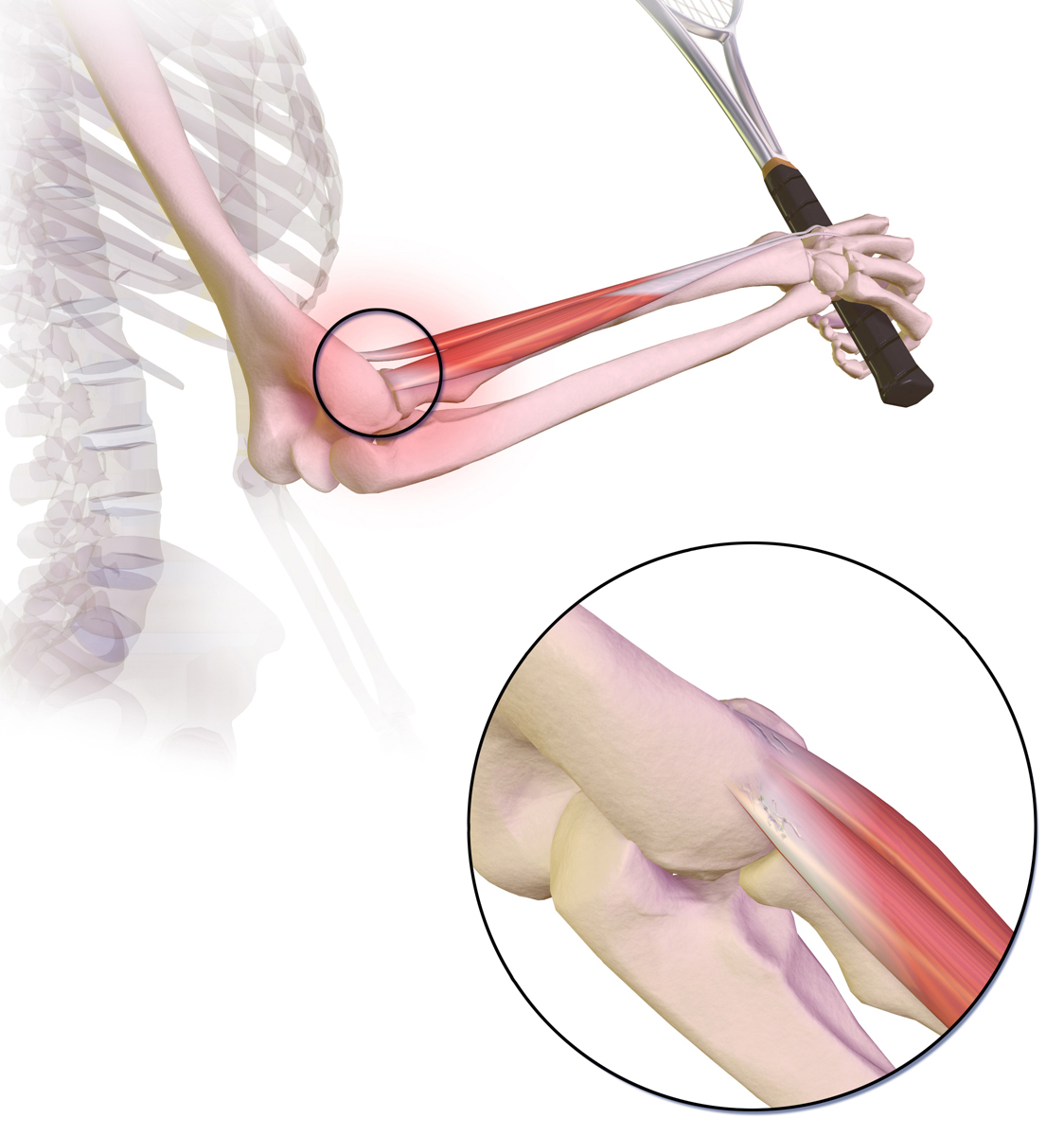
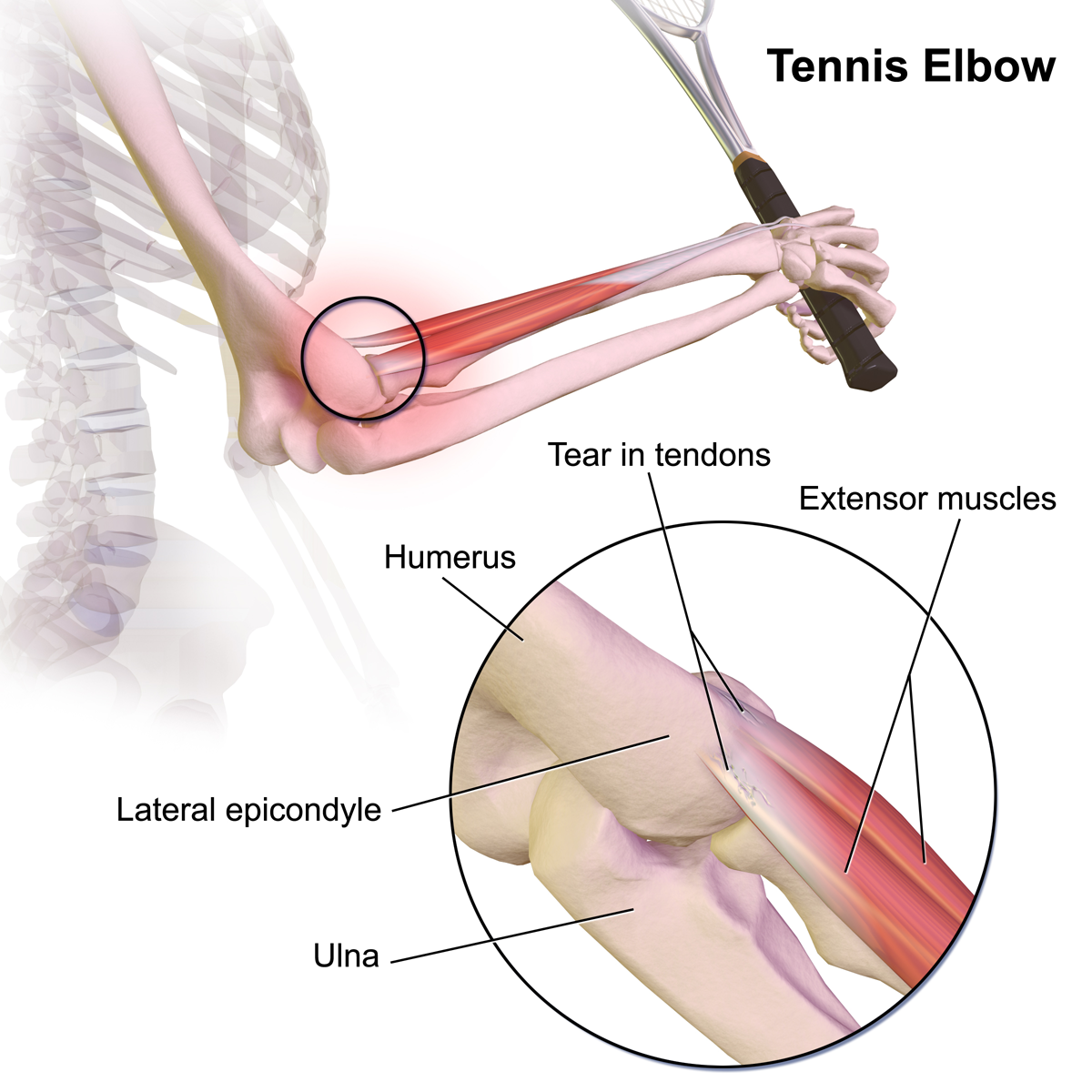
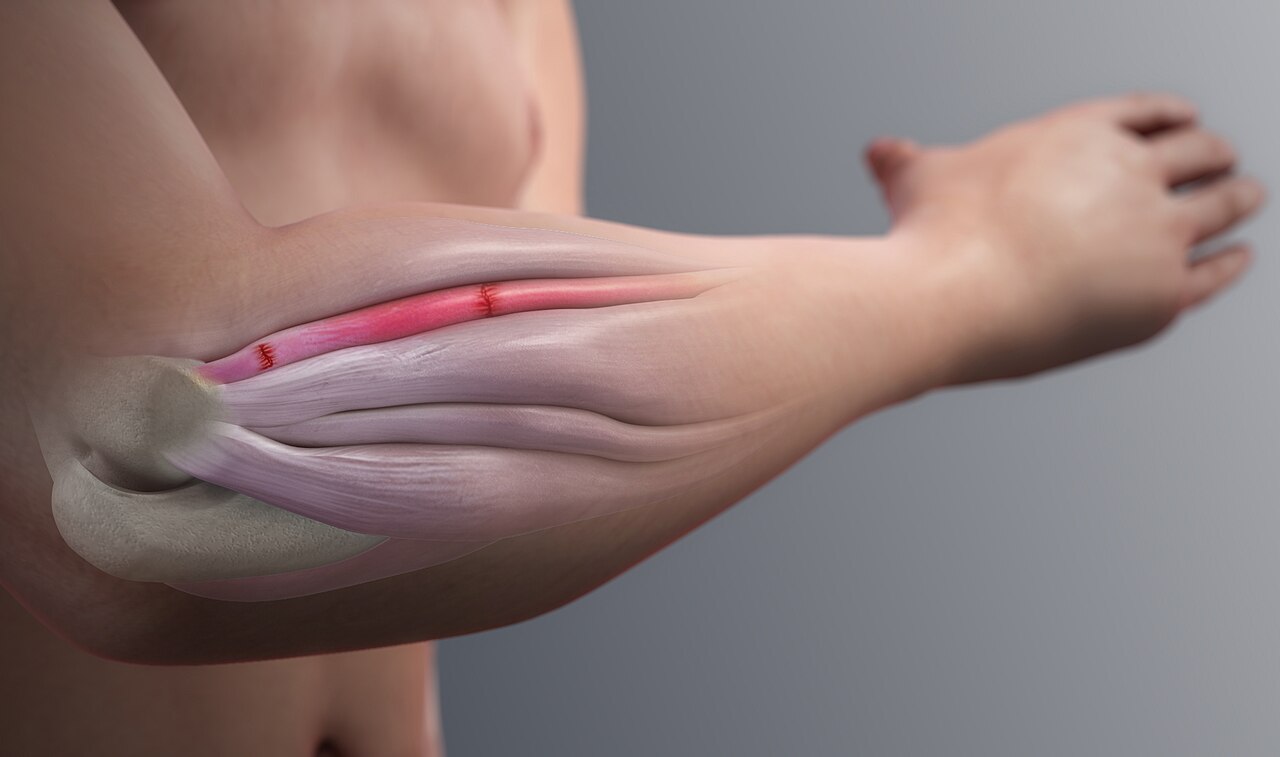
Tennis elbow, or lateral epicondylitis, is a condition affecting the point where the extensor carpi radialis brevis tendon attaches to the outer elbow bone (the lateral epicondyle). The main symptoms are pain and tenderness at that spot. Doctors do not know the exact cause—it is considered idiopathic—but it is thought to be a tendinosis, meaning an overuse injury of the tendon.
People typically feel a burning or aching pain on the outer elbow, which may spread down the forearm or up toward the upper arm. The pain gets worse with activities that involve bending the wrist back, like gripping objects. It can range from mild to severe, and may come and go or be constant, often interfering with daily tasks. Many patients also notice a weak grip and trouble lifting things.
The informal name "tennis elbow" is common, but the condition affects many people who do not play tennis. With the rise of pickleball in the 21st century, the term "pickleball elbow" has also appeared. The older medical term "lateral epicondylitis" is still used, but the suffix "-itis" suggests inflammation, which is not typically present. Because tissue samples show no inflammation, doctors often call it "lateral elbow tendinopathy" or "tendinosis." In 2019, international experts recommended "lateral elbow tendinopathy" as the most accurate term, though an injury at a tendon attachment point is technically an enthesopathy.
The exact cause remains unclear, but it is often linked to repeated minor injuries from excessive gripping, wrist extension, or forearm twisting. Some have thought of it as a repetitive strain injury from overuse and failed healing, but there is no clear evidence of injury or repair, and painful activities are often misinterpreted as causing damage.
The extensor carpi radialis brevis (ECRB) muscle is most often affected. Because of how it attaches, the ECRB tendon rubs during elbow movements, leading to repeated microtrauma. This was once thought to be an inflammatory process, but since inflammation is not evident, it is now seen as tendinosis—a degenerative condition with abnormal collagen, increased blood vessels, and scar tissue. Over time, repetitive stress causes microtears and biomechanical changes that worsen symptoms.
Diagnosis is based on symptoms and a physical exam. A key sign is pain on the outer elbow when the wrist is bent forward with the elbow straight.
- Field
- Orthopedics / Sports Medicine
- Known for
- Pain and tenderness at the lateral epicondyle, often linked to repetitive wrist extension
- Common name
- Tennis elbow
- Medical term
- Lateral epicondylitis
- Affected muscle
- Extensor carpi radialis brevis (ECRB)
Lore & Background
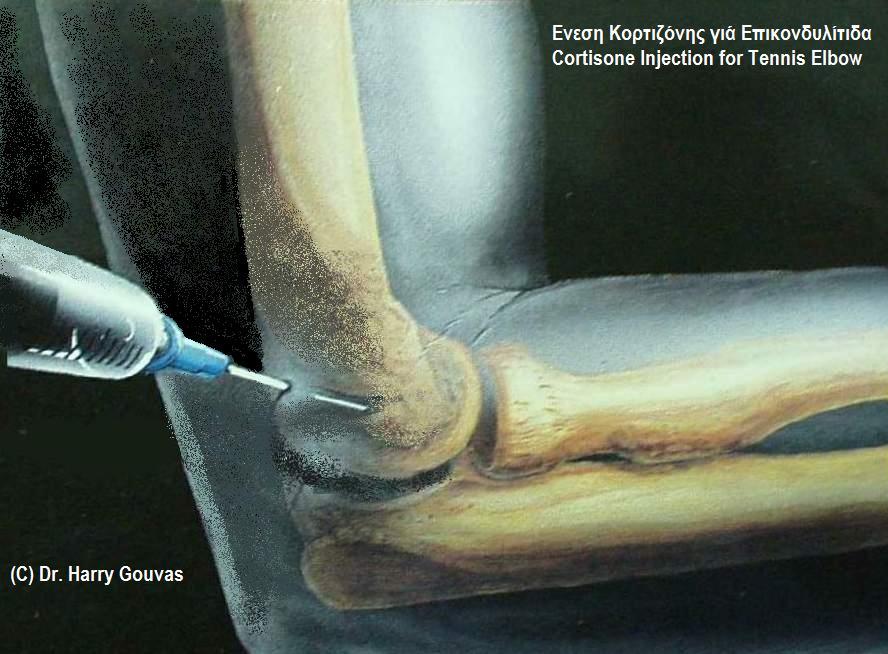
Tennis elbow is typically associated with work or sports – classically racquet sports (including paddle sports) – but many people with the condition are not participants in these activities. The diagnosis is based on the symptoms and examination; medical imaging is not commonly used. Untreated tendinosis usually resolves in 1–2 years. Treating the symptoms and pain involves medications such as NSAIDs or acetaminophen, a wrist brace, or a strap over the upper forearm. Corticosteroid injections as treatment have been a common treatment historically.
Reader's Guide
Tennis elbow is a common enthesopathy affecting the lateral epicondyle, primarily involving the extensor carpi radialis brevis tendon. Its significance lies in its high prevalence among both athletes and non-athletes, and its impact on daily activities such as gripping and lifting. The condition is idiopathic, with no clear evidence of inflammation, leading to the clinical use of terms like 'lateral elbow tendinopathy' or 'tendinosis.' Diagnosis relies on characteristic symptoms and physical exam findings, such as pain with resisted wrist extension. Non-operative treatment resolves 90% of cases, including activity modification, physical therapy, and bracing. Surgery is rarely needed. The condition's legacy includes the informal term 'pickleball elbow' in the 21st century, reflecting its association with paddle sports. Its management remains non-standardized, with many alternative treatments lacking proven effectiveness.
Did You Know?
- Tennis elbow is idiopathic, meaning its precise cause is unknown.
- The condition is also referred to as 'pickleball elbow' due to the growth of pickleball participation.
- Histologic studies show no evidence of inflammation, making 'tendinosis' a more accurate term than 'epicondylitis.'
- Smokers have a higher chance of developing lateral epicondylitis compared to non-smokers.
What the Tendon Is Really Going Through
Tennis elbow is one of those conditions whose common name obscures what is actually happening inside the body. The formal medical label, lateral epicondylitis, suggests inflammation, yet histological studies consistently show no acute or chronic inflammatory process at the attachment site. What the tissue reveals instead is a degenerative picture: disorganized collagen, abnormal fibroblast activity, and a proliferation of small blood vessels where healthy tendon should be. The extensor carpi radialis brevis, because of its distinctive origin on the lateral epicondyle, is especially vulnerable to repeated abrasion during everyday elbow movements, accumulating microtears that trigger scar tissue and gradual biomechanical shifts. In 2019, a panel of international specialists recommended the term "lateral elbow tendinopathy" as the most accurate descriptor, while purists note that because the damage sits at a tendon-to-bone junction, "enthesopathy" is technically more precise. The colloquial name persists, and in the twenty-first century the surge in pickleball play even spawned the informal label "pickleball elbow," reminding us that the condition belongs to far more than just tennis players.
How It Announces Itself and How Clinicians Confirm It
The hallmark complaint is a burning or aching sensation centered on the outer elbow, the lateral epicondyle of the humerus, which may travel down the forearm or creep up toward the shoulder. Simple acts involving wrist extension, such as gripping objects, can sharpen the pain, and intensity swings from a mild nuisance to a constant, life-disrupting ache. Grip strength often drops, and lifting tasks become frustratingly difficult. Yet the diagnosis is remarkably straightforward: a clinician asks the patient to extend the elbow while flexing the wrist, or to resist wrist extension and middle-finger extension, and listens for the characteristic tenderness at the ECRB origin. Notably, full elbow range of motion is frequently preserved even in severe cases. Imaging is generally unnecessary; an X-ray might incidentally show calcification at the tendon-bone junction, and an ultrasound can display tendon thickening, internal tears, and irregular vascularity, but these findings are confirmatory rather than essential. The condition is identified by what the patient reports and what the hands-on exam reveals, not by a scan.
The Road Back: Treatment and Natural Recovery
There is no single protocol that fits every case, but the reassuring statistic is that roughly ninety percent of symptomatic cases resolve without surgery. The backbone of conservative care is activity modification: scaling back the repetitive gripping, wrist extension, and forearm rotation that keep irritating the tendon. Physical therapy, over-the-counter pain relief with NSAIDs or acetaminophen, a wrist brace, or a strap across the upper forearm are common adjuncts. Some patients benefit from extracorporeal shock-wave therapy or acupuncture, while the classic RICE approach—rest, ice, compression, elevation—can blunt early pain. A practical tip often shared is to lift with the palm facing upward, which shifts the load from the lateral to the medial epicondyle and eases the strained side. Corticosteroid injections exist but are not routinely recommended. If left entirely untreated, the enthesopathy still tends to heal on its own within one to two years, though managing symptoms during that window makes the wait far more tolerable.
Who Is at Risk and What Can Be Done Upfront
The precise trigger for tennis elbow remains elusive; the condition is classified as idiopathic, and the traditional story of a simple overuse injury with failed tendon healing has not been borne out by histological evidence. What is well established is a link to repetitive microtrauma from excessive gripping, wrist extension, radial deviation, and forearm supination. While racquet sports—tennis, squash, paddle games—are the classic association, a large share of affected individuals never pick up a racket, and the condition shows up across a wide range of manual and desk-based occupations. Prevention centers on modifying activity: avoiding extreme end-range flexion and extension, limiting repetitive hand and wrist cycles, and adjusting how heavy objects are lifted with the arm fully extended. Lifestyle factors also play a role; smokers face a measurably higher risk compared to non-smokers, whereas current evidence does not show a significant link between alcohol consumption and the condition. In short, the best defense is recognizing the repetitive patterns that quietly load the ECRB origin and interrupting them before degeneration sets in.
Gallery
Frequently Asked Questions
Who is Tennis elbow?
Tennis elbow, medically known as lateral epicondylitis, is a painful overuse condition centered on the outer elbow where the extensor carpi radialis brevis tendon anchors to the lateral epicondyle. Despite its name, it affects far more than tennis players—anyone who repeatedly extends or grips the wrist can develop it.
What are Tennis elbow's powers/role?
Its signature move is a burning or aching pain at the lateral epicondyle that can radiate down the forearm or creep up toward the upper arm. The condition is triggered by repetitive wrist-extension motions, making gripping, lifting, and racket sports its primary battlefields.
Why is Tennis elbow important?
It is one of the most common overuse tendinopathies in orthopedics and sports medicine, making it a frequent reason athletes and manual workers seek professional care. Recognizing it helps clinicians distinguish a true tendon problem from arthritis or nerve compression, which guides correct treatment.
What is Tennis elbow's true identity?
Beneath the pop-culture nickname, the condition is a tendinosis—a degenerative, non-inflammatory breakdown of ECRB tendon fibers at their bony insertion. It is not an acute injury from a single event but a gradual wear-and-tear process that accumulates over weeks or months of repetitive loading.
More in Injuries And Conditions 1-24
Spotted an error? Know more?
Reader corrections go straight into our review queue. Suggest an edit · How this site is sourced