Tension headache
Most common primary headache, affecting an estimated 40-70% of all headache cases.

Ocean Observatories Initiative · Public domain
Tension headache, or tension-type headache (TTH), is the most common kind of primary headache, making up an estimated 40-70% of all headaches. The pain is typically bilateral, pressing or tightening in quality, and often described as a band-like sensation around the head. According to the 2016 Global Burden of Disease study, about 1.89 billion people worldwide have TTH, and it is more common in women (30.8%) than in men (21.4%). The condition is most prevalent between ages 40 and 49. Although generally benign, chronic tension-type headaches can cause significant disability for individuals and place a burden on society. In 2016, the global burden was estimated at 7.2 million years lived with disability (YLDs), calculated from prevalence, average time spent with TTH, and a disability weight of 0.037.
For treatment, pain relievers like paracetamol and ibuprofen are effective. Tricyclic antidepressants can help prevent headaches, but there is poor evidence for SSRIs, propranolol, and muscle relaxants.
To be diagnosed, attacks must last from 30 minutes to 7 days and have at least two of these features: bilateral location, a pressing or tightening (non-pulsating) quality, mild or moderate intensity, and no worsening with routine physical activity like walking or climbing stairs. Additionally, there should be no nausea or vomiting, and only one of either photophobia (sensitivity to bright light) or phonophobia (sensitivity to loud sounds). Scalp tenderness may occur during an attack.
Risk factors include anxiety, stress, sleep problems, young age, and poor health.
The exact cause of TTH is not fully understood, but it likely involves a mix of personal factors, environmental factors, and changes in both peripheral and central pain pathways. Peripheral pain pathways receive signals from the myofascial tissue around the head, and alterations in these pathways probably underlie episodic tension-type headache (ETTH). While muscle tenderness, inflammation, and ischemia have been suggested as causes, studies have not found clear evidence for inflammation or ischemia in the muscles. Pericranial tenderness may not be a direct cause but could trigger a chronic pain cycle, where peripheral pain responses become centralized over time.
- Prevalence
- 1.89 billion people affected (2016)
- Gender ratio
- 30.8% women, 21.4% men
- Peak age
- 40 to 49 years
- Global burden
- 7.2 million years lived with disability (YLDs) in 2016
- Health loss percentage
- 3.7% (disability weight of 0.037)
- Type
- Primary headache
- Subtypes
- Episodic (ETTH) and Chronic (CTTH)
Lore & Background
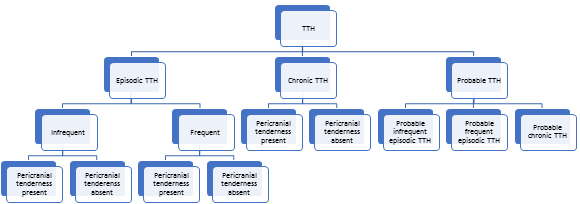
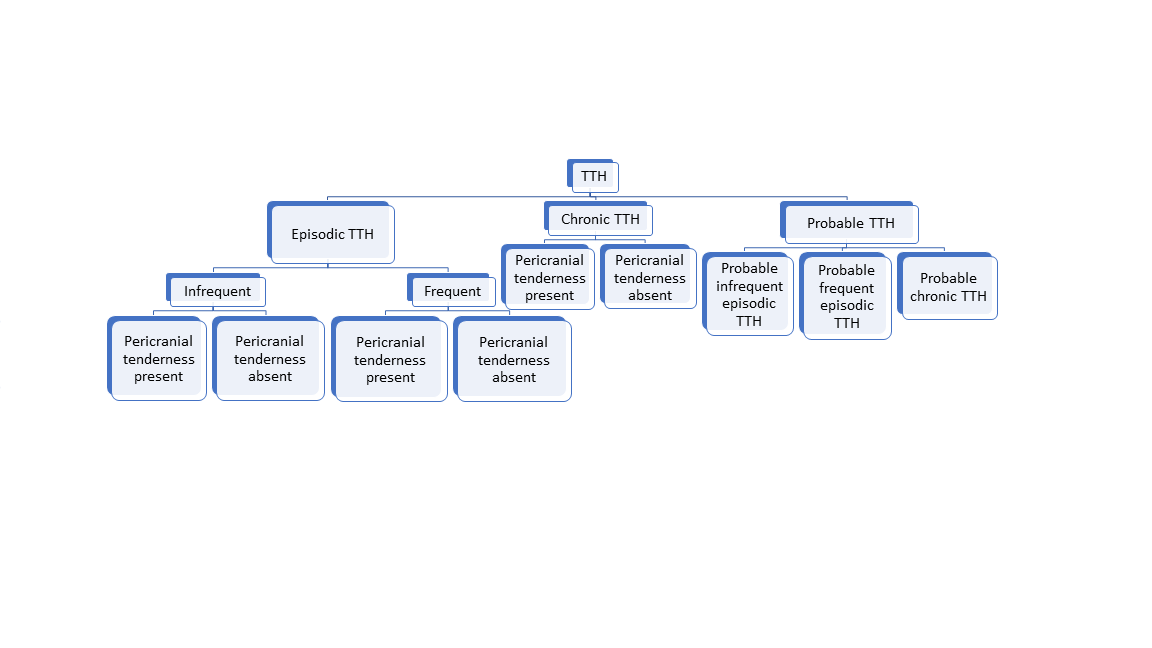
Tension-type headache is classified by the International Headache Society into episodic and chronic forms. Episodic TTH occurs fewer than 15 days per month, while chronic TTH occurs 15 or more days per month for over three months. The diagnosis is based on history and physical exam, with expected normal findings except possible pericranial tenderness or mild photophobia or phonophobia. The pain is bilateral, pressing or tightening, mild to moderate, and not aggravated by routine physical activity.
Reader's Guide
Tension-type headache is significant as the most prevalent headache disorder worldwide, causing substantial disability despite its benign character. The 2016 Global Burden of Disease study highlighted its impact, with 7.2 million years lived with disability. Treatment includes pain medications like paracetamol and ibuprofen, while tricyclic antidepressants are useful for prevention. Evidence is poor for SSRIs, propranolol, and muscle relaxants. The pathophysiology involves a combination of peripheral and central pain pathway alterations, with central sensitization playing a key role in chronic cases. Stress, anxiety, sleep problems, and poor health are risk factors. The condition's high prevalence and chronic form's disability burden make it a major public health concern.
Did You Know?
- Tension-type headaches account for an estimated 40-70% of all headaches.
- The pain is bilateral, pressing or tightening, and not aggravated by routine physical activity.
Prevalence and Where Tension Headaches Sit in the Classification Landscape
Tension-type headaches hold the top spot among all headache categories, affecting roughly 24.9 percent of the general population—making them more common than migraine headaches, which reach about 14.1 percent. They fall under the umbrella of primary headaches, a category that accounts for approximately ninety percent of all headache cases. Primary headaches are defined as benign, recurrent episodes of pain that are not driven by an underlying disease or structural abnormality in the body. While they can cause significant daily discomfort and disability, they are not considered physiologically dangerous. The International Headache Society, whose classification system is the most widely recognized in the field, organizes headaches into more than 150 distinct types of both primary and secondary varieties. Within the tension-type family, clinicians further distinguish between episodic and chronic presentations, each carrying its own clinical considerations. Primary headaches of all types, including tension-type, typically first emerge when individuals are between the ages of twenty and forty.
How Tension Headaches Feel and How They Are Distinguished
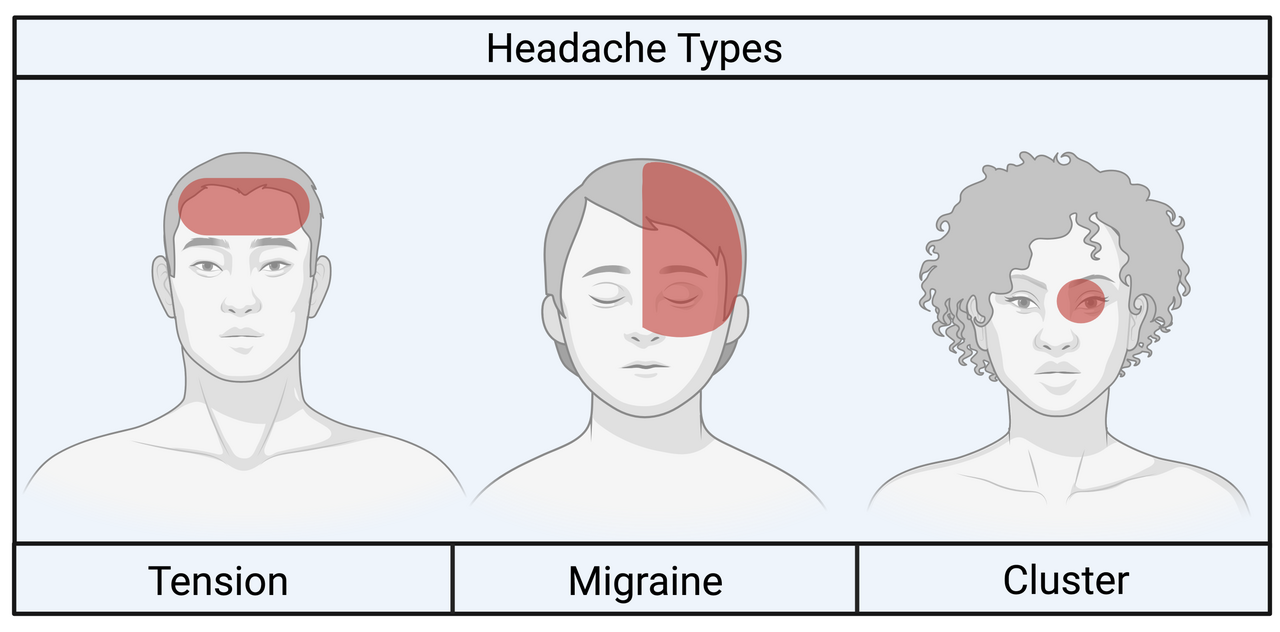
Unlike the pulsing, one-sided pain characteristic of migraines—which often arrives alongside nausea, light sensitivity, and sound sensitivity—tension-type headaches present with a distinctly different signature. The hallmark is a non-pulsing, bandlike pressure felt across both sides of the head, and notably, this pressure is not accompanied by the additional neurological or sensory symptoms that mark other primary headache types. This bilateral, steady quality helps clinicians differentiate tension-type headaches from migraines during a neurological examination. The description of the headache, combined with findings from that examination, guides whether additional diagnostic testing is necessary and which treatment pathway is most appropriate. It is worth noting that while primary headaches like tension-type are not dangerous from a physiological standpoint, they still represent one of the most commonly experienced forms of physical discomfort in human experience, with about half of all adults reporting at least one headache in any given year.
Everyday Triggers and Contributing Factors
The onset of a tension-type headache can be linked to a wide range of everyday and environmental factors. Among the most frequently cited triggers are dehydration, fatigue, and sleep deprivation. Psychological stress also plays a prominent role. The effects of medications—particularly the overuse of pain relievers—and recreational drugs, including the withdrawal phase, can provoke or exacerbate headache episodes. Viral infections, exposure to loud noises, and head injuries are additional recognized causes. Even something as simple as rapidly consuming a very cold food or beverage has been identified as a potential trigger. Dental problems and sinus issues, such as sinusitis, round out the list of common contributors. It is important to recognize that while many of these causes are harmless, the broader landscape of more than two hundred headache types includes some that are life-threatening, making careful clinical assessment essential to rule out secondary causes before attributing pain to a benign primary mechanism.
Treatment Approaches and the Painkiller Paradox
Managing a tension-type headache begins with identifying its underlying cause, as treatment strategy is tailored accordingly. For mild to moderate episodes, over-the-counter pain relievers are the standard first-line approach and are widely used given how frequently headaches occur in the general population. However, a critical caveat exists: the excessive or habitual use of these same painkillers can paradoxically trigger a secondary headache condition often referred to as a painkiller headache, in which the medication intended to relieve pain actually worsens the overall headache burden. This creates a frustrating cycle that clinicians must recognize and address. Because secondary headaches—those arising from infections, vascular disorders, brain bleeds, tumors, or other structural problems—can be genuinely dangerous, certain warning signs or red flags must always be evaluated to ensure a benign primary diagnosis is correct before relying on simple analgesic therapy.
Gallery


Frequently Asked Questions
Who is Tension headache?
Tension headache, or tension-type headache, is the most common primary headache disorder, responsible for roughly 40 to 70 percent of all headache cases. It is defined by a bilateral, pressing, or tightening pain that many sufferers compare to a tight band wrapped around the skull.
What are Tension headache's powers/role?
Its signature presentation is a dull, non-pulsating pressure felt on both sides of the head, usually without nausea, throbbing, or light sensitivity. It sits in the 'primary headache' category, meaning it is not triggered by another underlying structural problem.
Why is Tension headache important?
It affects approximately 1.89 billion people globally, making it one of the most widespread health conditions on Earth. Its disability weight of 0.037 translates to about 3.7 percent health loss for those who carry it.
Who does Tension headache target most?
It hits women noticeably harder than men, with roughly 30.8 percent of women affected versus 21.4 percent of men. The peak prevalence window falls between ages 40 and 49.
More in Injuries And Conditions 1-24
Spotted an error? Know more?
Reader corrections go straight into our review queue. Suggest an edit · How this site is sourced