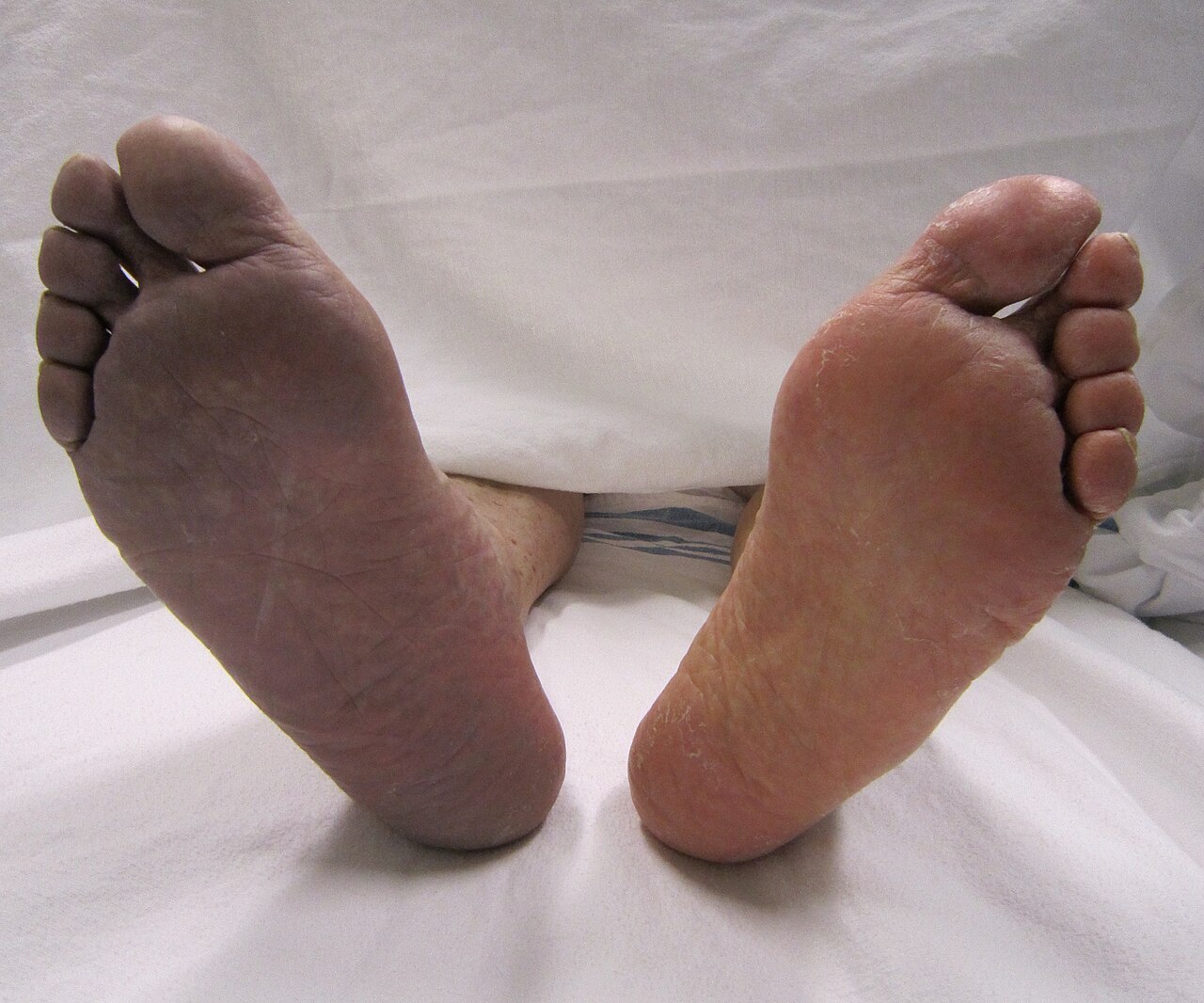
Thrombosis
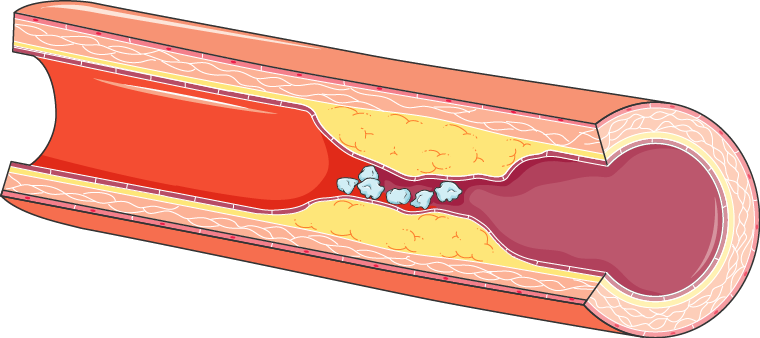
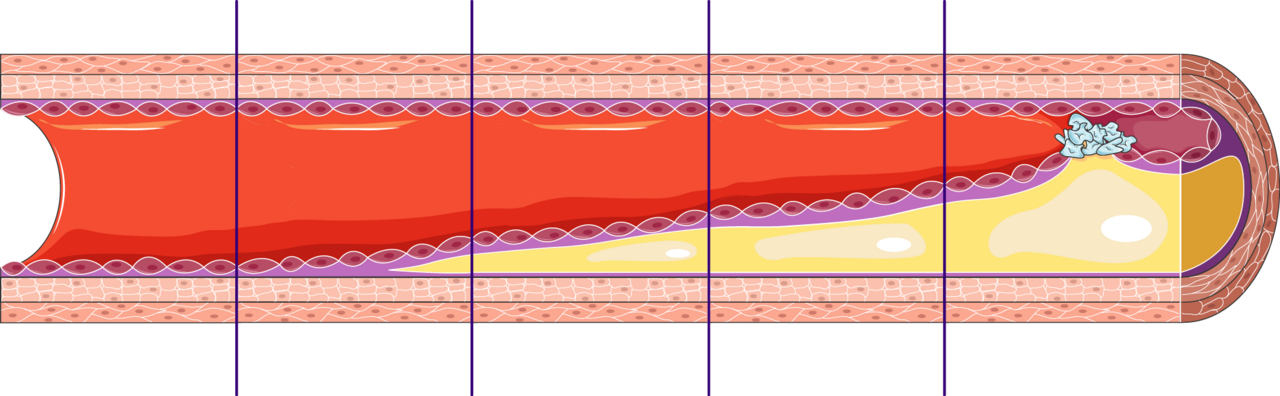
Formation of a blood clot obstructing blood flow.

James Heilman, MD · CC BY-SA 3.0
Thrombosis is the process by which a blood clot forms inside a vein or artery, blocking the normal flow of blood through the circulatory system. The body typically uses platelets and fibrin to create a clot when a blood vessel is injured, preventing blood loss. However, clots can also develop without any injury. If a clot or a fragment of it breaks loose and travels through the body, it is called an embolus. Thrombosis can lead to severe events like stroke and heart attack.
Thrombosis is categorized by where it occurs: in veins (venous thrombosis) or arteries (arterial thrombosis). Venous thrombosis, often called deep vein thrombosis (DVT), causes a clot in the affected area. Arterial thrombosis, and in rare cases severe venous thrombosis, disrupts blood supply, leading to tissue damage (ischemia and necrosis) in the area served by that artery. A piece of either type of clot can break off as an embolus, travel through the circulation, and lodge elsewhere as an embolism—this is known as a thromboembolism. A venous thromboembolism (VTE) that lodges in the lung becomes a pulmonary embolism. An arterial embolus may travel further down the same vessel and lodge there.
**Signs and symptoms** depend on the type of blood vessel affected and its location.
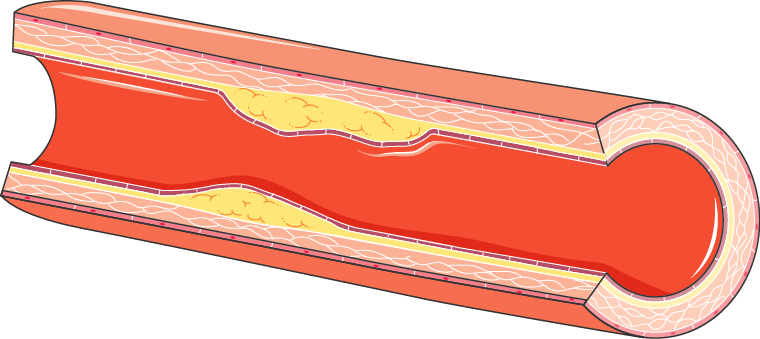
**Arterial thrombosis** usually follows the rupture of an atheroma (a fatty deposit in the vessel wall), a condition called atherothrombosis. Clots can then migrate downstream as arterial emboli, affecting any organ. Arterial occlusion can also result from emboli that originate in the heart, most often due to atrial fibrillation, which causes blood stasis and clot formation in the atria. Clots may also form in the heart from other causes, such as infective endocarditis.
A **stroke** is a rapid decline in brain function caused by a disruption in blood supply—due to ischemia, a thrombus, an embolus, or a hemorrhage. In thrombotic stroke, a clot typically forms around atherosclerotic plaques. Because the artery blocks gradually, symptoms come on more slowly. Thrombotic stroke is divided into large vessel disease (affecting arteries like the internal carotids, vertebral, and circle of Willis) and small vessel disease (affecting smaller branches of the circle of Willis).
**Myocardial infarction** (heart attack) results from ischemia caused by a thrombus blocking a coronary artery.
- Field
- Medicine
- Known for
- Formation of blood clots obstructing blood vessels
- Types
- Venous thrombosis, arterial thrombosis
- Complications
- Stroke, myocardial infarction, pulmonary embolism
Lore & Background
Thrombosis is defined by the type of blood vessel affected and the precise location. Arterial thrombosis often follows rupture of atheroma and is called atherothrombosis, while venous thrombosis commonly occurs in deep veins of the legs. A clot or piece that breaks free is known as an embolus, which can travel and lodge elsewhere as a thromboembolism.
Reader's Guide
Thrombosis is a key pathological process underlying many cardiovascular events. Its significance lies in its potential to cause ischemia and necrosis in affected tissues, leading to conditions such as stroke, myocardial infarction, and pulmonary embolism. Prevention focuses on assessing risk factors, including those described in Virchow's triad: hemodynamic changes, vessel wall injury, and hypercoagulability. Understanding thrombosis has guided treatments like thrombolytic therapy for myocardial infarction and anticoagulation for deep vein thrombosis.
Did You Know?
- Thrombosis can occur even when a blood vessel is not injured.
- A piece of a thrombus that breaks free is called an embolus.
- Deep vein thrombosis most commonly affects leg veins such as the femoral vein.
- Cerebral venous sinus thrombosis is a rare form of stroke with a mortality rate of 4.3%.
The Biology of Clot Formation
Thrombosis, a term rooted in the Ancient Greek word for clotting, describes the process by which a blood clot forms within a blood vessel and obstructs circulation. The body's natural response to vascular injury involves deploying platelets (thrombocytes) and fibrin to seal the wound and prevent hemorrhage. However, this same mechanism can activate without any visible injury, producing clots under certain physiological conditions. The distinction between venous and arterial thrombosis is critical: venous thrombosis creates a localized clot in the affected region, while arterial thrombosis disrupts the blood supply downstream, causing ischemia and potentially tissue necrosis. A particularly dangerous development occurs when a fragment of either type of clot detaches and becomes an embolus, free to travel through the circulatory system and lodge in a distant vessel. This process, termed thromboembolism, transforms a localized problem into a potentially systemic emergency.
Arterial Thrombosis and Its Devastating Consequences
Arterial thrombosis most commonly arises when an atheroma, a fat-rich deposit embedded in the vessel wall, ruptures, a process known as atherothrombosis. The resulting clot can obstruct flow and starve downstream tissue of oxygen. In the brain, this manifests as thrombotic stroke, where a clot forms around atherosclerotic plaques. Because the arterial blockage develops gradually, symptoms tend to emerge more slowly than in hemorrhagic events. Thrombotic strokes are further classified by whether large vessels such as the internal carotids, vertebral arteries, or the circle of Willis are affected, or whether smaller branch vessels are involved. In the heart, a thrombus obstructing a coronary artery triggers myocardial infarction: oxygen deprivation kills cardiac muscle tissue, forming an infarct. Without prompt emergency intervention, specifically thrombolytic therapy initiated within twelve hours of the initial episode, this condition can rapidly prove fatal. Arterial clots can also produce acute limb ischemia, and in the liver, hepatic artery thrombosis represents a devastating post-transplant complication.
The Many Faces of Venous Thrombosis
Venous thrombosis presents in numerous anatomical variants, each with distinct clinical profiles. Deep vein thrombosis, the most recognized form, typically involves leg veins such as the femoral vein and is governed by three key factors: blood flow rate, blood viscosity, and vessel wall integrity. Its hallmark signs include swelling, pain, and redness in the affected area. Upper extremity DVT, known as Paget-Schroetter disease, obstructs arm veins like the axillary or subclavian vein and frequently surfaces after vigorous exercise in otherwise healthy younger individuals, with a male predominance. In the abdomen, Budd-Chiari syndrome blocks hepatic veins or the hepatic segment of the inferior vena cava, presenting with abdominal pain, ascites, and hepatomegaly, and may require surgical shunts. Portal vein thrombosis, often secondary to conditions like pancreatitis or cirrhosis, reduces hepatic blood supply and elevates portal pressure. Renal vein thrombosis impairs kidney drainage, while jugular vein thrombosis, linked to infection, intravenous drug use, or malignancy, can trigger sepsis, pulmonary embolism, or papilledema.
The Embolic Cascade and Cardiogenic Origins
The most perilous dimension of thrombosis lies in its embolic potential. A fragment of either an arterial or venous thrombus can shear off, become an embolus, and ride the bloodstream to lodge in a distant vessel, producing a thromboembolism. When a venous thromboembolism reaches the pulmonary vasculature, it creates a pulmonary embolism, a life-threatening obstruction of lung blood flow. Arterial emboli, meanwhile, travel further down the affected vessel before lodging. A separate and significant source of emboli is the heart itself. Atrial fibrillation, a common arrhythmia, causes blood stasis within the atria, creating ideal conditions for thrombus formation. These so-called cardiogenic emboli can then be ejected into the systemic circulation and strike any organ. Infective endocarditis represents another cardiac source. The embolic cascade thus connects seemingly unrelated conditions, including arrhythmia, infection, and vascular disease, into a single pathway of tissue injury, underscoring why thrombosis management must consider not just the clot's origin but every possible destination along the circulatory route.
Gallery
Frequently Asked Questions
What is Thrombosis?
Thrombosis is a medical condition in which a blood clot forms inside a vein or artery, obstructing the normal circulation of blood. It can arise as a protective response to vessel damage or develop spontaneously with no injury present.
How does Thrombosis form?
The body typically assembles a clot from platelets and fibrin to seal a wounded vessel and prevent blood loss. In pathological cases, however, this clotting mechanism activates without any actual wound, producing an unwanted blockage.
What types of Thrombosis exist?
Thrombosis is split into two main categories by location: venous thrombosis, which affects veins, and arterial thrombosis, which affects arteries. Each type carries distinct risks depending on which segment of the circulatory system becomes obstructed.
What complications does Thrombosis cause?
A blocked vessel can trigger catastrophic events such as a stroke, a myocardial infarction, or a pulmonary embolism. These downstream emergencies represent the most feared consequences of an untreated thrombotic episode.
What is an embolus and how does it relate to Thrombosis?
An embolus is a piece of a thrombus that breaks free and drifts through the bloodstream until it lodges in another vessel. This secondary blockage can strike a completely different region of the body, compounding the danger of the original clot.
More in Injuries And Conditions 1-24
Spotted an error? Know more?
Reader corrections go straight into our review queue. Suggest an edit · How this site is sourced