West Sulawesi
Indonesian province on western Sulawesi with ancient cave art.

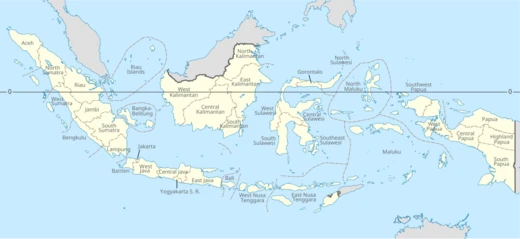
West Sulawesi (Indonesian: Sulawesi Barat) is a province of Indonesia located on the western side of Sulawesi island, with its capital at Mamuju. It covers a land area of 16,590.67 km² and consists of six regencies: Polewali Mandar, Mamasa, Majene, Mamuju, Central Mamuju, and Pasangkayu. The province is notable for containing the limestone cave of Leang Bulu’ Sipong 4, where researchers discovered the oldest known hunting scenes in prehistoric art, dated to more than 44,000 years ago.
Quick Facts
- Official Name
- Province of West Sulawesi / id · Provinsi Sulawesi Barat
- Shield Link
- Armorial of Indonesia#Provincial
- Motto
- mdr · Mellete Diatonganan / Stick to the Truth
- Established Title
- Established
- Established Date
- 22 September 2004
- Seat Type
- Capital
- Seat
- Mamuju
- Leader Title
- Governor
- Leader Name
- Suhardi Duka (Democratic)
Facts from the source article.
Lore & Background
West Sulawesi was established as a province comprising six regencies: Polewali Mandar, Mamasa, Majene, Mamuju, Central Mamuju, and Pasangkayu. The sixth regency, Central Mamuju, was created from part of Mamuju Regency on 14 December 2012. The province borders South Sulawesi and Central Sulawesi to the east, the Makassar Strait to the west, and the Flores Sea to the south, and shares maritime borders with East Kalimantan and South Kalimantan.
On 11 December 2019, a team led by Dr. Maxime Aubert announced the discovery of the oldest hunting scenes in prehistoric art, found in the limestone cave of Leang Bulu’ Sipong 4. The depiction of a pig and buffalo hunt was dated to more than 44,000 years old using calcite 'popcorn' and isotope levels of radioactive uranium and thorium.
The province's geography includes Gandang Dewata National Park at its center, the Karama and Lariang rivers, and the Balabalagan Islands in Mamuju Regency, which rest on a coral reef on an undersea bank extending from Kalimantan, noted as a major navigation hazard.
Reader's Guide
West Sulawesi holds significance as the site of the world's oldest known hunting scenes in prehistoric art, discovered in the Leang Bulu’ Sipong 4 cave. This finding, announced in 2019, pushes back the timeline for representational art and provides insight into early human symbolic behavior. The province's economy relies on mining, agriculture, and fishing, reflecting its natural resources and coastal location. Its infrastructure is limited, with no rail transport, mostly unpaved roads, and two airports—Sumarorong Airport in Mamasa Regency and Tampa Padang Airport in Mamuju Regency. The nearest major airport is Sultan Hasanuddin International Airport in Makassar, South Sulawesi, a 9.5-hour drive from Mamuju. The province forms one of Indonesia's 84 national electoral districts, electing four members to the People's Representative Council. Its population was estimated at 1,525,335 in mid 2025, with a growth rate of 2.67% annually. The discovery of ancient art in West Sulawesi underscores the region's archaeological importance, while its administrative and economic characteristics highlight its role within Indonesia's decentralized governance.
Did You Know?
- The oldest hunting scenes in prehistoric art, more than 44,000 years old, were discovered in the Leang Bulu’ Sipong 4 cave in West Sulawesi.
- The province's Balabalagan Islands rest on a coral reef on an undersea bank extending from Kalimantan, presenting a major hazard to navigation.
- The Trans-Sulawesi Highway, a national road, runs through parts of the province, including Mamuju, and major routes are paved or in good condition.
More in Indonesian Provinces 1-19
Spotted an error? Know more?
Reader corrections go straight into our review queue. Suggest an edit · How this site is sourced