Papua (province)
Indonesian province on northern Western New Guinea with special autonomy.

Dansdan45 · CC BY-SA 4.0
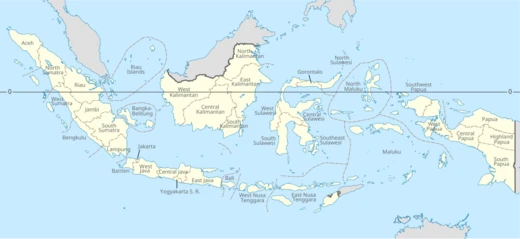
Papua is a province of Indonesia, located on the northern coast of Western New Guinea and including island groups in Cenderawasih Bay. It was formerly known as West Irian and Irian Jaya, and since 2002 has held special autonomous status under Indonesian law, granting it a higher degree of self-governance than most other provinces. The province is bordered by Papua New Guinea to the east, the Pacific Ocean to the north, and the provinces of Central Papua and Highland Papua to the south.
Quick Facts
- Other Name
- Mamberamo – Tabi – Saireri
- Shield Link
- #Coat of arms
- Official Name
- Province of Papua / id · Provinsi Papua
- Shield Size
- 100
- Established Title
- Establishment
- Established Date
- 27 December 1949
Facts from the source article.
Lore & Background
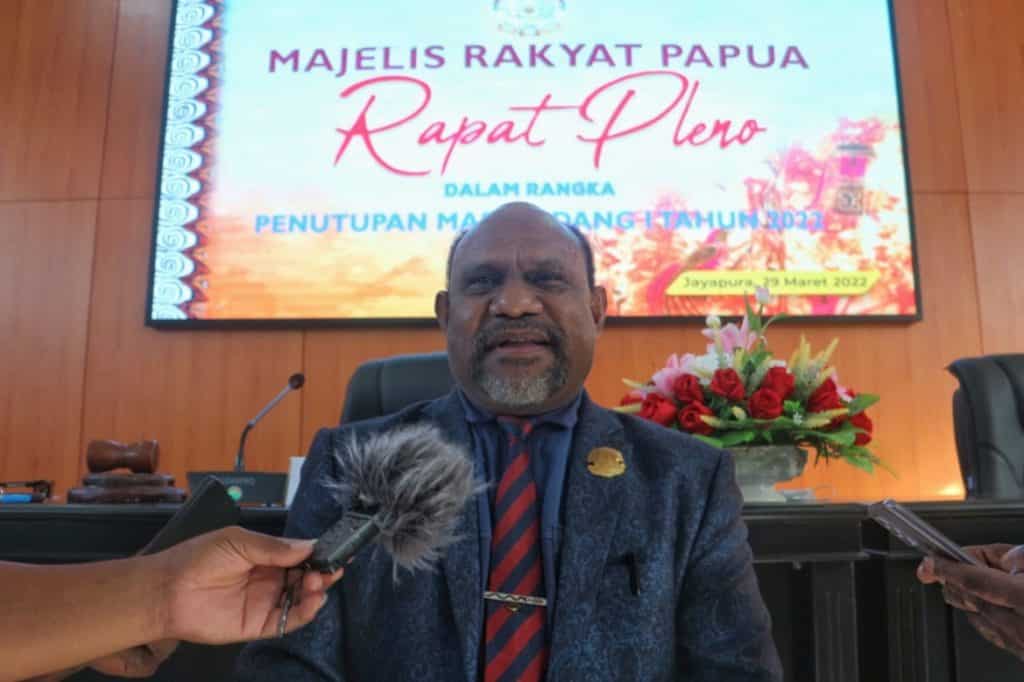
Papua province was created from the former Irian Jaya, which originally covered all of Western New Guinea. In 2003, the western part split off to form West Papua province, and in July 2022, three more provinces—Central Papua, Highland Papua, and South Papua—were carved out, leaving the current smaller northern territory. The province is governed by a directly elected governor and a regional legislature, the People's Representative Council of Papua, which includes 55 elected members and 14 appointed members under special autonomy rules. A unique body, the Papuan People's Assembly, was formed in 2004 to represent tribal chiefs, religious leaders, and women, focusing on customary arbitration.
Reader's Guide
Papua's significance lies in its special autonomous status, which grants it authority over most administrative sectors except foreign affairs, defense, monetary policy, religion, and justice. This status, established by Law 21/2001, provides substantial funding for indigenous peoples, though the province has low fiscal capacity and relies heavily on transfers. The province's cultural distinctiveness is rooted in native Papuan traditions, with coastal populations more open to modern influences. Demographically, the majority of residents are Christian (70.15%), with a significant Muslim minority (29.56%). The province's administrative divisions include eight regencies and one city, Jayapura, which is the most populous area. Papua also elects three members to Indonesia's national People's Representative Council. Its geography spans coastal regions and islands, with most population concentrated around Jayapura.
Did You Know?
- Papua was formerly known as Irian Barat (1963–1973) and Irian Jaya (1973–2002).
- The province shares a maritime boundary with Palau in the Pacific Ocean.
- The Papuan People's Assembly, formed in 2004, includes tribal chiefs, religious leaders, and women representatives.
- The province's population in mid-2025 was estimated at 1,073,640, with a growth rate of 1.31% per year.
Geographic Identity & Territorial Evolution
Papua province occupies the northern coastal strip of Western New Guinea, stretching along the Pacific Ocean and encompassing the island groups scattered through Cenderawasih Bay to the west. Its eastern boundary is shared with the nation of Papua New Guinea, while to the south it meets the provinces of Central Papua and Highland Papua. The province also holds maritime boundaries with Palau in the Pacific. The territory roughly mirrors the traditional Papuan customary region known as Mamta – Saireri. The province has undergone dramatic territorial shifts over the past two decades: before 2003 it covered the entirety of Western New Guinea. In 2001 the western portion was carved into the new province of West Papua, and in July 2022 three additional provinces—Central Papua, Highland Papua, and South Papua—were separated, leaving a considerably smaller northern area centered on Jayapura and the Cenderawasih Bay islands. The name itself has shifted through West Irian (1963–1973), Irian Jaya (1973–2002), and finally Papua, adopted in 2002.
Special Autonomy & Political Architecture
Papua holds one of seven special autonomy designations in Indonesia, a status granted under Law 21 of 2001. This framework grants the provincial government broad authority across nearly all administrative sectors, with only five areas reserved for the central government: foreign affairs, security and defense, monetary and fiscal policy, religion, and justice. The province is led by a directly elected governor and a regional legislature called the DPRP, which since 2014 has comprised 69 members—55 elected in general elections every five years and 14 appointed through the special autonomy mechanism. A distinctive institution is the Papuan People's Assembly, established in 2005 as a body of tribal chiefs, religious leaders, and women representatives, charged with arbitrating matters of Papuan tribal custom. The 2019–2024 DPRP spans 13 parties, with NasDem and the Democratic Party each holding 8 seats and the Indonesian Democratic Party of Struggle winning 7.
Indigenous Empowerment & Forestry Governance
A central pillar of Papua's special autonomy is the channeling of resources toward its indigenous populations. The province receives a dedicated special autonomy fund, which in 2008 accounted for roughly 55 percent of total provincial revenues, reflecting a fiscal structure heavily reliant on unconditional transfers from the national government. Following the autonomy law, the provincial government issued decrees designed to give local communities direct access to timber production benefits. These included a Timber Logging Permit for Customary Communities, allowing small-scale extraction on concessions of 250 to 1,000 hectares for one year through participatory cooperatives, and a Permit to Manage Customary Forests for larger tracts up to 2,000 hectares over a maximum of 20 years. Additionally, logging companies operating in the region were required to pay compensations to local communities beyond the standard national fees and taxes, representing a deliberate attempt to align resource extraction with customary land rights.
Administrative Divisions & Local Governance
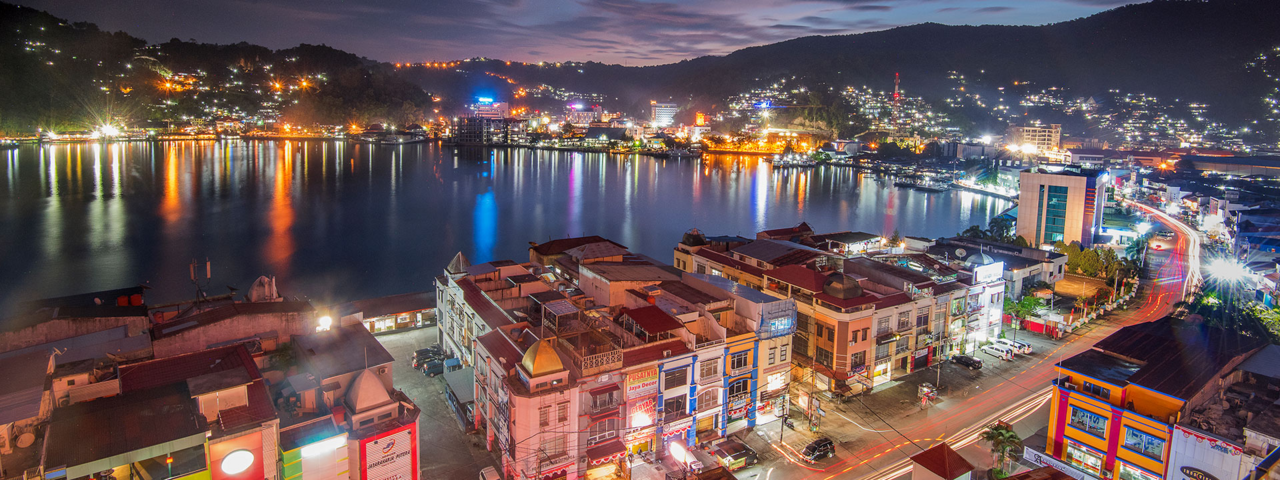
Within its current borders, Papua is divided into eight regencies and one city, the latter being Jayapura, the provincial capital. The administrative landscape has evolved considerably: the area originally contained just three regencies—Jayapura, Yapen Waropen, and Biak Numfor. Jayapura City was separated from Jayapura Regency on 2 August 1993. In December 2002, Keerom and Sarmi were carved from Jayapura Regency, while Waropen was split from Yapen Waropen, the remainder of which became Yapen Islands. Supiori Regency emerged from Biak Numfor in December 2003, and Mamberamo Raya was created from western Sarmi in March 2007. Below the regency level, the territory is subdivided into districts and then villages. Notably, the special autonomy legislation introduced the term distrik in place of the more common kecamatan across all of Western New Guinea, with the district head titled kepala distrik. The mid-2025 population estimate stands at approximately 1.07 million, growing at about 1.31 percent annually.
Gallery

Frequently Asked Questions
Who is Papua (province)?
Papua is an Indonesian province stretching along the northern coast of Western New Guinea and covering island groups inside Cenderawasih Bay. It has been renamed several times in its history, having previously gone by West Irian and Irian Jaya before adopting its current name.
What are Papua's powers or special role?
Since 2002 the province has operated under a special autonomous status that grants it a noticeably higher level of self-governance compared with most other Indonesian provinces. This arrangement lets Papua manage more of its own affairs while still sitting within the national legal framework.
Where does Papua sit geographically?
The province is flanked by Papua New Guinea to the east, the Pacific Ocean to the north, and the provinces of Central Papua and Highland Papua to the south. Its total land and water area covers approximately 81,049 square kilometres.
Why is Papua (province) important?
As Indonesia's westernmost province on the island of New Guinea, Papua carries significant cultural, ecological, and geopolitical weight. Its special autonomy also makes it a distinctive case in how Indonesia structures provincial self-rule.
What is Papua's current status in the canon?
Papua today functions as a special autonomous province within Indonesia, sharing its southern border with the newer provinces of Central Papua and Highland Papua. Its ongoing self-governance and development remain active and evolving topics for observers of Indonesian provincial politics.
More in Indonesian Provinces 1-19
Spotted an error? Know more?
Reader corrections go straight into our review queue. Suggest an edit · How this site is sourced