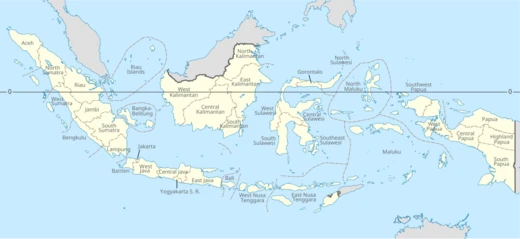
South Sulawesi
Province in southern Sulawesi, Indonesia, with rich spice-trade history.

Enonico · CC BY-SA 4.0
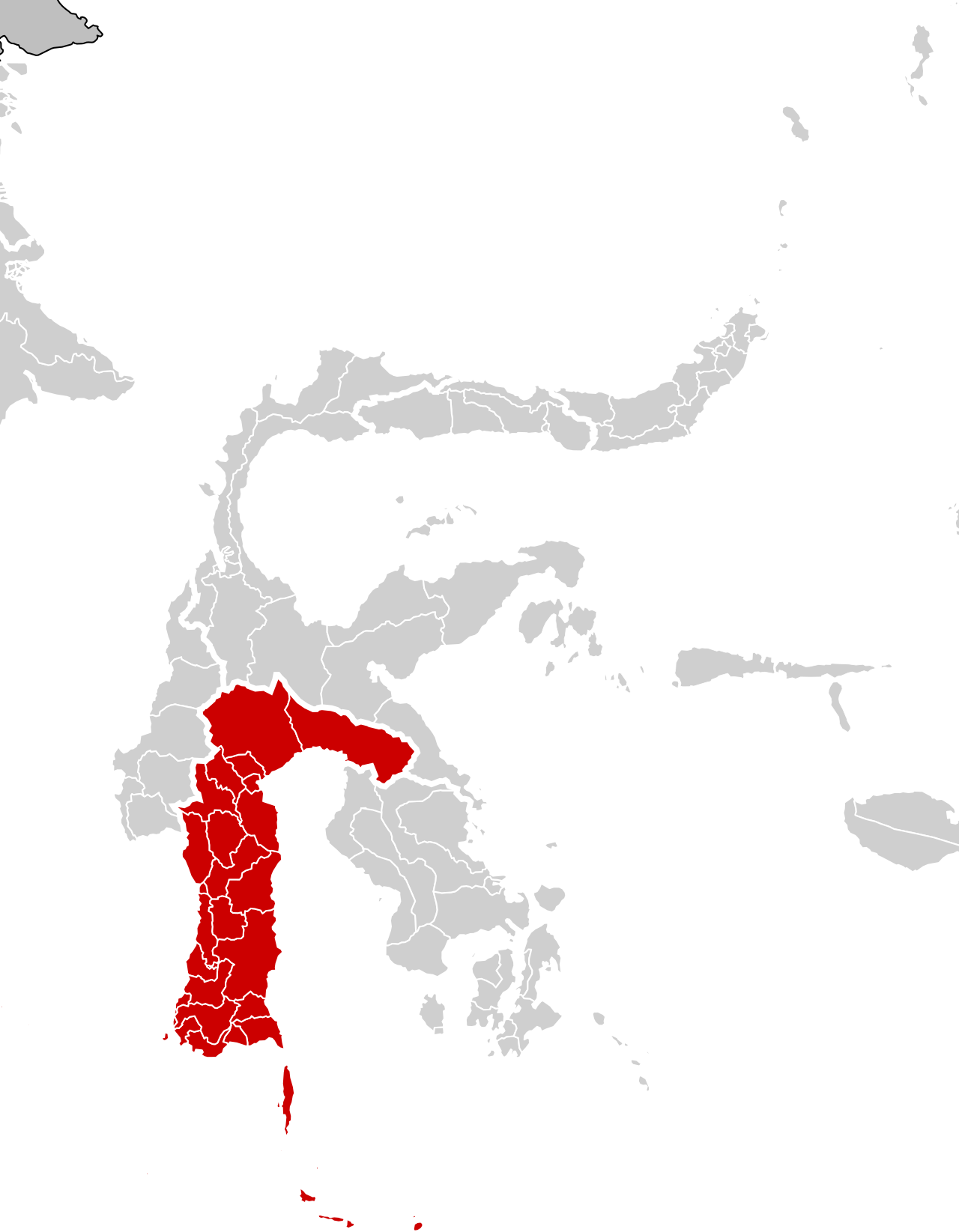
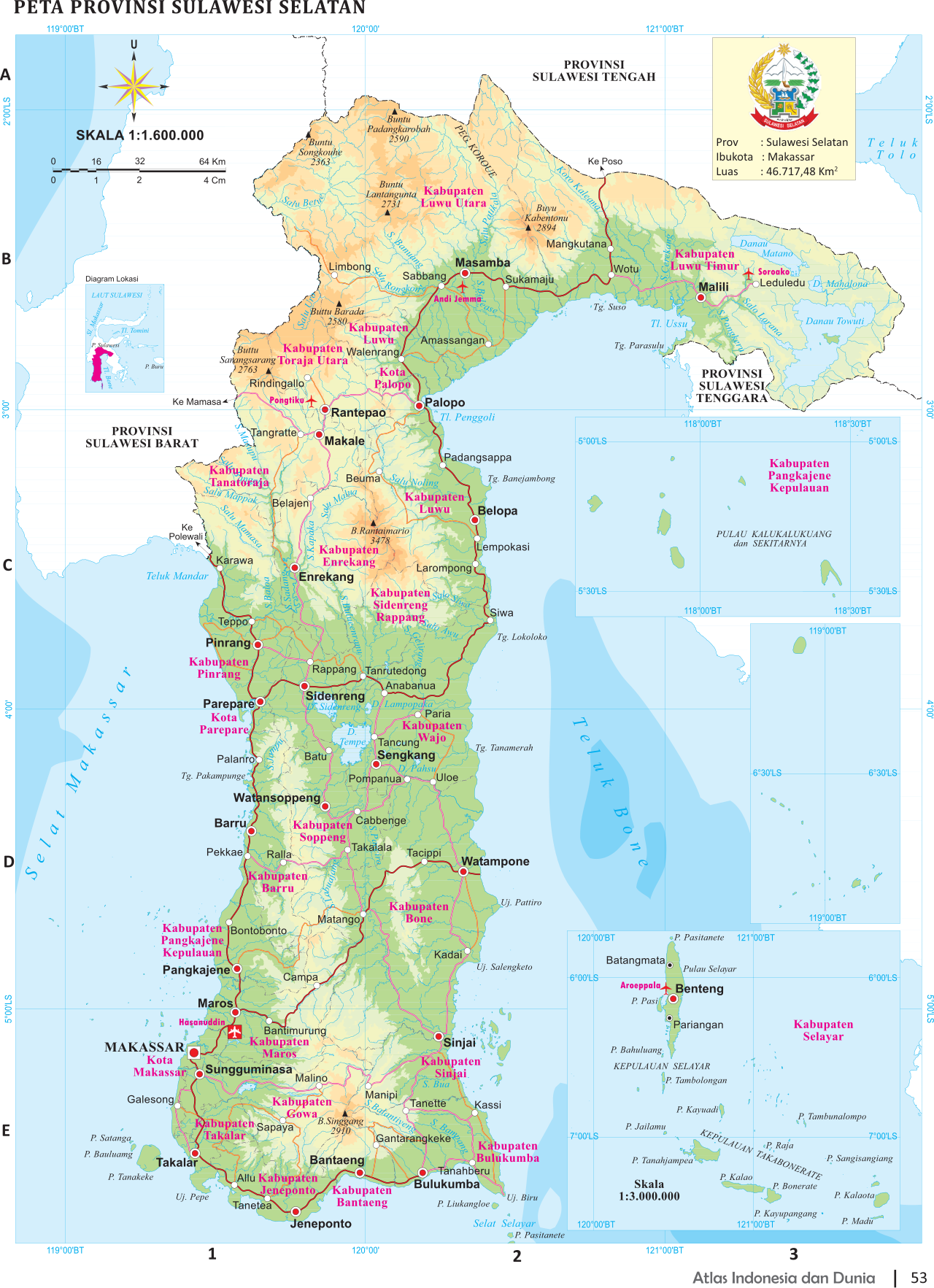
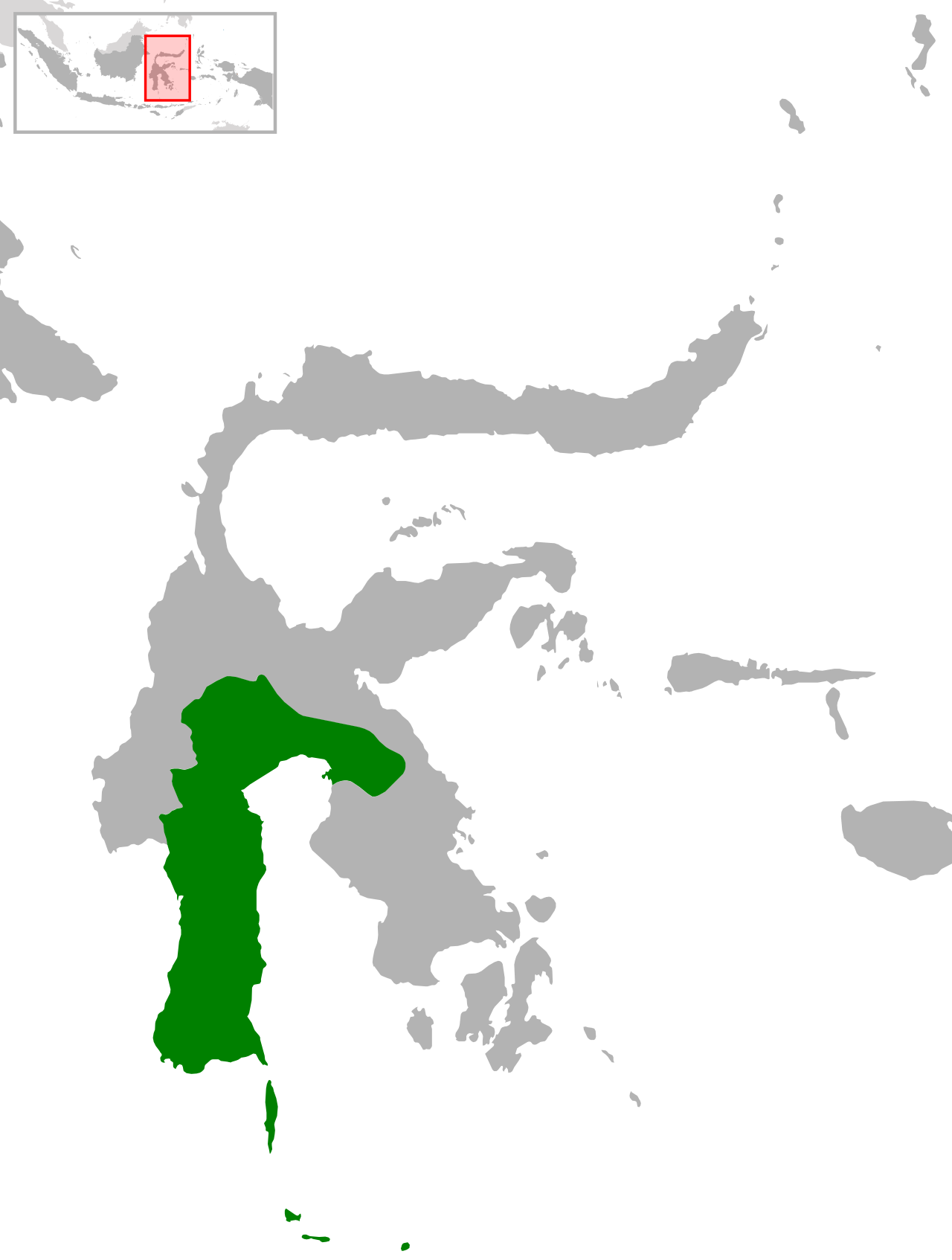
South Sulawesi is a province in the southern peninsula of Sulawesi, Indonesia, including the Selayar Islands archipelago. It is the most populous province on the island, with a population of over 9 million according to the latest official census in 2020, and its capital and largest city is Makassar. Historically, South Sulawesi served as the gateway to the Maluku Islands during the spice trade from the 15th to 19th centuries, and was home to prominent kingdoms such as Makassar and Bone.
Quick Facts
- Official Name
- Province of South Sulawesi / id · Provinsi Sulawesi Selatan
- Native Name
- id · Sulawesi Selatan
- Shield Link
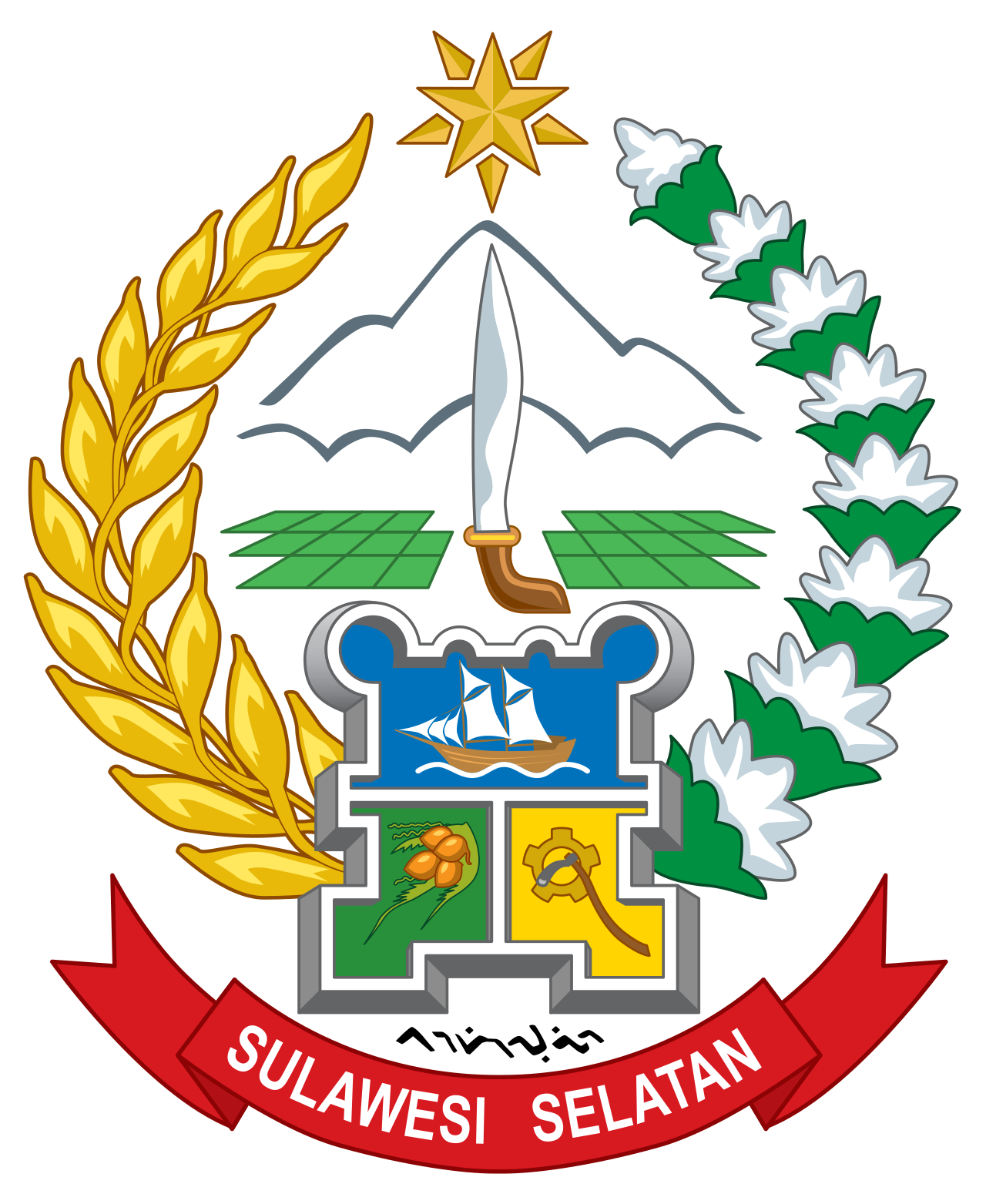
- #Coat of arms
- Shield Size
- 100
- Motto
- Toddopuli / ᨈᨚᨉᨚᨄᨘᨒᨗ / (Bugis-Makassar) / "Keep the faith"
- Established Title
- Founded
- Established Date
- 13 December 1960
Facts from the source article.
Lore & Background
South Sulawesi was first inhabited approximately 30,000 years ago, with archaeological remains found in caves near Maros. Handprint paintings estimated to be 35,000 to 40,000 years old have been discovered in Pettakere cave. By the early 14th century, rising external demand for rice spurred agricultural expansion and political centralization, leading to the rise of Bugis chiefdoms like Boné and Wajoq, and the Makassar polity of Gowa.
Reader's Guide
South Sulawesi's significance lies in its role as a historical gateway for the spice trade, connecting the Maluku Islands to global markets from the 15th to 19th centuries. The region was shaped by competition between the Makassar kingdom of Gowa and the Bugis kingdom of Bone, culminating in Dutch East India Company (VOC) intervention in the 17th century. The VOC allied with Bugis prince Arung Palakka to defeat Gowa, forcing Sultan Hasanuddin to sign a treaty that reduced Gowa's power. Resistance to Dutch colonial rule continued until 1905. Today, South Sulawesi is the most populous province on Sulawesi, with a diverse economy based on agriculture, fishing, and mining. Its cultural heritage includes the traditional pinisi sailing ship, still used by Buginese and Makassarese for inter-island transport and fishing. The province's administrative divisions include 21 regencies and three independent cities, and it elects members to Indonesia's People's Representative Council through three electoral districts.
Did You Know?
- The province includes 369 offshore islands, with 133 in Pangkajene and Islands Regency.
- The pinisi, a traditional two-masted sailing ship, is still widely used by the Buginese and Makassarese.
- A tornado struck the province on June 16, 2022, damaging 63 homes.
- The province's population grew by an average of roughly 1.2% per year between 2010 and 2020, according to official census data.
Constitutional Foundations & Administrative Hierarchy
The 1945 Constitution, specifically Article 18 paragraph 1, establishes the bedrock of Indonesia's territorial organization: the unitary state is partitioned into provincial regions, which are further broken down into regencies and cities, each equipped with its own regional government. This framework is not merely bureaucratic—it is a deliberate mechanism for maintaining administrative cohesion across a vast, geographically scattered archipelago, consistent with Indonesia's international recognition as a unified archipelagic state. Today the country comprises 38 provinces covering a combined land area of roughly 1.89 million square kilometers, yielding an average provincial footprint of about 49,768 square kilometers. In mid-2025 the average province was home to approximately 7.49 million residents. Beneath the provincial tier, regencies and cities (formerly designated as second-level regions) are subdivided into districts, creating a layered administrative architecture that stretches from the national capital down to the most local level of governance.
Provincial Governance & Electoral Mechanics
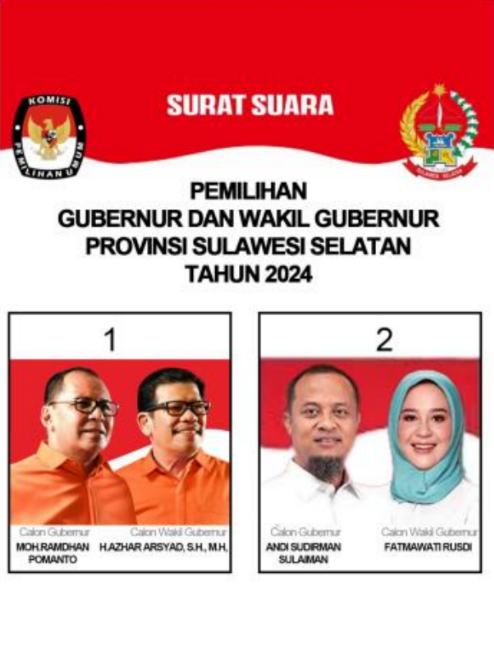
Every province in Indonesia operates through a tripartite local government: an elected governor, a vice-governor, and a regional legislative assembly known as the DPRD Provinsi. Both the executive leaders and the DPRD members stand for popular vote on a five-year cycle, though governors face a hard ceiling of two consecutive terms—a safeguard against prolonged personal rule at the provincial level. The electoral calendar has evolved significantly over the past decade. Prior to 2015, gubernatorial races were scheduled independently from national votes, but a reform brought regional head elections into alignment with the broader democratic timetable. Subsequent partial simultaneous elections took place in February 2017, June 2018, and December 2020, building toward a landmark November 2024 vote in which every local executive post across the archipelago was contested at once. From that point forward, the plan calls for a unified five-year rhythm of local executive elections, streamlining what was once a patchwork of staggered contests.
The Scope of Provincial Authority
Under Law 23 of 2014 on Regional Government, provincial authorities wield a broad but defined portfolio of responsibilities. These span development planning and oversight, public order and community peace, infrastructure provision, health services, education and human-resource allocation, social-welfare coordination, cooperative and small-business facilitation, environmental regulation, defense coordination, civil registration, general administration, and investment management. Crucially, the law also assigns provinces any basic service that lower-tier regencies or cities cannot deliver independently, plus any additional duties mandated by national legislation. The underlying logic is one of jurisdictional fit: a matter falls under provincial purview when it crosses multiple regency or city boundaries, when its users or beneficiaries span several local jurisdictions, when its positive or negative effects ripple across regional lines, or when centralized handling at the provincial level simply makes more efficient use of available resources. This criteria-based approach ensures governance responsibilities align with the geographic and functional scale at which they are most effectively managed.
Special Autonomy & the Expanding Map
Indonesia is not a federation, yet nine of its 38 provinces enjoy a designated special status—labeled either 'Istimewa' or 'Khusus'—that grants them autonomy beyond the standard provincial framework. The formulations are deliberately non-uniform, shaped by distinct political circumstances. Yogyakarta, which held autonomous standing under colonial Dutch rule, received its first formal special-autonomy grant through a 1950 law; today its governorship is hereditary, held by the Sultan Hamengkubuwono, with the Adipati Paku Alam serving as vice-governor. Aceh's path was forged through conflict: the Free Aceh Movement's insurgency and demands for Islamic-law implementation drove successive legal milestones, culminating in a 2006 framework that enshrined privileged religious, customary, and educational provisions for Muslim citizens alongside a two-decade development fund. Papua was likewise granted special autonomy. Meanwhile the national map continues to shift: after a moratorium on new provinces from 2013, four new provinces emerged in 2022 in Papua, and a 2022 law set the stage for Nusantara to become the 39th province once a presidential capital-relocation decree is issued.
Gallery

Frequently Asked Questions
Who is South Sulawesi?
South Sulawesi is a province in Indonesia situated on the southern peninsula of the island of Sulawesi, and its territory also extends to the Selayar Islands archipelago. It is the most populous province on that island, with roughly 9 million residents as recorded in the 2020 census.
What is South Sulawesi's role in the Spice Trade arc?
Between the 15th and 19th centuries, the province acted as the principal gateway to the Maluku Islands, making it a linchpin of the global spice trade. Local powers such as the kingdoms of Makassar and Bone controlled key ports and trade routes that passed through their territory.
Where is South Sulawesi's 'home base' (capital)?
Makassar is both the capital and the largest city of the province, sitting on the southwestern coast of Sulawesi. It has long served as the region's political, commercial, and cultural center.
How big is South Sulawesi's fanbase (population)?
The 2020 official census counted approximately 9.07 million people, and mid-2025 projections push that figure close to 9.3 million. This makes it the most populous province on the island of Sulawesi.
Why is South Sulawesi a fan favorite?
Its layered narrative—powerful maritime kingdoms, a centuries-long role as the spice-trade gateway, and a large modern population—gives it a depth of story that few other Indonesian provinces rival. Its strategic position on the southern peninsula also cemented its importance in both regional and national history.
More in Indonesian Provinces 1-19
Spotted an error? Know more?
Reader corrections go straight into our review queue. Suggest an edit · How this site is sourced