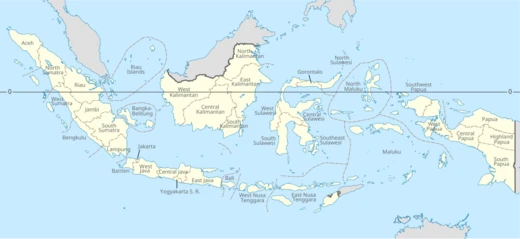
South Sumatra
Province in southeast Sumatra, historically home to Srivijaya.

Gunkarta · Public domain
South Sumatra is a province of Indonesia, located in the southeast of the island of Sumatra. Despite its name, it is not the southernmost province on Sumatra, as Lampung lies to its south. The capital and largest city is Palembang, and the province covers territory historically administered by the Palembang Sultanate. It is the largest province on Sumatra, slightly smaller than Portugal, and is rich in natural resources such as petroleum, natural gas, and coal.
Quick Facts
- Native Name
- id · Sumatera Selatan
- Official Name
- Province of South Sumatra / id · Provinsi Sumatera Selatan
- Registration Plate
- BG
- Shield Link
- Armorial of Indonesia#Provincial
- Shield Size
- 90
- Nickname
- id · Bumi Sriwijaya / "Land of Srivijaya"
- Motto
- id · Bersatu Teguh / "Stand Together"
- Seat Type
- Capital / and largest city
- Seat
- Palembang
- Established Title
- Established
Facts from the source article.
Lore & Background
South Sumatra has been settled since the Palaeolithic era, evidenced by tools found in the Saling and Kikim rivers and 78 skeletons dated 3,000–14,000 years ago from Harimau Cave. Around the 7th century AD, the Buddhist kingdom of Srivijaya was established in the area now known as Palembang, becoming a major maritime trade power. The Kedukan Bukit inscription of 682 CE records the empire under Dapunta Hyang, and the Kota Kapur inscription of 686 CE shows Srivijaya dominated southern Sumatra, Bangka, Belitung, and Lampung, and launched expeditions against Java.
Reader's Guide
South Sumatra's significance lies in its role as the heartland of the Srivijaya empire, a dominant maritime kingdom that controlled key trade routes in Southeast Asia from the 7th to the 13th centuries. The province's capital, Palembang, was the likely center of Srivijaya, though some experts debate the exact location. Srivijaya's influence extended to Thailand, Cambodia, and even Madagascar, and it was known to Arab traders as Sribuza or Zabaj. The empire declined after a Chola invasion in 1025 and due to silting of the Musi River, which reduced Palembang's strategic importance. Today, South Sumatra is Indonesia's largest province on Sumatra, with a diverse population including Palembangese, Javanese, Sundanese, Minangkabau, and Chinese communities.
Did You Know?
- The Kedukan Bukit inscription from 682 CE is reputed to be the oldest inscription written in Malay.
- Srivijaya contributed to the population of Madagascar, 3,300 miles west of Sumatra.
- The province is slightly smaller than Portugal and the U.S. state of Maine.
- Seventy-eight skeletons dating back 3,000–14,000 years were excavated from Harimau Cave in Ogan Komering Ulu Regency.
Constitutional Foundation & Administrative Place
South Sumatra occupies its position as one of Indonesia's thirty-eight first-level administrative divisions, a structure rooted in Article 18, paragraph 1, of the 1945 Constitution. That constitutional clause mandates that the Unitary State be partitioned into provincial regions, each further broken down into regencies and cities, with every tier possessing its own regional government governed by statute. Before the Reform era, provinces carried the designation 'first-level provincial regions' (provinsi daerah tingkat I), a label reflecting the hierarchical naming convention of the Suharto period. The constitutional architecture is designed to hold together a vast archipelago spanning both land and sea, reinforcing administrative unity in line with Indonesia's standing as a recognized archipelagic state under international law. Within this framework, South Sumatra sits alongside its peers, each province averaging roughly 49,768 square kilometers of territory and a population near 7.5 million as of mid-2025, though individual provinces vary considerably from those national means.
Provincial Authority & Service Delivery
Under Law 23 of 2014 on Regional Government, the provincial executive in South Sumatra wields a broad portfolio of responsibilities that extend across multiple regencies and cities within its borders. These duties span development planning and oversight, the provision of public infrastructure and facilities, management of the health sector, and the allocation of human resources for education. The province also shoulders social services, environmental regulation, defense coordination, population registration, and investment administration. A key principle guiding these powers is that provincial authority applies to matters whose scope, users, or impacts cross municipal boundaries, or where centralized delivery proves more resource-efficient. The governor, vice-governor, and the provincial DPRD collectively manage these affairs, operating within limits set by the central government. This layered authority ensures that services which individual regencies cannot deliver alone are handled at the provincial level, creating a functional bridge between local and national governance.
Electoral Mechanics & Term Limits
The leadership of South Sumatra's provincial government is determined through direct popular vote. Both the governor and members of the DPRD Provinsi stand for five-year terms, though a governor may serve no more than two consecutive terms, a constraint designed to prevent prolonged concentration of executive power. The election of DPRD members is synchronized with the national general election, ensuring a single coordinated voting day. Regional head elections, by contrast, were historically held on separate schedules. That changed in 2015, when simultaneous regional elections became the norm. The reform trajectory continued with partial simultaneous elections in February 2017, June 2018, and December 2020, before culminating in a fully synchronized cycle in November 2024. Going forward, all local executive posts across the archipelago will be contested on the same five-year rhythm, a system that streamlines campaign logistics and reduces the frequency of electoral events citizens must navigate.
Special Autonomy Context & Provincial Peers
Nine of Indonesia's thirty-eight provinces hold a special or designated status, marked by the terms 'Istimewa' or 'Khusus.' South Sumatra does not carry this elevated designation, placing it in the standard provincial category alongside the majority of its peers. The special-autonomy provinces each received their unique formulation through distinct political circumstances: Yogyakarta's hereditary sultanate model traces back to Law 3 of 1950, while Aceh's framework—shaped by decades of insurgency and the Free Aceh Movement's demands—culminated in Law 11 of 2006, granting privileges in Islamic law, customary life, and a dedicated development fund. Papua was also granted special autonomy, though its provisions were still being detailed at the time of the source material. These arrangements exist without making Indonesia a federation; rather, they represent tailored decentralization responding to specific historical and political imperatives. For South Sumatra, the standard provincial framework under the 1945 Constitution and Law 23/2014 remains the operative governance structure.
Gallery
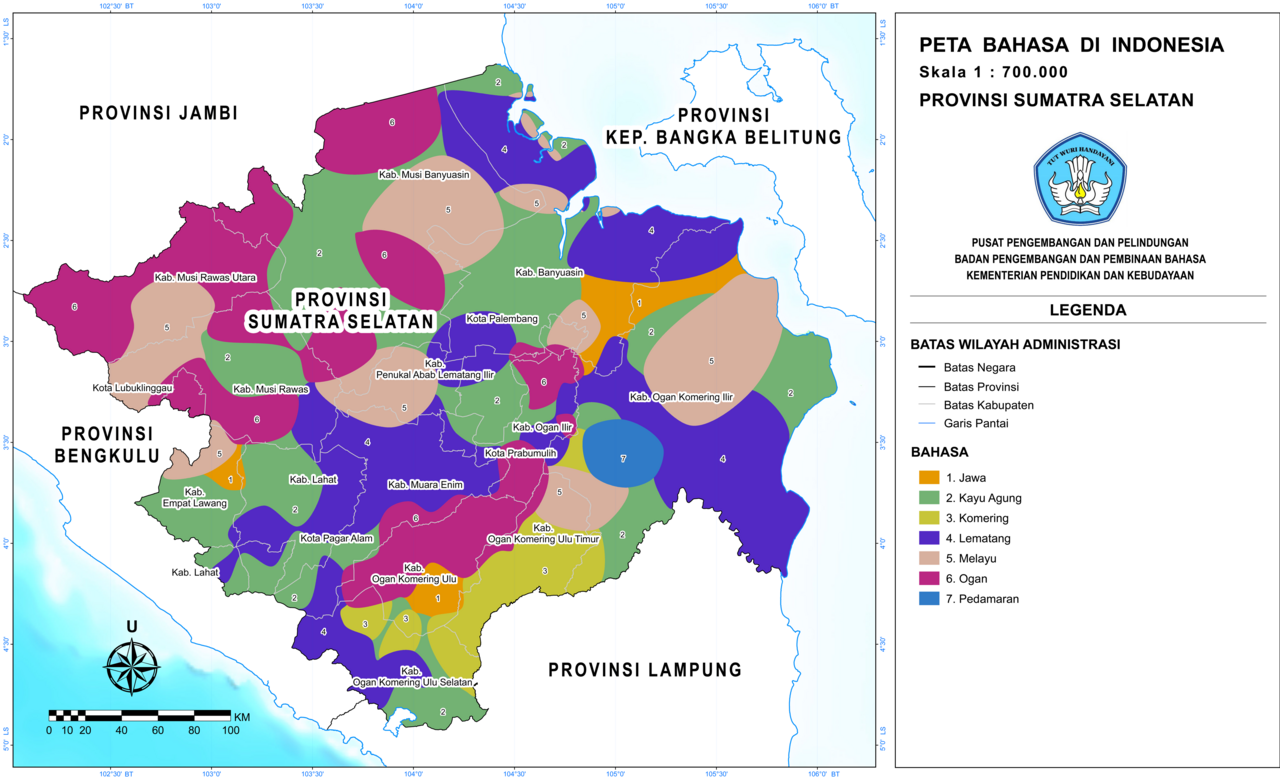
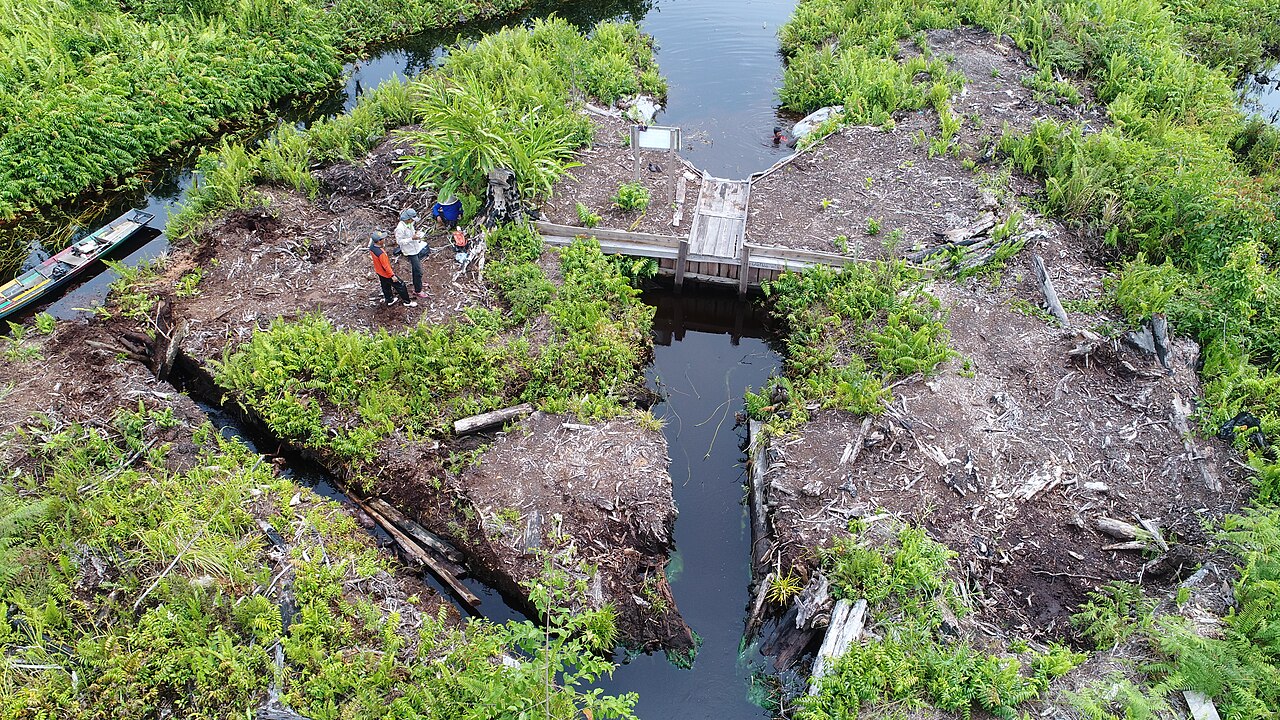


Frequently Asked Questions
Where exactly is South Sumatra located on the island of Sumatra?
It occupies the southeastern portion of Sumatra, though it is not actually the southernmost province—Lampung sits further south. The name can be a little misleading for first-time readers of a map.
What city serves as South Sumatra's capital and largest urban center?
Palembang holds both titles and is the cultural heart of the province. It is also the main hub for the Palembangese ethnic group and the Palembang language, the region's most widely spoken tongue.
How does South Sumatra's size and population compare to other Indonesian provinces?
At roughly 86,772 square kilometers it is the largest province on Sumatra, with an area just slightly under that of Portugal. Its population reached about 8.47 million in the 2020 census and is estimated near 8.84 million by mid-2025.
What natural resources make South Sumatra economically significant?
The province holds substantial reserves of petroleum, natural gas, and coal, which form the backbone of much of its industrial output. These deposits have shaped the region's economy and its role in Indonesia's energy sector for decades.
What historical legacy is South Sumatra most associated with?
The territory was long administered by the Palembang Sultanate and is widely regarded as the homeland of the ancient Srivijaya maritime empire. This layered history makes it one of the most culturally rich provinces on the island.
More in Indonesian Provinces 1-19
Spotted an error? Know more?
Reader corrections go straight into our review queue. Suggest an edit · How this site is sourced