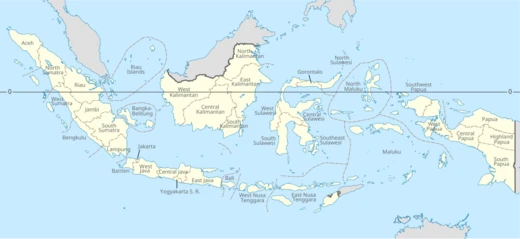
West Nusa Tenggara
Indonesian province of Lombok and Sumbawa islands.

West Nusa Tenggara (Indonesian: Nusa Tenggara Barat, NTB) is a province of Indonesia, comprising the western portion of the Lesser Sunda Islands except Bali. It consists of two main islands, Lombok and Sumbawa, along with several smaller islands, and its capital and largest city is Mataram on Lombok. The province is known for its Sasak culture on Lombok and Samawa and Mbojo culture on Sumbawa, as well as its natural environment including beaches and the Gili Islands.
Quick Facts
- Native Name
- id · Nusa Tenggara Barat
- Official Name
- Province of West Nusa Tenggara / id · Provinsi Nusa Tenggara Barat
- Shield Link
- Armorial of Indonesia#Provincial
- Established Title
- Established
- Established Date
- 14 August 1958
- Seat Type
- Capital / and largest city
- Seat
- Mataram
- Governing Body
- West Nusa Tenggara Provincial Government
- Leader Title
- Governor
- Leader Name
- Lalu Muhamad Iqbal (Gerindra)
Facts from the source article.
Lore & Background
West Nusa Tenggara was originally inhabited by people from Southeast Asia, with the Sasak people being the most numerous indigenous group on Lombok, while Sumbawa is home to the Samawa and Bima peoples. The region was part of the Majapahit Empire in the 14th century, as recorded in the Negarakertagama. Islam spread through the region following the decline of Majapahit, influenced by the Demak Sultanate and Malay traders, and became the official religion under King Abdul Kahir of Bima around 1605.
European contact began with the Portuguese in 1605 and the Dutch in 1611, leading to disputes and Dutch expansion. The Dutch made agreements with local sultanates, including the Bima Sultanate in 1669, which restricted trade and recognized Dutch power. The eruption of Mount Tambora in 1815 devastated the region, destroying the kingdoms of Tambora and Papekat and killing over 10,000 people.
After Indonesian independence, West Nusa Tenggara was part of the State of East Indonesia and later the province of the Lesser Sunda Islands. It was established as a separate province on 14 August 1958, with its first governor being AR. Moh. Ruslan Djakraningrat.
Reader's Guide
West Nusa Tenggara holds significance as a province that bridges the cultural and geographical diversity of Indonesia's Lesser Sunda Islands. Its two main islands, Lombok and Sumbawa, contrast sharply: Lombok is smaller but densely populated, with a mountainous interior dominated by Mount Rinjani, an active volcano and popular tourist destination, while Sumbawa is larger but less populated, with varied landscapes including dry grasslands and Mount Tambora, site of a historic massive eruption. The province's cultural heritage includes the Sasak traditions of Lombok and the Samawa and Mbojo cultures of Sumbawa, alongside historical sites like Sade Village and ancient palaces of the Bima Sultanate. Economically and touristically, West Nusa Tenggara is known for its beaches, surfing destinations such as Kuta Beach and Lakey Beach, and the Gili Islands, which attract visitors for their clear waters and coral reefs. The province's history reflects a blend of indigenous, Hindu-Buddhist, Islamic, and colonial influences, shaping its modern identity as a distinct administrative region within Indonesia.
Did You Know?
- Mount Rinjani on Lombok is the highest mountain in the province at 3,726 meters and is an active volcano.
- The eruption of Mount Tambora in 1815 destroyed the kingdoms of Tambora and Papekat and killed more than 10,000 people.
- The Gili Islands (Gili Trawangan, Gili Air, and Gili Meno) are among the most popular tourist destinations in Indonesia.
- The province was established on 14 August 1958 by Law No. 64 of 1958.
More in Indonesian Provinces 1-19
Spotted an error? Know more?
Reader corrections go straight into our review queue. Suggest an edit · How this site is sourced