Hockey skates
Boot, blade, and holder designed for ice hockey and ringette.

Anonymous Unknown author · Public domain
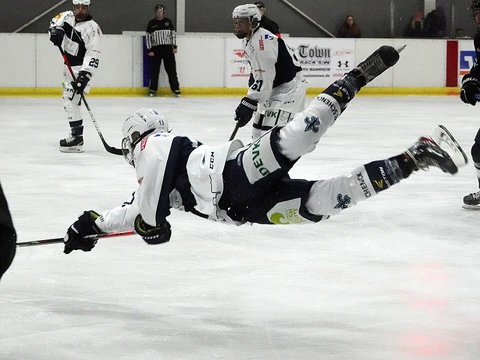
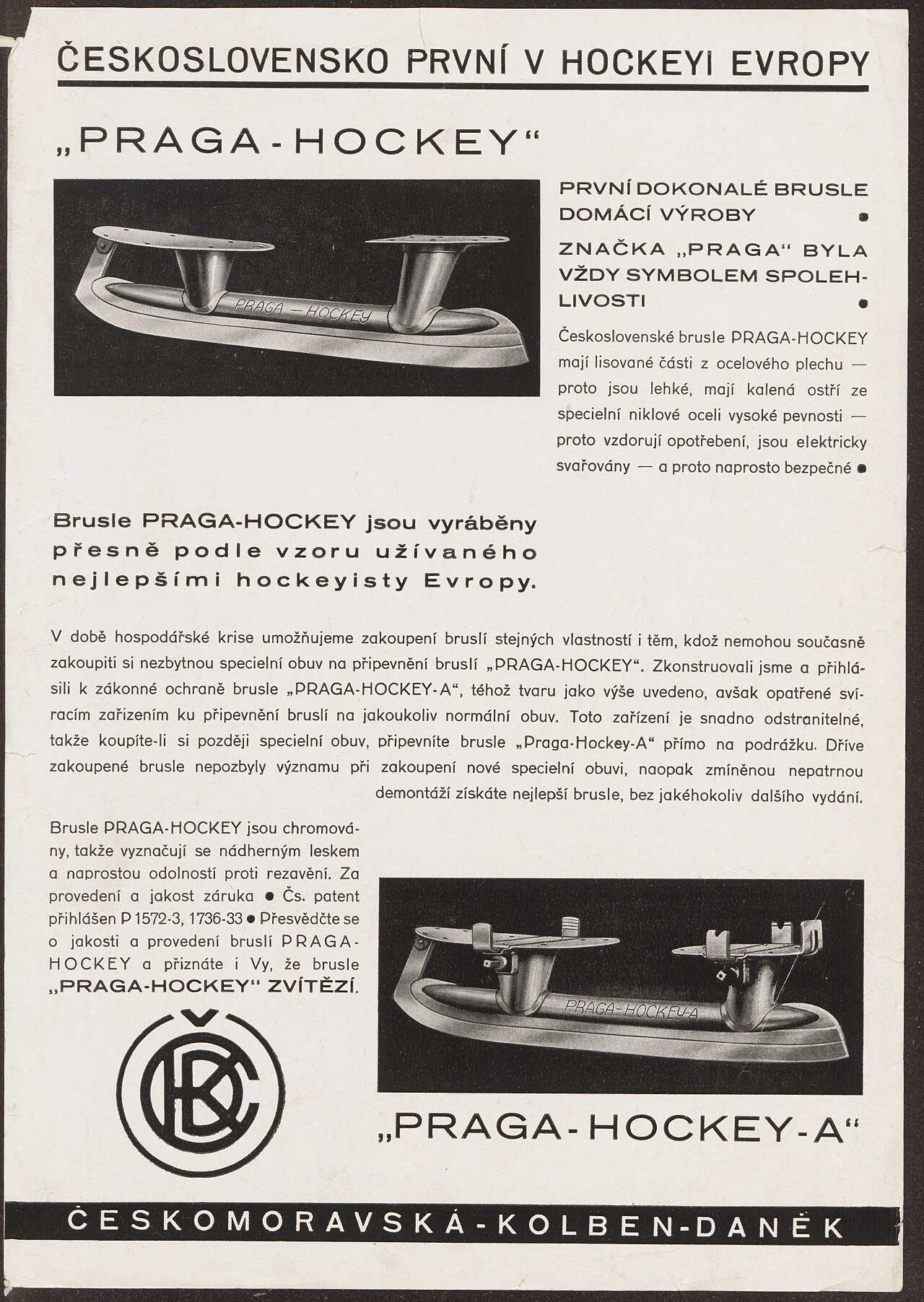
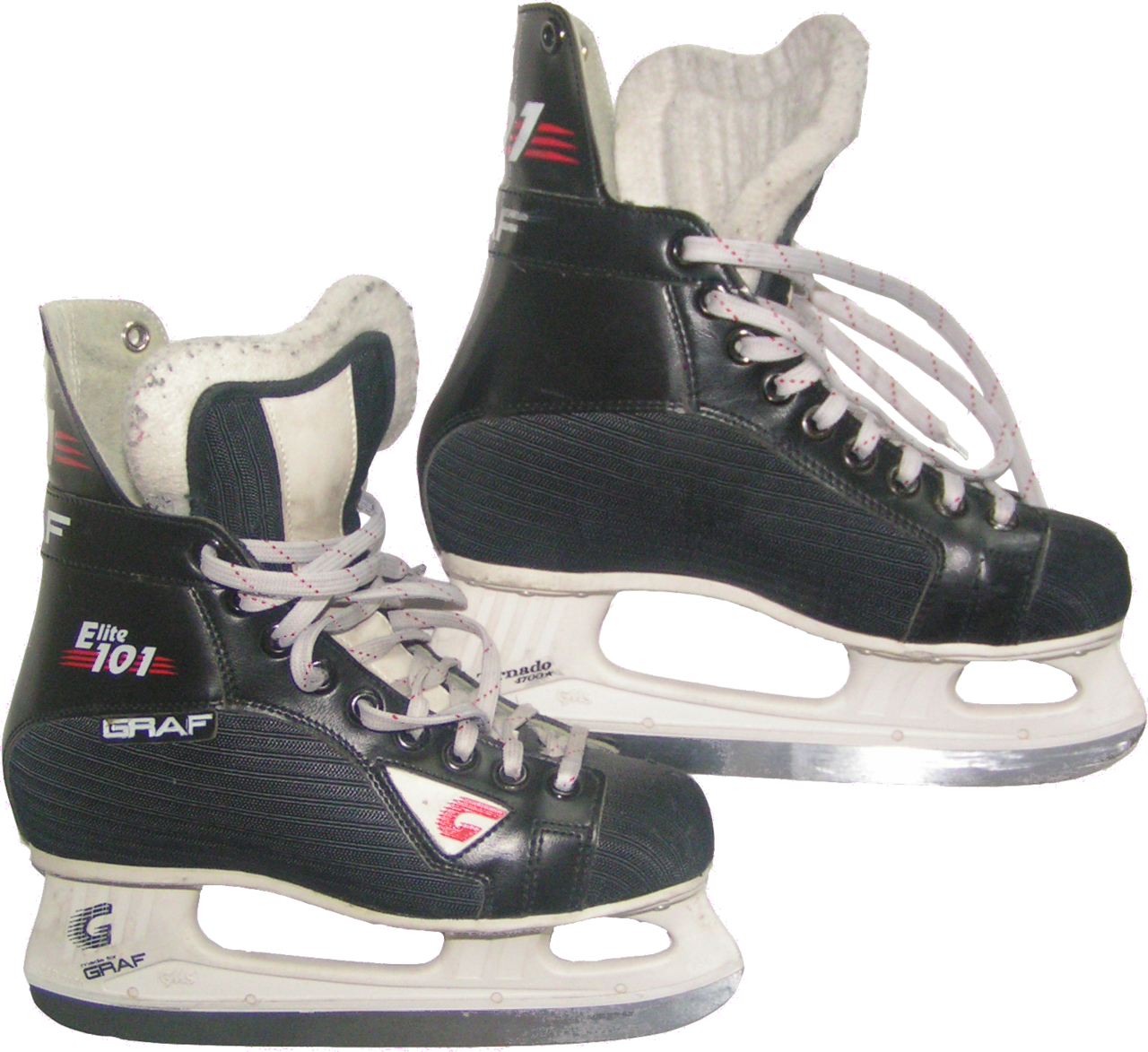
Ice hockey skates are designed for the sports of ice hockey and ringette, though people also wear them for casual recreational skating. Each skate has four main parts: a boot, laces, a blade, and a blade holder. The boot is typically constructed from molded plastic, synthetic or genuine leather, ballistic nylon, or a thermoformed composite material. The blade features two edges. In competitive hockey and ringette, molded plastic is rarely used for the upper part of the boot because it restricts the skater’s range of motion.
- Common sharpening radius
- 1/2 in
- Goalie standard sharpening radius
- 3/4 in
Lore & Background
Ice hockey skates are one of five main types of ice skates, alongside figure skates, bandy skates, racing skates, and touring skates. The boot is constructed from materials such as molded plastic, leather (often synthetic), ballistic nylon, or thermoformed composite. Competitive skates avoid molded plastic for the upper boot to allow greater mobility. The blade is hollow ground in cross section, creating two edges that contact and cut into the ice, enabling increased maneuverability. Sharpening is done with round-edged grinding wheels that grind out a hollow semi-circle along the length of the underside of the blade, forming a sharp edge on each side. The sharpness is measured by the thickness of the grinding wheel; a smaller radius produces a sharper edge. The choice of sharpness is based entirely on player preference, not on player size or level of play. The most common and standard sharpening for most players is a 1/2 in radius of hollow.
Reader's Guide
Ice hockey skates are notable as the standard footwear for the sports of ice hockey and ringette, and are also used recreationally. Their design prioritizes maneuverability and sharp turning, achieved through the hollow-ground blade that provides two edges for cutting into the ice. The variety of boot materials—from molded plastic to thermoformed composites—reflects a balance between durability, support, and mobility, with competitive models favoring materials that do not restrict movement. The practice of sharpening skates hundreds of times over a player's career underscores the importance of blade condition to skating performance. The goalie variant of the skate is distinct: it has a lower ankle cut, a boot encased in hardened plastic (a cowling) to protect against puck impacts, a longer blade with less rocker for lateral movement, and no tendon guard. Goalie skates are typically sharpened with a 3/4 in radius of hollow, differing from the common player standard. The blade design of ice hockey skates allows for sharper and faster maneuverability compared to bandy skates, which prioritize speed and distance over tight turns.
Did You Know?
- Ice hockey skates are also used for playing ringette.
- Competitive ice hockey skates rarely use molded plastic for the upper boot to allow greater mobility.
- The most common sharpening radius for hockey skates is 1/2 in.
- Goalie skates have a lower ankle cut and a longer blade with less rocker than regular hockey skates.
The Skate as a Foundation of Protection
The hockey skate serves as the primary interface between a player and the ice, and its construction reflects the serious physical demands of the sport. Because the game unfolds on hard ice surfaces, against rigid boards, while pucks travel at high velocity and opponents frequently engage in deliberate body contact known as checking, every piece of equipment must address the risk of bruises and severe fractures. The skate itself is built around a thick layer of leather or nylon, a material choice that shields the foot and lower leg from impact while still allowing the flexibility needed for skating. The blade, attached to this protective shell, is rounded at both ends—a design decision that prioritizes easy maneuvering and quick directional changes. In a sport where players must accelerate, decelerate, and pivot constantly, that rounded geometry is essential. The skate thus occupies a unique position: it is simultaneously a performance tool and a protective barrier, the one piece of gear that every player touches the ice through, making its design a critical factor in both speed and safety.
A Layered System of Safety
Beyond the skate and stick, a hockey player relies on a comprehensive array of protective gear to mitigate the many hazards inherent in the sport. A helmet with a rigid thermoplastic shell—typically nylon or ABS—and firm vinyl nitrile foam padding sits atop the head, optionally fitted with a face cage or visor. Beneath it, a neck guard made of nylon or ABS plates offers puncture resistance against pucks and skate blades. The torso is wrapped in a padded vest with front and back panels, velcro closures, and soft or hard-shelled shoulder caps that shield the chest, ribs, spine, and shoulders. Elbow pads with reinforced cups protect the joint and arm bones, while gloves feature a thin leather palm for feel but substantial padding on the outer hand and reinforced thumbs. Knee-length pants incorporate thigh, pelvic, hip, and tailbone pads, and a jockstrap or pelvic protector guards the lower body. Even garter belts, used to hold up hockey socks, are part of this layered defensive architecture.
From Tied-On Blades to Fortified Masks
The protective equipment of ice hockey has undergone a remarkable transformation over more than a century. The earliest skates consisted of nothing more than simple metal blades lashed to ordinary shoes, and sticks remained thin wooden sticks until the 1930s. Goalie protection followed a similar slow arc: in 1897, G.H. Merritt took a step forward by wearing wicket-keeper's pads, and all players wore basic leather gloves until a Detroit goaltender in 1948 experimented with a rectangular leather piece and a baseball catcher's glove to create the trapper and blocker. Head protection for goalies began when Clint Benedict donned a crude leather mask in 1928 to cover a broken nose, and Jacques Plante became the first to wear a goalie mask as regular equipment. Vladislav Tretiak's design marked the first true helmet-and-cage combination. Today's most recognized goalie mask resembles a heavily fortified motorcycle helmet with an attached cage, though its internal construction is fundamentally that of a mask rather than a helmet.
The Goaltender's Distinct Toolkit
While skaters and goaltenders share the broad philosophy of protection, the goalie's equipment diverges significantly in both form and function. Because goalies face a constant barrage of direct puck impacts, they wear masks and substantially bulkier gear than their teammates. This specialization extends all the way down to the skate: a goaltender's blade sits lower to the ice and is shaped more square than the rounded blade used by skaters. That geometry trades quick turns and top speed for the lateral mobility and stability a goalie needs to cover the net. The neck protector also differs—where skaters use a series of nylon or ABS plates, goalies wear a curved panel of clear Lexan suspended from nylon cords beneath their mask, evoking the look of a military gorget. The gloves split into two distinct pieces, the trapper and the blocker, a configuration born from a 1948 experiment. Together, these adaptations create a specialized kit optimized for one singular purpose: standing between the net and the highest-velocity objects in the sport.
Gallery
Frequently Asked Questions
What are the four main parts of a hockey skate?
Every hockey skate is built from a boot, laces, a blade, and a blade holder. The boot can be crafted from molded plastic, synthetic or genuine leather, ballistic nylon, or a thermoformed composite, while the blade itself carries two distinct cutting edges.
Why do competitive players avoid molded plastic hockey skate boots?
In competitive hockey and ringette, molded plastic uppers are rarely chosen because they restrict the skater's range of motion. Players need the ankle flexibility to push off the ice and change direction quickly, which a rigid plastic shell simply cannot provide.
What is the standard sharpening radius for a hockey skate blade?
A typical player's blade is sharpened to a 1/2-inch radius, whereas goalies generally go with a wider 3/4-inch radius. The larger goalie radius offers more surface contact, which helps with lateral shuffling and absorbing shots.
Can hockey skates be used for sports other than ice hockey?
Absolutely — the same boot, blade, and holder design is shared with ringette, and plenty of people lace them up for casual recreational skating. The two-edged blade makes the skate versatile enough for both high-level competition and leisurely laps around a rink.
What material options exist for the hockey skate boot upper?
Boot uppers come in molded plastic, synthetic leather, genuine leather, ballistic nylon, or thermoformed composite materials. The choice usually comes down to whether the skater values durability, low weight, or maximum ankle flexibility for their level of play.
More in Ice Hockey Equipment 1-24
Spotted an error? Know more?
Reader corrections go straight into our review queue. Suggest an edit · How this site is sourced