Cooperalls
Waist-to-ankle hockey pants that changed protection and mobility.

Cooperalls are a brand of ice hockey equipment manufactured by Cooper Canada. The name has become a generic term for all hockey pants featuring a waist-to-ankle outer shell. The basic design remains popular in the sports of ringette and broomball but not ice hockey.
- Manufacturer
- Cooper Canada
- Designer
- Brian Heaton
- Design period
- 1972 to 1975
- Alternative name
- Cooperall Coupé (short-legged version)
- Similar product
- CCM Propac
Lore & Background
Cooperalls were designed by Brian Heaton, the senior designer for Cooper Canada from 1972 to 1975, and were used in ice hockey, ringette, and broomball. Promoted as 'a complete hockey uniform system,' it consisted of an elasticated girdle extending from the middle of the rib cage to the top of the knees, worn beneath a tracksuit-style woven nylon outer shell covering waist to ankle. The girdle had pockets into which lightweight, compression moulded foam pads were placed, and the close fitting nature of the garment ensured that the pads always stayed in contact with the areas of the body they were designed to protect. This replaced the traditional combination of short hockey pants and socks, and Cooper claimed that when combined with their own brand of extra light shin guards, shoulder pads and gloves the system weighed 40% less than a conventional uniform. As well as being considerably lighter, the system offered players greater freedom of movement and improved hip, pelvis and thigh protection.
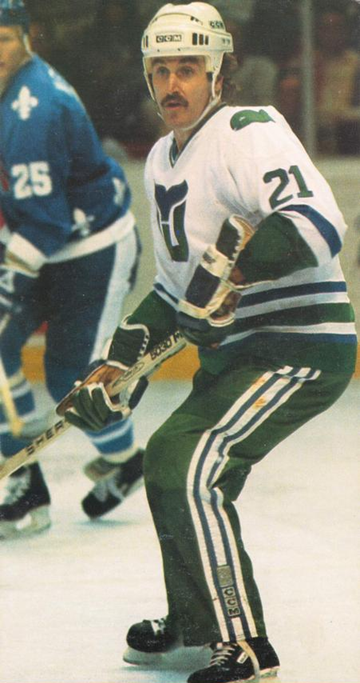
A short-legged outer shell, called the 'Cooperall Coupé' (from the French past participle coupé, to cut) was also available for traditionalists. The long pant was first adopted by the Ontario Hockey League in the late 1970s and was tested in training camps by a number of National Hockey League teams, including the Winnipeg Jets and the Quebec Nordiques. A similar style of girdle and long pant, called the 'Propac', was manufactured by CCM. This design was worn by the Philadelphia Flyers in the 1981–82 NHL season, and both the Flyers and the Hartford Whalers in the 1982–83 NHL season.
Reader's Guide
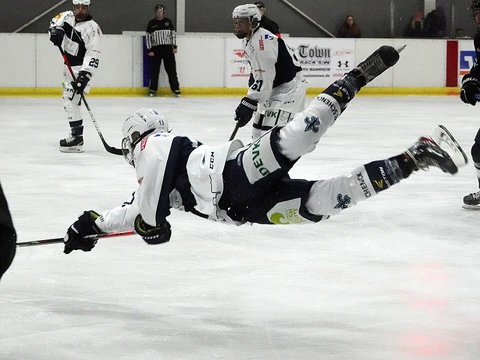
The long pant design received considerable criticism in ice hockey circles. Critics argued that player safety was compromised by less friction with the ice during a fall, causing players to slide more violently into the boards. The design was also considered too warm. Goalies complained that the puck was difficult to see against the long black pants worn by the Flyers players. The NHL subsequently passed a rule that teams had to wear short pants and home and away socks from the 1983–84 season onwards. However, they remained popular in amateur hockey and inline hockey throughout the 1980s, and the girdle and short shell design is still available from some hockey manufacturers. Today, players in the sports of ringette and broomball still wear ankle length sports pants whose designs were inspired by the original design of Cooperalls and can be seen widely used across both sports including at major international events. Ringette players wear ice hockey skates while broomball players do not use ice skates of any kind.
Did You Know?
- The NHL banned long pants from the 1983–84 season onward.
- Ringette players wear ice hockey skates; broomball players do not use ice skates.
Engineering a New Standard
Cooperalls emerged from the design desk of Brian Heaton, who served as senior designer at Cooper Canada between 1972 and 1975. His creation was marketed as a complete hockey uniform system intended to replace the familiar pairing of short pants and socks that had defined the sport for decades. The core of the garment was an elasticated girdle stretching from the middle of the rib cage down to the upper knee, into which players slotted lightweight, compression-moulded foam pads. Because the girdle hugged the body tightly, those pads remained pressed firmly against the hip, pelvis, and thigh regions they were meant to shield. Over this foundation sat a tracksuit-style woven nylon outer shell running from waist to ankle, giving the whole ensemble a sleek, unified silhouette. Cooper calculated that, when paired with their own line of extra-light shin guards, shoulder pads, and gloves, the full system weighed roughly forty percent less than a conventional kit while simultaneously granting players noticeably greater freedom of movement. For those who preferred a shorter look, a trimmed version called the Cooperall Coupé—named after the French word for 'cut'—was also offered.
A Brief Run in Professional Hockey
Though conceived as a universal solution, Cooperalls found their most visible stage in organized hockey. The Ontario Hockey League embraced the long-pant format in the late 1970s, signaling early institutional support for the concept. At the professional level, several National Hockey League franchises—including the Winnipeg Jets and the Quebec Nordiques—tested the garment during training camps, evaluating whether the lighter, more protective system could translate to the grueling demands of the regular season. The idea did not die with Cooper Canada's original product line. Rival manufacturer CCM developed its own girdle-and-long-pant combination under the name Propac, which saw actual game action when the Philadelphia Flyers donned it throughout the 1981–82 NHL campaign. The following season, 1982–83, both the Flyers and the Hartford Whalers took to the ice in the Propac, making the long pant a recognizable sight in two different arenas. For a brief window, the silhouette that had been mocked as radical became a legitimate option at the highest level of the sport.
Backlash and the NHL Ban
The very features that made Cooperalls appealing—lightness, a continuous shell, reduced bulk—became the basis for serious criticism once players and officials experienced them in competitive play. The most frequently cited safety concern was that the smooth nylon exterior generated less friction against the ice during a fall, meaning a player who lost balance could slide with considerably more momentum and force into the boards. Others found the enclosed design uncomfortably warm over the course of a full shift. Goalies raised a practical visibility problem: when the Flyers wore their long black pants, the puck became difficult to track against the dark fabric. The cumulative weight of these complaints prompted the NHL to act decisively. Beginning with the 1983–84 season, a league rule mandated that all teams wear short pants paired with home and away socks, effectively ending the long pant's professional career. Yet the design did not vanish entirely; it continued to thrive in amateur and inline hockey throughout the 1980s, and the girdle-plus-short-shell configuration remains available from select manufacturers to this day.
A Living Legacy in Ringette and Broomball
Where ice hockey abandoned the long-pant silhouette, two other sports embraced it wholeheartedly. In ringette and broomball, ankle-length sports pants directly inspired by the original Cooperalls design remain the standard uniform element, seen widely at club level and at major international competitions. The name 'Cooperalls' itself has transcended its brand origins to become a generic term for any hockey-style pants featuring a waist-to-ankle outer shell, a linguistic testament to how deeply the design embedded itself in the vocabulary of these sports. The two disciplines that carry the tradition forward differ in one key mechanical detail: ringette athletes lace up ice hockey skates and glide on frozen rinks, while broomball players take to the ice in regular athletic footwear, using no ice skates of any kind. Despite that distinction, both communities share the same fundamental garment philosophy that Brian Heaton first articulated at Cooper Canada—protective padding held snug against the body beneath a continuous woven shell—proving that a design rejected by one sport can become the enduring identity of another.
Gallery
Frequently Asked Questions
What are Cooperalls?
Cooperalls are waist-to-ankle hockey pants that originally came from Cooper Canada but became a generic term for any full-length hockey pants with an outer shell. They were designed to give players more leg protection while still allowing reasonable mobility on the ice.
Who designed Cooperalls and when were they made?
Brian Heaton created the Cooperalls for Cooper Canada, with the line in production from 1972 through 1975. During that window they competed with similar full-coverage options like the CCM Propac.
What is the Cooperall Coupé?
The Coupé is a short-legged variant of the standard Cooperall pants, offering the same shell concept in a reduced length. It gave players who wanted a bit less coverage a middle-ground option within the Cooper Canada lineup.
Why aren't Cooperalls worn in ice hockey anymore?
The design was only manufactured between 1972 and 1975, and after that the full waist-to-ankle style simply fell out of favor in the sport. Ice hockey shifted toward shorter pants that prioritized freedom of movement over full-leg coverage.
Which sports still use the Cooperall-style pants today?
Ringette and broomball both retain the basic waist-to-ankle design as a standard part of their equipment. In those sports the extended shell remains a practical choice for protection and mobility, even though ice hockey moved on.
More in Ice Hockey Equipment 1-24
Spotted an error? Know more?
Reader corrections go straight into our review queue. Suggest an edit · How this site is sourced