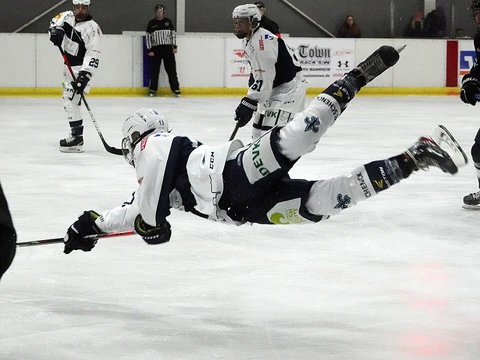
Hockey helmet
Protective headgear worn in ice hockey, inline hockey, and bandy.

Santeri Viinamäki · CC BY-SA 4.0
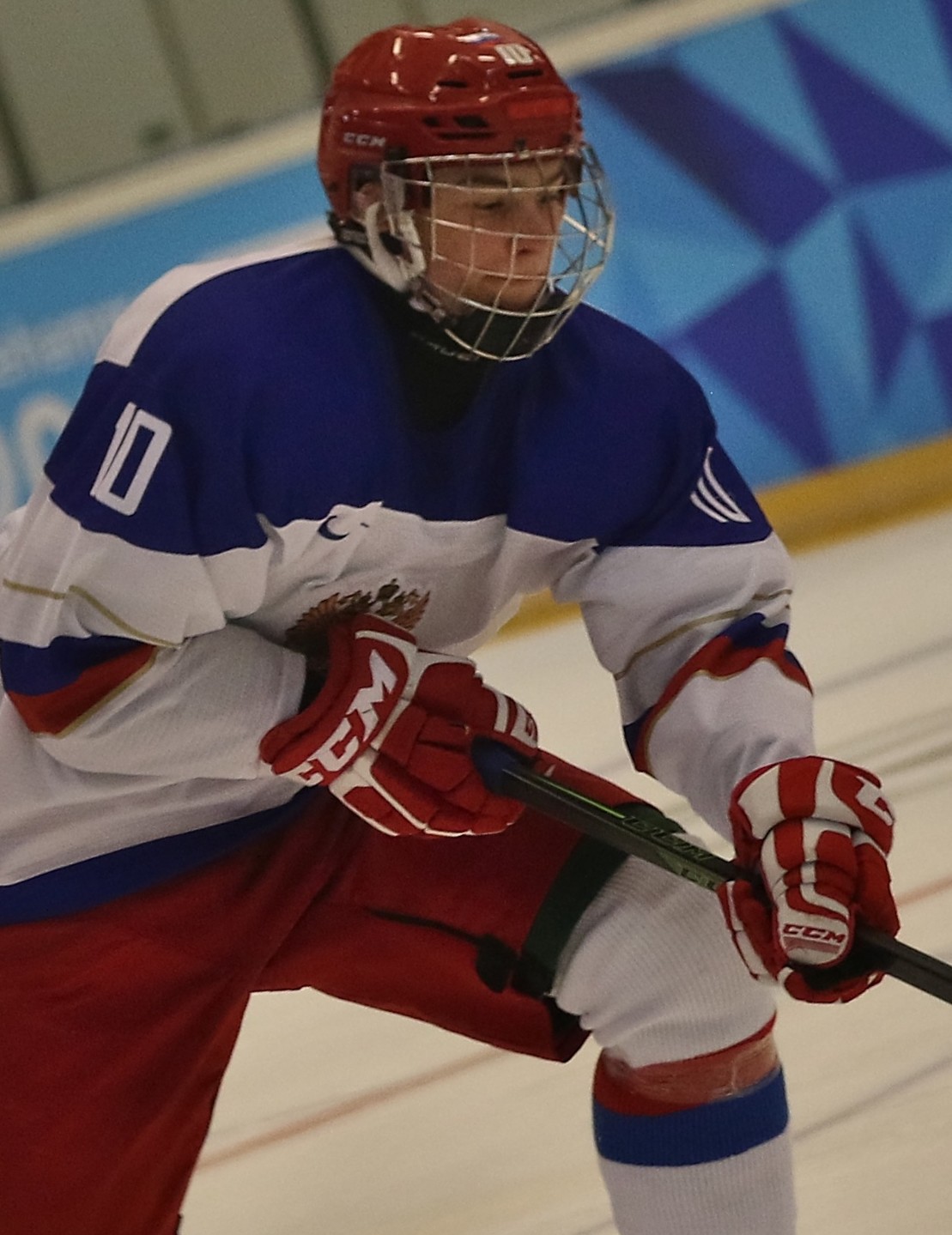
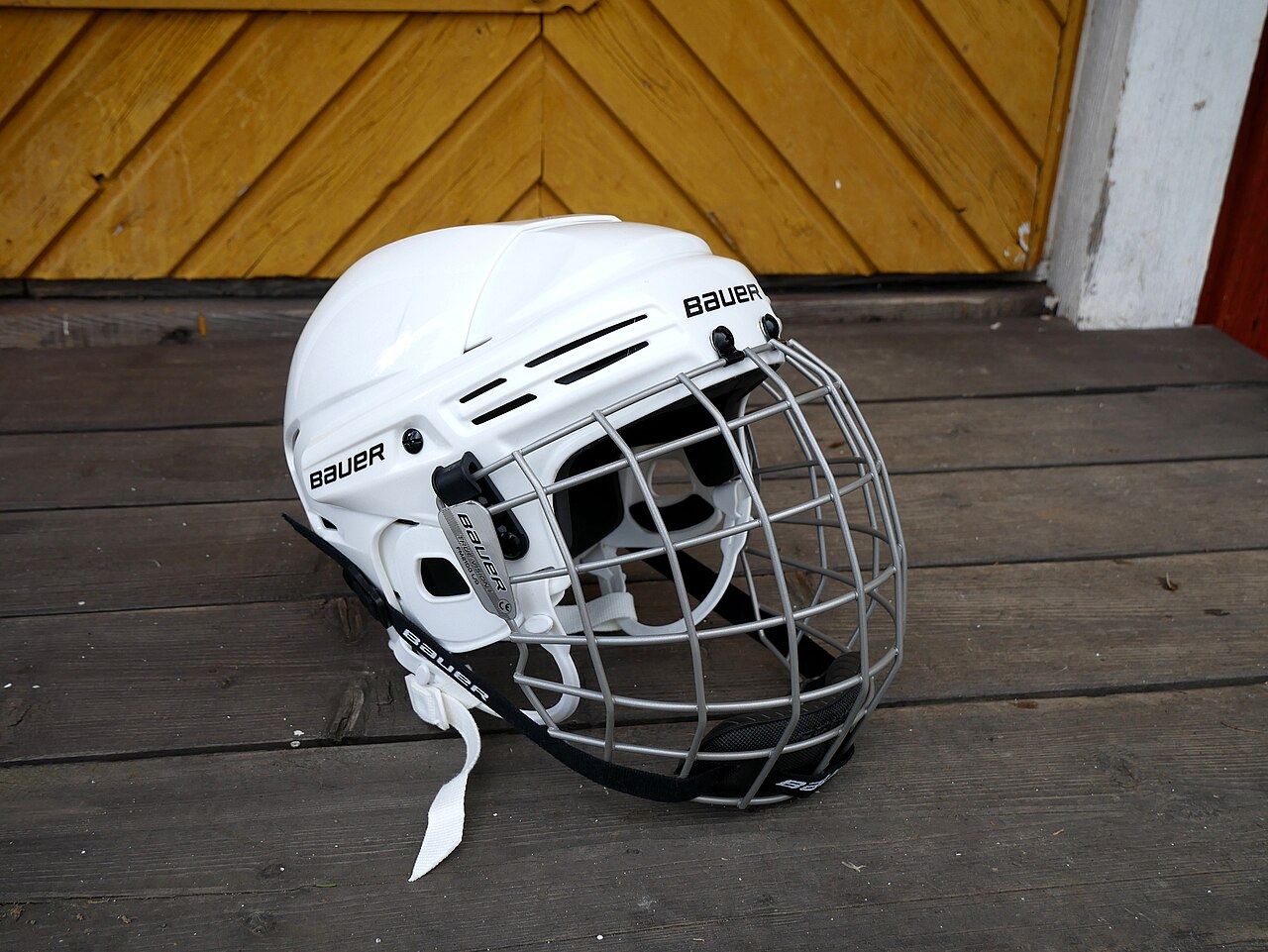
A hockey helmet protects players in ice hockey, inline hockey, and bandy from head injuries caused by pucks, sticks, skates, boards, other players, or the ice. The outer shell is typically made of vinyl nitrile, which spreads out the force of an impact, while the inner liner—often vinyl nitrile foam, expanded polypropylene foam, or another material—absorbs energy to help lower the risk of concussion. Inside, the helmet grips the head by cupping the occipital protuberance at the back of the skull. Manufacturers provide sizing charts that match helmet sizes to head measurements; on older models, the fit is adjusted by loosening side screws and sliding the front portion forward or backward.
A visor or face shield attaches to the front of a helmet to protect the face. Visors cover the upper half of the face, while full face shields cover the entire face. A series of eye injuries, notably those to Greg Neeld—the first professional player to wear a visor—and Bryan Berard, prompted calls for mandatory use. Currently, 94% of NHL players wear visors, and many other leagues worldwide require them. Visors and shields are made of high-impact-resistant plastic and offer better overall vision than wire cages, which can block sight in some areas. The face shield provides excellent straight-ahead and peripheral vision but allows less airflow than a cage.
The American Hockey League, North America’s top minor league, mandated visors for all players before the 2006–07 season. The NHL strongly recommends visors and, starting in 2013, required all players with fewer than 25 games of experience to wear one. The hockey visor was first invented by Kenneth William Clay after he lost vision in his left eye from a high stick while playing for the Vanderhoof Bears. Following a month in a Vancouver hospital, Clay created the first documented clear face shield in January 1964. The invention drew attention, with announcers calling it a “fish bowl” and a “wrap-around windshield.” Although the original shield and helmet were lost in a fire that destroyed the Vanderhoof Arena a few years later, newspaper clippings confirm the dates and facts.
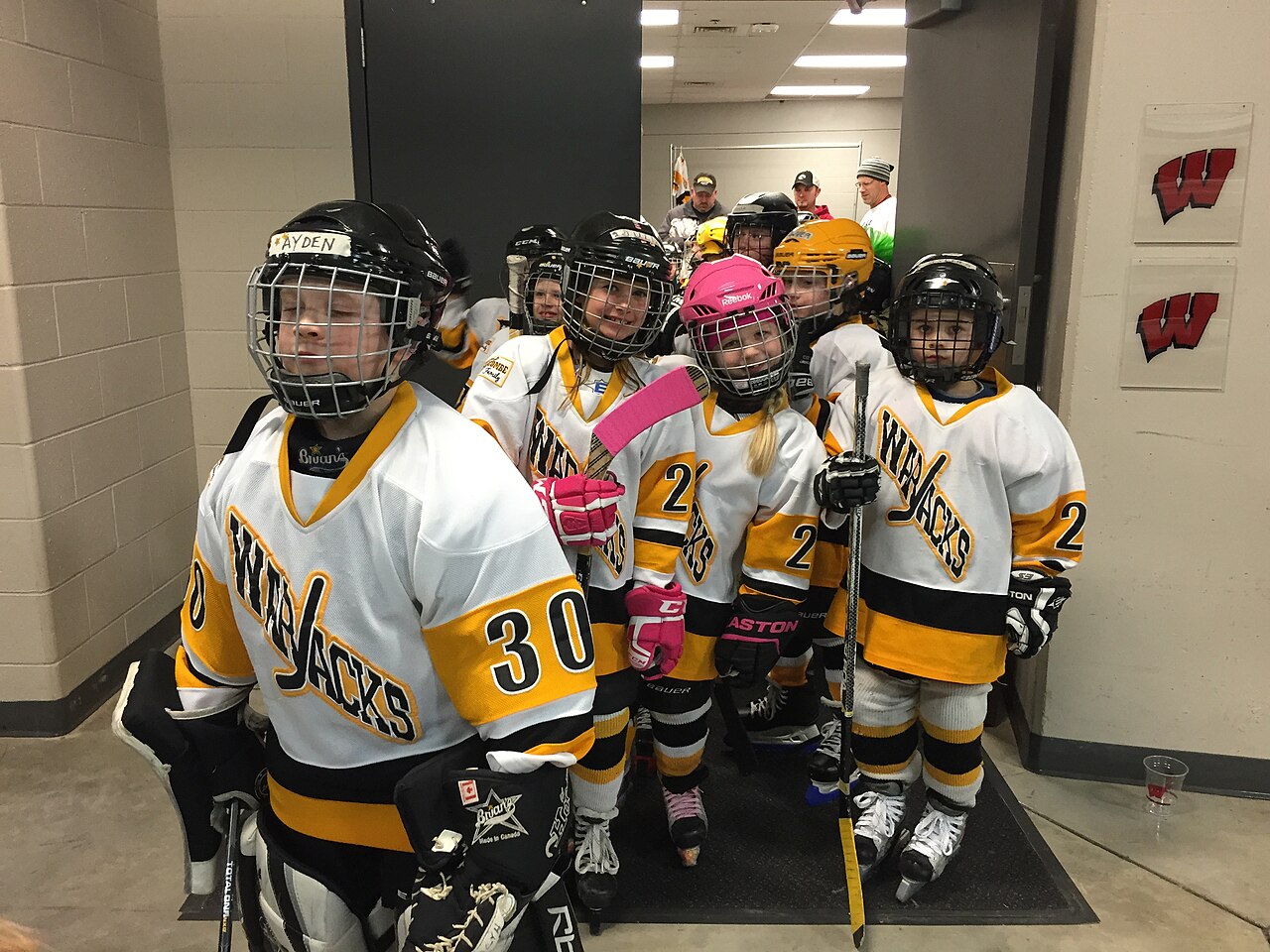
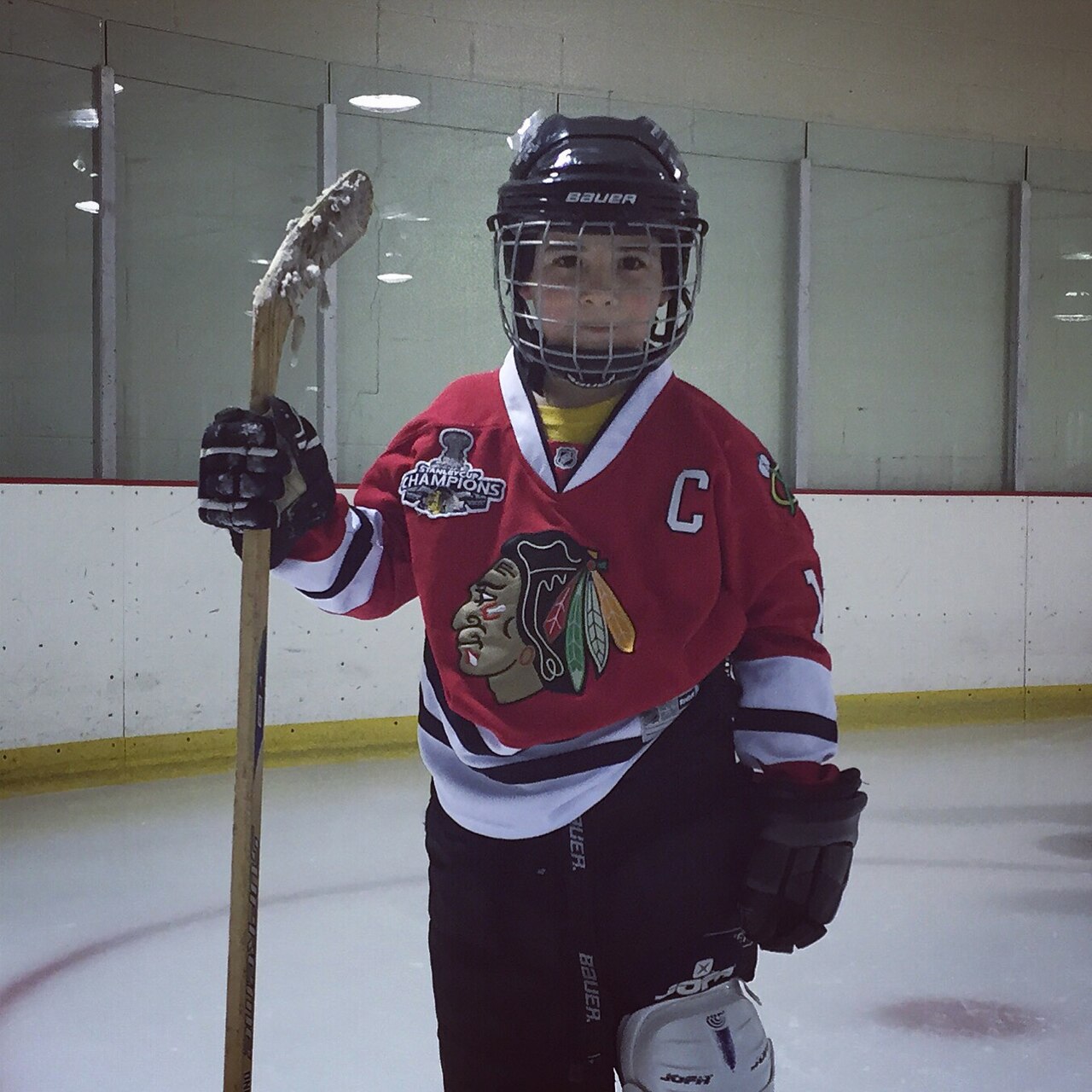
A cage is another device attached to the front of a helmet to protect the face. It consists of a metal or composite mesh that covers the entire face, though half cages exist to protect the eyes while allowing full airflow.
- First player to regularly wear helmet
- George Owen, 1928–29
- First prototype presented
- Barney Stanley, 1927
- Last helmetless player
- Craig MacTavish, 1996–97
- Last helmetless referee
- Mick McGeough, 2006–07
- Helmet mandatory for incoming nhl player
- August 1979
- Helmet mandatory for nhl officials
- 1988
- Percentage of nhl players wearing helmet
- 70%
Lore & Background
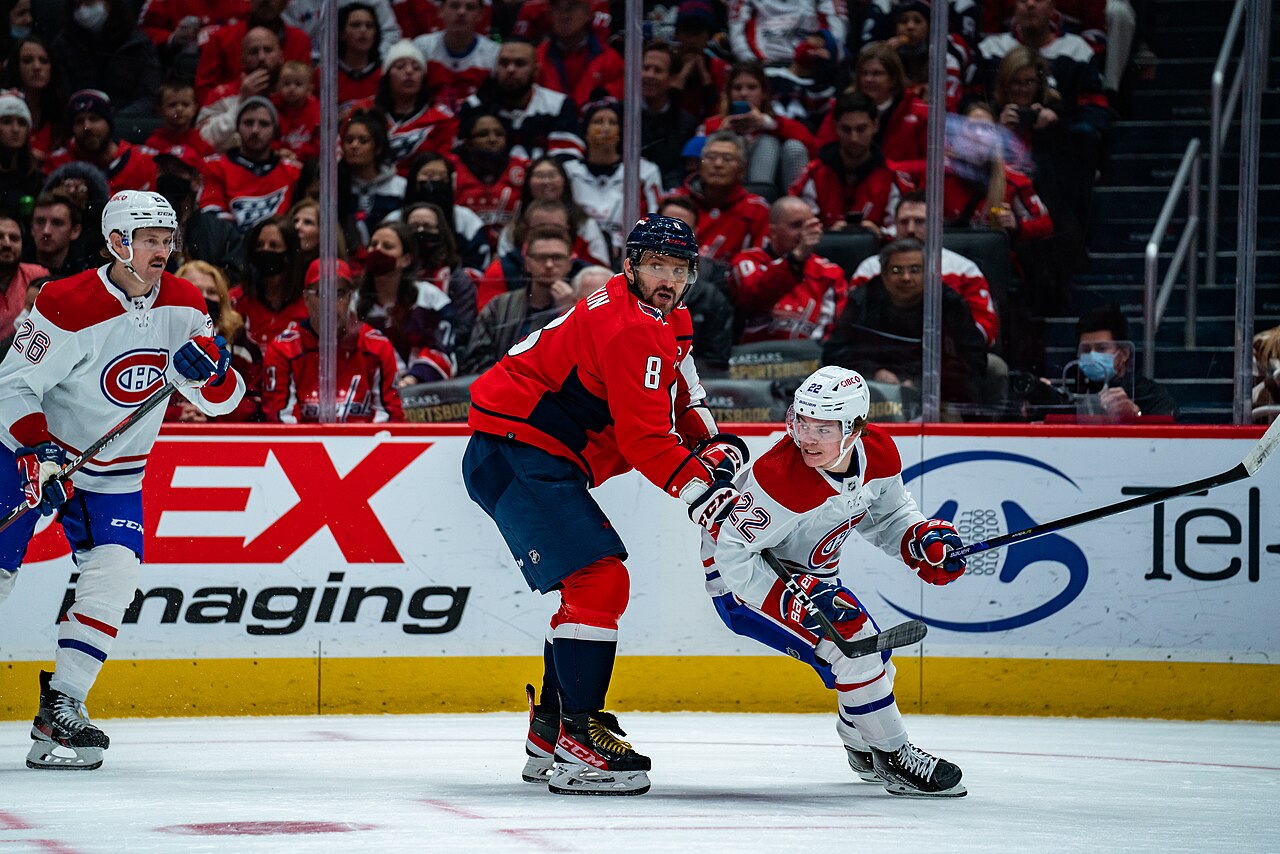
The first player to regularly wear a helmet for protective purposes was George Owen, who played for the Boston Bruins in 1928–29. In 1927, Barney Stanley presented a prototype at the NHL's annual meeting, but it was quickly rejected. Helmets gained attention after the Ace Bailey–Eddie Shore incident on December 12, 1933, after which Art Ross engineered a new helmet design; most Boston Bruins players donned it for one game, but only Eddie Shore wore it for the rest of his career. In the 1930s, the Toronto Maple Leafs were ordered to add helmets, but King Clancy famously flung his off minutes into the first game. Helmets were generally unpopular with fans, media, and other players, though a few players such as Des Smith, Bill Mosienko, Dit Clapper, and Don Gallinger continued to wear them. During the Original Six era, Maurice Richard and Elmer Lach briefly wore helmets; Jack Crawford wore one to hide his bald head, and Charlie Burns wore one to protect metal plates in his head from a junior hockey injury. The death of Bill Masterton from a brain injury on January 13, 1968, began to change perceptions. Helmet use gradually increased during the 1970s, with Ted Green being the first Bruins player since Shore to wear one, starting in 1970–71. The 1972 Summit Series showcased an entirely helmet-clad Soviet Union team, with only Paul Henderson, Stan Mikita, and Red Berenson among Canadians sporting helmets. Usage rose to 70% by 1979, and every goalie had been wearing a helmet and mask for almost half a decade. In August 1979, NHL President John Ziegler announced that protective helmets would become mandatory for incoming players, with a grandfather clause for those who signed contracts before June 1, 1979. In 1988, helmets became mandatory for officials, with a similar grandfather clause. The last player to play without a helmet was Craig MacTavish in 1996–97; the last referee to call a game without a helmet was Mick McGeough, who began wearing one in 2006–07.
Reader's Guide
The hockey helmet's significance lies in its evolution from a rejected prototype to mandatory equipment, driven by catastrophic injuries and shifting attitudes. The 1933 Ace Bailey–Eddie Shore incident and the 1968 death of Bill Masterton were pivotal in changing perceptions. The NHL's 1979 mandate for incoming players and 1988 mandate for officials, both with grandfather clauses, gradually eliminated helmetless play; the last bare-headed player retired in 1997 and the last bare-headed referee in 2007. Helmet design advanced through contributions from figures like Canadian ophthalmologist Tom Pashby, who spent 46 years improving helmet safety and helped set Canadian Standards Association standards, and former NHL player George Parsons, who worked with CCM to develop safer helmets and facial protection. The visor was invented by Kenneth William Clay in January 1964 after he lost vision in his left eye to a high stick while playing for the Vanderhoof Bears. By early 1976, CCM had developed a helmet with eye and face shield and lower face protector approved by the CSA and endorsed by the Canadian Amateur Hockey Association. The legacy of the helmet is one of incremental safety improvements driven by injury prevention, with full facial protection now mandatory in many amateur leagues and for players under 18 in North America. A 2002 study in the British Journal of Sports Medicine found that full-face shields significantly reduced playing time lost due to concussion compared to half-face shields, suggesting reduced concussion severity.
Did You Know?
- The last NHL player to play without a helmet was Craig MacTavish, who played his final game in the 1996–97 season.
- Canadian ophthalmologist Tom Pashby spent 46 years improving helmet safety and served as president of the Canadian Standards Association for two decades.
The Reluctant Adoption of Helmets in Professional Hockey
In 1927, Barney Stanley presented a helmet prototype at the NHL's annual meeting, but it was rejected. The next season, George Owen of the Boston Bruins became the first player to regularly wear one, yet most of the player base remained unconvinced. A turning point arrived on December 12, 1933, when a collision between Ace Bailey and Eddie Shore left Bailey near death and Shore with a severe head wound. Art Ross then engineered a new design, and the Bruins donned them against Ottawa—but by the next game, nearly everyone had ditched them, Eddie Shore being the lone exception who kept his on for his remaining career. The Toronto Maple Leafs were ordered to adopt helmets in the 1930s, but King Clancy famously flung his off minutes into their first game. Fans, media, and fellow players largely mocked the gear. A few—Des Smith, Bill Mosienko, Dit Clapper, Don Gallinger—stuck with it, while Maurice Richard and Elmer Lach wore them only briefly. Jack Crawford used one to hide his bald head, and Charlie Burns needed it to protect metal plates in his skull. Bill Masterton's fatal brain injury in January 1968 finally shifted the conversation toward mandatory protection.
The Invention and Spread of Facial Protection
The clear hockey visor was born from personal tragedy. Kenneth William Clay, playing for the Vanderhoof Bears, lost the vision in his left eye to a high stick. After a month in a Vancouver hospital, he fashioned the first documented clear face shield in January 1964. The invention caused a stir among broadcasters, who dubbed it a "fish bowl" and a "wrap-around windshield." The original shield and helmet were lost in a fire that consumed the Vanderhoof Arena a few years later, though newspaper clippings still confirm the dates and details. In professional hockey, Greg Neeld became the first player to wear a visor, and a series of eye injuries—including those sustained by Bryan Berard—spurred calls to mandate the gear. By 2017, 94 percent of NHL players wore visors, and many leagues worldwide had made them compulsory. The American Hockey League required all players to wear one starting in the 2006–07 season, while the NHL "strongly recommends" their use and, since 2013, mandates them for any player with fewer than 25 games of experience. Visors, made from high impact-resistant plastic, offer superior straight-ahead and peripheral vision compared to older wire cages, though they sacrifice some airflow.
The Engineering Behind the Helmet
Modern hockey helmets rely on a two-layer engineering approach. The outer shell, typically constructed from vinyl nitrile, is designed to disperse the force of an impact across a wider area rather than concentrating it at a single point of contact. Beneath that, a liner made of vinyl nitrile foam, expanded polypropylene foam, or a similar material absorbs residual energy to lower the risk of concussion. The helmet secures itself by cupping the back of the skull, specifically the occipital protuberance, ensuring a snug fit. Manufacturers provide sizing charts that correlate their helmet dimensions to head measurements, and on older models the fit is fine-tuned by loosening side screws and sliding the front portion forward or backward. For facial protection, a cage consists of metal or composite mesh bars spaced widely enough to preserve sight but closely enough to block pucks and sticks. A hybrid design pairs a polycarbonate shield on the upper half with a polycarbonate or metal cage below. A 2002 study in the British Journal of Sports Medicine found that a full-face shield significantly reduced playing time lost to concussion compared with a half-face shield, suggesting that greater coverage may lessen concussion severity.
The Pioneers Who Drove Helmet Safety Forward
Behind the evolution of hockey headgear stand several individuals who poured decades of effort into making the sport safer. Canadian ophthalmologist Tom Pashby dedicated 46 years to improving helmet safety and preventing injuries. His two-decade tenure as president of the Canadian Standards Association proved pivotal: under his leadership, formal standards were established for helmets, rules were enacted requiring players to wear protective gear, and regulations for safer play were put in place. NHL player George Parsons, whose career ended in 1939 after a devastating eye injury, channeled his experience into working with CCM to develop helmets and facial protection that would better shield players. By early 1976, CCM had produced a complete hockey helmet incorporating an eye and face shield along with a lower face protector, earning both CSA approval and endorsement from the Canadian Amateur Hockey Association. Today, the fruits of these pioneers' labor are visible in the fact that full facial protection—whether a cage, a full shield, or a combination—is mandatory in high school hockey, college hockey, and for every player under 18 across North America, as well as in numerous amateur leagues worldwide.
Gallery
Frequently Asked Questions
Who was the first player to regularly wear a hockey helmet?
George Owen was the first player to consistently put on a helmet during games, doing so in the 1928–29 season. That came just a year after Barney Stanley presented the very first prototype design in 1927.
What materials make up a hockey helmet and how does it protect the head?
The outer shell is usually molded from vinyl nitrile, which spreads the force of a blow across a wider area. Beneath that, an inner liner of foam—such as vinyl nitrile foam or expanded polypropylene—soaks up energy to lower the risk of a concussion.
When did the NHL make helmets mandatory for all players?
Starting with the August 1979 deadline, every incoming NHL player was required to wear a helmet. The league extended the same rule to its officials a few years later, in 1988.
Who was the last NHL player to play without a helmet?
Craig MacTavish held that distinction during the 1996–97 season, making him the final player on the ice without head protection. Referees lagged behind, with Mick McGeough being the last to go helmetless in 2006–07.
How does a hockey helmet actually grip the head?
The interior is shaped to cradle the occipital protuberance, the bony bump at the base of the skull, which anchors the helmet securely in place. Players rely on manufacturer sizing charts to match their head measurements to the correct shell size.
More in Ice Hockey Equipment 1-24
Spotted an error? Know more?
Reader corrections go straight into our review queue. Suggest an edit · How this site is sourced