Hockey jersey
Upper-body garment worn by players and fans of ice hockey.

Santeri Viinamäki · CC BY 4.0
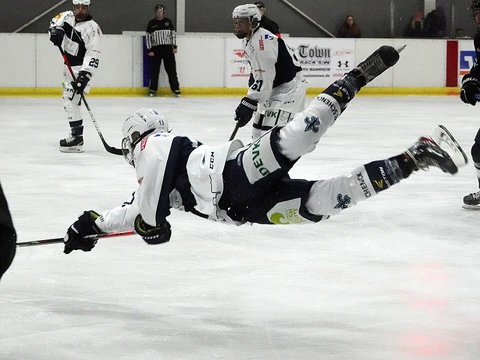
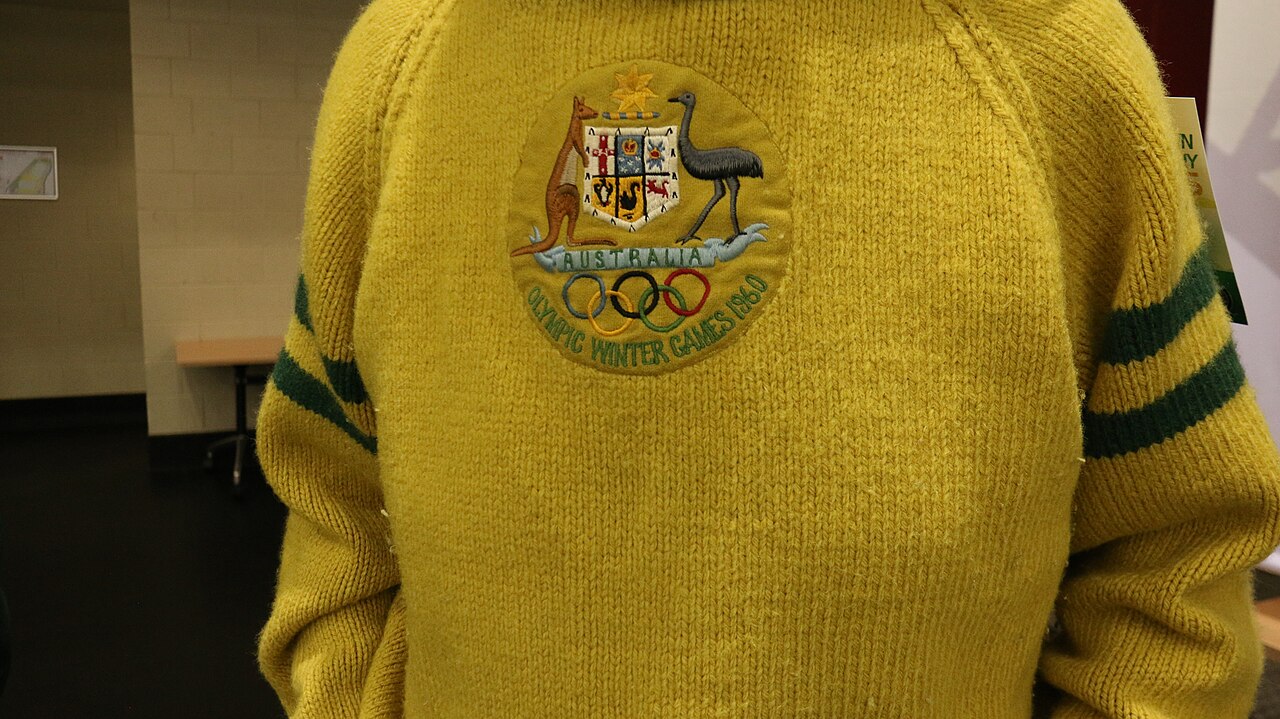
A hockey jersey is an upper-body garment worn by ice hockey players. Fans also wear them to demonstrate team loyalty or connect with a hometown or region. The term "hockey sweater" comes from the sport’s early days, when games were mostly played outdoors in winter and players wore warm, wool-knit coverings. In some places, that term is still commonly used.
Modern hockey jerseys are usually made from tough synthetic materials like polyester, which wick away moisture and keep the wearer dry. Most professional teams sell replica jerseys—both with and without player names—at sports memorabilia stores and arenas.
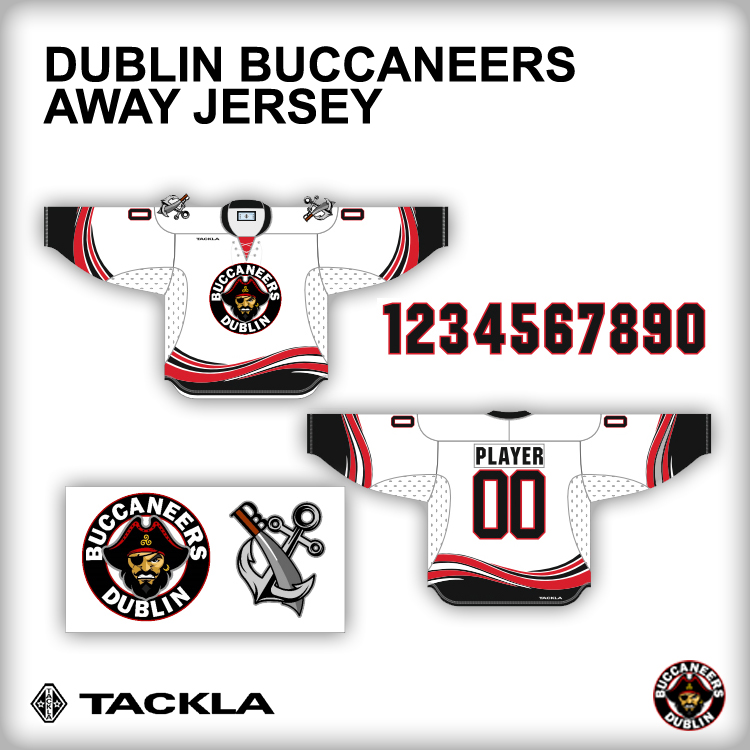
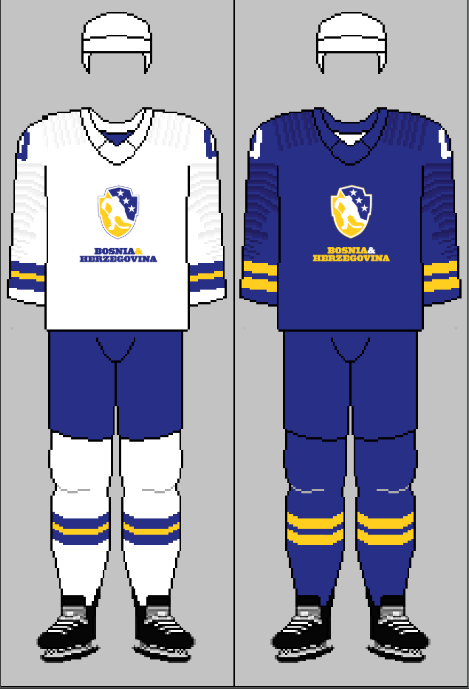
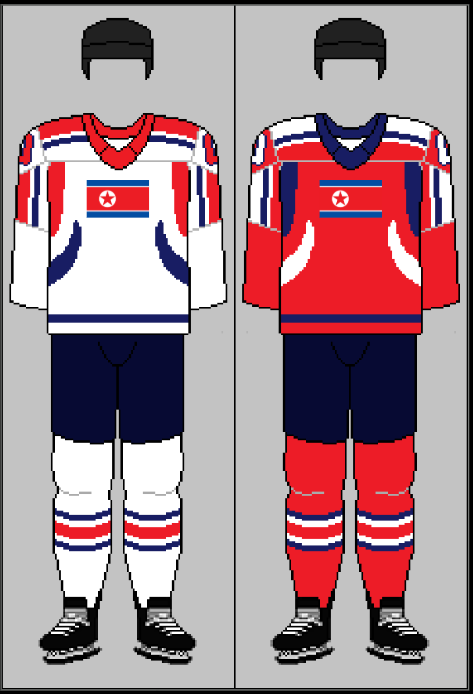
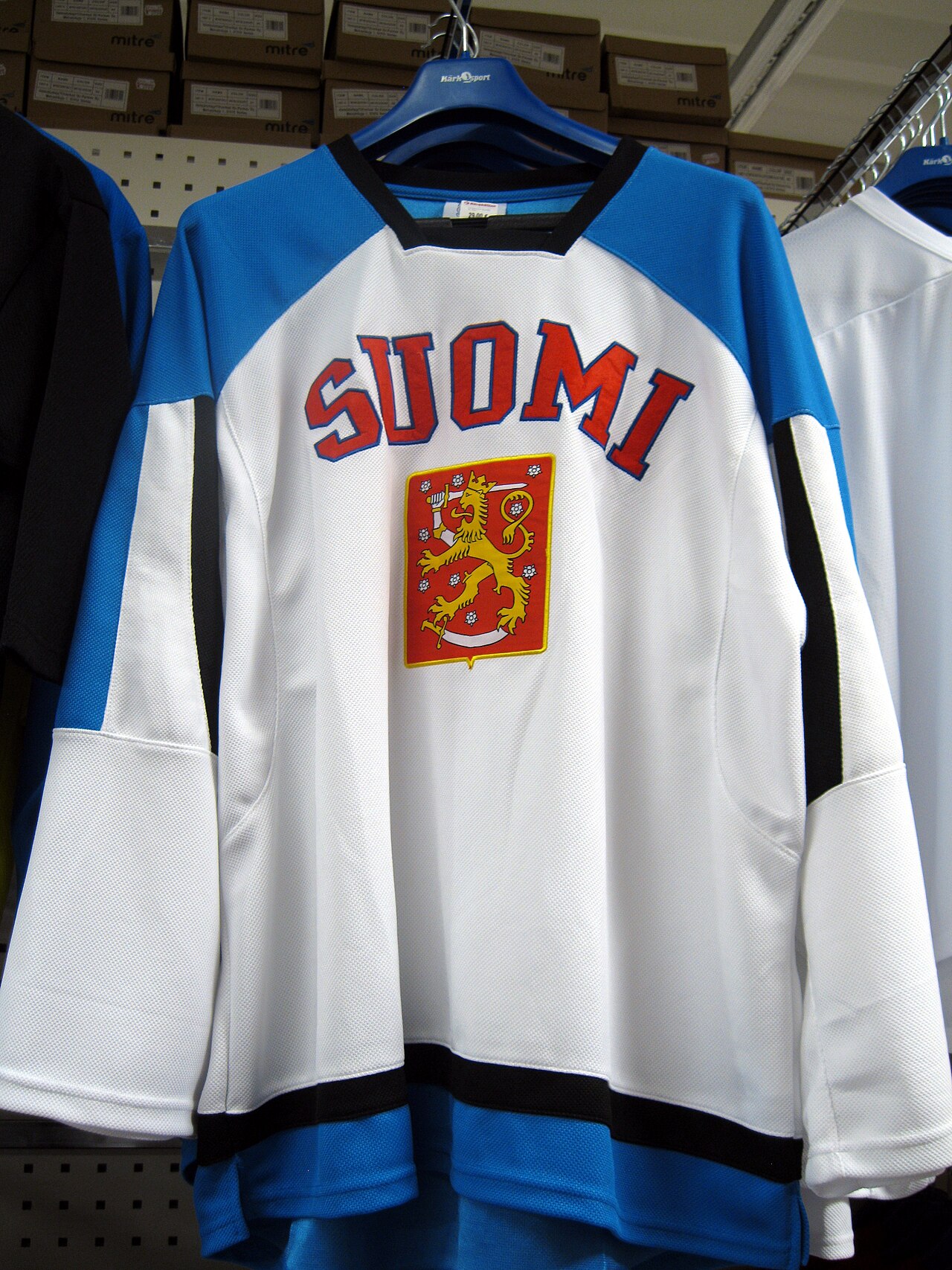
In most leagues worldwide, jerseys follow team colors and match the socks. They typically feature the team’s logo on the front, the player’s last name on the upper back, and a number between 0 and 99 below. A team captain wears a capital "C" above and to the right of the team logo (though a few NHL teams place it above and to the left). Two alternate captains wear a capital "A" in the same spot.
Hockey jerseys are often more complex than football or baseball jerseys because the front crest is a major design element rather than player numbers. Because of this, the NHL requires teams to give 18 months’ notice before changing jerseys.
Manufacturer-specific traits affect on-ice designs. For the 2014 and 2022 Olympic hockey tournaments, Nike jerseys used a more tapered fit compared to the usual loose, baggy style. These designs were divisive, as Nike added sublimation and other flashy elements. In 2007, Reebok moved the NHL shield logo to an insert in the neckline instead of the bottom hem, giving every team a V-neck design. In 2017, Adidas took over and gave all teams a collar flush with the rest of the jersey, plus dimples on the shoulders. Adidas was sued in 2022 because its retail jerseys were advertised as comparable to the on-ice product but used thinner materials and a lower-quality fight strap.
European leagues and tournaments often feature sponsor advertisements on jerseys, a concept borrowed from football. The NHL first allowed ads on jerseys in the 2022–23 season.
Many hockey leagues also have third or alternate jerseys, like the NHL. These often have special crests and are used for events such as the Winter Classic or Stadium Series, or leaguewide initiatives like the Reverse Retro line, which revived vintage designs.
- Material
- Tough synthetic materials like polyester
- Number range
- 0 to 99
- Captain designation
- Uppercase 'C' above and to the right of the team logo (some NHL teams have it above and to the left)
- Alternate captain designation
- Uppercase 'A'
- Nhl jersey change notice
- 18 months
- Nhl 99 retirement
- Retired for Wayne Gretzky
- Nhl advertising start
- 2022-23 season
Lore & Background
Hockey jerseys today are typically made of tough synthetic materials like polyester, to help take away moisture and keep the wearer dry. Most professional ice hockey teams sell replica sweaters both with no names and of their players at sports memorabilia stores, as well as being available for purchase at arenas. For most leagues around the world, in accordance with the team's colours and matching the socks, they are usually emblazoned with the team's logo on the front, the player's last name on the upper back, and a designated number below, from 0 to 99. A team captain wears an uppercase 'C' above and to the right of the team logo on their sweaters (although a few NHL teams have the letter above and to the left). Two other players, designated alternate captains, wear an uppercase 'A' on theirs.
Hockey jerseys are often more complicated than football or baseball jerseys, due the front crest being a major feature rather than player numbers. Due to this the NHL requires an 18 month notice from any team looking to change their jerseys. There are many manufacturer specific traits that can affect the on ice design. Nike jerseys for the 2014 and 2022 Olympic hockey tournaments had designs to simplify the look, using a more tapered design when compared to the standard loose and baggy style. These designs were divisive as Nike added other design elements such as sublimation and a feel of attempting to be flashy. For the NHL in 2007 Reebok added the league's shield logo to an insert in the neckline rather than the bottom hem, giving every team a V neck design. Which was changed again in 2017 when Adidas took over, giving all teams a collar that was flush with the rest of the jersey and adding dimples to the shoulders. Adidas was sued in 2022 for having their retail version of jerseys not comparable to the on ice product despite being advertised as such, having thinner materials and a lower quality tie down fight strap. Sweaters worn in European leagues and tournaments are adorned with sponsor advertisements, a concept borrowed from football jerseys. The NHL first allowed ads on jerseys in the 2022-23 season.
Many hockey leagues across the globe also have an additional third or alternate jersey, like the NHL. These jerseys usually have a special design as the crest and are sometimes part of a special event such as the Winter Classic or Stadium Series, or leaguewide initiative like the Reverse Retro line which brought back vintage designs. However, many other leagues have different alternate jerseys for many different things. For example, the Sioux Falls Stampede in the USHL rebrand to the 'Sioux Falls Fighting Wiener Dogs' for a night and wear a special jersey with a group of dachshunds stampeding forwards, although they changed the logo to a dachshund holding a hockey stick. NHL teams also have special nights where they recognize a significant cultural group or event where they will have special jerseys worn in warmups to show their appreciation. Leaguewide events like Pride night will have special LGBTQIA+ designs on the jersey and players can opt to have rainbow stick tape to show support in addition to the jersey worn during warmups. However, each team has their own nights for special events.
Reader's Guide
The cultural impact of the hockey sweater in Canada is encapsulated by the short story 'The Hockey Sweater' by Roch Carrier. In it, a young hockey fan asks his mother to order a Montreal Canadiens sweater from an Eatons department store catalogue, but instead accidentally receives a sweater for the team's arch-rival, the Toronto Maple Leafs, much to his embarrassment and the derision from his friends. The story was later made into a short animated film of the same name, which was produced by the National Film Board of Canada; a quote from it appears on the 2003 Canadian five-dollar bill. In 'Ferris Bueller's Day Off' the character Cameron played by Alan Ruck wears a Detroit Red Wings Gordie Howe jersey. Ruck said this was to give the character more depth and independence that wasn't shown directly in the movie.
Hockey jerseys started to become more popular as a fashion choice with the general public starting with the expansion of teams like the San Jose Sharks and Mighty Ducks of Anaheim to southern California, as well as Wayne Gretzky being traded to the Los Angeles Kings around the same time. Jerseys started to be made with fashion in mind first at this time, with the NHL's first alternate jersey program starting in 1995. The first alternate of the Edmonton Oilers introduced was meant to be worn by fans of the team and fans of fashion alike, and to speak to skater culture. It featured completely new elements such as bold new logos and the introduction of silver to the team. Hockey jerseys have sold well since. The Utah Mammoth set a record for the highest sales day in their shared arena when their jerseys first launched.
Starting in the early 2010's tossing a jersey onto the ice has become an extreme way of vocalizing displeasure with a team. This is seen mostly in Canada. It is done to show the fan is 'giving up.' The practice is mostly frowned upon, being seen as attention seeking. Maple Leaf Sports & Entertainment the owner of the Toronto Maple Leafs and their arena have banned and fined fans for throwing jerseys onto the ice. Other sports have involved hockey jerseys in their promotions. Some MLB teams have hockey jersey nights where the team colours and logos are used to create hockey style jerseys for giveaways. The Toronto Blue Jays giveaway has seen major interest with long lines ahead of gate opening, breaking giveaway records, and high resale prices. Some pro wrestling heels will wear hockey jerseys in ring of the local teams rival or recent trades in order to elicit boos from the crowd. The NBA was used to tease the release of a new Seattle Kraken jersey in 2023. There have been events that encourage people wearing hockey jerseys outside of arenas, like USA Hockey hosting a 'Hockey jersey day' encouraging fans to share their jerseys on social media. Chipotle has had meal deals for customers that come in wearing a hockey jersey on certain days.
Did You Know?
- The National Hockey League no longer permits 0 nor 00 for jersey numbers, and the available numbers only go up to 98 since the League retired the number 99 in honour of Wayne Gretzky.
- During an exhibition match between the Calgary Flames and Edmonton Oilers, defenseman Ethan Bear, who is of Cree descent, wore a jersey with his last name on it written in Cree syllabics.
The Jersey as Functional Armor
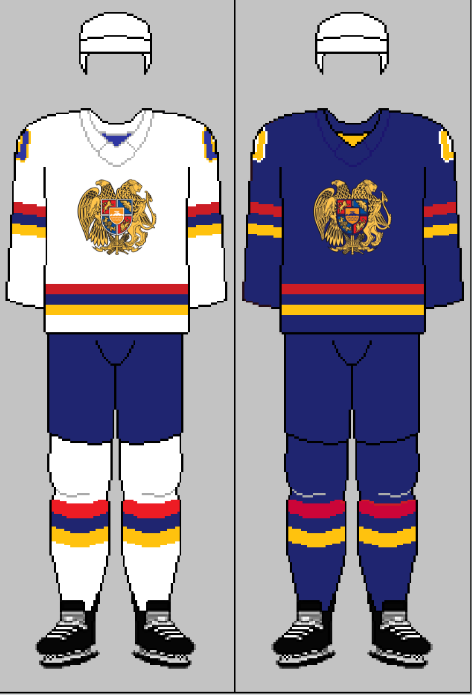
The hockey jersey is far more than a simple team identifier. While its most visible role is color-coding and numbering for player and team recognition on the ice, its structural purpose is to conceal and help secure the bulky protective gear worn underneath—specifically the shoulder pads and elbow pads. At higher skill levels, teams maintain separate home and away jersey styles to distinguish themselves. Traditional designs are notably oversized and roughly square in shape, constructed from fabrics with limited stretch. However, modern iterations have shifted toward a more form-fitting silhouette made with elastic materials, drawing visual parallels to NFL jerseys in their overall cut. A critical regulatory detail in most professional leagues is the fight strap, a hidden connector that links the jersey to the interior of the pants. This small but essential feature prevents an opponent from yanking the jersey over a player's head during a fight, making the garment a small but meaningful component of the overall safety system.
A Century of Protective Innovation
The journey from rudimentary gear to today's comprehensive safety systems spans well over a century. Early hockey players laced simple metal blades onto ordinary shoes and wielded thin wooden sticks. In 1897, G.H. Merritt borrowed wicket-keeper's pads to create the first goalie leg protection. All players wore basic leather gloves until 1948, when a Detroit goaltender experimented with a rectangular leather piece and a baseball catcher's mitt to produce the trapper and blocker. Head protection followed a similar slow arc: Clint Benedict used a crude leather face shield in 1928 to guard a broken nose, while Jacques Plante became the first to regularly wear a goalie mask. Vladislav Tretiak later introduced the first true helmet-and-cage combination. Though considered primitive by modern standards, that Tretiak-style mask still appears on players like Chris Osgood, while the alternative helmet-cage design last seen on Dominik Hasek and Dan Cloutier has drawn ongoing safety criticism.
The Goaltender's Specialized Arsenal
Goaltenders occupy a uniquely hazardous position on the ice, absorbing direct puck impacts that skaters rarely face. Their equipment reflects this reality with bulkier, more specialized protection. Where skaters wear helmets with optional face cages or visors, goalies don masks that resemble highly fortified motorcycle helmets with attached cages, though their internal construction differs fundamentally from a standard helmet. Their skates are purpose-built differently: the blades sit lower to the ice and are more square than round, sacrificing the quick-turn agility of a skater's rounded blade in favor of the lateral mobility and stability a goalie needs to track shots. The neck protector for goalies is a curved panel of clear Lexan suspended beneath the mask by nylon cords, evoking the look of a military gorget. Even the gloves diverge, with the trapper and blocker design providing asymmetric coverage tailored to the goalie's blocking and catching roles.
The Layered Defense Against a Violent Sport
Ice hockey presents a convergence of hazards that no single piece of equipment can address. The hard ice surface, the boards, pucks traveling at high velocity, and the deliberate body contact known as checking all create a constant threat of bruises, fractures, and more severe trauma. The solution is a layered system: a rigid thermoplastic helmet, typically nylon or ABS, with vinyl nitrile foam padding inside; shoulder pads with hard or soft caps protecting the chest, ribs, spine, and solar plexus; elbow pads with reinforced cups guarding the joint and surrounding bones; heavily padded knee-length shorts incorporating thigh, hip, pelvic, and tailbone protection; a jockstrap or pelvic protector for the genitals; and a neck guard of nylon or ABS plates for skaters. Even with all these layers in place, concussions and facial injuries remain common, underscoring that the equipment mitigates rather than eliminates risk.
Gallery
Frequently Asked Questions
Why do some people call a hockey jersey a "hockey sweater"?
The nickname traces back to the sport's earliest outdoor winter games, when players bundled up in thick wool-knit tops for warmth. That older name never fully faded and is still used colloquially in many regions.
What material are modern hockey jerseys made from?
Most contemporary jerseys are built from tough synthetic fabrics such as polyester. Those materials are chosen because they pull moisture off the body and help the player stay dry through a full shift.
What do the "C" and "A" letters on a hockey jersey indicate?
The uppercase "C" marks the team captain and is generally placed above and to the right of the team logo, though a handful of NHL clubs position it to the left. The uppercase "A" designates an alternate captain who can take over on-ice leadership duties when the captain is off the ice.
Why is the number 99 retired across the entire NHL?
The league permanently retired number 99 to honor Wayne Gretzky and his extraordinary impact on the game. No active NHL player is allowed to wear that number on their jersey.
How often are NHL teams required to update their jersey designs?
The league mandates a new jersey design at least every 18 months. This keeps team identities current and gives fans a recurring reason to buy a fresh replica.
More in Ice Hockey Equipment 1-24
Spotted an error? Know more?
Reader corrections go straight into our review queue. Suggest an edit · How this site is sourced