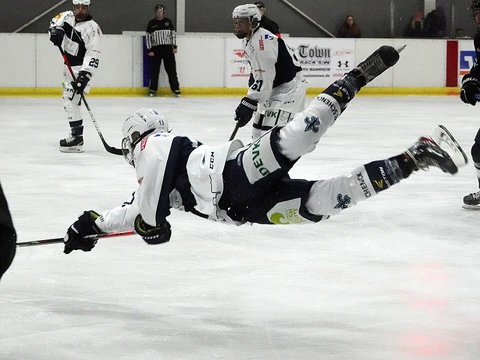
Goaltender mask
Protective headgear worn by ice hockey goaltenders.

Steve Slep from Nope, The World · CC BY 2.0
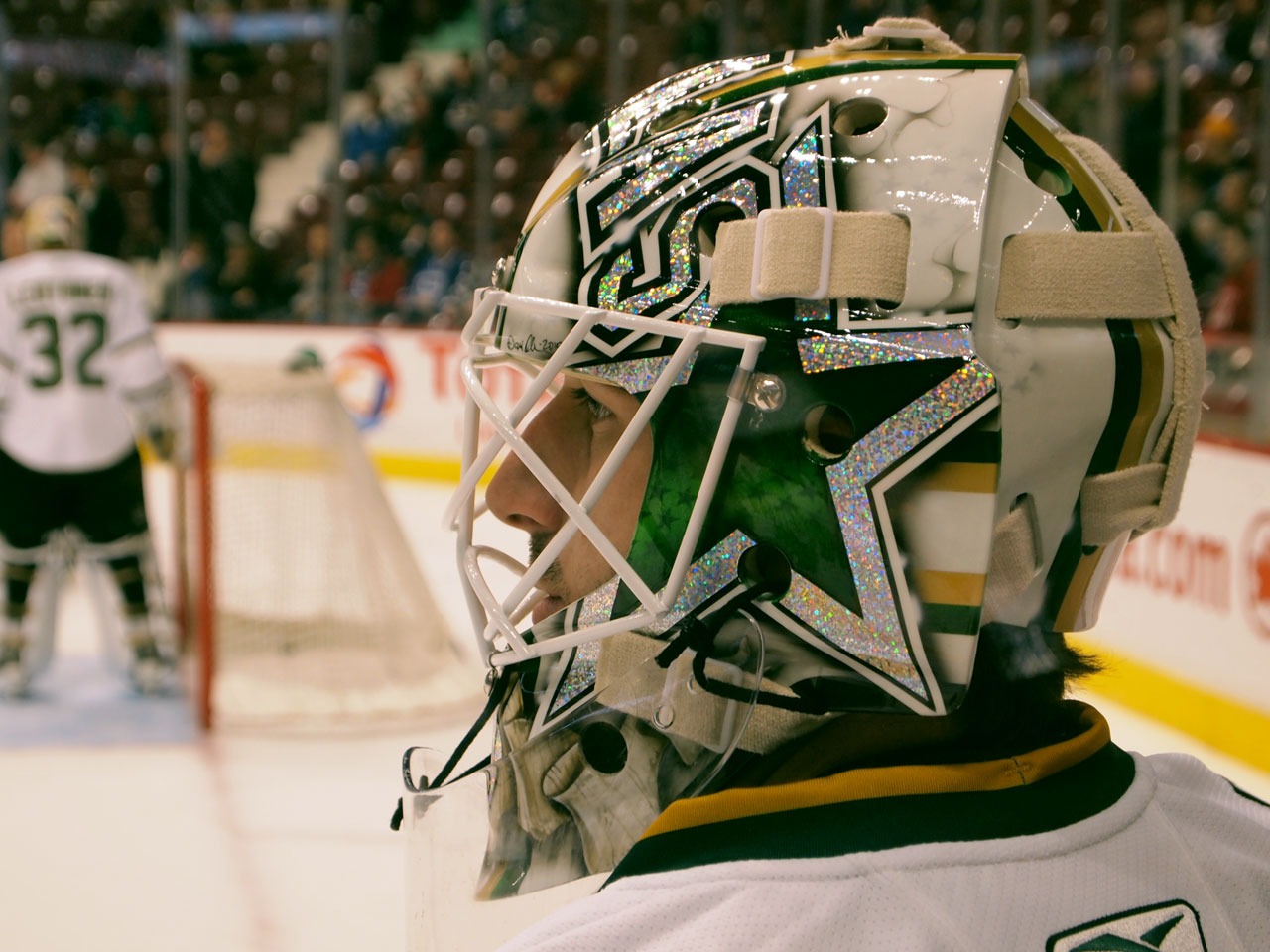
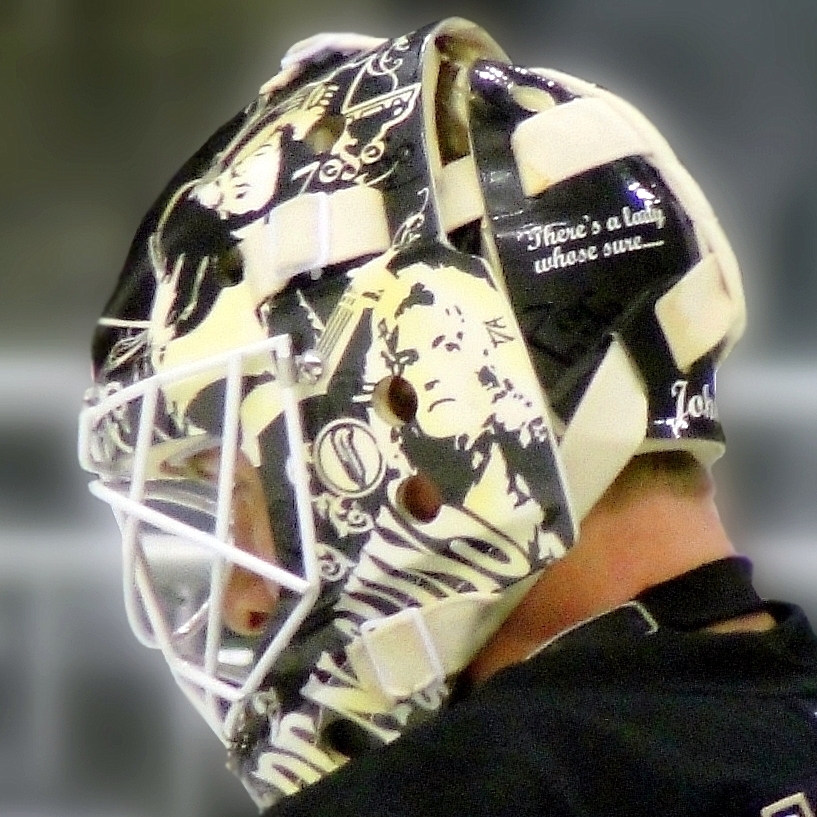
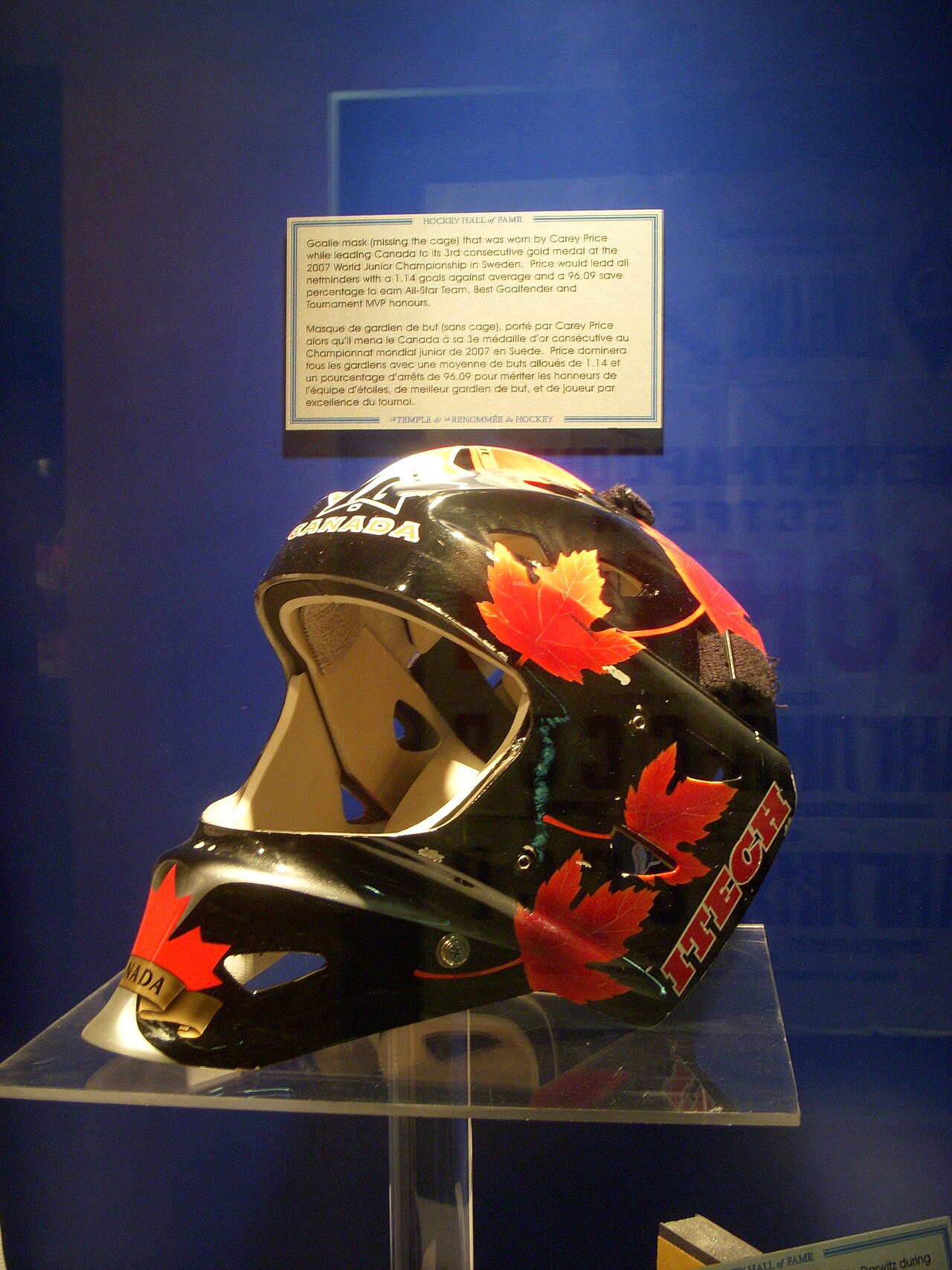
A goaltender mask, commonly referred to as a goalie mask, is a mask worn by goaltenders in ice hockey and other sports to protect the head and face from injury from the puck. In ice hockey it is sometimes simply called a hockey mask. The mask is now mandatory equipment for professional goaltenders, who no longer play without one.
- First use in game
- February 1927
- First goaltender to wear mask in game
- Elizabeth Graham
- First to create and use practical mask
- Jacques Plante
- Year of first practical mask
- 1959
- Last nhl goaltender without mask
- Andy Brown
- Year of last nhl game without mask
- 1974
Lore & Background
The first recorded use of a mask by an ice hockey goaltender was in February 1927, when Queen's University netminder Elizabeth Graham wore a metal fencing mask to protect her teeth. In 1930, Clint Benedict wore a crude leather model, an American football nose-guard, to protect a broken nose, but abandoned it after recovering. At the 1936 Winter Olympics, Japanese goaltender Teiji Honma wore a leather mask with a wire cage, similar to a baseball catcher's mask, that also accommodated his large circular glasses.
Jacques Plante became the first goaltender to wear a mask full-time in 1959. On November 1, 1959, after being struck in the face by a shot from Andy Bathgate, Plante refused to return to the ice without his fiberglass mask, which he had previously worn only in practice. His coach, Toe Blake, relented, and Montreal won the game, beginning an 18-game unbeaten streak. Plante's face-hugging fiberglass mask soon became standard; by late 1969, only a few NHL goaltenders played without one.
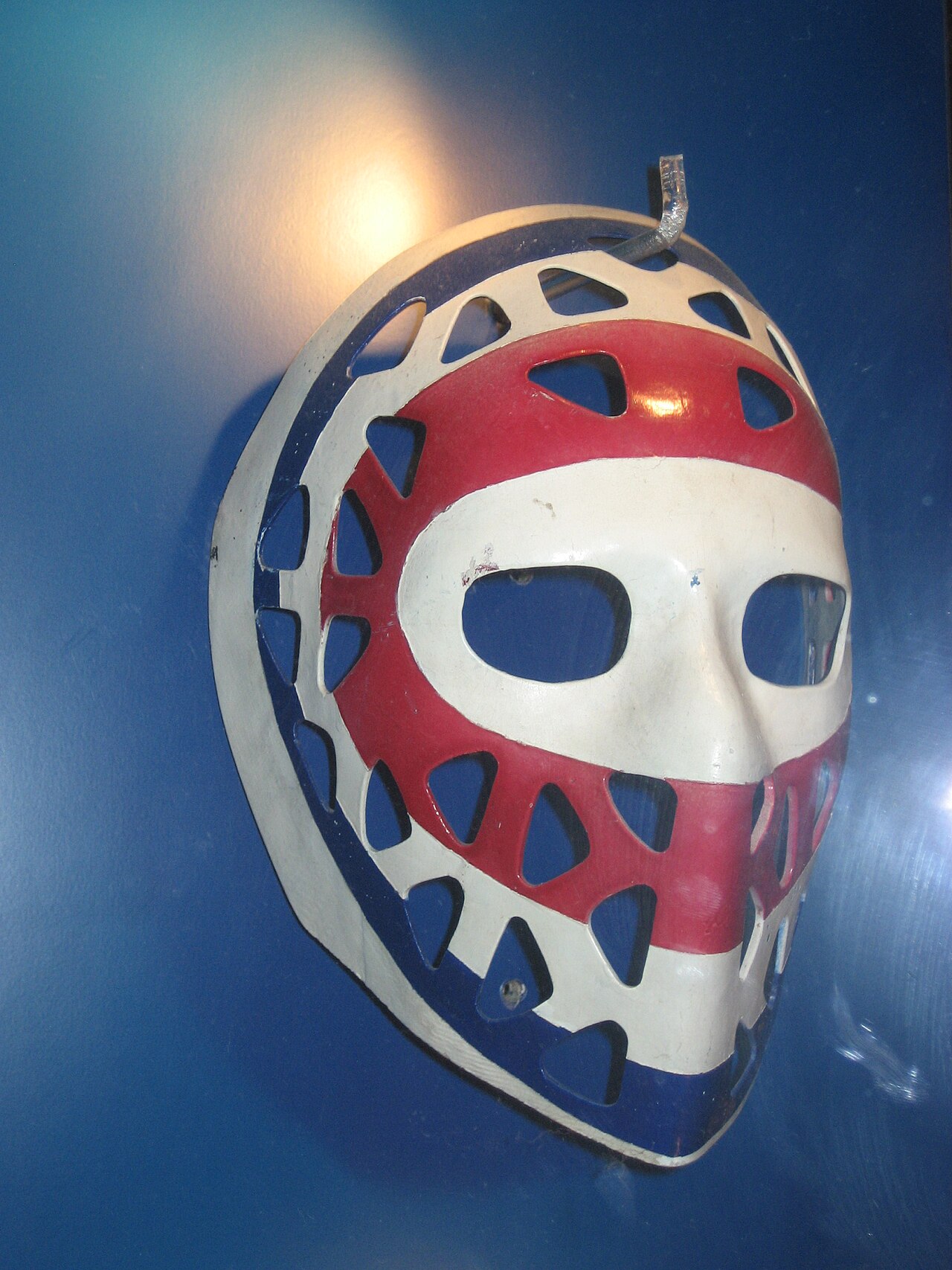
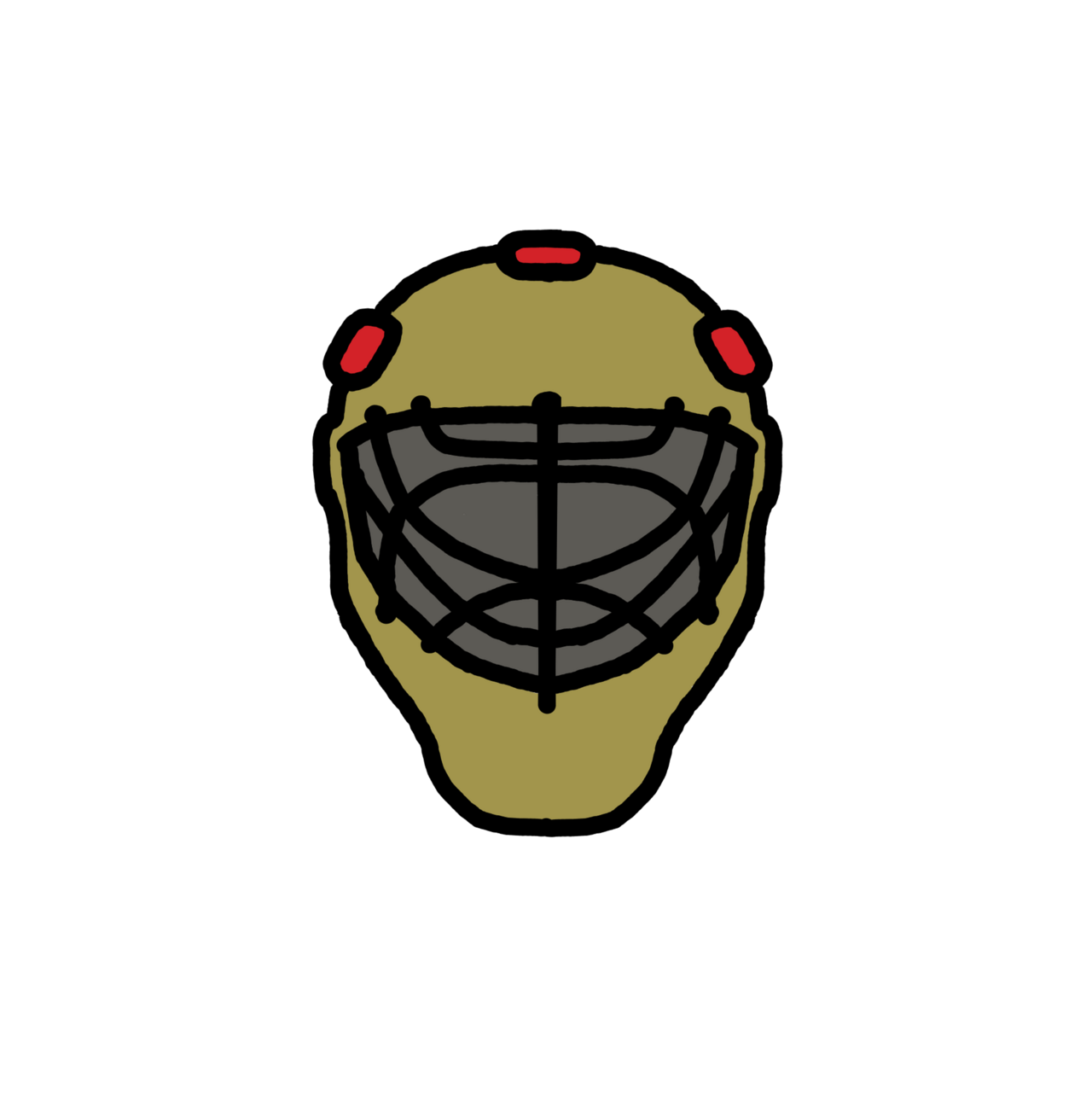
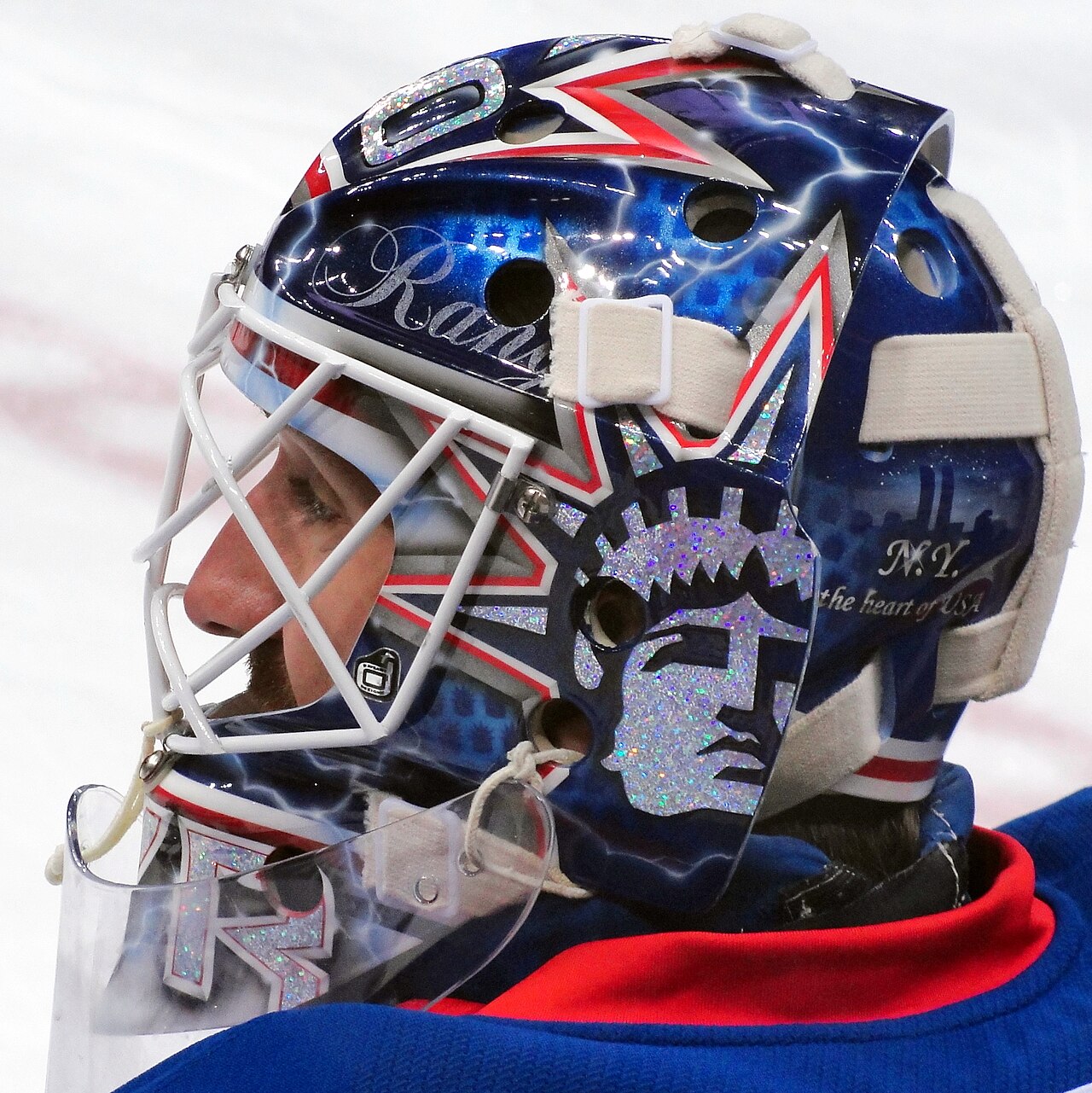
Several types of masks developed over time. The original face-hugging fiberglass mask, typified by Ken Danby's painting At the Crease, was later decorated by goaltenders such as Gerry Cheevers, who painted fake stitches on his mask. In the 1970s, a helmet-cage combination was popularized by Vladislav Tretiak. In the late 1970s, Dave Dryden and Greg Harrison developed the fiberglass/cage combination mask, which is considered safer and is the most common type used today. Cats-eye bars, inspired by designer Brian Heaton, are a feature of many modern cages.
Reader's Guide
The goaltender mask transformed ice hockey by making it possible for goaltenders to face shots without constant risk of severe facial injury. Jacques Plante's introduction of the fiberglass mask in 1959 marked a turning point; despite initial resistance from coaches and questions about bravery, the mask became mandatory equipment. The last NHL goaltender to play without a mask was Andy Brown, who played his last NHL game in 1974 and later played in the World Hockey Association without a mask until his retirement in 1977.
The mask evolved from the original face-hugging fiberglass design to include helmet-cage combinations and the more protective fiberglass/cage combo mask. The combo mask, approved for Canadian minor hockey in 1989, is now the most common type at all levels of organized hockey. The mask has also entered popular culture, most famously through the character Jason Voorhees from the Friday the 13th film franchise, as well as Casey Jones from Teenage Mutant Ninja Turtles and the musicians of Hollywood Undead. The face-hugging style remains an iconic symbol of the sport.
The Plante Ultimatum
On November 1, 1959, at Madison Square Garden, Montreal Canadiens goaltender Jacques Plante took a shot from Andy Bathgate directly to the face during the first period against the New York Rangers. Plante had already been using a contoured fiberglass mask in practice, but head coach Toe Blake had forbidden him from wearing it in actual games, worried it would restrict his sight. After getting stitched up, Plante delivered a blunt ultimatum: he would not return to the ice without his mask. Blake, facing the prospect of forfeiting the game because NHL rosters at the time carried no backup goaltenders, relented. Montreal went on to win that night 3–1 and rode an 18-game unbeaten stretch through November. Blake later asked Plante to remove the mask for a March 8 playoff-prep game, which Montreal lost 3–0. The very next night, Plante put the mask back on and never took it off again. When critics questioned his courage, Plante compared playing without facial protection to skydiving without a parachute—stupidity, not bravery. By the close of the 1969 season, only a handful of NHL netminders still went maskless.
Pioneers on the Ice
Long before fiberglass became the standard, goaltenders experimented with rudimentary facial protection. The earliest documented instance dates to February 1927, when Queen's University netminder Elizabeth Graham strapped on a metal fencing mask, primarily to shield her teeth from incoming shots. In 1930, Clint Benedict donned what was essentially an American football nose-guard made of leather to cover a broken nose; once the injury healed, he discarded it and never wore a mask again during his career. At the 1936 Winter Olympics, Japanese goaltender Teiji Honma took the ice wearing a crude leather mask fitted with a wire cage that guarded both his face and his large circular glasses—a design loosely resembling those used by baseball catchers of the era. These early attempts, while well-intentioned, offered limited coverage and were treated as novelty items rather than essential gear. It would take another three decades before a goaltender committed to wearing a mask as a permanent, non-negotiable part of his equipment, fundamentally changing how the position was played.
From Birdcage to Combo: The Design Arms Race
Plante's original face-hugging fiberglass shell gave way over the decades to two other dominant styles. In the 1970s, Vladislav Tretiak popularized the helmet-cage combination, a design that gained massive visibility during the 1972 Summit Series and introduced Canadian fans to the so-called bird-cage look. Chris Osgood wore this configuration for his entire 17-year NHL career from 1993 to 2011, and Rick DiPietro was among the last goaltenders to use it, appearing with the New York Islanders in 2013. However, safety concerns persisted; Dan Cloutier switched to the full fiberglass combo mask on the advice of the Los Angeles Kings, citing protection. The turning point came after Clint Malarchuk's life-threatening injury in 1989, which prompted the addition of plastic neck guards to most masks. Today, the full fiberglass combo mask with a birdcage facial protector is the preferred option in professional hockey, valued for its superior safety profile and clearer sight lines. Andy Brown, who played his final NHL game in 1974 and continued maskless in the WHA until retiring in 1977, remains the last goaltender to forgo facial protection entirely.
The Mask in Popular Culture
Few pieces of sporting equipment have permeated popular culture as thoroughly as the face-hugging goaltender mask. Gerry Cheevers of the Boston Bruins became one of the first to personalize his, after trainer John 'Frosty' Forristall jokingly painted a fake stitch on the mask where Cheevers had been struck by a puck. Cheevers embraced the 'stitch mask' identity and went on to set the NHL record of 32 consecutive wins during the 1971–72 season. Ken Danby's iconic painting At the Crease cemented the face-hugging mask as a visual symbol of ice hockey. In horror cinema, Jason Voorhees from the Friday the 13th franchise wears a stylized version. Casey Jones from the Teenage Mutant Ninja Turtles, D-Roc the Executioner of Body Count, and the members of Hollywood Undead all draw on the design. In the film Heat, protagonists use face-hugging masks as heist disguises, a scene echoed in Grand Theft Auto: Vice City. The mask has become a cultural shorthand for anonymity and menace far beyond the rink.
Gallery
Frequently Asked Questions
Who was the first goaltender to wear a mask in an actual ice hockey game?
Elizabeth Graham is credited with being the first goalie to put a mask on during a game back in February 1927.
Who is considered the father of the modern goalie mask?
Jacques Plante designed and began using the first truly practical full-face mask in 1959, transforming head protection for the position.
When did the last NHL goaltender play a game without a mask?
Andy Brown was the final NHL goalie to take the ice maskless, doing so in 1974 before the league made the equipment universally mandatory.
Is a goalie mask required in professional ice hockey today?
Yes, every professional goaltender must wear a mask as part of standard mandatory equipment; playing without one is no longer permitted.
What exactly does a goaltender mask protect against?
It shields the head and face from the impact of a high-speed puck, which is the primary danger a goalie faces while defending the net.
More in Ice Hockey Equipment 1-24
Spotted an error? Know more?
Reader corrections go straight into our review queue. Suggest an edit · How this site is sourced