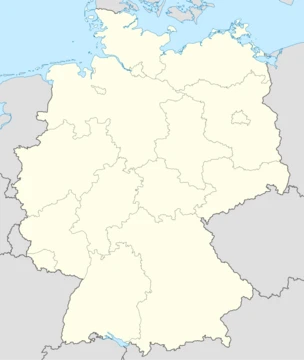
Schleswig-Holstein
Northernmost German state with a contested Danish-German history.

Schleswig-Holstein is Germany's northernmost state, covering about 15,763 square kilometers and ranking as the 12th largest by area out of 16 states. It borders Denmark, Mecklenburg-Vorpommern, Lower Saxony, and the city-state of Hamburg. The capital is Kiel, with Lübeck and Flensburg as other major cities. The name historically described a larger area that also included what is now South Jutland County in Denmark.
The term "Holstein" comes from Old Saxon *Holseta Land*, where *holz* means wood. It originally referred to one of three Saxon tribes north of the Elbe River, the others being Tedmarsgoi and Sturmarii. The Holsts lived between the Stör River and Hamburg, and after Christianization their main church was in Schenefeld. Saxon Holstein became part of the Holy Roman Empire after Charlemagne's campaigns in the late 700s, and from 811 the River Eider marked its northern border.
"Schleswig" derives from the city of Schleswig, a German transliteration of the Danish *Slesvig*. This combines *Schlei* (the river) and *vig* (inlet or bay), meaning "the bay at the river Schlei." The Schlei is called *Slien* in Danish, and the word may relate to *Slæ*, meaning reeds and aquatic plants.
During the Migration Period, the Jutland peninsula was home to several tribes. The Jutes lived in the far north, separated from the Angles by a dyke from around the first century. When the Angles expanded north in the 200s, a new dyke—the Wendish Dyke—was built. The Angles' southern border was formed by marshes along the Eider and dense forest to the south. Beyond that lay Holstein, split between the Germanic Saxons in the west and the Slavic Wagri in the east. By the 8th century, the Wagri had joined the Obotrite confederation. In the 4th and early 5th centuries, many Jutes, Angles, and Saxons migrated to the British Isles, leaving the peninsula sparsely populated. Danes from southern Scandinavia and the islands then moved in, settling and mixing with the remaining Jutes and Angles.
Schleswig, then called South Jutland, was under Danish control from the 5th century. In the 12th century, infighting in the Danish royal house turned it into a duchy within Denmark. It bordered Holstein, part of the Holy Roman Empire. From 1460, the King of Denmark ruled both as duke: Schleswig remained part of Denmark, while Holstein stayed in the Empire. In the 19th century, both Danes and Germa
- Capital
- Kiel
- Area
- 15,763 km² (6,086 sq mi)
- Rank by area
- 12th largest German state (out of 16)
- Bordering countries
- Denmark
- Bordering German states
- Mecklenburg-Vorpommern, Lower Saxony, Hamburg
- Notable cities
- Lübeck, Flensburg
Quick Facts
- Official Name
- Schleswig-Holstein
- Native Name
- da · Slesvig-Holsten / nds · Sleswig-Holsteen / frr · Slaswik-Holstiinj
- Settlement Type
- State
- Flag Size
- 120px
- Shield Size
- 75px
- Subdivision Type
- Country
- Subdivision Name
- Germany
- Seat Type
- Capital / (and largest city)
- Seat
- Kiel
- Governing Body
- Landtag of Schleswig-Holstein
- Leader Party
- CDU
- Leader Title
- Minister-President
Facts from the source article.
Lore & Background
Schleswig, known as South Jutland, had been under Danish control since the fifth century. In the 12th century, it became a duchy within Denmark due to infighting in the Danish royal house. It bordered Holstein, which was part of the Holy Roman Empire. Beginning in 1460, the King of Denmark ruled both Schleswig and Holstein as their duke, with Schleswig remaining part of Denmark and Holstein part of the Holy Roman Empire. In the 19th century, both Danes and Germans claimed Schleswig-Holstein. The population of Holstein and Lauenburg was predominantly German but included small Danish and other minorities, while Schleswig had a mixed population: South Schleswig had a significant German-speaking population from early times, and the whole duchy was not predominantly Danish until the late 1700s and early 1800s. This sparked the Schleswig-Holstein Question. In 1848, Denmark fought to maintain its existing sovereignty over Schleswig, not to annex new territory, leading to the First Schleswig War.
Reader's Guide
Schleswig-Holstein's significance lies in its role as a contested borderland between Danish and German spheres, shaping the Schleswig-Holstein Question that led to two wars in the 19th century. The 1920 plebiscites resolved the territorial dispute by returning North Schleswig to Denmark. Today, its economy is known for agriculture, particularly Holstein cows, and its position on the Atlantic Ocean makes it a major trade point and shipbuilding site, including the Kiel Canal. Offshore oil wells and wind farms produce significant energy, and fishing is a major industry. It is a popular tourist destination. The region's history includes the Migration Period, when Jutes, Angles, and Saxons departed for Britain, and Danes settled the peninsula, building the Danevirke fortification. The Frisians arrived in the 800s, settling in North Frisia. The terms 'Holstein' and 'Schleswig' derive from Old Saxon and Danish origins, respectively, reflecting the region's mixed heritage.
Did You Know?
- The name 'Schleswig' is a German transliteration of the Danish 'Slesvig', meaning 'the bay at the river Schlei'.
- The Danevirke was a 30-kilometer earthwork with a palisade fortification, used from its construction until 1864.
- After World War II, Schleswig-Holstein took in over a million refugees.
- The Hærvejen trade route, also called the Cattle Way or Oxen Way, was used for trading livestock and other goods.
Frequently Asked Questions
What is Schleswig-Holstein?
Schleswig-Holstein is Germany's northernmost federal state, covering roughly 15,763 square kilometers and ranking as the 12th largest of the sixteen German states. Its capital is Kiel, with Lübeck and Flensburg serving as other key urban centers.
Where is Schleswig-Holstein located and what does it border?
The state sits at the very top of the German map, sharing its northern edge directly with Denmark. On the other three sides it is flanked by Mecklenburg-Vorpommern, Lower Saxony, and the city-state of Hamburg.
Where does the name 'Holstein' come from?
The term traces back to Old Saxon *Holseta Land*, in which *holz* simply means wood. It originally identified one of three Saxon tribes settled north of the Elbe River, distinguishing that group from its neighboring tribes.
Why is Schleswig-Holstein historically significant?
The region carries a long, contested Danish-German history that shaped its identity for centuries. The name 'Schleswig' once described a broader territory that included what is now South Jutland County in Denmark, reflecting the blurred border between the two nations.
What makes Schleswig-Holstein unique among the sixteen German states?
It holds the distinction of being the country's northernmost state, perched right at Germany's top edge. Its coastline stretches along both the North Sea and the Baltic Sea, giving it a particularly strong maritime character.
More in German States 1-17
Spotted an error? Know more?
This is a living reference — every entry is fact-audited, and reader corrections feed straight into our audit queue. Suggest an edit · See this site's audit record