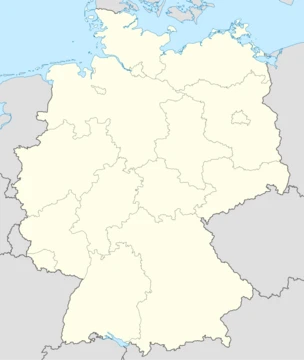
Rhineland-Palatinate
A post-war German state formed from historic regions.

Rhineland-Palatinate (German: Rheinland-Pfalz) is a landlocked state in western Germany, established in 1946 after World War II by the French military administration. It was formed from parts of the former states of Prussia, Hesse, and Bavaria, and became part of the Federal Republic of Germany in 1949. Its natural and cultural heritage includes the extensive Palatinate winegrowing region, picturesque landscapes, and many castles and palaces.
- established
- 30 August 1946
- capital
- Mainz
- area
- 19,846 km² (7,663 sq mi)
- population
- about 4.05 million
- nationality
- German
- known_for
- Palatinate winegrowing region, Middle Rhine UNESCO World Heritage Site
Quick Facts
- Official Name
- Rhineland-Palatinate
- Native Name
- de · Rheinland-Pfalz / pfl · Rhoilond-Palz
- Settlement Type
- State
- Flag Size
- 120px
- Shield Size
- 75px
- Blank Emblem Type
- Brandmark
- Subdivision Type
- Country
- Subdivision Name
- Germany
- Established Title
- Founded
- Established Date
- 30 August 1946
- Seat Type
- Capital (and largest city)
- Seat
- Mainz
Facts from the source article.
Lore & Background
Rhineland-Palatinate was founded on 30 August 1946 by Regulation No. 57 of the French military government under General Marie-Pierre Kœnig. It was the last state in the French occupation zone to be established, though Württemberg-Hohenzollern had already been created earlier in the Western Zone. The official name from the founding regulation was 'Rheinland-Pfalz'; the name 'Rhineland-Palatinate' was first confirmed in the constitution of 18 May 1947. The provisional French government originally wanted to leave open the option of annexing further areas west of the Rhine, but under pressure from the Americans and British, they followed their example by setting up the state. Mainz was named as the state capital, but due to war damage, the headquarters of the state government and parliament were provisionally established in Koblenz.
Reader's Guide
Rhineland-Palatinate's significance lies in its creation as a 'land of the retort' after World War II, consolidating diverse historical regions—Prussian, Hessian, and Bavarian—into a single state. It shared Germany's only border with the Saar Protectorate until 1957. The state developed a sense of community only gradually, facing petitions for separation in the 1950s and 1970s, none of which succeeded. Its legacy includes being the most forested state in Germany along with Hesse, and hosting the UNESCO World Heritage Site Middle Rhine. The state's constitutional bodies initially sat in Koblenz before moving to Mainz in 1950, though many authorities remained in Koblenz. The Joint German-Luxembourg Sovereign Region, a condominium formed by the rivers Moselle, Sauer, and Our, is the only unincorporated area of the state.
Did You Know?
- Rhineland-Palatinate was the last state in the French occupation zone to be established, on 30 August 1946.
- The state's constitution was adopted by 53% of valid votes cast in a referendum on 18 May 1947.
- The Joint German-Luxembourg Sovereign Region is the only unincorporated area of the state.
- With 42% of its area covered by forests, it is one of the most forested states, though Saarland has a higher forest cover percentage.
Birth from Occupation
Rhineland-Palatinate did not emerge organically but was assembled by foreign hands in the aftermath of total war. On 30 August 1946, the French military government under General Marie-Pierre Kœnig issued Regulation No. 57, stitching together the southern Prussian Rhine Province districts of Koblenz and Trier, Rhenish Hesse, the western portion of Nassau, and the Bavarian Rhenish Palatinate (minus the Saarpfalz county) into a single administrative entity. The French had taken over the zone from the Americans on 10 July 1945 and initially split the territory into two provisional upper presidiums. The creation of this state was partly reactive: the British and Americans had already established German states in their zones, and the French, under pressure, followed suit. Notably, the French forbade the Saarland from joining the new entity, preserving it as a separate protectorate until 1957. The state was initially called Rhenish-Palatinate before the name Rhineland-Palatinate was confirmed in the 1947 constitution.
A Constitution Divided
The founding constitution of Rhineland-Palatinate was far from a consensus document. A draft prepared by Adolf Süsterhenn was debated through multiple negotiation rounds before the Advisory State Assembly voted on it in April 1947. The CDU supported it with an absolute majority, while the SPD and KPD voted against. A particularly contentious provision mandated separate schools organized by Christian denomination. The constitution was then put to a popular referendum on 18 May 1947, where 53% of voters approved it. Yet the vote revealed deep regional fault lines: the Catholic north and west of the state backed the document by a majority, while the populations of Rhenish Hesse and the Palatinate rejected it. On that same date, the first elections for the Landtag were held. The inaugural parliamentary session convened on 4 June 1947 in Koblenz's city hall, where Wilhelm Boden was elected the first minister-president, though he would be replaced by Peter Altmeier just one month later.
Borders and the Sovereign Condominium
Rhineland-Palatinate is a landlocked state in western Germany, spanning 19,846 square kilometres with roughly 4.05 million inhabitants, making it the ninth largest and sixth most populous of Germany's sixteen states. It shares borders with four German neighbours—North Rhine-Westphalia, Saarland, Baden-Württemberg, and Hesse—and with three sovereign nations: France, Luxembourg, and Belgium. One of its most unusual features is the Joint German-Luxembourg Sovereign Region, an unincorporated condominium formed where the Moselle, Sauer, and Our rivers trace the boundary between Luxembourg and the state or the Saarland. This shared territory represents a rare legal arrangement in modern Europe. The state's natural and cultural landscape includes the extensive Palatinate winegrowing region, scenic countryside, and numerous castles and palaces. Its major cities include Mainz, the capital and largest city, along with Ludwigshafen am Rhein, Koblenz, Trier, Kaiserslautern, Worms, and Neuwied.
The Capital Question and Early Leadership
The choice of capital for the new state became an immediate political flashpoint. The French regulation of 1946 named Mainz as the capital, and a Mixed Commission was designated as the highest administrative organ, beginning its work there. However, wartime destruction had left Mainz without sufficient government buildings, so the state government and parliament were provisionally headquartered in Koblenz. The constituent meeting of the Advisory State Assembly took place there on 22 November 1946, and a draft constitution was drawn up. From the outset, Minister-President Peter Altmeier championed Mainz, reasoning that the southern regions—especially the Palatinate—would never accept Koblenz, which sat far to the north and carried the baggage of former Prussian administration. The public debate over which city should serve as the seat of government became a defining early controversy, reflecting the broader tensions between the state's Catholic north and its more Protestant south.
Frequently Asked Questions
Who is Rhineland-Palatinate?
It is a landlocked state in western Germany, put together on 30 August 1946 by the French military administration from fragments of the old Prussian, Hessian, and Bavarian territories. It officially became part of the Federal Republic of Germany in 1949.
What is Rhineland-Palatinate's capital and how big is it?
Mainz serves as the state capital. The region spans roughly 19,846 square kilometres and is home to about 4.05 million residents.
What is Rhineland-Palatinate most famous for?
The Palatinate winegrowing region and the Middle Rhine UNESCO World Heritage Site are its two signature attractions. The landscape is also studded with castles and palaces that give the area a distinctly romantic, storybook feel.
How was Rhineland-Palatinate actually created?
It was not an ancient kingdom but a post-war political construct: after 1945 the French occupying authority stitched together disparate territories from dissolved states into one new administrative unit. That arrangement has remained in place ever since.
Why does Rhineland-Palatinate matter to German culture?
Its centuries-old vineyard traditions, dramatic river valleys, and dense concentration of medieval architecture make it a living showcase of western German heritage. For many visitors and residents alike, it embodies the romantic, wine-soaked side of the country.
More in German States 1-17
Spotted an error? Know more?
This is a living reference — every entry is fact-audited, and reader corrections feed straight into our audit queue. Suggest an edit · See this site's audit record