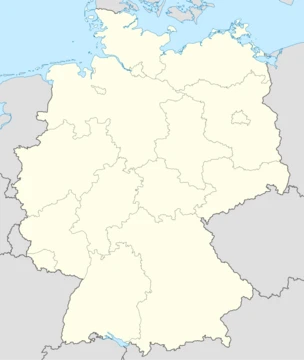
Brandenburg
Landlocked German state surrounding Berlin, core of historic Prussia.

Brandenburg, officially called the State of Brandenburg, is a landlocked state in northeastern Germany. It is the fifth-largest German state by area but only the tenth-most populous, home to 2.5 million people. Its capital and largest city is Potsdam, with other major towns including Cottbus, Brandenburg an der Havel, and Frankfurt (Oder). The state borders Poland and the German states of Berlin, Mecklenburg-Vorpommern, Lower Saxony, Saxony-Anhalt, and Saxony. Brandenburg completely surrounds the national capital and city-state of Berlin, and the two together form the Berlin/Brandenburg Metropolitan Region, Germany’s third-largest metropolitan area. A 1996 attempt to unify the two states failed, though they continue to cooperate on many issues.
The state’s name comes from the town of Brandenburg an der Havel. Its origin is unclear, with theories suggesting it derives from the Slavic *branyi* (marshy/boggy) or the Germanic *branda* (fire), or from West Slavic phrases like *branný bor* (defensive forest) or *brani-bor* (pine forest). In German, it is *Brandenburg* or *Land Brandenburg*; in Low German, *Brannenborg*; and in Lower Sorbian, *Bramborska*. The extinct Polabian language called it *Branibor*.
Historically, Brandenburg began as the Northern March in the 900s AD, carved from lands conquered from the Wends. It later became the Margraviate of Brandenburg, a major principality of the Holy Roman Empire. In the 15th century, it fell under the House of Hohenzollern, which later created Brandenburg-Prussia, the core of the Kingdom of Prussia. From 1815 to 1947, Brandenburg was a Prussian province. After World War II, Prussia was abolished, and the Soviet Military Administration established Brandenburg as a state. In 1952, East Germany dissolved it into several districts, but following German reunification, Brandenburg was re-established in 1990 as one of the five new states of the Federal Republic.
Southeastern Brandenburg contains part of historical Lower Lusatia, where most localities have two official languages: German and Lower Sorbian (spoken by the Sorbs/Wends).
- area_rank
- fifth-largest German state by area
- population
- 2.5 million residents
- population_rank
- tenth-most populous German state
- capital
- Potsdam
- major_cities
- Cottbus, Brandenburg an der Havel, Frankfurt (Oder)
- founded
- re-established in 1990 as one of the five new states of the Federal Republic after German reunification
- historical_origin
- originated in the Northern March in the 900s AD, later the Margraviate of Brandenburg, a major principality of the Holy Roman Empire
Quick Facts
- Official Name
- State of Brandenburg
- Native Name
- de · Land Brandenburg / nds · Land Brannenborg / dsb · Kraj Bramborska
- Settlement Type
- State
- Anthem
- de · "Märkische Heide, märkischer Sand" · italics=no (Unofficial) / (en · "Brandenburglied")
- Mapframe-Zoom
- 5
- Mapframe-Point
- none
- Subdivision Type
- Country
- Subdivision Name
- Germany
- Seat Type
- Capital / (and largest city)
- Seat
- Potsdam
- Governing Body
- Landtag of Brandenburg
Facts from the source article.
Lore & Background
Brandenburg originated in the Northern March in the 900s AD, from areas conquered from the Wends. It later became the Margraviate of Brandenburg, a major principality of the Holy Roman Empire. In the 15th century, it came under the rule of the House of Hohenzollern, which later established Brandenburg-Prussia, the core of the later Kingdom of Prussia. From 1815 to 1947, Brandenburg was a province of Prussia. Following the abolition of Prussia after World War II, Brandenburg was established as a state by the Soviet Military Administration in Germany. In 1952, the German Democratic Republic dissolved the state and broke it up into multiple regional districts. After German reunification, Brandenburg was re-established in 1990 as one of the five new states of the Federal Republic.
Reader's Guide
Brandenburg's significance lies in its role as the historical core of the Kingdom of Prussia and, by extension, the German Empire. Governed by the Hohenzollern dynasty from 1415, it contained the future German capital Berlin. After 1618 the Margraviate of Brandenburg and the Duchy of Prussia were combined to form Brandenburg-Prussia, which was ruled by the same branch of the House of Hohenzollern. In 1701 the state was elevated as the Kingdom of Prussia. Brandenburg remained the core of the Kingdom of Prussia, and it was the site of the kingdom's capitals, Berlin and Potsdam. Today, as a modern German state, it surrounds Berlin and cooperates with it on many matters, though a 1996 attempt to unify the two states failed. Southeastern Brandenburg contains part of the historical Lower Lusatia, and most of these localities have two official languages, German and Lower Sorbian.
Did You Know?
- Brandenburg takes its name from Brandenburg an der Havel; the name's origin is unclear but is thought to derive from Slavic 'branyi' (marshy/boggy) or Germanic 'branda' (fire).
- In the extinct local language Polabian, Brandenburg was called Branibor.
- Brandenburg originated in the Northern March in the 900s AD, from areas conquered from the Wends.
- An unsuccessful attempt to unify Brandenburg and Berlin occurred in 1996.
Geography & the Berlin Nexus
Brandenburg is a landlocked state in northeastern Germany, ranking fifth among German states by area and tenth by population, with approximately 2.5 million inhabitants. Potsdam serves as both the state capital and its largest city, while Cottbus, Brandenburg an der Havel, and Frankfurt (Oder) anchor the other major urban centers. Perhaps the state's most striking geographic characteristic is that it completely surrounds Berlin, the national capital and a separate city-state. The two together constitute the Berlin/Brandenburg Metropolitan Region, which stands as Germany's third-largest metropolitan area. Despite this intimate spatial arrangement, the two entities maintain distinct political identities. A 1996 effort to merge them into a single state was unsuccessful, though they continue to coordinate on a wide range of shared administrative matters. Brandenburg's borders touch Poland and five neighboring German states—Mecklenburg-Vorpommern, Lower Saxony, Saxony-Anhalt, and Saxony—placing it at a crossroads between central and eastern German territories.
Slavic Roots and the Medieval March
The territory now encompassed by Brandenburg was settled by Slavic peoples from at least the 7th century. The Hevelli occupied the western portions while the Sprevane held the east, and both groups likely arrived from regions in present-day Ukraine and Belarus, displaced by Hun and Avar incursions. They depended heavily on river transport for trade and movement. In the early 10th century, Henry the Fowler and his successors extended imperial authority eastward to the Oder River. In 948, Emperor Otto I installed margraves to guard the eastern marches and established the bishoprics of Brandenburg and Havelberg. A major Wendish uprising in 983, however, expelled imperial forces and returned the region to Slavic leadership. In 1134, following a German crusade against the Wends, the magnate Albert the Bear received the Northern March from Emperor Lothar III. By 1150 he formally inherited Brandenburg an der Havel from the last Wendish ruler, Pribislav, and declared himself margrave. His Ascanian descendants then drove systematic colonization, Christianization, and agricultural development eastward to the Oder, while Slavic and German communities gradually intermarried.
The Hohenzollern Ascendancy and the Making of Prussia
Beginning in 1415, the House of Hohenzollern governed Brandenburg, elevating it to one of seven electoral principalities within the Holy Roman Empire. After 1618, the Margraviate of Brandenburg and the Duchy of Prussia were united under a single Hohenzollern branch, forming the combined state of Brandenburg-Prussia. This entity drew strength from several converging advantages: the Franconian territories of Nuremberg and Ansbach, the Swabian Hohenzollern holdings, Berlin's connections to eastern European trade networks, and the ruler's privileged status as prince-elector. In 1701, the state was formally elevated to the Kingdom of Prussia. Brandenburg and Prussia together constituted the original core of the German Empire, the first unified German state. From 1815 until 1947, Brandenburg existed as a province within the larger Prussian structure, subordinate to a political entity that would ultimately be dismantled in the aftermath of World War II.
Twentieth-Century Turmoil and Reunification
The twentieth century subjected Brandenburg to repeated cycles of political dissolution and rebirth. After World War II, the Soviet Military Administration in Germany abolished Prussia and established Brandenburg as a distinct state. Yet just six years later, in 1952, the German Democratic Republic dissolved that state and fragmented its territory into multiple regional districts. The political landscape transformed with German reunification: in 1990, Brandenburg was reconstituted as one of five new states within the Federal Republic of Germany. The relationship with neighboring Berlin remained a persistent source of political debate; a 1996 attempt to unify the two into a single entity was defeated by voters. Nevertheless, the two continue to cooperate on numerous shared administrative matters. In southeastern Brandenburg, the historical region of Lower Lusatia preserves a unique linguistic heritage, where most localities maintain dual official languages of German and Lower Sorbian, reflecting the enduring cultural presence of the Sorb and Wendic peoples in the area.
Frequently Asked Questions
What is Brandenburg and where is it located?
Brandenburg is a landlocked state in northeastern Germany, ranking as the fifth-largest German state by area while housing only about 2.5 million people. It sits at the heart of the old Prussian heartland and borders Poland to the east.
Why does Brandenburg completely surround Berlin?
When the former East German territories were reorganized into new federal states after reunification in 1990, Brandenburg's borders were drawn to enclose the city-state of Berlin entirely. The two together make up the Berlin/Brandenburg Metropolitan Region.
What is the capital of Brandenburg?
Potsdam holds the role of both capital and most populous city in the state. Other notable urban centers include Cottbus, Brandenburg an der Havel, and Frankfurt (Oder).
When was Brandenburg re-established as a German state?
Brandenburg was re-created in 1990 as one of the five new federal states formed in the wake of German reunification. It draws its identity from the historic Duchy and Kingdom of Prussia, which had been dissolved decades earlier.
Why is Brandenburg geographically significant?
The state shares borders with Poland and five neighboring German states—Mecklenburg-Vorpommern, Lower Saxony, Saxony-Anhalt, Saxony, and Berlin—making it a broad land bridge between Germany and its eastern neighbor. Its complete encirclement of Berlin also gives it a unique administrative and logistical role in the country.
More in German States 1-17
Spotted an error? Know more?
This is a living reference — every entry is fact-audited, and reader corrections feed straight into our audit queue. Suggest an edit · See this site's audit record