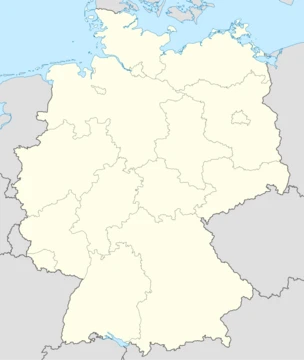
Saxony
A German state with a long history as duchy, electorate, and kingdom.

Saxony—officially called the Free State of Saxony—is a landlocked German state. It shares borders with Brandenburg, Saxony-Anhalt, Thuringia, and Bavaria, as well as with the Czech Republic and Poland. Dresden serves as its capital, while Leipzig is the largest city. Among Germany’s sixteen states, Saxony ranks tenth in size, covering 18,450 square kilometres, and seventh in population, with over 4 million residents. Alongside Saxony-Anhalt and Thuringia, it is one of the three states typically considered part of Central Germany.
The state’s name comes from the historical Electorate of Saxony and the Kingdom of Saxony, though its current territory covers only a portion of those earlier domains. For centuries, the House of Wettin ruled Saxony, making it one of the Holy Roman Empire’s most powerful states. It was especially influential during the Protestant Reformation, notably under Frederick the Wise, and later became a key political and cultural hub in German-speaking Europe.
- Capital
- Dresden
- Largest city
- Leipzig
- Area
- 18,450 square kilometres (7,124 sq mi)
- Population
- More than 4 million
- Rank by area
- Tenth largest of Germany's sixteen states
- Rank by population
- Seventh most populous
- Founded
- Re-established on 3 October 1990
Quick Facts
- Native Name
- de · Freistaat Sachsen / sxu · Freischdaad Saggsn / hsb · Swobodny stat Sakska
- Flag Size
- 120px
- Shield Size
- 75px
- Anthem
- Sachsenlied · de
- Subdivision Type
- Country
- Subdivision Name
- Germany
- Seat Type
- Capital
- Seat
- Dresden
- Seat1 Type
- Largest city
- Seat1
- Leipzig
- Governing Body
- Landtag of Saxony
- Leader Party
- CDU
Facts from the source article.
Lore & Background
Saxony has a long history as a duchy, an electorate of the Holy Roman Empire (the Electorate of Saxony), and finally as a kingdom. In 1918, after Germany's defeat in World War I, its monarchy was overthrown and a republican form of government was established under the current name. The state was broken up into smaller units during communist rule (1949–1989), but was re-established on 3 October 1990 on the reunification of East and West Germany. During the 19th century, Saxony became one of the most densely industrialised regions in Europe, with major textile, engineering, and manufacturing industries. Following the Second World War, it formed part of the Soviet occupation zone in Germany and later the German Democratic Republic. The state was abolished in 1952 during administrative reforms in East Germany and re-established upon German reunification in 1990.
Reader's Guide
Saxony's significance lies in its long evolution from a medieval stem duchy and influential electorate of the Holy Roman Empire to a modern German state. It played a prominent role during the Protestant Reformation under Frederick the Wise and was a major political and cultural centre. The state's name derives from the historic Electorate of Saxony and Kingdom of Saxony, though its modern territory represents only part of their former extent. After the Congress of Vienna in 1815, the kingdom ceded much territory to Prussia, establishing boundaries that broadly shaped the modern state. Saxony became one of the most densely industrialised regions in Europe during the 19th century, with major textile, engineering, and manufacturing industries. Its cultural legacy includes Dresden's Baroque cityscape and art collections, Leipzig's musical traditions, and the Ore Mountains' mining heritage. The state's economy is centred on manufacturing, particularly in the automotive, microelectronics, and mechanical engineering sectors. Saxony is also home to several universities and research institutes. The state was abolished in 1952 during East German administrative reforms and re-established upon German reunification in 1990.
Did You Know?
- Saxony is the tenth largest of Germany's sixteen states, with an area of 18,450 square kilometres.
- The present-day state takes its name from the historic Electorate of Saxony and Kingdom of Saxony, though its territory represents only part of their former extent.
- During the 19th century, Saxony became one of the most densely industrialised regions in Europe.
- The state was abolished in 1952 during administrative reforms in East Germany and re-established upon German reunification in 1990.
The Freistaat Designation
Saxony carries the title Freistaat, a term that translates roughly as "free state" and represents an older German word for "republic." The state first adopted this appellation in 1919, during the Weimar era, and reclaimed it once more in 1990 following German reunification. Only three of Germany's sixteen Länder use this designation—Saxony, Bavaria, and Thuringia—making it a distinctive marker of regional identity rather than a universal feature of the federation. Crucially, the title is purely stylistic. It carries no additional legal weight, no expanded sovereignty, and no special political standing compared to the other thirteen states. The comparison most often drawn is to American states that call themselves "commonwealths," where the label is a matter of tradition and self-image rather than a functional distinction in governance. For Saxony, the Freistaat name thus operates as a badge of historical continuity, linking the modern entity to the republican experiments of the early twentieth century while acknowledging that, in practical constitutional terms, it holds the same position within the federal system as any other Land.
Administrative Architecture as an Area-State
Saxony belongs to the category of thirteen area-states, or Flächenländer, that make up the majority of Germany's federal structure. Unlike the compact city-states of Berlin and Hamburg—where the state government and municipal administration are one and the same—Saxony operates a layered system. Beneath the state government, the territory is subdivided into local authorities comprising counties and county-level cities, each maintaining its own separate administration. This arrangement reflects the broader principle of dual federalism in Germany, a system that demands strong Länder possessing both the administrative machinery and the fiscal capacity to implement legislation and fund it from their own source revenues. The state capital, as in all German Länder, is designated a Landeshauptstadt. The practical effect of this structure is that governance in Saxony is distributed across multiple tiers, with local authorities handling day-to-day administration while the state government coordinates broader policy. This multi-level setup, while adding complexity to inter-state and federal coordination, is considered essential to the German model of federalism, which has deep roots stretching back centuries in the region's political history.
Reunification and the 1990 Re-establishment
The modern state of Saxony owes its current existence to the pivotal events of 1990, when German reunification brought the territory of the former German Democratic Republic into the Federal Republic. This was not a simple merger but an accession: the re-established eastern states—Brandenburg, Mecklenburg-West Pomerania, Saxony, Saxony-Anhalt, and Thuringia—joined the existing federal structure as full members. The process stood in contrast to 1949, when the Federal Republic was initially created through the unification of the three western occupation zones under American, British, and French administration. In that earlier moment, Saxony had no place in the new western federation. The 1990 accession restored Saxony to the map of the Bundesrepublik, and with it the state once again assumed its Freistaat title. The reunification also saw West and East Berlin merge into a single city-state. In the years that followed, proposals for further territorial adjustments have surfaced, including a 1996 referendum to merge Berlin with surrounding Brandenburg that ultimately failed to secure the necessary majority in Brandenburg, underscoring how sensitive questions of state boundaries remain in German politics.
Historical Continuity from Weimar and Prussia
Saxony occupies a rare position among Germany's sixteen states: it is one of only six entities that trace their existence directly back to the seventeen Länder of the Weimar Republic at the end of the 1919 constitutional era, though its borders have shifted somewhat over the decades. The other eleven Weimar states were absorbed into larger entities or split into smaller ones. Saxony's territorial core derives from the former Prussian province of Saxony, which formed the foundational geography of the modern state. The very terminology of the federal system has evolved: the Weimar Constitution of 1919 introduced the term Länder, replacing the older designation Staaten used for the states of the German Empire. Today, the compound Bundesland is common in everyday usage, though it appears in neither the 1919 text nor the current constitution. Federalism itself is not a modern invention in this region; it has deep historical roots in German political life, with the majority of what later became German territory organized along territorial lines for centuries before the nineteenth century. Saxony's survival as a distinct entity through the Weimar period, the post-war divisions, and reunification speaks to the durability of these older territorial identities.
Frequently Asked Questions
Who is Saxony?
Saxony, officially the Free State of Saxony, is a landlocked German state whose identity grew out of a duchy, an electorate, and a kingdom. It sits in eastern Germany and is one of three states typically grouped under the Central Germany label alongside Saxony-Anhalt and Thuringia.
What are Saxony's key cities?
Dresden holds the capital seat, while Leipzig is the state's most populous city. Together they anchor Saxony's cultural and economic profile.
How does Saxony rank among Germany's sixteen states?
By area it is the tenth largest at 18,450 square kilometres, and by population it sits seventh with just over four million residents.
Where is Saxony located and who are its neighbors?
Saxony borders four German states—Brandenburg, Saxony-Anhalt, Thuringia, and Bavaria—as well as two foreign countries: the Czech Republic to the south and Poland to the east.
Why is Saxony historically significant?
Its name and political identity trace back to the old Electorate of Saxony, and the region cycled through the roles of duchy, electorate, and kingdom across the centuries. That layered history gives it a distinct place in the broader narrative of German statehood.
More in German States 1-17
Spotted an error? Know more?
This is a living reference — every entry is fact-audited, and reader corrections feed straight into our audit queue. Suggest an edit · See this site's audit record