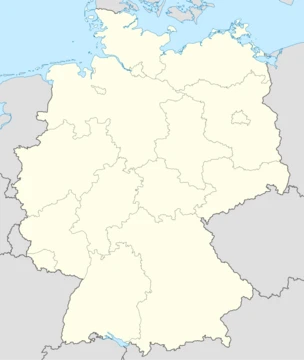
Berlin
Capital and largest city of Germany, a global hub of culture and science.

Berlin is the capital and largest city of Germany, with 3.7 million inhabitants. It is also one of the states of Germany, the third-smallest by area, and is surrounded by the state of Brandenburg. Berlin was built along the banks of the Spree river and has served as the capital of several German states, including the Margraviate of Brandenburg, the Kingdom of Prussia, the German Empire, the Weimar Republic, and Nazi Germany. After World War II, the city was split into West Berlin and East Berlin, divided by the Berlin Wall, and following German reunification in 1990, it once again became the capital of all of Germany.
- Country
- Germany
- Population (city limits)
- 3.7 million
- Population (urban area)
- 4.5 million
- Population (metropolitan region)
- 6.2 million
- First documented
- 13th century
- Founded
- 1237
- Area rank in Germany
- Third-smallest state
Quick Facts
- Subdivision Type
- Country
- Subdivision Name
- Germany
- Subdivision Type1
- State
- Subdivision Name1
- Berlin
- Mapframe-Point
- none
- Total Type
- City/State
- Area Total Km2
- 891.3
- Area Urban Km2
- 3,743
- Population Total
- 3,596,999
- Population As Of
- 2022 census
- Pop Est As Of
- December 2025
- Population Est
- 3,700,577
Facts from the source article.
Lore & Background
Berlin lies in northeastern Germany, in an area formerly settled by Slavs, and its name derives from the Old Polabian stem berl-/birl- ("swamp"). The area has been settled for millennia, with a deer mask dated to 9,000 BCE attributed to the Maglemosian culture. In the 12th century, the region came under German rule as part of the Margraviate of Brandenburg, and the first written records of towns in the area date from the late 12th century, with Spandau mentioned in 1197 and Köpenick in 1209. German merchants founded two settlements—Berlin and Cölln—and 1237 is considered the founding date of the city. Members of the Hohenzollern family ruled in Berlin until 1918, first as electors of Brandenburg, then as kings of Prussia, and eventually as German emperors. The Thirty Years' War devastated Berlin, but under Frederick William, the "Great Elector," a policy of immigration and religious tolerance was initiated, including the Edict of Potsdam in 1685 offering asylum to French Huguenots. By 1700, approximately 30 percent of Berlin's residents were French. In 1701, Berlin became the capital of the Kingdom of Prussia, and between 1700 and 1750, its population nearly quadrupled. Under Frederick II, Berlin became a center of the Enlightenment. The Industrial Revolution transformed Berlin during the 19th century, and in 1871, it became capital of the newly founded German Empire.
Reader's Guide
Berlin's significance lies in its role as a political, cultural, and scientific hub across multiple centuries. It served as the capital of the Margraviate of Brandenburg, Kingdom of Prussia, German Empire, Weimar Republic, and Nazi Germany, and after division during the Cold War, it was reunified as the capital of Germany in 1990. The city has been called "the heart of Europe" due to its geographic location and history. Berlin is a global city of culture, politics, media, and science, with an economy based on high tech and the service sector, including creative industries, startups, research facilities, and media corporations. It is a continental hub for air and rail traffic and has a complex public transportation network. Berlin is home to several universities, including Humboldt University of Berlin, Technische Universität Berlin, the Berlin University of the Arts, and the Free University of Berlin. The Berlin Zoological Garden is the most visited zoo in Europe, and Babelsberg Studio is the world's first large-scale movie studio complex. The city contains three UNESCO World Heritage Sites: Museum Island, the Palaces and Parks of Potsdam and Berlin, and the Berlin Modernism Housing Estates. About one-third of the city's area is composed of forests, parks, gardens, rivers, canals, and lakes.
Did You Know?
- Berlin's name may be related to the Old Polabian stem berl-/birl- meaning 'swamp'.
- The Berlin Zoological Garden is the most visited zoo in Europe.
- Babelsberg Studio, founded in 1912, is one of the world's oldest large-scale movie studio complexes.
- About one-third of Berlin's area is composed of forests, parks, gardens, rivers, canals, and lakes.
The City-State Distinction
Berlin occupies a singular position among Germany's sixteen federal states. While thirteen of the Länder — the so-called area-states — maintain a layered governance structure in which counties and county-level cities operate with their own administrations beneath the state government, Berlin (alongside Hamburg) collapses that hierarchy entirely. In a city-state, there is no institutional divide between the state-level government and the municipal administration; the same body governs both the 'state' and the 'city' simultaneously. This makes Berlin's political architecture fundamentally different from, say, North Rhine-Westphalia or Bavaria, where local authorities function as distinct administrative tiers. Even Bremen, often grouped with the city-states, is actually a hybrid: its state government doubles as the municipal administration for the city of Bremen, yet Bremerhaven retains a separate local government. Berlin, by contrast, is a pure city-state — a single, undivided unit of governance covering its entire territory. This structural simplicity shapes everything from budgeting to urban planning within the capital.
From Divided Capital to Reunified City-State
For over four decades, Berlin existed in a state of political fracture. After the Federal Republic of Germany was established in 1949 from the three western occupation zones, West Berlin remained under the administration of the American, British, and French forces. Yet the western sector of the city regarded itself as an integral part of the new republic; it was largely integrated into the federal system and treated as a de facto state, even though it was not formally one of the sixteen Länder. The eastern half, meanwhile, fell under the German Democratic Republic. The rupture was finally healed in 1990, when the territory of the former East Germany acceded to the Federal Republic. Five re-established eastern states — Brandenburg, Mecklenburg-West Pomerania, Saxony, Saxony-Anhalt, and Thuringia — joined the federation, and West and East Berlin were merged into a single city-state. This reunification did not merely redraw a map; it restored a continuous municipal and governmental identity to a capital that had been split for a generation.
The 1996 Brandenburg Question
One of the most revealing episodes in modern Berlin's political life came in 1996, when a referendum was held on merging the city-state with its surrounding neighbour, Brandenburg. The vote produced a strikingly split result: a majority of Berliners supported the union, while the necessary majority threshold was not met in Brandenburg, causing the proposal to fail. The episode underscores a broader pattern in German politics. Unlike the United States or other federations where calls for territorial reorganization between subnational units are rare, Germany continues to debate possible boundary changes among its Länder. Scholars note that the German model of dual federalism demands strong states with sufficient administrative and fiscal capacity to implement and fund legislation from their own revenues, and that an excessive number of states complicates coordination both among them and with the federal government. Yet despite these structural arguments, no major territorial reform has succeeded, and the question of whether Berlin should absorb or be absorbed by Brandenburg remains a live, contentious topic in public discourse.
Berlin's Place in the Federal Tapestry
Berlin is one of sixteen partly sovereign states that together constitute the Federal Republic of Germany. The terminology itself has a long lineage: the Weimar Constitution of 1919 introduced the word Länder to describe the constituent units, replacing the older imperial term Staaten. Today, the compound Bundesland — 'federated Land' — is the everyday label, even though it appears in neither the 1919 nor the current constitution. Berlin's roots in this federal structure reach back further still. The vast former Free State of Prussia was partitioned after 1945 among several successor states, and Berlin received a share of that legacy. The individual states, rather than a central authority, were the entities that formed the Federal Republic in 1949 — a deliberate inversion of the Austrian model, where the national federation was created first and the states defined within it. For Berlin, being a state in its own right means it participates directly in the federal legislative and fiscal architecture, wielding the same constitutional standing as Bavaria or Saxony, despite governing a single urban territory rather than a sprawling rural landscape.
Frequently Asked Questions
Who is Berlin?
Berlin is Germany's capital and most populous state, home to roughly 3.7 million residents within its city limits. It sits along the Spree River and is entirely encircled by the neighboring state of Brandenburg.
What are Berlin's powers and role?
As the federal capital, Berlin serves as the seat of the German government and parliament, making it the political center of the nation. It also functions as a major global hub for culture, science, and creative industries.
How does Berlin's story end?
Berlin's narrative is still unfolding, but its most dramatic chapter closed in 1990 when the divided city was reunified and once again became the capital of a whole, sovereign Germany. Since then it has continued to grow as a living, evolving metropolis.
Why is Berlin important?
Berlin has held the capital role across an unbroken chain of German polities stretching from the Margraviate of Brandenburg through the German Empire to the modern federal republic. Its 6.2-million-strong metropolitan region makes it the demographic and cultural engine of the country.
What is Berlin's origin story?
The city's first documented mention dates to the 13th century, with formal founding recorded in 1237 along the banks of the Spree. It began as a modest riverside settlement before growing into one of Europe's most significant urban centers.
More in German States 1-17
Spotted an error? Know more?
This is a living reference — every entry is fact-audited, and reader corrections feed straight into our audit queue. Suggest an edit · See this site's audit record