Bavaria
Largest German state, with a history from Celts to kingdom.

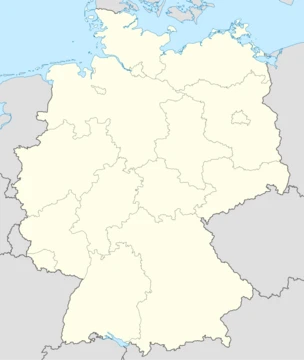
Bavaria, whose official name is the Free State of Bavaria, is a German state without a coastline. To its west lies Baden-Württemberg, to the northwest Hesse, and to the north Thuringia and Saxony. It shares a southern border entirely with Austria, and an eastern border with the Czech Republic. Munich serves as both the capital and largest city; other significant urban centers include Nuremberg, Augsburg, Regensburg, and Ingolstadt. Covering 70,550 square kilometers (27,249 square miles), Bavaria holds the title of Germany's largest state by area, and with 13.08 million residents, it ranks second in population.
The region's recorded history starts with Iron Age Celtic tribes. During the first century AD, the Roman Empire took control, incorporating the area into the provinces of Raetia and Noricum. After Rome's fall, the Duchy of Bavaria emerged within Francia in 555 AD. It later became part of East Francia and extended its reach into what are now Austria, Slovenia, and Italy. Within the Holy Roman Empire, Bavaria gained elector status in 1623 amid the Thirty Years' War, and later became the Kingdom of Bavaria in 1806. After German unification, it remained a kingdom inside the German Empire until World War I ended. The modern state was formally constituted with its current constitution on December 1, 1946, and it joined West Germany in 1949.
Bavarian culture draws heavily from its Catholic heritage. The Bavarian language, a group of German dialects spoken by about 12 million people in both Bavaria and Austria, is the largest German dialect. Other major cultural elements include its cuisine—featuring dishes like Weißwurst and Leberkäse—its architecture, which in the southern Alpine regions emphasizes Alpine symbolism, and its large festivals, notably Munich's Oktoberfest.
Today's Bavarian borders encompass Altbayern along with parts of the historical regions of Franconia and Swabia. The state is divided into seven administrative regions: three in Franconia, three in Altbayern, and one in Swabia. Politically, Bavaria has a conservative tradition; the CSU is the state's largest party and is considered the "sister party" of the national CDU, together known as the Union.
**History**
**Antiquity**
Human occupation of Bavaria dates back to the Paleolithic era, but the first documented inhabitants were Celtic tribes of the Bronze Age, such as the Boii, who live
- Capital
- Munich
- Area
- 70,550 square kilometres (27,249 sq mi)
- Population
- 13.08 million
- Largest party
- CSU
- Founded as modern state
- December 1, 1946
- Major dialect
- Bavarian language
Quick Facts
- Official Name
- Free State of Bavaria
- Native Name
- de · Freistaat Bayern / bar · Freistoot Bayern
- Settlement Type
- State
- Shield Size
- 110
- Anthem
- "Bavaria Hymn"
- Mapframe-Zoom
- 5
- Mapframe-Point
- none
- Subdivision Type
- Country
- Subdivision Name
- Germany
- Seat Type
- Capital / (and largest city)
- Seat
- Munich
- Governing Body
- Landtag of Bavaria
Facts from the source article.
Lore & Background
Bavaria's recorded history begins with Celtic tribes in the Iron Age, followed by Roman conquest and incorporation into the provinces of Raetia and Noricum in the first century AD. After the Roman collapse, the Duchy of Bavaria was created in Francia in 555 AD, later part of East Francia. It gained elector status in the Holy Roman Empire in 1623 during the Thirty Years' War and became the Kingdom of Bavaria in 1806. Following German unification, it remained a kingdom within the German Empire until World War I. The modern state was formally constituted with its current constitution on December 1, 1946 and joined West Germany in 1949.
The culture of Bavaria is heavily influenced by its Catholic heritage. The Bavarian language, a group of German dialects with around 12 million speakers, is the largest German dialect. Major cultural elements include cuisine such as Weißwurst and Leberkäse, A
Reader's Guide
Bavaria's significance lies in its long continuity as a distinct political entity within larger German and European frameworks. From the Duchy of Bavaria in 555 AD through its elevation to an electorate in 1623 and a kingdom in 1806, Bavaria maintained a strong regional identity. Its role in the Holy Roman Empire, particularly the Thirty Years' War, and its later integration into the German Empire and West Germany illustrate the balance between regional autonomy and national unity. The Wittelsbach dynasty's 738-year rule shaped Bavarian governance and culture. Bavaria's Catholic heritage, distinct dialect, and traditions like Oktoberfest contribute to its enduring cultural influence. Economically and politically, as Germany's largest state by area and second-most populous, Bavaria remains a key region, with the CSU party playing a major role in national politics. The state's borders incorporate historical regions of Franconia and Swabia, reflecting a complex territorial evolution. Its legacy includes contributions to German federalism, cultural preservation, and economic strength.
Did You Know?
- Bavaria is the largest German state by area, covering 70,550 square kilometres.
- The Bavarian language has around 12 million speakers, making it the largest German dialect.
- The Wittelsbach family ruled Bavaria for 738 years, from 1180 to 1918.
- Bavaria gained elector status in the Holy Roman Empire in 1623 during the Thirty Years' War.
From Electorate to Kingdom: The Wittelsbach Ascension
The story of Bavaria's elevation to a kingdom began with a dynastic crisis. In late 1777, the direct Bavarian branch of the Wittelsbach family died out, and the electorate passed to Charles Theodore, who also held the title of Elector Palatine. For the first time in four and a half centuries, the Electoral Palatinate was reunited with Bavaria. Yet this inheritance brought turmoil: French Revolutionary forces swept through the Palatinate in 1793 and pushed into Bavarian territory by 1795, reaching Munich itself. Charles Theodore, who had done little to resist, fled to Saxony while a regency negotiated an armistice with General Moreau. His successor, Maximilian IV Joseph of the Palatinate-Birkenfeld-Zweibrücken line, inherited a scattered army and strained finances. The turning point came with the 1805 Peace of Pressburg, which granted Maximilian the right to raise Bavaria to kingdom status. He proclaimed himself Maximilian I on 1 January 1806, and on 1 August that year Bavaria formally seceded from the Holy Roman Empire to join the Confederation of the Rhine. The Wittelsbach crown endured for a full century, passing through the family until the German Revolution of 1918 dissolved the monarchy and gave birth to the modern Free State of Bavaria.
The Napoleonic Crucible: Alliance, Betrayal, and War
Bavaria's early years as a kingdom were defined by its entanglement with Napoleonic France. After the Treaty of Lunéville in 1801 stripped the state of the Palatinate and the duchies of Zweibrücken and Jülich, the powerful minister Maximilian von Montgelas convinced the reluctant Maximilian Joseph to sign a separate peace and alliance with France in August of that year. This alignment brought both opportunity and peril. The new kingdom was compelled to supply conscripts for Napoleon's Peninsular War, fought Austria in 1809, and lost territory to Württemberg and Italy between 1810 and 1814. The heaviest toll came during the 1812 invasion of Russia, where roughly 30,000 Bavarian soldiers perished in action. The tide turned decisively in October 1813. Through the Treaty of Ried on 8 October, Bavaria abandoned the Confederation of the Rhine and pledged to join the Sixth Coalition against Napoleon, securing a guarantee of its sovereign independence. Crown Prince Ludwig and Marshal Karl Philipp von Wrede passionately championed the switch. On 14 October, Bavaria formally declared war on France. The coalition's triumph at Leipzig that same month sealed Napoleon's defeat in Germany, though Bavarian forces scored a minor success at Hanau while attempting to block the French retreat.
Modernization and the Architecture of Governance
Count Montgelas, who dominated Bavarian politics from 1799 to 1817, pursued a rigorous program of modernization that laid the groundwork for administrative structures still recognizable in the state today. His influence extended into the most fundamental social reforms: in 1808, Maximilian I abolished all remaining relics of serfdom and promulgated Bavaria's first written constitution. However, that document was amended repeatedly in the following years to accommodate Paris's shifting demands, reflecting the kingdom's continued dependence on French support. When Montgelas was dismissed on 1 February 1817, Bavaria entered a new phase of constitutional development. The landmark second constitution, proclaimed on 26 May 1818, established a bicameral Landtag. The upper chamber, the House of Councillors, was composed of the aristocracy, royal princes, archbishops, and hereditary or lifelong nominees of the crown. The lower chamber, the House of Representatives, drew its members from landowners, the three universities, both Catholic and Protestant clergy, the towns, and the peasantry. No law could be enacted and no tax levied without the consent of both houses. Notably, the constitution enshrined the equality of all religions, safeguarding Protestant rights despite strong opposition from Roman Catholic interests.
Borders, Rank, and the Long Shadow of 1814
The territorial shape of modern Bavaria was largely fixed in the aftermath of Napoleon's defeat. The 1814 Treaty of Paris required the kingdom to cede Tyrol and Vorarlberg to the Austrian Empire, but in return it received Aschaffenburg and Würzburg. Additional compensations included the Grand Duchy of Frankfurt, parts of the Grand Duchy of Hesse, and the Rhenish Palatinate, granted through the Treaty of Munich. These acquisitions made Bavaria the second-largest and second-most-powerful state south of the Main, behind only Austria, and the third-ranked state in all of Germany after Prussia and Austria. When the German Empire was unified in 1871, Bavaria entered the new federal structure as a sovereign constituent state, second in size, power, and wealth only to the dominant Kingdom of Prussia. This position of privileged autonomy within a unified Germany defined the kingdom's final decades. The monarchy's end came not through conquest but through revolution: in 1918, the German Revolution swept away the Wittelsbach crown, and Bavaria was reconstituted as a republic, the Free State of Bavaria that continues to exist today, its borders still largely those established after 1814.
Frequently Asked Questions
Who is Bavaria?
Bavaria, officially the Free State of Bavaria, is Germany's largest state by area and sits entirely inland, bordered by Austria to the south, the Czech Republic to the east, and several other German states to the north and west. It has no coastline and stretches from the Alpine foothills all the way up to the flatlands near Thuringia and Saxony.
What is Bavaria's capital and what other major cities does it include?
Munich serves as both the capital and the largest city of the state. Other significant urban centers include Nuremberg, Augsburg, Regensburg, and Ingolstadt, each anchoring important economic and cultural regions within Bavaria.
How does Bavaria rank among Germany's states in size and population?
At 70,550 square kilometres, Bavaria is the largest of Germany's sixteen states by area. It is also the second most populous, with roughly 13.08 million residents calling it home.
Which political party has historically dominated Bavarian politics?
The Christian Social Union (CSU) has been the dominant force in Bavaria since the state was reconstituted as a modern entity on 1 December 1946. Its long-running influence shapes both state-level governance and broader federal politics in Germany.
What language or dialect is most closely associated with Bavaria?
The Bavarian language (Bairisch) is the major regional dialect spoken throughout the state and remains a core part of local identity and everyday life. It is distinct from standard German and has roots stretching back centuries, reflecting a history that reaches from Celtic settlement through to the medieval Bavarian kingdom.
More in German States 1-17
Spotted an error? Know more?
This is a living reference — every entry is fact-audited, and reader corrections feed straight into our audit queue. Suggest an edit · See this site's audit record