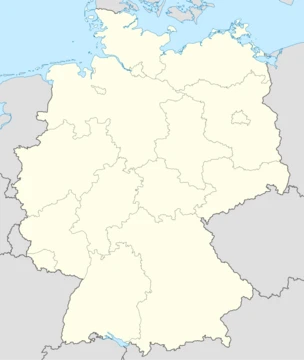
Hamburg
Second-largest German city and major Hanseatic port.

Hamburg, whose full official title is the Free and Hanseatic City of Hamburg, ranks as Germany's second most populous city, trailing only Berlin, and holds the sixth spot within the European Union, boasting a population of approximately 1.85 million. Its wider metropolitan region is home to over 5.1 million people and stands as the EU's tenth-largest metropolitan area when measured by economic output. Situated at the base of the Jutland Peninsula, the city lies near the Elbe estuary, which begins at the tidal limit near Geesthacht and stretches about 100 kilometers to the North Sea near Cuxhaven. As one of Germany's three city-states—alongside Berlin and Bremen—Hamburg is bordered by Schleswig-Holstein to the north and Lower Saxony to the south. Its port is the largest in Germany and typically ranks third in Europe by container throughput, though rankings can vary by year and metric. The local dialect is a variant of Low Saxon.
The city's official name is a nod to its past as a member of the medieval Hanseatic League and as a free imperial city within the Holy Roman Empire. Prior to Germany's unification in 1871, Hamburg operated as a fully sovereign city-state, and until 1919, it functioned as a civic republic constitutionally led by a class of hereditary Grand Burghers known as Hanseaten. The city has weathered several major disasters—including the Great Fire of 1842, the Allied firebombing of 1943, and the North Sea flood of 1962—and has consistently rebuilt and emerged wealthier after each event. Major regional broadcaster NDR, the publishing house Gruner + Jahr, and the newspapers *Der Spiegel* and *Die Zeit* are all based here. Hamburg is home to Germany's oldest stock exchange and the world's oldest merchant bank, Berenberg Bank. Significant multinationals with a major presence in the city include Airbus, Blohm + Voss, Aurubis, Beiersdorf, Lufthansa, and Unilever, spanning media, commerce, logistics, and industry.
The city is a prominent European center for science, research, and education, hosting institutions like the University of Hamburg and the Deutsches Elektronen-Synchrotron (DESY) laboratory. It ranks 28th in the 2024 Mercer Quality of Living Survey, reflecting a very high standard of living. Hamburg is a hub for specialists in global economics and international law, housing consular and diplomatic missions such as the International Tribunal
- population
- approximately 1.85 million
Quick Facts
- Official Name
- Free and Hanseatic City of Hamburg
- Native Name
- de · Freie und Hansestadt Hamburg / nds · Friee un Hansestadt Hamborg
- Settlement Type
- Municipality and state
- Shield Size
- 70
- Subdivision Type
- Country
- Subdivision Name
- Germany
- Seat Type
- Capital
- Governing Body
- Hamburg Parliament
- Leader Party
- Germany · SPD
- Leader Title
- First Mayor
- Leader Name
- Peter Tschentscher
- Leader Title1
- Second Mayor
Facts from the source article.
Lore & Background
In 1529, Hamburg embraced Lutheranism and received Reformed refugees. During the Thirty Years' War, Jan van Valckenborgh extended the city with a grid-planned Neustadt. After the dissolution of the Holy Roman Empire in 1806, Hamburg became a sovereign state. It was briefly annexed by Napoleon I and freed by a coalition of Russian, Prussian, and Swedish forces in 1814. The Great Fire of 1842 destroyed about a quarter of the inner city, killing 51 and leaving 20,000 homeless. Hamburg adopted a semidemocratic constitution in 1860 and joined the German Customs Union in 1888. The city experienced its fastest growth in the late 19th century, with its population reaching about 706,000 by 1900 and climbing to 800,000 around 1905–1910.
Reader's Guide
Hamburg's significance lies in its enduring role as a major European port and commercial center, rooted in its Hanseatic League heritage. The Port of Hamburg remains Germany's largest and Europe's third-largest, driving the city's economy alongside media firms like Gruner + Jahr and newspapers Der Spiegel and Die Zeit. It hosts Germany's oldest stock exchange and the world's oldest merchant bank, Berenberg Bank. The city is a major science and education hub, with the University of Hamburg and DESY. Its cultural impact includes the Elbphilharmonie concert hall, the Speicherstadt World Heritage Site, and the Reeperbahn red-light district. Hamburg has recovered from disasters such as the 1842 fire, the 1943 Allied fire-bombing, and the 1962 North Sea flood, emerging wealthier each time. Former chancellors Helmut Schmidt and Angela Merkel were born here, and former mayor Olaf Scholz served as chancellor from 2021 to 2025.
Did You Know?
- Hamburg has around 2,500 bridges, the highest number in Europe.
- The city is home to five of the world's 29 tallest churches, the most of any city worldwide.
- The Matthiae-Mahl feast, first celebrated in 1356, continues as the world's oldest ceremonial meal.
- Hamburg's 1241 alliance with Lübeck is regarded as the founding moment of the Hanseatic League.
Geography & Economic Power
Hamburg sits at the base of the Jutland Peninsula where the 110-kilometer Elbe estuary begins at the confluence of the Alster and Bille rivers. This strategic position between the North Sea and Baltic Sea trade routes shaped its destiny as a commercial powerhouse. Today, the Port of Hamburg ranks as Germany's largest and the third-largest in Europe, trailing only Rotterdam and Antwerp. The city's economic reach extends far beyond its 1.9 million residents, with a metropolitan region exceeding 5.1 million people and the tenth-highest GDP among EU metropolitan areas. Hamburg is home to Germany's oldest stock exchange and the world's oldest merchant bank, Berenberg Bank. Multinational firms including Airbus, Blohm + Voss, Aurubis, Beiersdorf, Lufthansa, and Unilever maintain significant operations here. The city also hosts major media and publishing entities such as NDR, Gruner + Jahr, Der Spiegel, and Die Zeit, cementing its role as a hub for commerce, logistics, and industry across the continent.
Medieval Origins & Hanseatic Legacy
The name Hamburg traces back to a fort called Hammaburg, ordered built by Charlemagne in AD 808 on rocky ground between the Alster and Elbe as a bulwark against Slavic raids. In 834, the city became the seat of a bishopric under Ansgar, later called the Apostle of the North, and two years later merged with Bremen into a single diocese. A pivotal moment arrived in 1189 when Frederick Barbarossa elevated Hamburg to Free Imperial City status, granting tax-free passage down the Lower Elbe. The 1241 alliance with Lübeck is widely regarded as the founding act of the Hanseatic League, and in 1266 a contract with Henry III of England permitted Hamburg's merchants to open a trading post in London — the first recorded use of the word 'hanse.' In 1270, the city's solicitor drafted the Ordeelbook, the first civil and criminal code for a German city written in German. A 1410 civic compromise, known as the Rezeß, stands as Hamburg's first constitution. The Matthiae-Mahl, first celebrated in 1356, endures as the world's oldest ceremonial meal.
Resilience Through Catastrophe
Few cities have endured as many devastating blows as Hamburg, yet each time the city rebuilt and emerged stronger. In 845, a Viking fleet of 600 ships sailed up the Elbe and razed a town of roughly 500 inhabitants. King Mieszko II Lambert of Poland burned the city in 1030, and Valdemar II of Denmark raided it twice in the early 13th century. The Black Death struck in 1350, killing at least 60 percent of the population. Centuries later, the Great Fire of 1842 consumed vast portions of the urban core, and in 1943 Allied fire-bombing devastated the city once more. The North Sea flood of 1962 brought yet another wave of destruction. Through every catastrophe — medieval plagues, imperial wars, industrial-age fires, and modern warfare — Hamburg recovered and grew wealthier. This pattern of resilience is woven into the city's identity, from its medieval fires to its postwar reconstruction, and is reflected in its continued growth as a global commercial and cultural center.
Cultural & Intellectual Heritage
Hamburg's cultural landscape is as layered as its history. The Speicherstadt warehouse district and Kontorhausviertel earned UNESCO World Heritage status in 2015, while the city's roughly 2,500 bridges make it Europe's most bridge-dense urban area. Five of the world's 29 tallest churches rise above 100 metres here, giving Hamburg the greatest concentration of such structures on the planet. Musical life thrives at venues like the Elbphilharmonie and Laeiszhalle, and the city gave birth to the Hamburger Schule movement while serving as a formative stop for the Beatles. St. Pauli's Reeperbahn remains one of Europe's most recognized red-light districts. On the intellectual front, Hamburg hosts the University of Hamburg, the DESY particle physics laboratory, and specialists in world economics and international law. International institutions such as the International Tribunal for the Law of the Sea, the EU-LAC Foundation, and the UNESCO Institute for Lifelong Learning call the city home, and it has hosted G20 summits and Europe-China conferences.
Frequently Asked Questions
Who is Hamburg?
Hamburg is Germany's second-largest city by population at roughly 1.85 million residents and one of the nation's most prominent Hanseatic ports. It sits at the mouth of the Elbe River, just a short distance from the North Sea.
What are Hamburg's powers/role?
As a Free and Hanseatic City, Hamburg functions simultaneously as a city and a sovereign state, meaning it legislates for itself without an intermediate regional layer. Its deep-water port and the 5.1-million-strong metropolitan region around it give it a commanding role in European trade and logistics.
How does Hamburg's story end?
It doesn't — Hamburg is still very much in the present tense, operating as an active, self-governing state within the Federal Republic of Germany. Its ongoing work in shipping, culture, and urban development keeps its narrative firmly ongoing rather than concluded.
Why is Hamburg important?
Trailing only Berlin in population and ranking sixth among EU cities, Hamburg anchors northern Germany's economy through its port infrastructure, its centuries-old Hanseatic trading network, and its status as the EU's tenth-largest metropolitan area by economic output.
Where exactly is Hamburg located?
The city sits at the base of the Jutland Peninsula along the Elbe estuary, which runs roughly 100 kilometers from the tidal limit near Geesthacht down to the North Sea near Cuxhaven.
More in German States 1-17
Spotted an error? Know more?
This is a living reference — every entry is fact-audited, and reader corrections feed straight into our audit queue. Suggest an edit · See this site's audit record