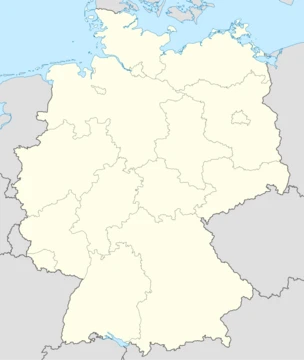
Bremen
A historic Hanseatic port city and cultural hub of Northern Germany.

Bremen, officially the City Municipality of Bremen, is the seat of government of the German state of the Free Hanseatic City of Bremen, which consists of the two cities of Bremen and Bremerhaven. It is an important port city with about 586,000 inhabitants, the 11th-largest city in Germany by population and the second-largest city in Northern Germany after Hamburg. Bremen is a major cultural and economic hub of Northern Germany, known for its UNESCO World Heritage Site and its role in the Hanseatic League.
- area_rank
- 11th-largest city in Germany by population
Quick Facts
- German Name
- nds · Breem / Bräm
- State
- Bremen
- District
- urban
- Elevation
- 12
- Area
- 326.73
- Area Metro
- 11627
- Pop Metro
- 2,800,000
- Demonym
- Bremer (m), Bremerin (f)
- Postal Code
- 28001–28779
- Area Code
- 0421
- Licence
- HB / (with 1 to 2 letters and 1 to 4 digits)
- Gemeindeschlüssel
- 04 0 11 000
Facts from the source article.
Lore & Background
Bremen traces its origins to a settlement in the early Middle Ages and became the seat of a bishopric in 787. During the High Middle Ages, it grew into a flourishing trading centre and joined the Hanseatic League in the 13th century, establishing commercial links across Northern Europe. Its autonomy as a free imperial city was recognized within the Holy Roman Empire, and despite periods of conflict, Bremen retained a strong civic identity. For most of its 1,200-year history, Bremen was an independent city within the confederal jurisdiction of the Holy Roman Empire, with its governing merchants and guilds at the centre of the Hanseatic League.
Reader's Guide
Bremen's significance lies in its long history as a major port and trading hub, central to the Hanseatic League and later to Germany's maritime economy. Its port, together with Bremerhaven, is the second-largest in Germany after Hamburg. The city is a UNESCO City of Literature and hosts the UNESCO World Heritage Site 'Town Hall and Roland on the Marketplace of Bremen.' Bremen is also known for the Brothers Grimm fairy tale 'Town Musicians of Bremen,' with a statue dedicated to it in front of the city hall. After World War II, in which almost two-thirds of the city's fabric was destroyed, its autonomy was restored, and Bremen became one of the founding states of the Federal Republic of Germany.
Did You Know?
- Bremen is the second-largest city in the Low German dialect area after Hamburg.
- The city has the lowest high point of all the German states, at 32.5 meters above sea level.
- Bremen was named a UNESCO City of Literature in 2023.
- The Norddeutscher Lloyd (NDL), founded in Bremen in 1857, became one of the world's leading shipping companies.
A State in Fragments
The Free Hanseatic City of Bremen is Germany's smallest and least populous of its sixteen states, yet its territory is far from simple. Rather than forming one contiguous block, the state is scattered across four non-contiguous territories, all entirely encircled by the neighbouring state of Lower Saxony. The two principal enclaves are the capital city of Bremen and the downstream seaport of Bremerhaven, both situated along the River Weser. Beyond these, two smaller outlying patches add to the patchwork: a strip of land northeast of Bremerhaven within the Fehrmoor district, and a mere 4.3-hectare sliver on Bremen's north side centred on Opitzstrasse. Adding further complexity, an exclave designated the City-Breman Overseas Port Area sits entirely inside Bremerhaven's own boundaries. The state's highest point is a modest 32.5 metres in Friedehorst Park. This fragmented geography makes Bremen a genuine political curiosity on the German federal map.
A Stubborn Independence
Bremen's claim to sovereignty stretches back to 1186, when it first received privileges of autonomy, and was formalised as a Free Imperial City in 1646. When the Holy Roman Empire dissolved in 1806, Bremen escaped the fate of many smaller territories: instead of being absorbed into a surrounding monarchy, it was recognised alongside Hamburg and Lübeck as a sovereign Free Hanseatic City, even minting its own thaler until 1873. Napoleon's forces annexed the city-state in 1811 to enforce the Berlin Decree against Britain, but at the 1815 Congress of Vienna, Bremen's emissary Johann Smidt successfully lobbied for full restoration of independence within the new German Confederation. Bremen then entered the North German Confederation in 1867 and became one of the German Empire's twenty-six constituent states in 1871. After the devastation of the Second World War, the city was reconstituted as a state in 1947 and, from 1949, resumed its historic title as the Free Hanseatic City of Bremen within the Federal Republic.
A Left-Leaning Harbour City
Bremen's identity as an international port and industrial centre fostered a deeply rooted left and liberal political culture that set it apart from much of Germany. In the final Imperial Reichstag elections of January 1913, Social Democrats captured 53.4 per cent of the vote while Left Liberals added another 41.4 per cent, leaving Conservatives with a mere 5.1 per cent. That tradition persisted through the Weimar years, where seven elections to the local Bürgerschaft saw strong left-wing representation. Even in the November 1932 federal election, the last broadly free vote before the Nazi consolidation of power, Social Democrats won 31.2 per cent and Communists 16.8 per cent, together outpolling the Nazis' 20.8 per cent. In the compromised March 1933 elections, the Nazis still managed only 32.7 per cent in Bremen. Yet the regime imposed Gleichschaltung through violence and intimidation, dissolving the Bürgerschaft and placing the city under a Reich Governor for twelve years. During that period, Bremen's small Jewish community of 1,438 registered members was systematically destroyed through coerced emigration and deportation to death camps.
The Port That Shaped a State
The name Bremerhaven literally means Bremen's harbour, and the state's very existence is inseparable from its maritime ambitions. In 1827, Bremen purchased land at the mouth of the Weser from the Kingdom of Hanover specifically to construct a new seaport with open access to the North Sea. This investment cemented Bremen's role as Germany's principal port of embarkation for emigrants heading to the Americas and positioned it as an entrepôt for the nation's late-developing colonial trade. The port's strategic importance resurfaced after the Second World War: Allied bombing had destroyed or severely damaged sixty per cent of the city's built fabric, including much of its historic centre, before British troops entered in late April 1945. Once transferred to American control, Bremen served as the supply port for the US occupation zones in west Berlin and southern Germany. Today, the state's political structure still reflects this dual-city reality, with Bremerhaven maintaining its own municipal assembly, head mayor, and second mayor, distinct from the state Senate and the 87-member Bürgerschaft that governs the whole.
Frequently Asked Questions
What is Bremen?
Bremen is a German state officially titled the Free Hanseatic City of Bremen, made up of two separate cities: Bremen and Bremerhaven. The city of Bremen itself acts as the state's capital and seat of government.
How does Bremen work as a state?
Bremen is unusual among German states because it is split into two non-contiguous cities governed under one administration. Bremen handles the state's political and cultural functions, while Bremerhaven anchors its port and industrial side.
What is Bremen's role in Northern Germany?
Bremen is the second-largest city in Northern Germany after Hamburg and a major economic and cultural hub for the region. With around 586,000 inhabitants, it ranks as the 11th-largest city in the entire country.
What is Bremen's connection to the Hanseatic League?
Bremen is a historic Hanseatic port city, and its medieval trading roots are still central to its identity today. That legacy is preserved in part through its UNESCO World Heritage Site, which showcases the city's long maritime and commercial heritage.
Why is Bremen considered important?
Bremen packs together a major port, a rich cultural scene, and a strong economic base into a single state, making it a key player in Northern Germany. Its UNESCO World Heritage status and deep Hanseatic history give it a distinctive place in the German federation.
More in German States 1-17
Spotted an error? Know more?
This is a living reference — every entry is fact-audited, and reader corrections feed straight into our audit queue. Suggest an edit · See this site's audit record