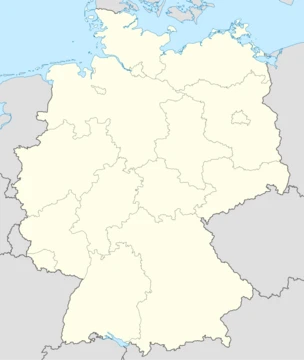
Bremen (state)
Smallest German state, a historic Hanseatic city and port.

Bremen, officially the Free Hanseatic City of Bremen, is the smallest and least populous of Germany's 16 states. It consists of the capital city of Bremen and the seaport exclave of Bremerhaven, both located on the River Weser and surrounded by Lower Saxony. Historically a Free Imperial City within the Holy Roman Empire, Bremen's sovereignty as a Free Hanseatic City was recognized as early as the 1646 Privilege. After the dissolution of the Holy Roman Empire in 1806, it continued as a sovereign city-state, was restored as an independent state at the Congress of Vienna in 1815, and later became a constituent state of the German Empire in 1871. After World War II, it was reestablished as a state in 1947 and became part of the Federal Republic of Germany.
- Capital
- Bremen
- Area
- Four non-contiguous territories
- Highest point
- Friedehorst Park (32.5 m)
- Founded as state
- 1947 (reestablished)
- Former status
- Free Hanseatic City (from 1646)
- Currency until 1873
- Bremen thaler
Quick Facts
- Official Name
- Free Hanseatic City of Bremen
- Native Name
- de · Freie Hansestadt Bremen / nds · Free Hansestadt Bremen
- Settlement Type
- State
- Flag Size
- 120px
- Shield Size
- 110
- Mapframe
- yes
- Mapframe-Zoom
- 5
- Mapframe-Point
- none
- Subdivision Type
- Country
- Subdivision Name
- Germany
- Seat Type
- Capital (and largest city)
- Seat
- Bremen
Facts from the source article.
Lore & Background
Bremen's history as a sovereign entity dates back to its status as a Free Imperial City within the Holy Roman Empire, long before 1806. Its recognition as a Free Hanseatic City was solidified by the 1646 Privilege. In 1811, the First French Empire annexed the city-state to enforce Napoleon's Berlin Decree, but at the Congress of Vienna in 1815, emissary Johann Smidt secured its restoration as one of 39 states in the German Confederation. In 1827, Bremen purchased land from the Kingdom of Hanover to build Bremerhaven, ensuring its role as Germany's main port for emigrants to the Americas and for colonial trade.
Reader's Guide
Bremen's significance lies in its enduring status as a sovereign city-state and major port, which shaped its economy and political identity. Its acquisition of Bremerhaven in 1827 secured its maritime dominance, while its strong left-liberal tradition was evident in pre-1933 elections, where Social Democrats and left liberals consistently outperformed conservatives. Post-war, Bremen's economy boomed during the Wirtschaftswunder, but structural changes—mechanization of the port and closure of major shipbuilders like AG Weser and Bremer Vulkan—led to high unemployment and a shift from single-party SPD dominance to coalition governments. The state's unique geography, with four non-contiguous territories including a tiny exclave of 4.3 hectares, underscores its historical development as a trading hub.
Did You Know?
- Bremen is the smallest and least populous of Germany's 16 states.
- The state includes a tiny exclave of only 4.3 hectares centered on Opitzstrasse.
- In 1827, Bremen bought land from the Kingdom of Hanover to build Bremerhaven.
- At the November 1932 federal election, the Nazis won 23.0% of the vote in Bremen.
More in German States 1-17
Spotted an error? Know more?
This is a living reference — every entry is fact-audited, and reader corrections feed straight into our audit queue. Suggest an edit · See this site's audit record