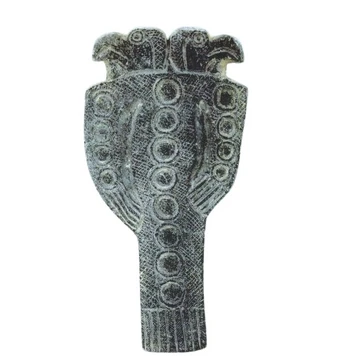
Under the Double Eagle
An 1893 Austrian march popularized worldwide.

"Under the Double Eagle" (German: *Unter dem Doppeladler*), Op. 159, is a march from 1893 by Austrian military composer Josef Wagner. Its name comes from the double-headed eagle featured on the coat of arms of Austria-Hungary. The march is set in E♭ major, shifts to A♭ major for its trio, and follows a ternary structure. In the United States, it was first published in 1902 by Eclipse Publishing Co., part of Joseph Morris Music in Philadelphia.
Quick Facts
- Composer
- Josef Wagner
- Native Name
- "Unter dem Doppeladler"
- Key
- E-flat major
- Opus
- 159
- Form
- Ternary
- Publisher
- Eclipse Publishing Co.
Facts from the source article.
Lore & Background
Josef Wagner was an Austrian military bandmaster and composer, sometimes called the "Austrian March King" for his march music. He served as bandmaster of the 49th Infantry Regiment from 1891 to 1899, a period when the regiment was frequently deployed near Vienna. It was during this time, in 1893 in Graz, that he composed "Under the Double Eagle," dedicating it to Edmund von Krieghammer, the Imperial Minister of War at the time.
Within the Austro-Hungarian realm, the march became popular and was historically associated with the 49th Infantry Regiment. The march also gained popularity outside Austria-Hungary, becoming a favorite in the repertoire of American composer and bandleader John Philip Sousa, whose band recorded it three times and helped popularize it in America.
In the 1930s and 1940s, the march became popular in Texas, likely introduced by German or Austrian immigrants. Outside Texas, it was popular with fiddlers in Minnesota and West Virginia. Bill Boyd and His Cowboy Ramblers' 1935 arrangement on Bluebird Records became the fourth best-selling country song of 1935, and the march was frequently played by Allied bands during the Second World War. In the 1960s, it gained renewed popularity after guitarist Doc Watson recorded his version.
Reader's Guide
The significance of "Under the Double Eagle" lies in its remarkable cross-cultural journey from a regimental march in the Austro-Hungarian Empire to a staple of American country, Western swing, and bluegrass music. Its adoption by John Philip Sousa helped establish it in the American concert band repertoire, while its later popularity in Texas and among fiddlers in Minnesota and West Virginia demonstrates its integration into regional folk traditions. The 1935 recording by Bill Boyd and His Cowboy Ramblers, arranged by Mort Glickman, became a major country hit, second only to the Carter Family in the top Hillbilly music hits of that year, and solidified the march as a Western swing standard. Its use in Allied bands during World War II further cemented its international recognition. The march's melody also entered popular culture through parodies, such as Benny Goodman's "Benjie's Bubble," and the Monty Python's Flying Circus animation segment "Conrad Poohs And His Dancing Teeth." The piece's enduring appeal is reflected in its many recordings by country and bluegrass artists, and its status as the official regimental march of Austrian Artillery Regiment Number 2 until 2007 underscores its lasting military heritage.
Did You Know?
- Bill Boyd and His Cowboy Ramblers' 1935 version was the fourth best-selling country song of that year.
- The tune was parodied in Benny Goodman's recording 'Benjie's Bubble'.
- It was historically associated with the 49th Infantry Regiment, not Austrian Artillery Regiment Number 2.
More in Double-headed eagle 1-22
Spotted an error? Know more?
Reader corrections go straight into our review queue. Suggest an edit · How this site is sourced