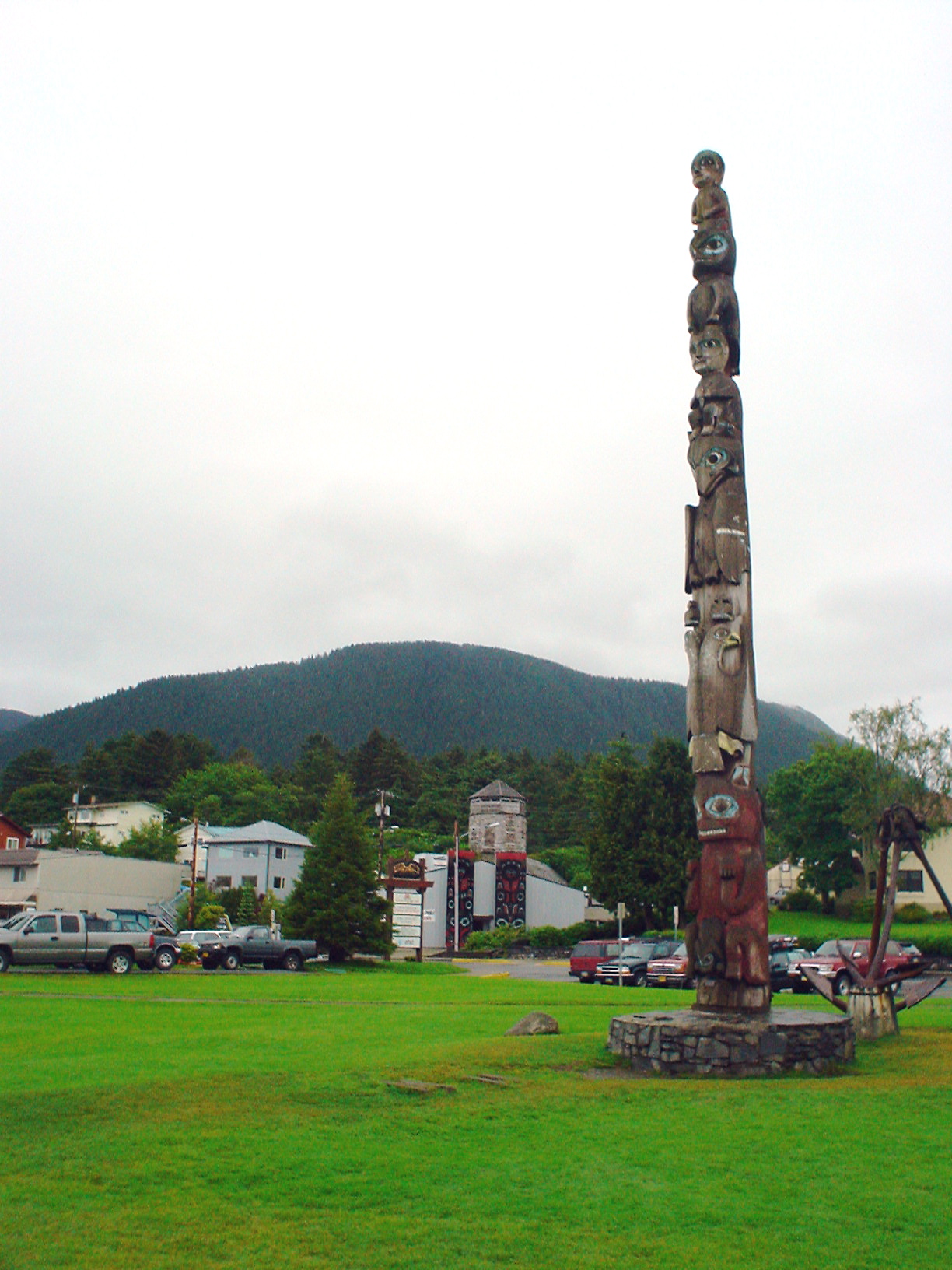
Baranof totem pole
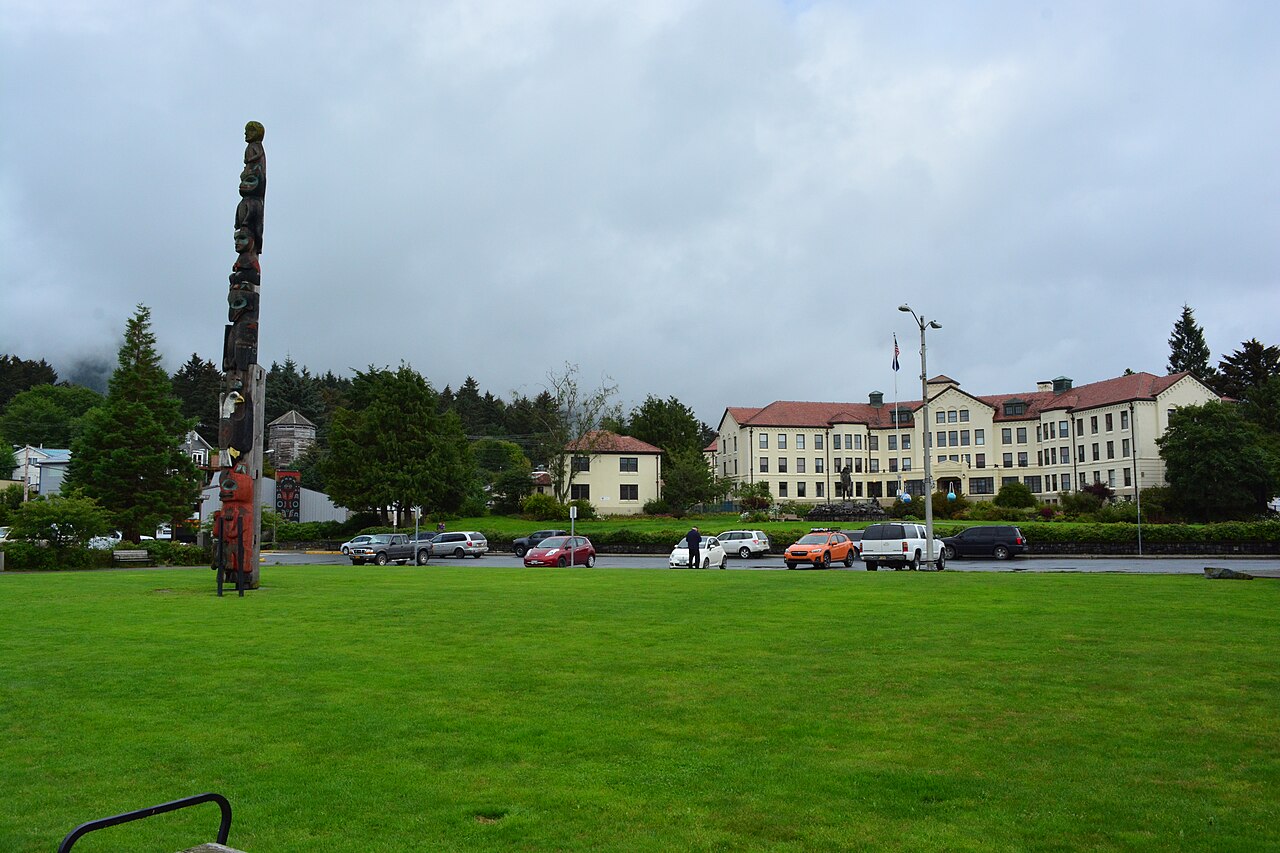
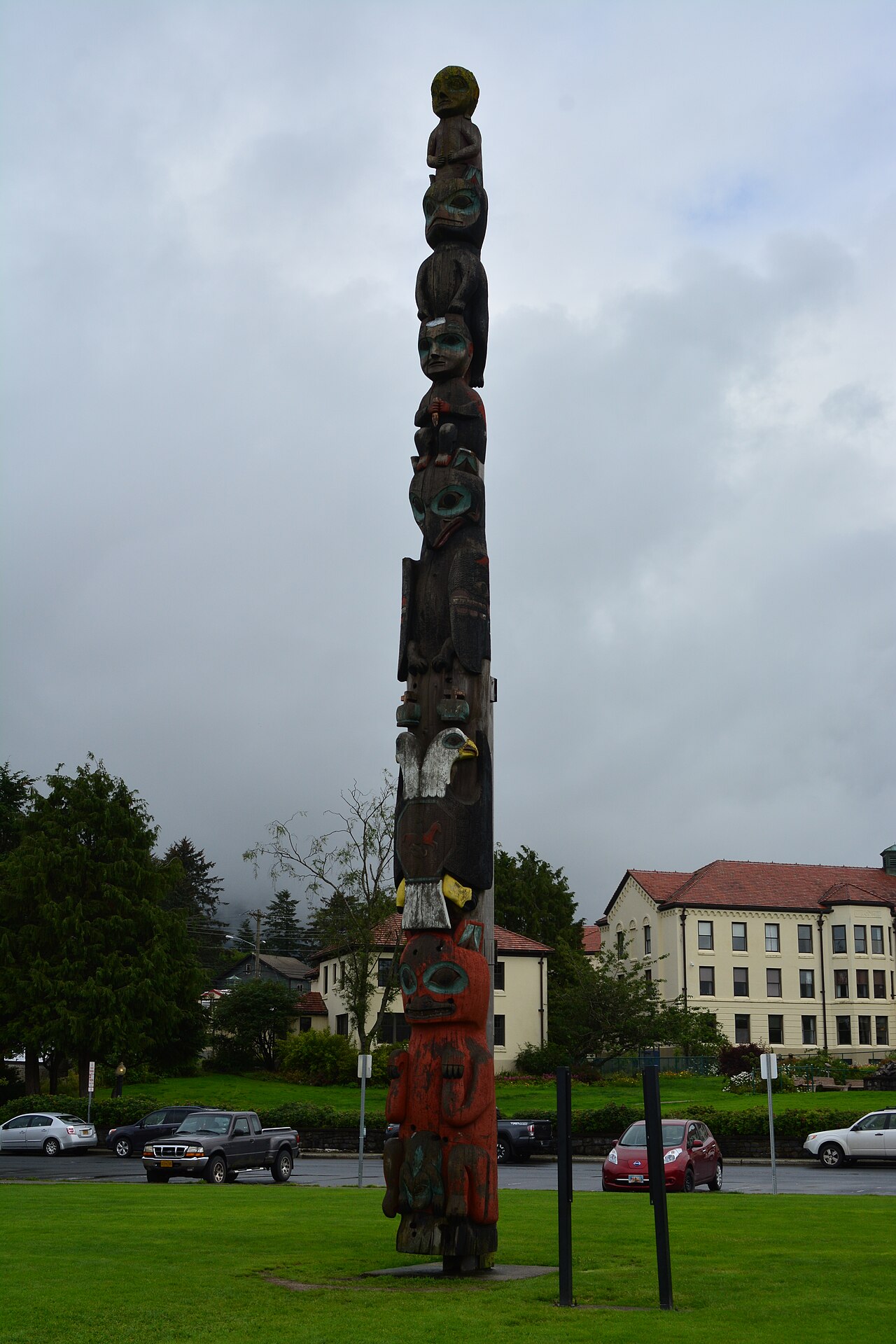
A controversial totem pole in Sitka, Alaska, depicting Russian and Tlingit figures and the 1804 Battle of Sitka. Designed by George Benson, Sitka Alaska 1940

John Bromley · CC BY 2.0
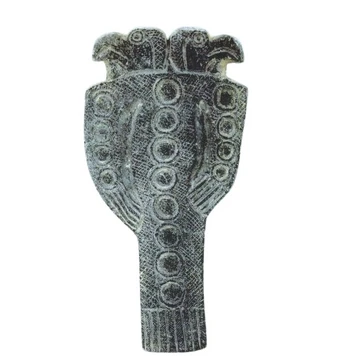
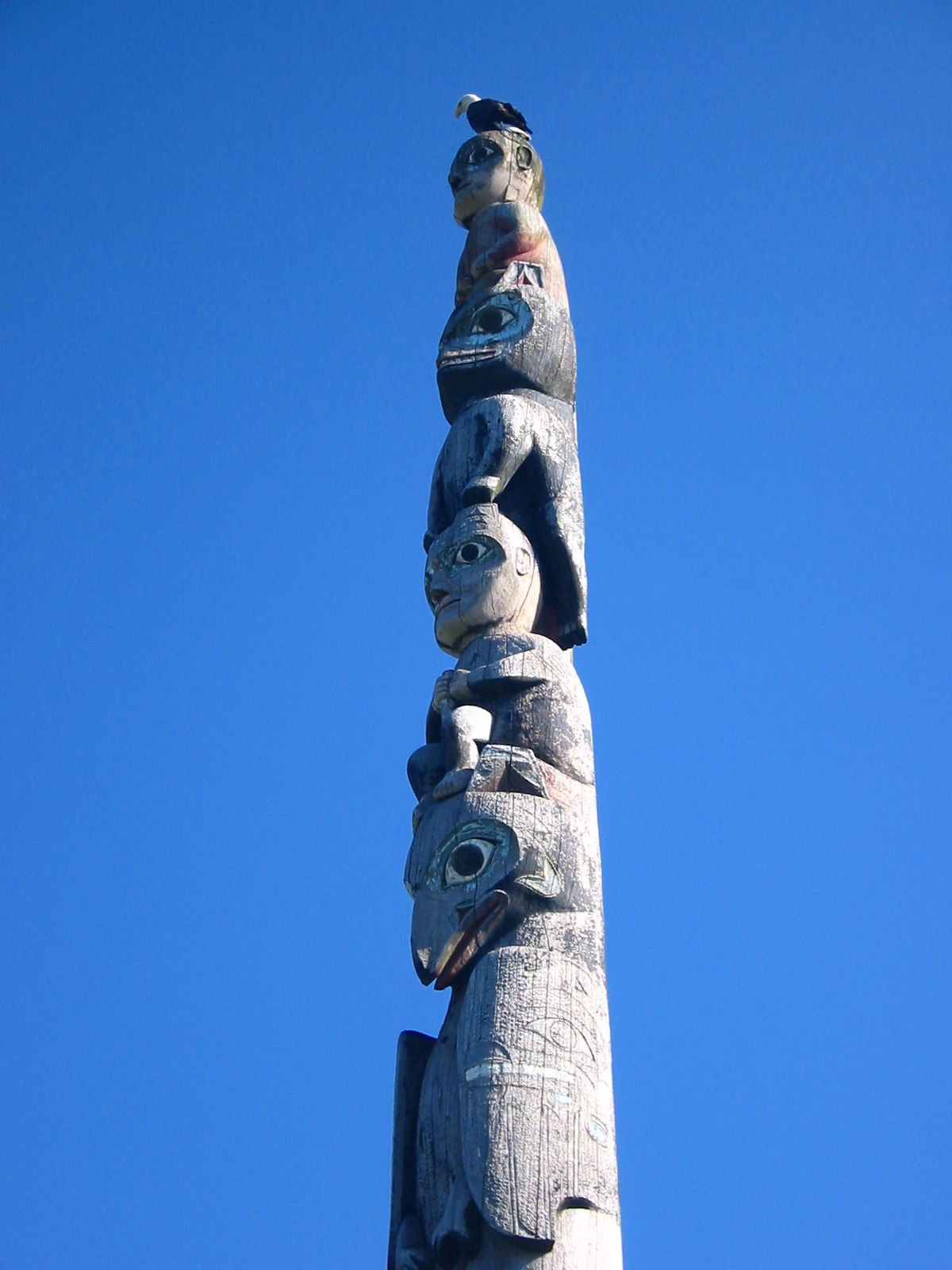
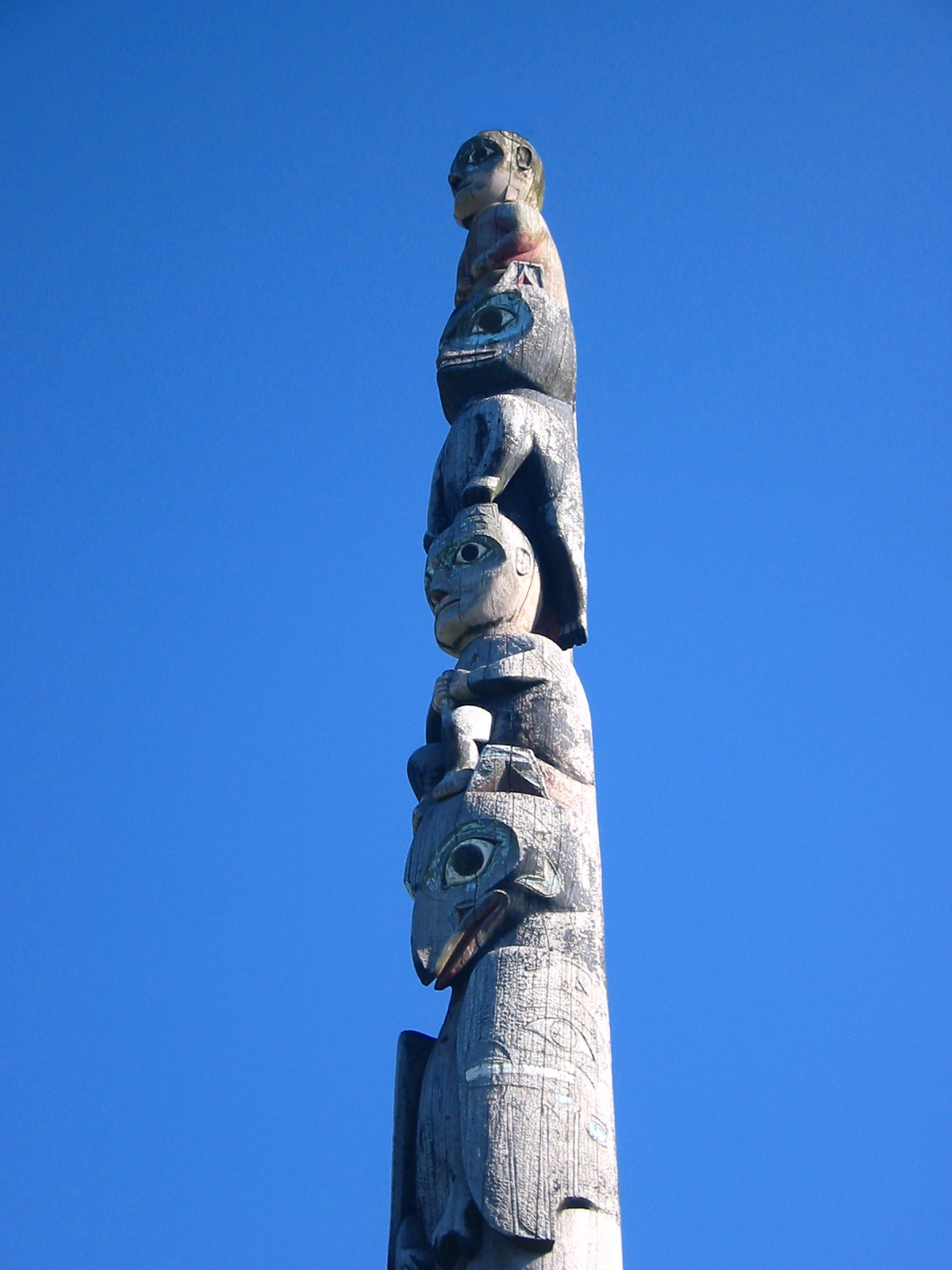
In the 1940s, the United States Forest Service commissioned a Tlingit totem pole for Totem Square in Sitka, Alaska, as part of a Civilian Conservation Corps project. The pole, designed by George Benson, commemorates an early 1800s battle and the subsequent peace treaty between the Tlingit clan and Alexander Baranov, the first governor of Russian Alaska. It stands 40 feet tall near the Sitka Pioneer Home and a seawall. The design blends Russian and Tlingit imagery. At the top sits Baranov, originally carved nude by CCC carvers despite Benson’s clothed sketch. Below him are a Russian black bear, the Tlingit warrior Kʼalyaan holding a blacksmith hammer, a Raven referencing the Tlingit Raven moiety, a double-headed eagle (also on a peace medal Baranov gave the Tlingit), and at the base, a brown bear holding a frog—both Tlingit crests. The pole references Castle Hill, which a Tlingit elder called “the only piece of real estate ever given to the Russians.”
The pole was immediately controversial. The Forest Service hired carvers from the Wrangell Tlingits, historical enemies of the Sitka Tlingit, without consulting the local clan. Under Tlingit custom, carving the clan’s at.óow without permission was offensive. The nude depiction of Baranov added to the insult, and Sitka locals, viewing it as a shame pole, threatened its removal. Benson himself disavowed the finished work. In 2010, the pole was taken down and restored the following year, with Baranov’s figure clothed.
Quick Facts
- Artist
- George Benson
- Year
- 1942
- City
- Sitka, Alaska
Facts from the source article.
Lore & Background
Designed by George Benson, the pole references an early 1800s battle and subsequent peace treaty between the Tlingit clan and Alexander Baranov, the first governor of Russian Alaska. It depicts some Russian figures, including a Russian bear and a double-headed eagle, and some Alaska Native ones, including a Tlingit brown bear, a frog, and Tlingit warrior Kʼalyaan. At the top of the pole is a representation of Baranov. On the top of the pole is Baranov, balding and leaning forward. In Benson's design the figure of Baranov was clothed, but CCC carvers depicted him nude. The nude image, combined with the origin of the carvers — the Forest Service had hired them from the Tlingit's historical enemies, the Wrangell Tlingits — made the totem immediately controversial. Sitka locals, perceiving it as a shame pole, threatened to remove it; Benson also disavowed it. The totem pole was taken down in 2010 and restored the following year, with Baranov clothed.
Reader's Guide
The Baranof totem pole is located in Totem Square, in Sitka, Alaska. Near the Sitka Pioneer Home, which is listed jointly with the Square on the National Register of Historic Places, the totem pole overlooks a nearby seawall. It is 40 feet tall. The totem pole commemorates and references the 1804 Battle of Sitka and subsequent 1805 peace treaty between Alexander Andreyevich Baranov, the first governor of Russian Alaska, and the Tlingit clan in Sitka, Alaska. The pole incorporates both Russian and Tlingit elements and references Castle Hill in Sitka, given to the Russians by the Tlingits in the peace treaty. On the top of the pole is Baranov, balding and leaning forward. Below him is a black bear, representing Russia, then the Tlingit warrior Kʼalyaan, holding a blacksmith hammer he'd taken from the Russians. Next is a Raven, in reference to the Tlingit's Raven moiety. Below the Raven is a double-headed eagle, who was also depicted on a peace medal Baranov gave to the Tlingit. At the very base of the pole is a brown bear holding a frog; the brown bear and the frog are Tlingit and Tlingit crests, respectively. Until 2011, the figure of Baranov on top of the pole was nude; this was rectified in a 2011 restoration. A brass plaque near the base of the pole reads 'Designed by George Benson, Sitka Alaska 1940'.
Did You Know?
- The pole was carved by Tlingit carvers from Wrangell, historical enemies of the Sitka Tlingit.
- The figure of Baranov was originally carved nude, causing controversy and leading to the pole being seen as a shame pole.
- The pole was restored in 2011, during which Baranov was given clothing.
A Story Carved in Two Cultures
The Baranof totem pole stands as a rare physical record of cross-cultural negotiation in early American history. Rising 40 feet in Sitka's Totem Square, it narrates the 1804 Battle of Sitka and the 1805 peace treaty that followed, an agreement between Alexander Andreyevich Baranov, the first governor of Russian Alaska, and the Kiks.ádi Tlingit clan. The pole's iconography deliberately weaves together two visual traditions. At its apex sits Baranov, balding and leaning forward. Descending the pole, viewers encounter a black bear symbolizing Russia, the Tlingit warrior Kʼalyaan gripping a blacksmith hammer seized from the Russians, a Raven honoring the Kiks.ádi's Raven moiety, and a double-headed eagle echoing the peace medal Baranov presented to the clan. At the base, a brown bear cradles a frog—both are Tlingit and Kiks.ádi crest figures. Tlingit elder Mark Jacobs noted that the pole references Castle Hill, the only piece of real estate the Tlingits ever ceded to the Russians.
A Commission Born of Advocacy
The pole's existence traces back to a determined campaign by the Kiks.ádi Tlingit during the 1930s and 1940s. The Civilian Conservation Corps was running a totem pole restoration program in Southeast Alaska, but the poles being restored were predominantly of Haida origin. Local Tlingit leader George Tlingit and others pressed architect Linn A. Forrest, the program's overseer, for $1,500 to commission a new pole depicting Tlingit history. Forrest initially refused but then offered that if the clan presented a drawing, the CCC would attempt to have it carved. George Benson, a Tlingit man and CCC enrollee, responded with a sketch showing Tlingit history crowned by the figure of Russian governor Baranov. Art historian Emily Moore later praised the formlines as elegant and called the fusion of Tlingit and Russian elements masterful. The Forest Service approved the plans but designated the pole for a downtown Sitka field rather than the Sitka National Historic Park, where it would have conflicted with the older Haida recreations.
The Wrangell Carving and Immediate Outrage
The pole's production became a cultural flashpoint almost before the first cut was made. The Forest Service, seeking to start carving sooner, sent Benson's sketch to a CCC camp in Wrangell rather than allowing Sitka carvers to work on it. This decision ignored the Kiks.ádi's wish to have their own at.óow carved locally and, more critically, placed the work in the hands of Wrangell Tlingits—historical enemies who had been in conflict with Sitka Tlingits since the early 1800s, with events like the 1852 massacre still raw in collective memory. Under Tlingit custom, carving another clan's at.óow without permission constituted offensive theft. Lead carver Thomas Ukas later admitted the pole was carved too quickly and the design transferred improperly, with Joe Thomas eventually taking over. Most infamously, the Wrangell carvers omitted the clothing lines Benson had drawn on Baranov, leaving the Russian governor nude. Sitka locals, perceiving the result as a shame pole, threatened to remove it, and Benson himself disavowed the finished work.
Removal, Restoration, and Enduring Presence
For nearly seven decades, the Baranof totem pole endured in Sitka as both a landmark and a sore point. Located in Totem Square near the Sitka Pioneer Home—both listed on the National Register of Historic Places—the 40-foot pole overlooks a nearby seawall and bears a brass plaque reading Designed by George Benson, Sitka Alaska 1940. In 2010, the pole was taken down for restoration. The following year, it was reinstalled with a crucial alteration: Baranov was finally clothed, correcting the Wrangell carvers' deviation from Benson's original design. This restoration addressed the single most contentious element of the pole's history, though the deeper questions of who carved it and under what authority remained part of its story. Today the pole continues to serve as a tangible link to the 1804 battle and 1805 treaty, a physical record of a moment when two very different worlds met on Castle Hill and negotiated a peace that shaped the future of Sitka.
Gallery

Frequently Asked Questions
What is the Baranof totem pole?
It is a 40-foot Tlingit totem pole erected in the 1940s under a U.S. Forest Service commission. The pole was carved by Civilian Conservation Corps workers from Wrangell using a design created by George Benson.
Where is the Baranof totem pole located?
It stands in Totem Square in Sitka, Alaska, United States.
What does the Baranof totem pole depict?
The pole commemorates the 1804 Battle of Sitka and the 1805 peace treaty that followed, which resolved the conflict between the Kiks.ádi Tlingit clan and Alexander Baranov, the first governor of Russian Alaska.
Who designed and carved the Baranof totem pole?
George Benson created the design, and the actual carving was done by CCC carvers from Wrangell as part of a 1940s Forest Service initiative.
Why is the Baranof totem pole considered controversial?
It publicly marks a 19th-century armed clash and negotiated treaty between Tlingit people and Russian colonial leadership, a topic that still carries weight in conversations about Alaska's colonial past.
More in Double-headed eagle 1-22
Spotted an error? Know more?
Reader corrections go straight into our review queue. Suggest an edit · How this site is sourced