Coat of arms of Russia
State symbol of Russia featuring a double-headed eagle and Saint George.

Vector version: Ahnode · Public domain
The coat of arms of Russia is a state symbol of the Russian Federation, alongside the national flag and anthem. The current version was approved by Presidential Decree No. 2050 on 30 November 1993. On 25 December 2000, President Vladimir Putin signed Federal Constitutional Law No. 2 "On the State Coat of Arms of the Russian Federation," which kept the 1993 design as the official symbol and set rules for its use.
This emblem traces back to the earlier coat of arms of the Russian Empire. Although it has been altered several times since the reign of Ivan III (1462–1505), the present coat of arms comes directly from its medieval original. The double-headed eagle has Byzantine and even older roots. The general colors follow the fifteenth-century standard.
The two main elements—the two-headed eagle and Saint George slaying the dragon—predate Peter the Great. According to the Kremlin’s website, the coat of arms is described as a red heraldic shield with rounded lower corners and a pointed bottom, featuring a gold two-headed eagle with raised, spread wings. The eagle’s heads are topped by two small crowns, with one large crown above them, all linked by a ribbon. In its right claw is a sceptre, and in its left, an orb. On the eagle’s chest, inside a red shield, is a silver horseman in a blue cape on a silver horse, striking a black dragon with a silver spear.
The design was created by artist Yevgeny Ukhnalyov. It was adopted by presidential decree on 30 November 1993, and later by federal law signed by President Putin on 20 December 2000. Today, the three imperial crowns represent the unity and sovereignty of Russia, both as a whole and within its constituent republics and regions. The orb and sceptre are traditional heraldic symbols of sovereign power and authority. Notably, the sceptre features a Droste effect, with a miniature image of the coat of arms at its top. These symbols remain in the modern arms even though Russia is not a monarchy, which drew objections from Communists. However, the blue ribbon and the collar of the Order of St. Andrew, which in the imperial version supported the crowns and surrounded the central shield, have been removed.
The coat of arms appears on federal buildings and on the cover of the national passport.
Quick Facts
- Armiger
- Russian Federation
- Year Adopted
- 30 November 1993 (current version)
- Crest
- Imperial crown of Russia
- Shield
- Saint George and the Dragon
- Supporters
- Double-headed eagle
- Other Elements
- Scepter and globus cruciger
- Designer
- Yevgeny Ukhnalyov
Facts from the source article.
Lore & Background
The current coat of arms was designed by artist Yevgeny Ukhnalyov and approved by Decree No. 2050 of the President of the Russian Federation on 30 November 1993. It was later retained by Federal Constitutional Law No. 2 signed by President Vladimir Putin on 25 December 2000. The description in the 1993 decree differs from that in the 2000 law, though both contain the same drawing by Ukhnalyov.
Reader's Guide
The coat of arms of Russia serves as a key state symbol, appearing on federal buildings, the national passport, the standard of the president, the banner of the Russian Armed Forces, and on Russian ruble coins since 2016. Its design incorporates imperial elements—crowns, sceptre, and orb—that symbolize unity, sovereignty, and sovereign power, despite Russia not being a monarchy, which has led to objections by Communists. The removal of the blue ribbon and collar of the Order of St. Andrew from the current arms distinguishes it from the imperial version. The double-headed eagle and Saint George motif predate Peter the Great and connect modern Russia to its medieval and Byzantine antecedents.
Did You Know?
- The sceptre held by the eagle shows the Droste effect, topped by a miniature image of the coat of arms itself.
- The double-headed eagle was first documented in the seal of Ivan III in 1472.
- The description of the coat of arms in the 1993 decree differs from that in the 2000 federal law, though both use the same drawing.
Byzantine Roots and the Double-Headed Eagle
The double-headed eagle at the heart of Russia's state symbol traces its lineage to the fall of Constantinople in 1453. When the Byzantine Empire collapsed, the Grand Dukes of Muscovy began positioning themselves as inheritors of that Roman-Byzantine legacy. This claim was cemented when Ivan III married Sophia Paleologue, a Byzantine princess, giving rise to the "Third Rome" concept. In 1472, Ivan first stamped the golden Byzantine double-headed eagle onto his personal seal, a deliberate assertion that he stood as a sovereign equal to the Holy Roman Empire. By 1497, the eagle appeared on a charter governing the allotment of independent princes' lands, and around the same period a gilt double-headed eagle on a red ground was painted onto the walls of the Palace of Facets inside the Moscow Kremlin. The general color scheme of today's coat of arms still mirrors that fifteenth-century standard, meaning the modern emblem is a direct descendant of a medieval original that was modified repeatedly across centuries.
The Saint George Rider and Its Long Evolution
The second principal element of the Russian coat of arms — the horseman spearing a dragon — has a parallel medieval pedigree. In its earliest form, a rider armed with a spear appears on the seal of Vasili I of Moscow, dated 1390. During the reign of Ivan III, the dragon was added to the composition, though the figure was not yet explicitly identified as Saint George. That definitive association came much later, in 1730, when an Imperial decree formally described the rider as the saint. Over time, Saint George became the patron saint of Moscow and, by extension, of Russia as a whole. After Ivan IV assumed the title of Tsar, the two heraldic devices were merged: the eagle came to bear an escutcheon on its breast showing the saint on horseback. The modern rendering depicts a silver horseman in a blue cape on a silver horse, striking a black dragon that has been knocked onto its back and trampled, all set within a red shield on the eagle's chest.
Legal Adoption in the Modern Era
The current coat of arms was designed by the artist Yevgeny Ukhnalyov and formally adopted through a two-stage legal process. On 30 November 1993, the President of the Russian Federation issued Decree No. 2050, which approved the emblem and included a written regulation describing its elements. More than seven years later, on 25 December 2000, President Vladimir Putin signed Federal Constitutional Law No. 2, which reaffirmed the 1993 version as the official state symbol and established binding rules for its proper use. Interestingly, while the textual descriptions in the 1993 decree and the 2000 law differ in their wording, both documents attach the identical drawing by Ukhnalyov as an appendix, meaning the visual design has remained unchanged between the two legal instruments. The law elevated the emblem to the same constitutional tier as the national flag and anthem, making it one of the three core state symbols of the Russian Federation.
Symbolism, Controversy, and Everyday Presence
Although the Russian Federation is a republic rather than a monarchy, its coat of arms retains the imperial crowns, scepter, and orb — traditional heraldic markers of sovereign authority. The two small crowns atop each eagle head and the single large crown above them, all linked by a ribbon, are understood to represent the unity and sovereignty of Russia both as a whole and across its constituent republics and regions. A striking detail is that the scepter is topped by a miniature replica of the coat of arms itself, creating a recursive Droste effect. The retention of these monarchical symbols drew objections from Communist factions, even though the blue ribbon and the collar of the Order of St. Andrew that surrounded the central shield in the imperial version had already been removed. In daily life, the emblem appears on federal government buildings, the cover of the national passport, the presidential standard, the banner of the Armed Forces, certain state awards including the State Prize, and — since 2016 — on the obverse of Russian ruble coins.
Gallery
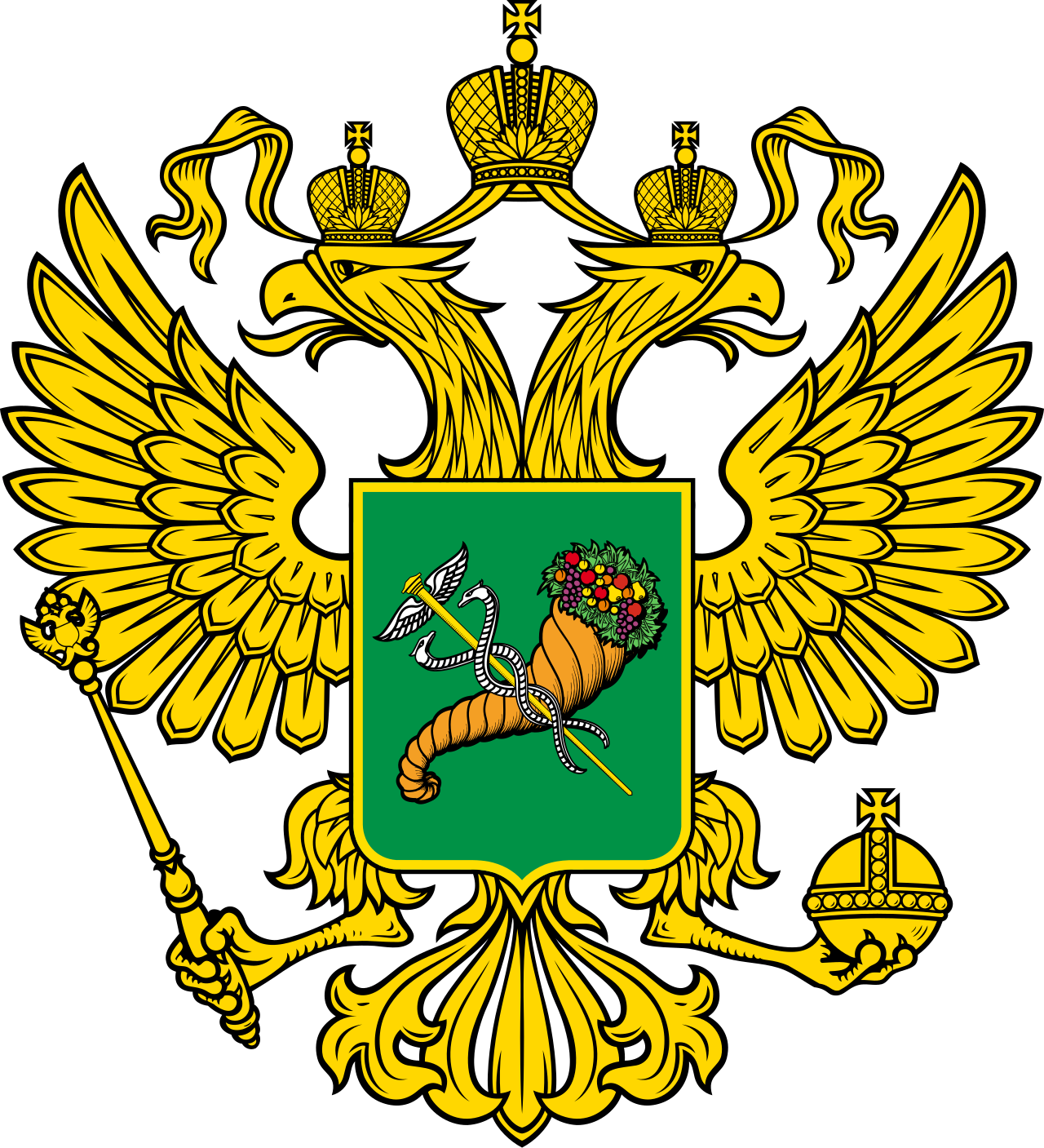
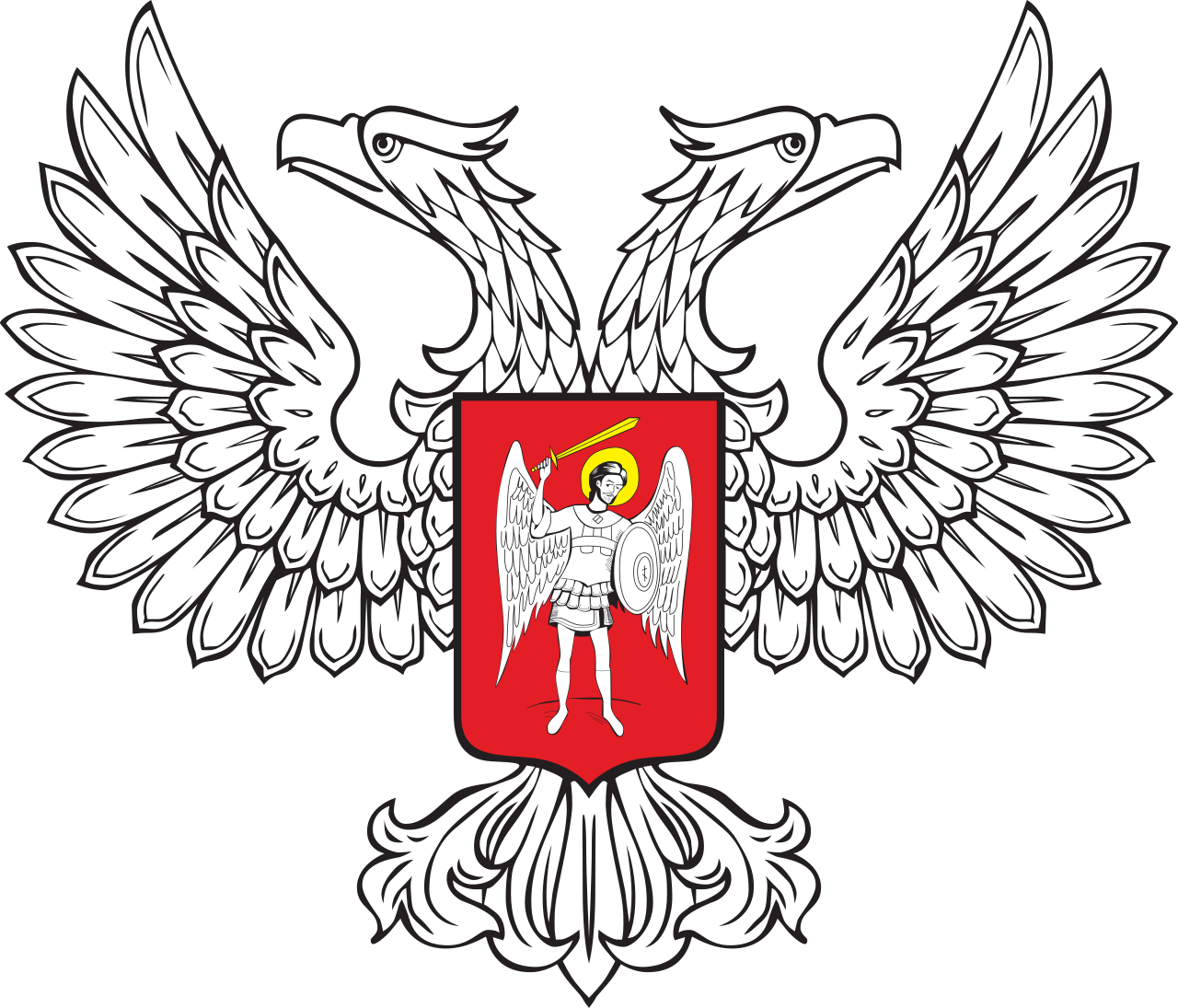
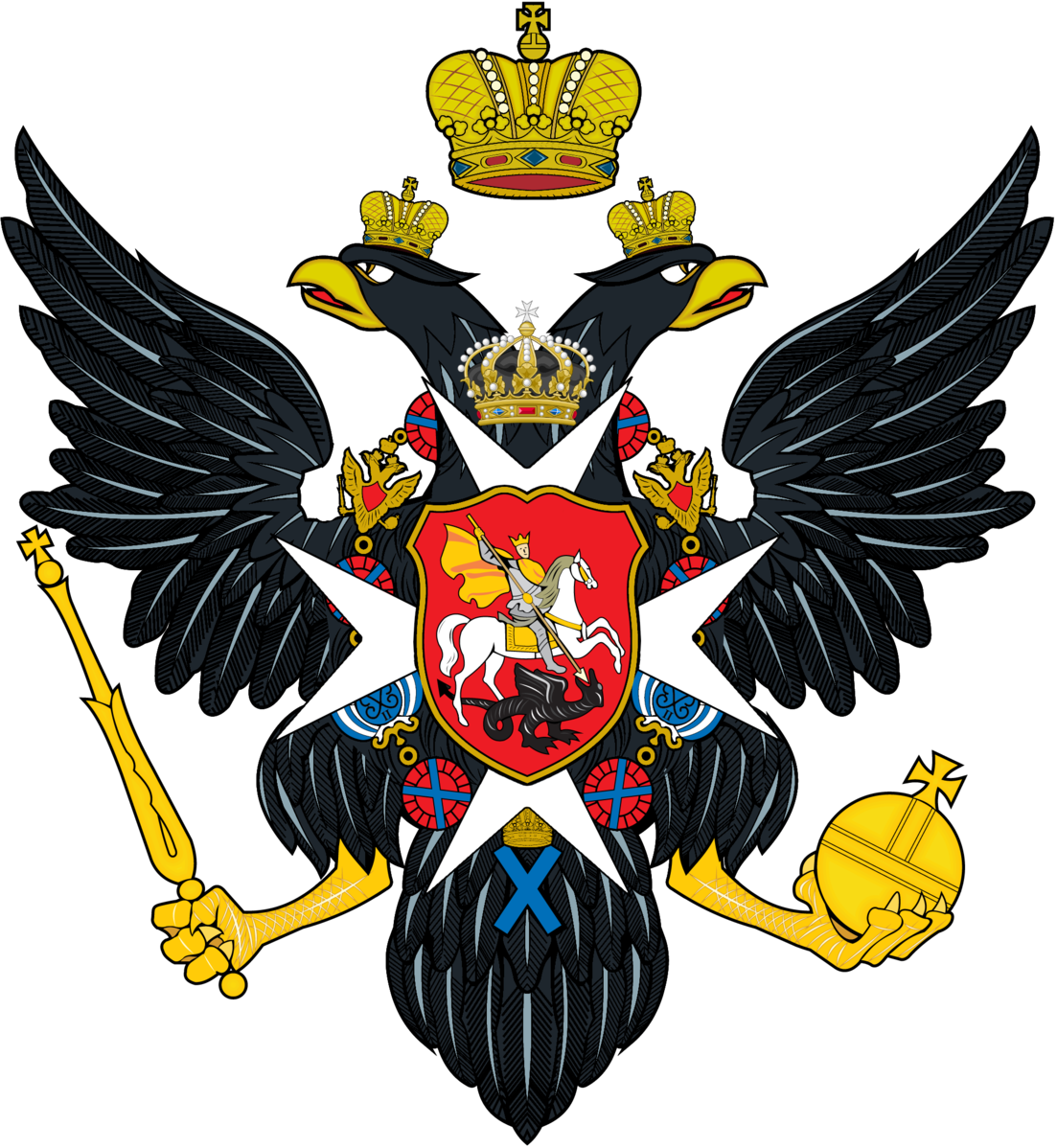
Frequently Asked Questions
What exactly is the Coat of arms of Russia?
It is the official state emblem of the Russian Federation, serving alongside the national flag and anthem as one of the three core symbols of the country. The design features a gold double-headed eagle clutching a sceptre and orb, with the figure of Saint George slaying a dragon displayed on its chest.
What symbols are featured on the Coat of arms of Russia?
The emblem shows a golden double-headed eagle wearing three crowns, holding a sceptre in one talon and a globus cruciger in the other, while Saint George defeating a dragon is depicted on its breast. The three crowns above the eagle's heads reference the historical constituent territories of the Russian state.
When was the current Coat of arms of Russia officially adopted?
The design we see today was first approved by Presidential Decree No. 2050 on 30 November 1993, and then permanently enshrined when President Putin signed Federal Constitutional Law No. 2 on 25 December 2000. That 2000 law locked the 1993 design in as the official symbol and established rules governing its proper use.
How does the Coat of arms of Russia connect to older Russian history?
The double-headed eagle motif first appeared on a seal of Ivan III as early as 1472, and the emblem has been altered and reworked many times since his reign. The Soviet era replaced it entirely, but the post-1991 Russian Federation restored the imperial-era heraldic design as its own state symbol.
Who designed the current Coat of arms of Russia?
The artist credited with the 1993 version of the emblem is Yevgeny Ukhnalyov. His design drew on the heraldic traditions of the Russian Empire while fixing the specific proportions and details that the 2000 federal law would later codify as the permanent standard.
More in Double-headed eagle 1-22
Spotted an error? Know more?
Reader corrections go straight into our review queue. Suggest an edit · How this site is sourced