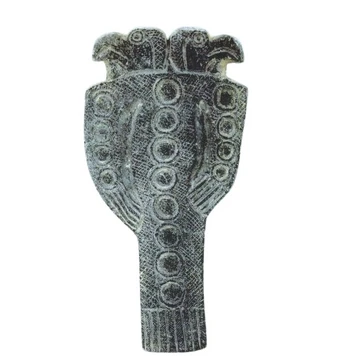
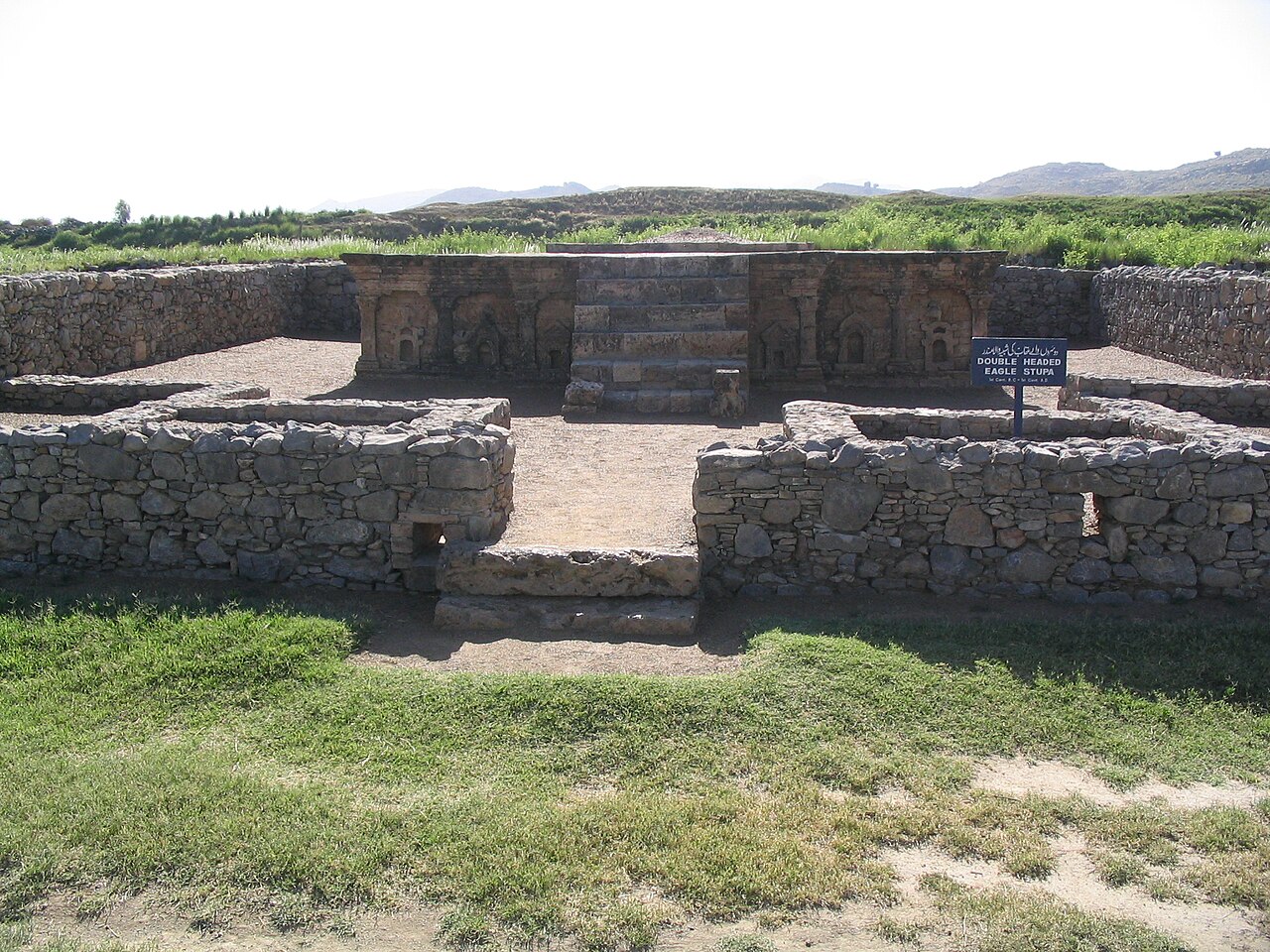
Double-headed eagle
Ancient symbol revived as imperial emblem across Europe and Asia.

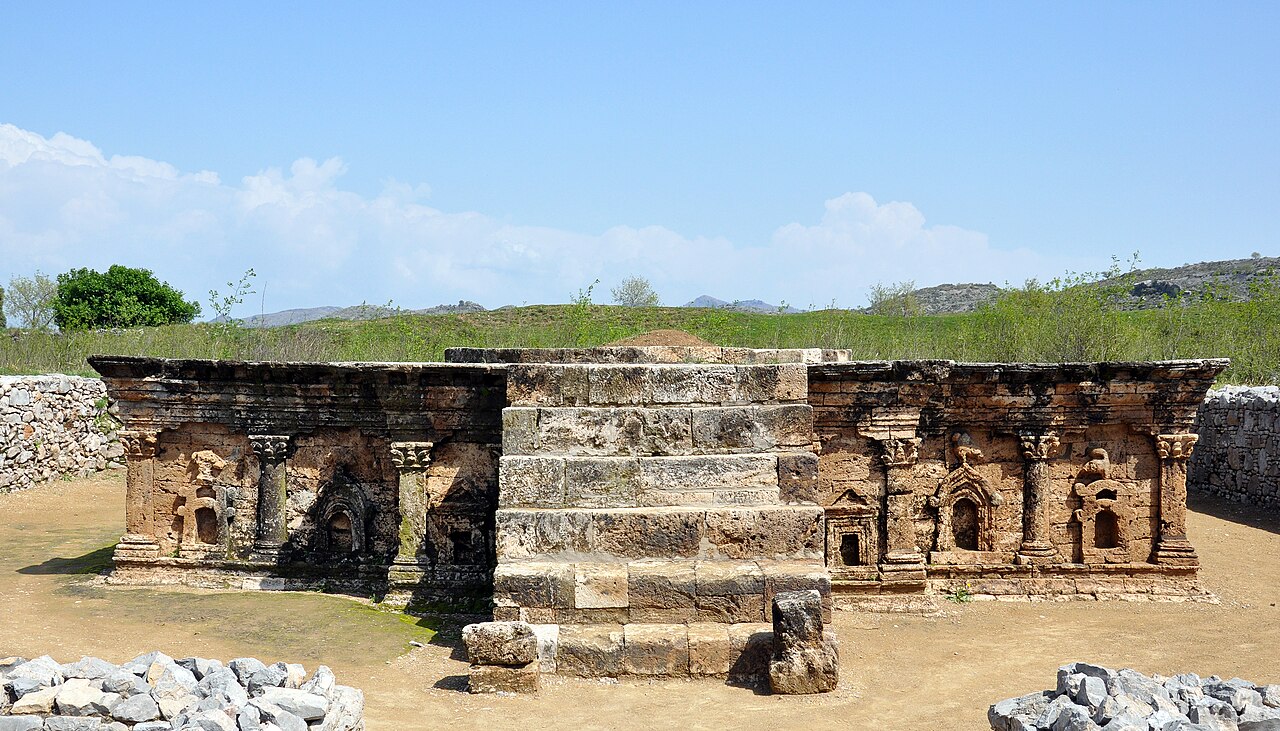
Dawoodmajoka · Public domain
The double-headed eagle is an iconographic symbol originating in the Bronze Age, with predecessors found in the Ancient Near East and Mycenaean Greece. Most modern uses are directly or indirectly associated with its use by the Palaiologos dynasty of the Byzantine Empire, a use possibly derived from the Roman Imperial Aquila. The motif appears in Islamic Spain, France, the Bulgarian Empire, and the Serbian principality of Raška in the high medieval period, and from the 13th century onward in the Seljuk Sultanate of Rum, the Mamluk Sultanate, Albania, the Holy Roman Empire, Russia, and Serbia.
- Origin
- Bronze Age
- Earliest depiction
- Late 3rd to early 2nd millennium BC (Bactria–Margiana Archaeological Complex)
- Earliest byzantine context
- 10th century (silk brocade, likely manufactured in Islamic Spain)
- Associated dynasties
- Palaiologos, Nemanjić, Kastrioti, Romanov
- Modern use
- Flag of Albania, coat of arms of Russia
Lore & Background
The double-headed eagle appears in Bronze Age Hittite imagery, interpreted as royal insignia, and on Mycenaean pottery. After a gap of over two millennia, it reappears in the 10th century on a silk brocade likely from Islamic Spain, and in France. In the Byzantine Empire, it appears in art by the 10th century but becomes an imperial emblem only during the final century of the Palaiologos dynasty. A modern theory connects its introduction to Emperor Isaac I Komnenos, whose family originated in Paphlagonia, possibly bringing a Hittite motif.
Reader's Guide
The double-headed eagle's significance lies in its long history as a symbol of imperial and royal authority across diverse cultures. In the Byzantine Empire, it became a state emblem by the 15th century. Its adoption by the Seljuk Sultanate of Rum and Mamluk Egypt shows its reach into the Islamic world. In Christian Europe, it was adopted in Serbia by the 12th century, in Albania by the Kastrioti family in the 14th–15th centuries, and in Russia after Ivan III's marriage to Zoe Palaiologina. The Holy Roman Empire used a double-headed eagle from the 15th–16th centuries. The motif persists today in the flag of Albania and the coat of arms of Russia, restored in 1993. Its legacy is that of a cross-cultural emblem of sovereignty, adapted by empires and nations over millennia.
Did You Know?
- The earliest known depiction appears on a ceremonial axe head from the Bactria–Margiana Archaeological Complex, dated to the late 3rd and early 2nd millennium BC.
- A Hittite relief of a double-headed eagle grasping two hares is found at the Sphinx Gate at Alaca Hüyük.
- The double-headed eagle was used on coins minted under Artuqid ruler Nasir al-Din Mahmud of Hasankeyf (r. 1200–1222).
- The earliest widely-accepted use of the double-headed eagle in Bulgaria dates to the 14th century.
The Legal Quagmire of 1933
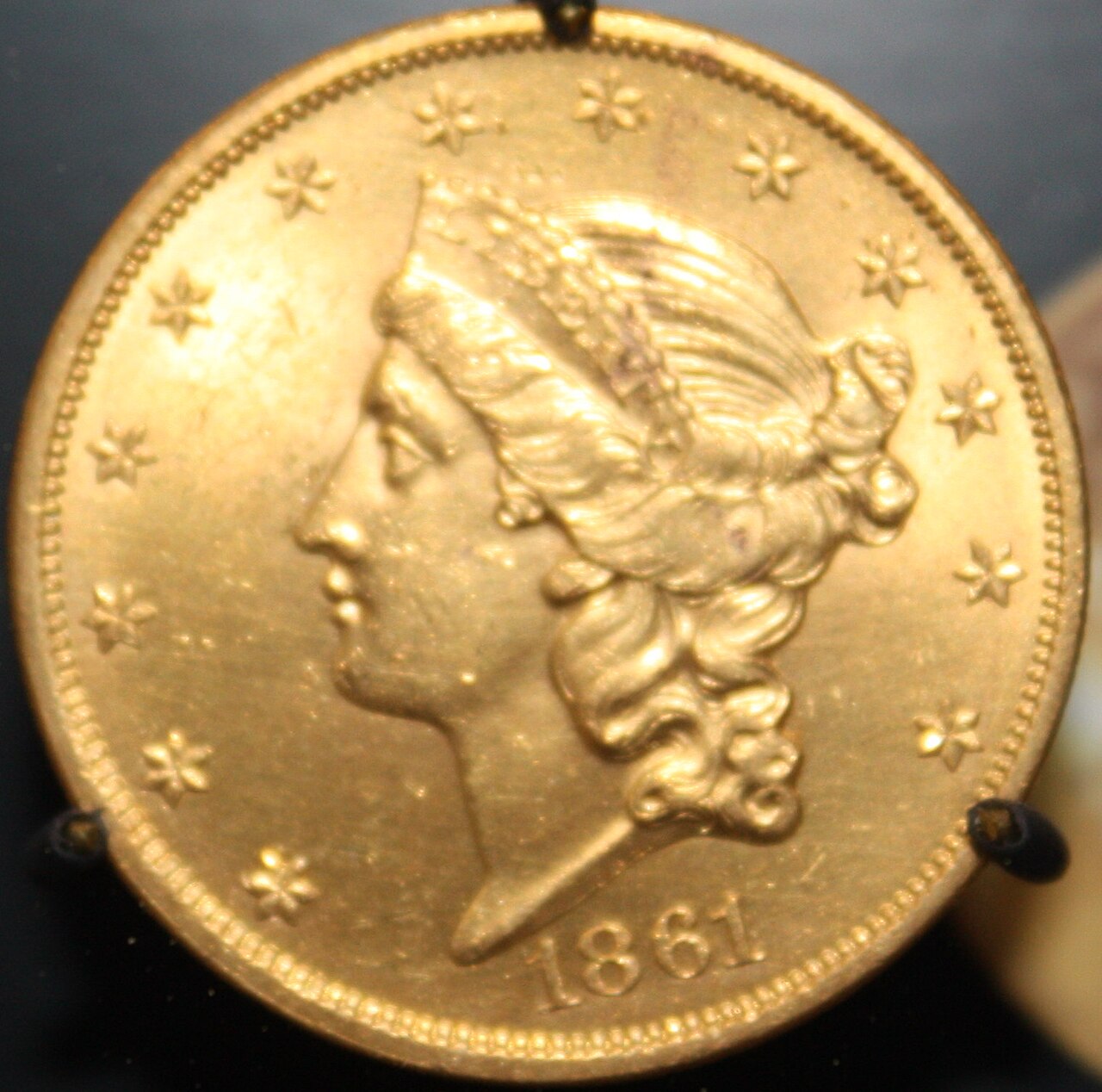
In 1933, President Franklin D. Roosevelt issued Executive Order 6102 as a response to the banking crisis gripping the nation. The order demanded that virtually all gold coins, bullion, and certificates be surrendered to Federal Reserve banks or member banks by May 1, 1933, with narrow exceptions for industrial use, small personal holdings under $100, collector pieces of recognized special value, and foreign government holdings. Congress followed with the Gold Reserve Act of 1934, which formally removed U.S. gold coins from legal tender status and prohibited their private possession for general circulation. The 1933 double eagles were struck after this executive order took effect, meaning they were produced as coins that could no longer legally circulate. As a result, the vast majority of the 445,500 Saint-Gaudens double eagles minted that year were ordered melted down in late 1934, with some destroyed during testing. Only two were deliberately preserved and presented to the U.S. National Numismatic Collection, one of which now sits on display in the National Museum of American History's Value of Money exhibit.
The Theft and the Long Investigation
Before the melting order could be fully carried out, roughly twenty of the 1933 double eagles vanished. The suspected culprit was the U.S. Mint cashier, and the coins reportedly passed through Philadelphia jeweler Israel Switt into the hands of private collectors, where they circulated for several years. The situation came to light when an investigative reporter, researching coins he had spotted in an upcoming Stack's Bowers auction, reached out to the Mint. This triggered a formal Secret Service investigation in March 1944. In the first year, seven coins were seized or voluntarily surrendered and destroyed at the Mint; an eighth followed the next year. In 1945, the investigation identified the alleged thief and Switt, who admitted to selling the nine located coins but claimed he could not recall how he obtained them. The Justice Department attempted prosecution, but the statute of limitations had already expired. A ninth coin was recovered and destroyed in 1952. Meanwhile, one coin had already slipped out of the country: a Texas dealer sold it to a foreign buyer, and it departed the United States on February 29, 1944.
The King Farouk Specimen
The coin that left the United States in 1944 found its way into the collection of King Farouk of Egypt, a famously acquisitive monarch whose holdings spanned Fabergé eggs, postage stamps, paperweights, and over 8,500 coins. Farouk's ministers, acting in strict legal compliance, applied to the U.S. Treasury Department for an export license. Tragically for American authorities, the license was granted just days before the Mint theft was discovered. The Treasury Department attempted to recover the coin through diplomatic channels, but World War II stalled their efforts for years. In 1952, a coup d'état toppled Farouk, and his vast possessions were prepared for public auction. Sotheby & Co. of London catalogued the coin collection, which was offered in Cairo as The Palace Collections of Egypt, with the sale opening on February 24, 1954. The double eagle appeared in lot 185, grouped with sixteen other twenty-dollar pieces dated 1924 to 1933. The United States government re-quested the return of the coin.
Rarity, Illegality, and Record-Breaking Sales
Today, only thirteen 1933 double eagles are known to exist, making it one of the rarest coins in the world. Two reside in the U.S. National Numismatic Collection, ten are stored at the United States Bullion Depository at Fort Knox, and a single specimen is privately owned. Because the coin was never officially released to the public, private ownership is illegal under U.S. law, with the sole exception of the Weitzman Specimen. The U.S. Secret Service reportedly investigates any reports of additional specimens surfacing. In 2002, the remaining recovered coin was sold at auction to private collector Stuart Weitzman, who remained anonymous at the time, for $7.59 million—the second-highest price ever paid for a single U.S. coin at that point. In June 2021, the coin changed hands again, fetching $18.9 million from an anonymous buyer and becoming the most expensive coin ever sold at auction. Adjusted for inflation, the 2002 price equates to roughly $12.2 million in 2022 dollars, underscoring the extraordinary and escalating value of this numismatic ghost.
Gallery
Frequently Asked Questions
What is the double-headed eagle?
It is an ancient heraldic emblem depicting an eagle with two heads, one turned left and one turned right, symbolizing dual authority or dominion over two realms. The motif first emerged in the Bronze Age and later became one of the most widely recognized marks of imperial power in both Europe and Asia.
Where does the double-headed eagle symbol originate?
The oldest known depictions come from the Bactria–Margiana Archaeological Complex in Central Asia, dating to roughly the late third or early second millennium BC. Earlier related imagery also appears in the Ancient Near East and Mycenaean Greece, showing the motif was already centuries old before it reached the Byzantine world.
Which empires and nations used the double-headed eagle as their emblem?
The symbol served as a dynastic or state emblem for the Byzantine Palaiologos line, the Holy Roman Empire, the Russian Romanov dynasty, the Serbian Nemanjić dynasty, and the Albanian Kastrioti family, among others. Today it still flies on Albania's national flag and appears on Russia's coat of arms.
How did the double-headed eagle spread beyond the Byzantine Empire?
The motif traveled through trade, diplomatic exchange, and cultural borrowing, showing up in Islamic Spain, France, the Bulgarian Empire, and the Serbian principality of Raška during the high medieval period. From the 13th century onward it was also adopted by the Seljuk Sultanate of Rum, the Mamluk Sultanate, Albania, the Holy Roman Empire, and Russia.
Why is the double-headed eagle considered important in heraldic history?
It is one of the longest continuously used state symbols in the world, linking Bronze Age iconography to modern national emblems. Its repeated revival as a marker of sovereignty across Europe and Asia made it a shared visual shorthand for imperial authority spanning several millennia.
More in Double-headed eagle 1-22
Spotted an error? Know more?
Reader corrections go straight into our review queue. Suggest an edit · How this site is sourced