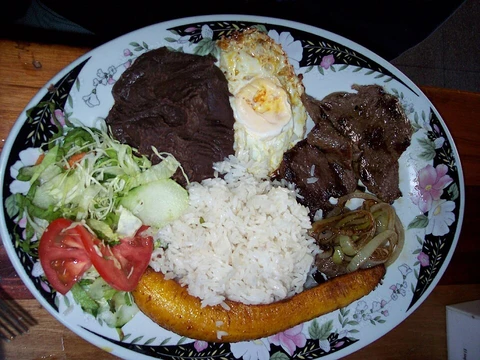
Tostones
Twice-fried plantain slices staple in Latin American and Caribbean cuisine.

Tostones are twice-fried plantain slices commonly found in Latin American cuisine and Caribbean cuisine. The name comes from the Spanish verb tostar, meaning 'to toast.' They are most commonly known as tostones in Puerto Rico, Mexico, Nicaragua, Cuba, Honduras, Venezuela, and the Dominican Republic, and by various other names in other regions.
Quick Facts
- Creator
- <!-- or
- Main Ingredient
- Unripe plantains, oil
- Minor Ingredient
- Salt, other seasonings
- Serving Size
- 1 slice
- Calories
- 92
- Protein
- 1
- Fat
- 5
- Carbohydrate
- 14
Facts from the source article.
Lore & Background
Green plantains are peeled, sliced lengthwise, diagonally, or widthwise, then fried for one to six minutes per side until golden. After patting off excess oil, the slices are pounded flat using a tostonera or any flat kitchen utensil, then fried again until crisp and golden brown. Tostones are salted and served much like potato chips or french fries, often accompanied by dips such as mojo, ají, or hogao sauce, or topped with cheese, shredded beef, or ceviche.
Reader's Guide
Tostones are a staple food across many Latin American and Caribbean countries, including Cuba, Puerto Rico, Dominican Republic, Panama, the north coast of Honduras, and Haiti. In Haiti, they are often served with griot (fried pork) or pikliz. In Colombia, they may be served with hogao sauce or seasoned shredded beef; in Costa Rica, with a black bean dip; in the Dominican Republic, with lime wedges and salt. In Puerto Rico, they are commonly seasoned with garlic salt and eaten with fry sauce, mojo, or pique verde boricua. Variations include tostones de pana, made from unripe breadfruit, and tostones rellenos, which are shaped into cups and stuffed. Tostones are also found in West African cuisine, where they are called plantain crisps. The tostonera, a hinged utensil made from wood, plastic, or metal, is an essential tool for their preparation.
Did You Know?
- Tostones are also known as patacones in Ecuador, Panama, Venezuela, Colombia, and Costa Rica.
- In Honduras and Mexico, the term tostón can refer to a 50-cent coin of the local currency.
- Tostones rellenos is a traditional Puerto Rican dish where fried plantains or breadfruit are shaped into cups and stuffed.
- Tostones made from unripe breadfruit are called tostones de pana in Puerto Rico.
More in Costa Rican cuisine 1-24
Spotted an error? Know more?
Reader corrections go straight into our review queue. Suggest an edit · How this site is sourced