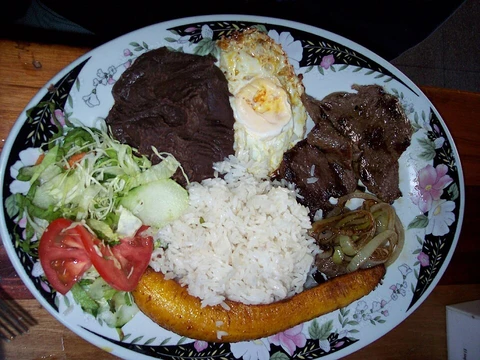
Gallo pinto
A disputed national dish of rice and beans.

Gmasmcal · CC BY 4.0
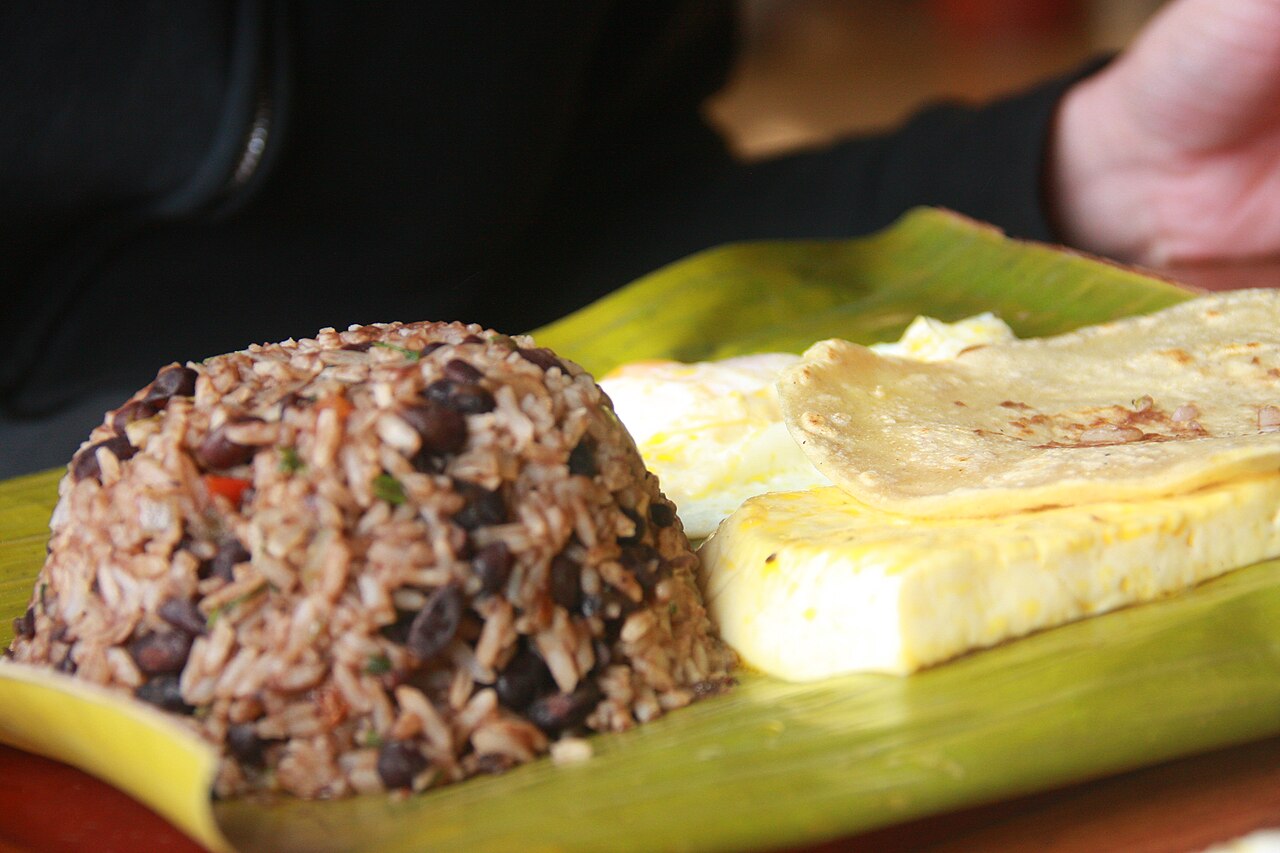
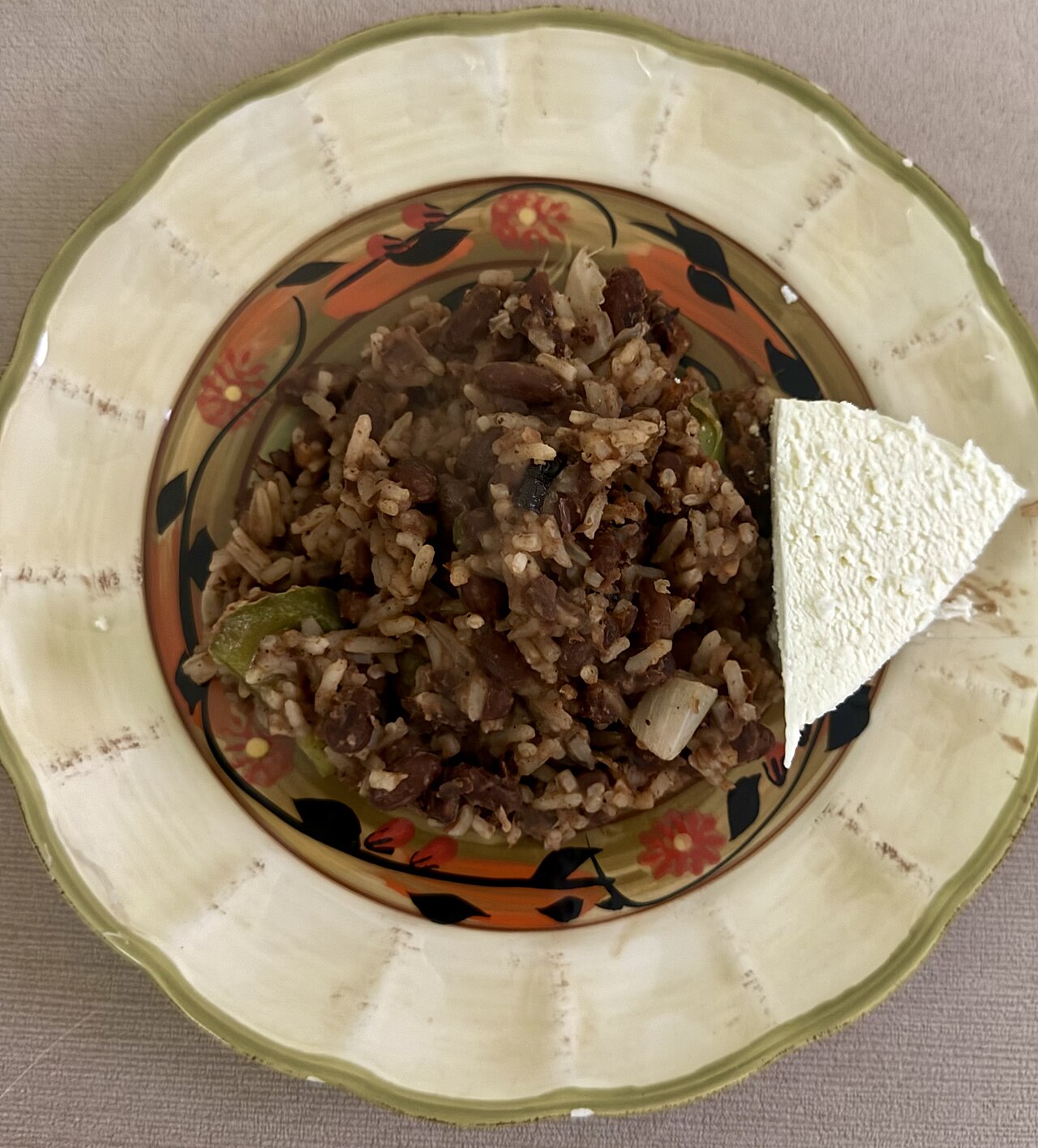
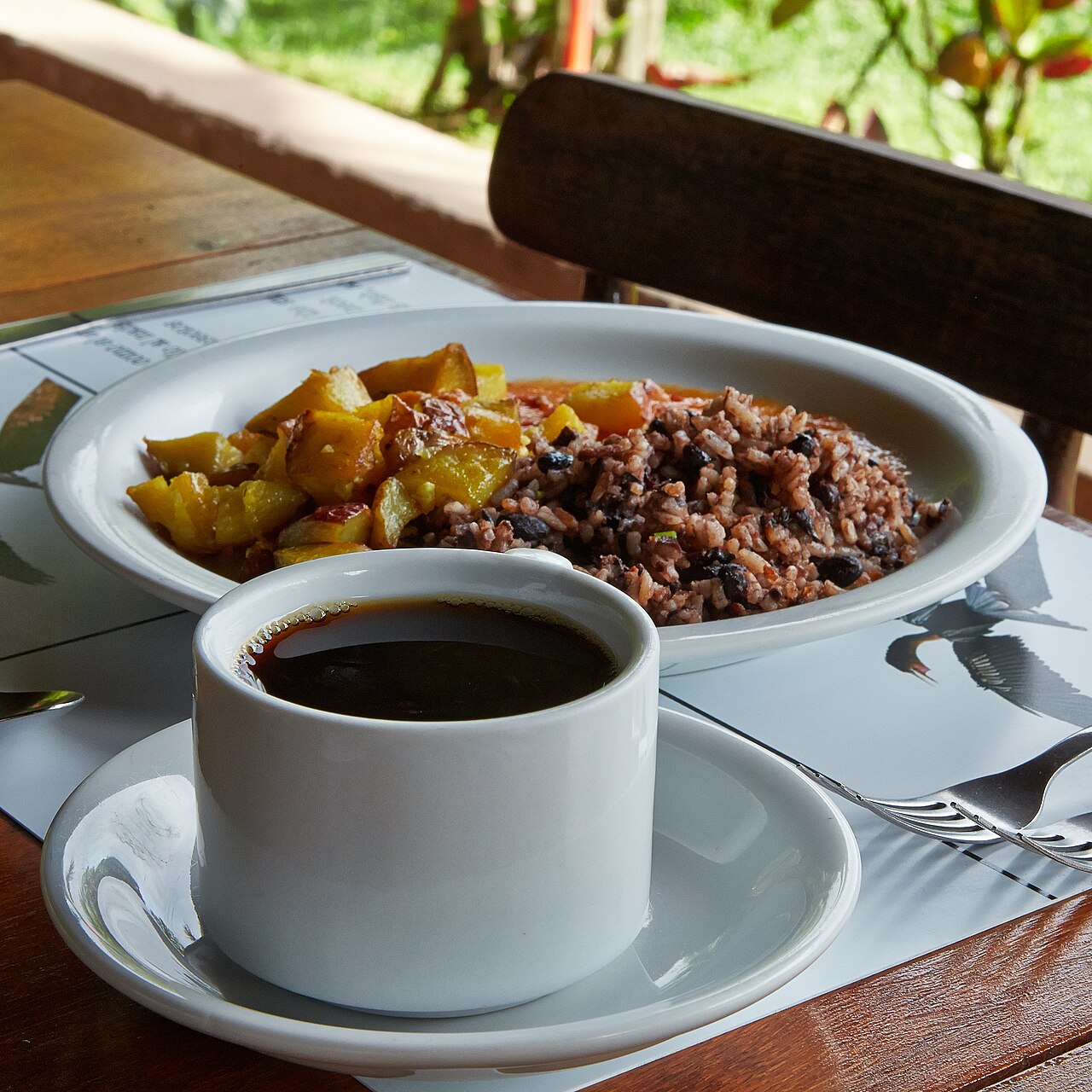
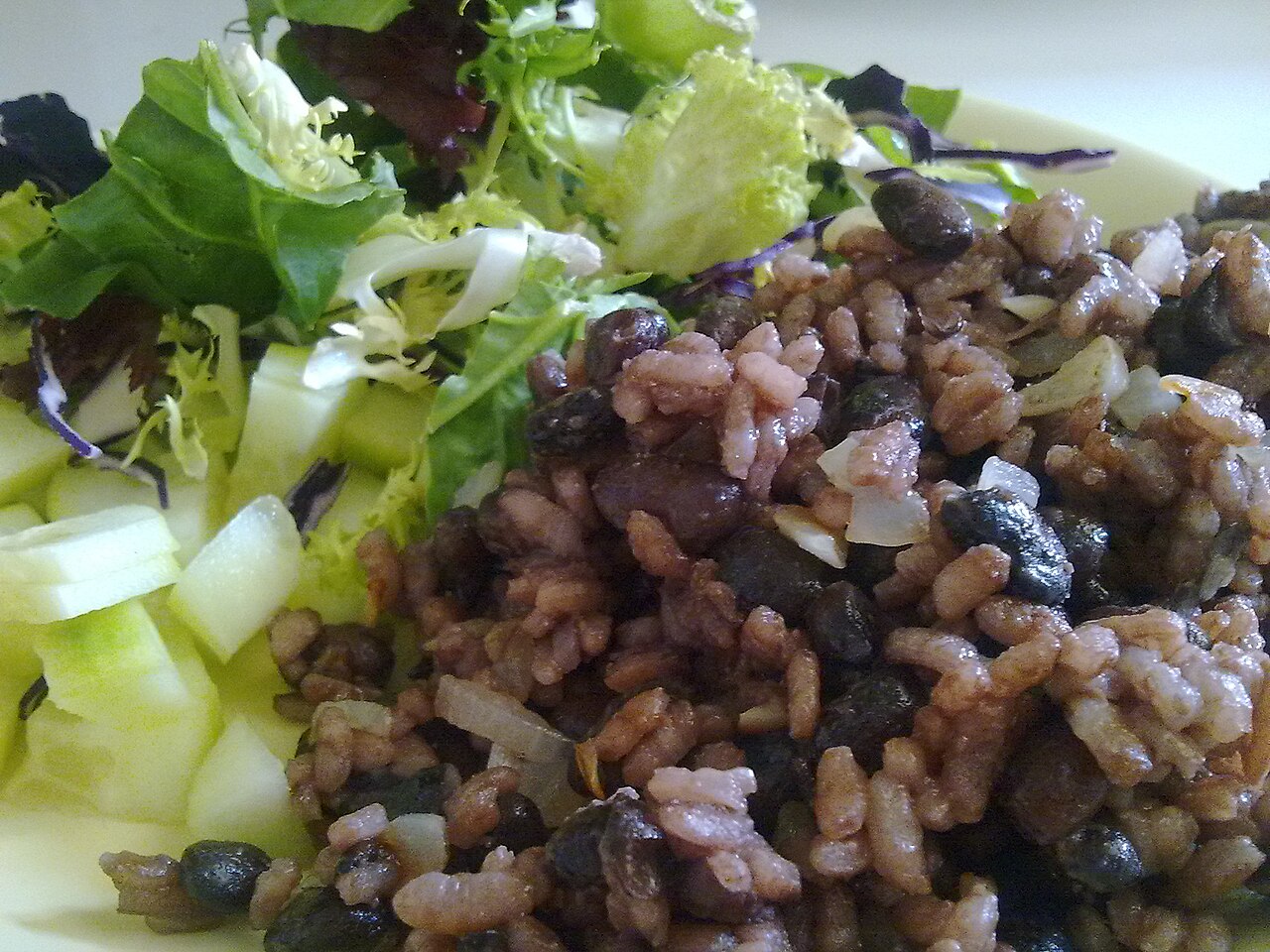
Gallo pinto, also written as gallopinto, is a Central American dish built from rice and beans. Both Nicaragua and Costa Rica regard it as a national dish. Its Spanish name translates to "spotted rooster," a reference to the speckled look the rice takes on when cooked with black or red beans.
To prepare the dish, beans are cooked with garlic, oregano, and onion. Once the bean liquid and the red beans are in equal measure, they are mixed with leftover or previously cooked rice. In Nicaragua, the rice is made with just salt and onions.
Which country actually invented gallo pinto is a matter of dispute. Both Nicaragua and Costa Rica claim it, and the argument over its origin is a heated topic between them. There is broad agreement, however, that the dish has Afro-Caribbean roots. It appears in Carlos Luis Fallas’ novel *Mamita Yunai*, where it is mentioned as a meal eaten by workers on banana plantations—though the novel does not describe the dish being invented there or brought home. Anthropologist Teresa Preston-Werner notes that Fallas’ mention of pinto in the Caribbean coast’s cultural setting shows how common the meal was in daily life as early as the first part of the twentieth century.
Costa Rica has its own folk anecdote about the dish's name. It tells of a farmer in San José’s San Sebastián neighborhood who announced he would slaughter a speckled hen—a *gallo pinto*—for a feast day honoring Saint Sebastian. People who heard this took it as a dinner invitation, but the hen was too small to feed everyone, so he served rice and beans instead. The incident became a local joke, with people asking each other if they’d gotten any of the farmer’s gallo pinto, and the name spread across the country. While this story is not a factual historical origin, Preston-Werner writes that it “provides a crucial cultural explanation for the origin of this ubiquitous food,” grounding it in time (the early twentieth century on Saint Sebastian’s Day) and place (the town of San Sebastián by the Tiribí River).
In Costa Rica, gallo pinto is often eaten with Lizano sauce. Home cooks traditionally use leftover rice and beans from the day before. Regional versions exist: in the Valle Central, it is usually made with black beans, peppers, onions, and cilantro, and often includes Lizano sauce; in Guanacaste, red beans are common and the dish is richer.
Quick Facts
- Country
- Costa Rica and Nicaragua
- Associated Cuisine
- Central American cuisine
- Course
- Main dish, side dish
- Served
- Hot
- Main Ingredient
- Rice, beans
- Minor Ingredient
- Onions, peppers, other seasonings
- Variations
- Regional variations
- Calories
- 200
- Protein
- 7
- Fat
- 0.5
- Carbohydrate
- 40
Facts from the source article.
Lore & Background
The dish is mentioned in Carlos Luis Fallas' Mamita Yunai, where it appears as a meal eaten by workers on banana plantations—though the novel does not describe the dish being invented there or brought home. According to anthropologist Teresa Preston-Werner, Fallas' inclusion of pinto in the cultural landscape of the Caribbean coast demonstrates the meal's ubiquity in daily life as early as the first part of the twentieth century. In Costa Rica, a well-known folk anecdote tells of a farmer in San Jose's San Sebastian neighborhood who told friends he was going to slaughter a speckled hen for a feast day celebration; when people interpreted this as an invitation to dinner, the hen wasn't enough, and he served rice and beans. The name spread as a local joke. This story is a cultural tale rather than a verified historical account.
Reader's Guide
Gallo pinto is a culturally significant dish in both Costa Rica and Nicaragua, where it is considered a national dish. In Costa Rica, the phrase 'más tico que el gallo pinto' (more Costa Rican than spotted rooster) is common, and the dish is on the menu of most Costa Rican restaurants. According to Costa Rican chef Isabel Campabadal, 'If any one dish defines Costa Rican cuisine, it is gallo pinto.' In Nicaragua, it is a staple and was referenced by Daniel Ortega in 2019 when he proposed a 'gallo pinto' economy. The dish's origin is disputed, with Costa Rica dating it to 1930s San Jose and Nicaragua claiming it was brought by enslaved Africans much earlier. This contention has led to annual Gallo Pinto Day competitions, sometimes called the 'Gallo Pinto War.' The dish is also known in Panamanian and Guatemalan cuisines.
Did You Know?
- Gallo pinto means 'spotted rooster' in Spanish.
- In 2003, Costa Rica held an event where nearly 1000 pounds of gallo pinto was cooked, recorded in the Guinness Book of World Records; Nicaragua responded with 1200 pounds.
- The dish is often made from leftover rice and beans from the previous day.
- In Costa Rica, it is commonly eaten with Lizano sauce.
National Identity and the Spotted Rooster
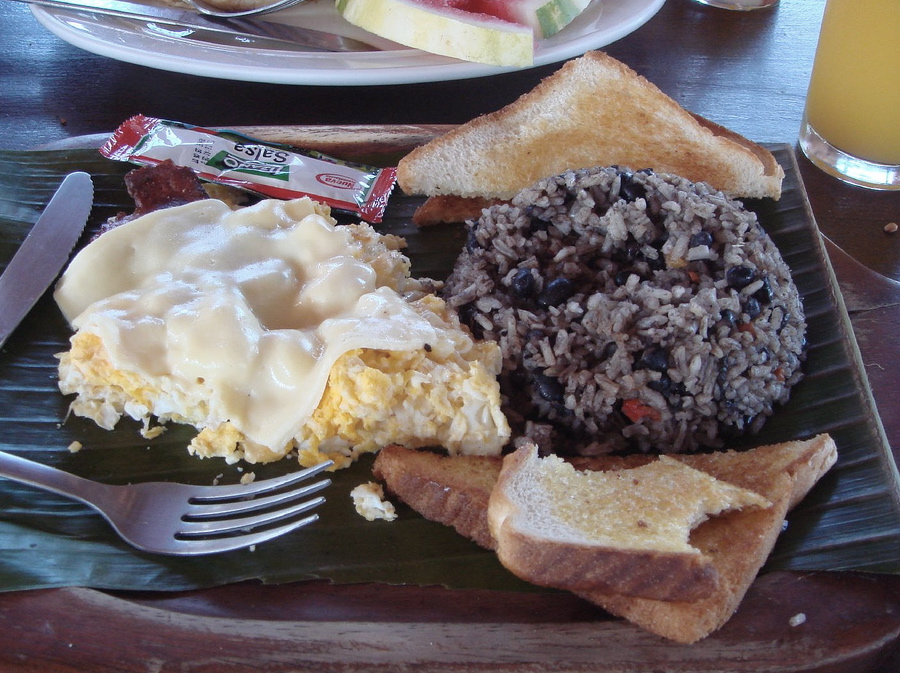
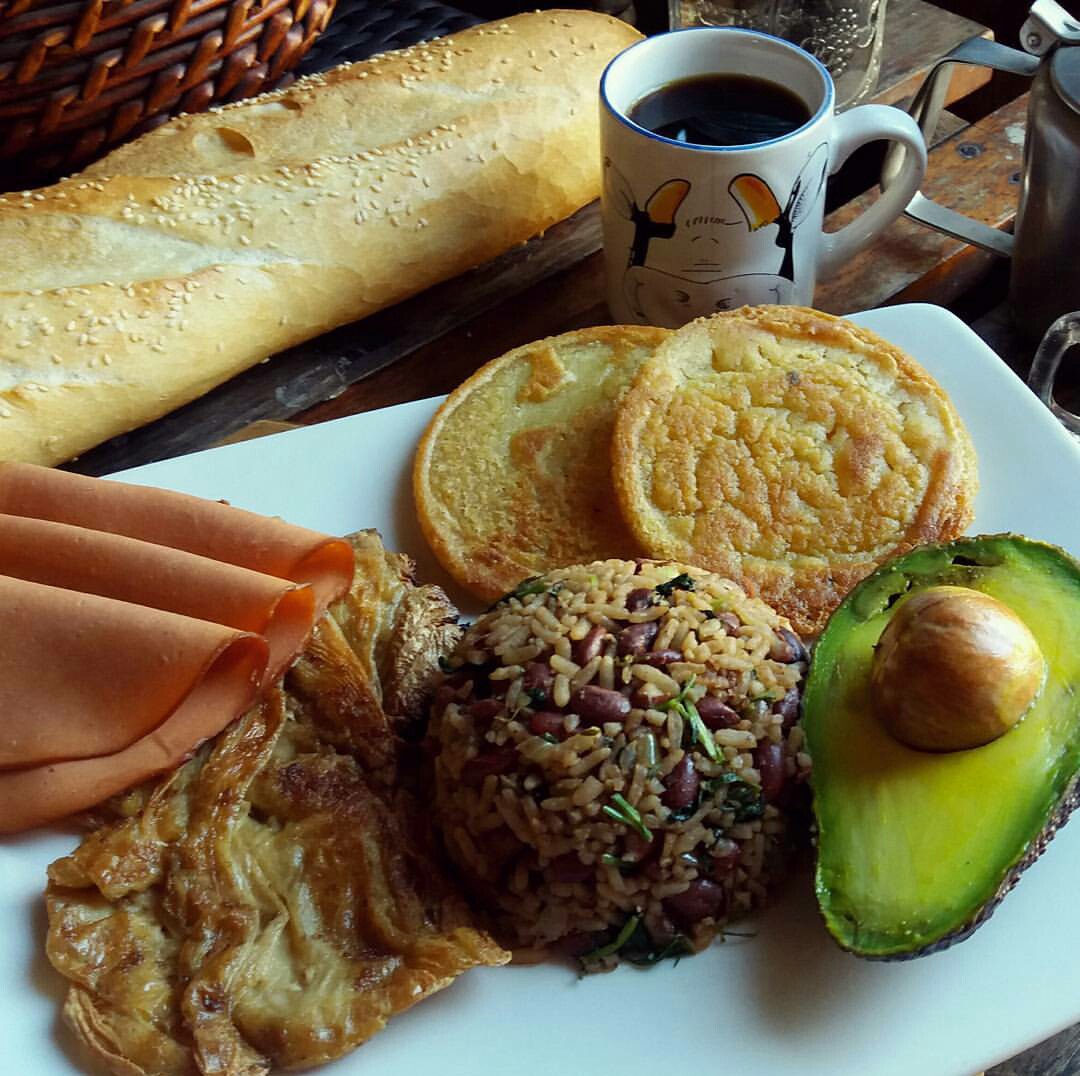
Gallo pinto holds the title of Costa Rica's national dish, a distinction it shares with neighboring Nicaragua—a fact that sparks ongoing debate across both countries about the ideal balance of beans, rice, and spices. The name itself is a colorful literal translation, "spotted rooster," a nod to the dish's distinctive mottled appearance created when rice and beans are stir-fried together in a pan. For Costa Ricans, known locally as Ticos, this dish is far more than a culinary curiosity; it is a daily presence, most commonly served at breakfast alongside scrambled or fried eggs and a dollop of sour cream or cheese. The local shorthand "pinto" reflects how deeply embedded the dish is in everyday language. Remarkably, it remains accessible to everyone, available at affordable prices in virtually every corner of the country, making it a true democratic food that bridges urban centers and rural communities alike.
The Art of the Stir-Fry and Salsa Lizano
The preparation of gallo pinto centers on a simple yet distinctive technique: rice and red or black beans are stir-fried together in a pan until they achieve that signature speckled look. The seasoning blend is deceptively modest—cilantro, red pepper, onion, and celery form the aromatic backbone. But the true soul of the dish lies in Salsa Lizano, a tangy condiment created in 1920 by the Lizano company. This sauce, often called "salsa inglesa" (English sauce) for its resemblance to Worcestershire sauce, combines water, sugar, salt, onions, carrots, cauliflower, cucumber, pepper, mustard, turmeric, and monosodium glutamate. Over the twentieth century, it became indispensable in Tico kitchens and restaurants nationwide, appearing not only in gallo pinto but also in tamales and countless other preparations. Its growing availability outside Costa Rica hints at the dish's potential to travel beyond its homeland.
Breakfast, Family, and the Rhythm of Tico Meals
In Costa Rican food culture, meals are not merely fuel but the gravitational center of family life and celebration. Gallo pinto anchors the breakfast table, where it is typically paired with eggs and a side of sour cream or cheese, setting a mild, wholesome tone for the day. This aligns with the broader character of Costa Rican cuisine, which leans heavily on fruits, vegetables, and fresh ingredients cooked from scratch, producing nutritionally well-rounded fare. The country's tropical location ensures a constant abundance of produce, while pork and beef dominate the protein landscape, supplemented by chicken and fish, particularly along the Caribbean coast. Rice and beans appear in nearly every meal, three times a day in many households, and potatoes add another layer of starch to the Tico diet. When families gather for special occasions, dishes like arroz con pollo—rice with chicken, vegetables, mild spices, and of course Salsa Lizano—take center stage, reinforcing the idea that in Costa Rica, sharing a table is as important as what sits on it.
A Dish in a Sea of Flavors: Regional Distinctions
While gallo pinto reigns as the national dish, Costa Rica's culinary landscape is far from monolithic. The Caribbean coast carries its own Afro-Caribbean traditions, where a rice-and-beans preparation exists but is distinctly different from gallo pinto: there, the grains and legumes are cooked in coconut milk and served alongside fish and fried plantain. This distinction matters to locals, who are careful not to conflate the two. The broader national cuisine also reflects layered histories—Indigenous peoples like the Chorotega relied heavily on maize before the Spanish conquest, and corn persists in dishes like tamales, which feature at nearly every celebration, especially Christmas. In urban centers like San José and tourist-heavy beach towns, the food scene has expanded to include Peruvian, Japanese, Chinese, and Italian options, yet traditional Tico fare remains the backbone. Gallo pinto, with its humble ingredients and universal availability, stands as the thread connecting all these diverse culinary worlds.
Gallery
Frequently Asked Questions
Who is Gallo pinto?
Gallo pinto is a Central American staple built from rice and beans that both Costa Rica and Nicaragua claim as their national dish. Its Spanish name, meaning 'spotted rooster,' refers to the mottled look the rice takes on after being cooked alongside black or red beans.
What are Gallo pinto's powers/role?
In a typical Costa Rican kitchen, gallo pinto anchors the breakfast spread, usually served alongside eggs, tortillas, and fresh fruit. It is made by blending seasoned beans—cooked with garlic, oregano, and onion—with previously cooked rice in roughly equal parts.
Why is Gallo pinto important?
Gallo pinto is one of the few dishes officially embraced as a national symbol by two separate countries, making it a rare culinary bridge in Central America. It embodies the everyday food culture of working families and is deeply woven into the national identity of both Costa Rica and Nicaragua.
What's Gallo pinto's origin story?
The exact birthplace of gallo pinto is still hotly debated, with Nicaragua and Costa Rica each insisting they created the dish first. What is well established is that it grew out of the practical pairing of leftover rice with seasoned beans, a resourceful combination that eventually became a cultural institution across the region.
More in Costa Rican cuisine 1-24
Spotted an error? Know more?
Reader corrections go straight into our review queue. Suggest an edit · How this site is sourced