Mesoamerican cuisine
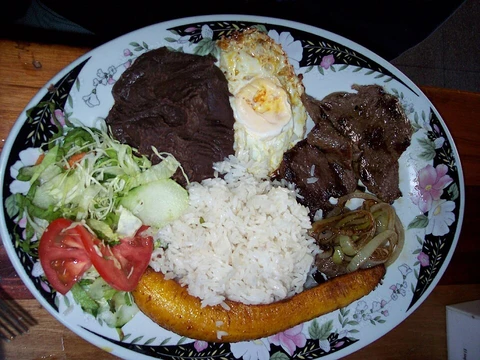
Staples of maize, beans, squash, and chili shaped Mesoamerican cuisine.

NahomyyS · CC BY-SA 4.0
Mesoamerican cuisine refers to the traditional food practices of the region covering Belize, El Salvador, Guatemala, Honduras, Nicaragua, and Mexico. Its four main staples are maize, beans, squash, and chili, supplemented by foods such as amaranth, avocado, chocolate, and chia. Historically, milpa (the cornfield) was a primary source of sustenance before the introduction of rice and wheat by Hernán Cortés.
- Earliest use of chilies
- 7200 BC
- Harvesting and teosinte planting
- 6700 BC
- Use of squash
- 4000 BC
- Cultivation began
- 2000 BC
- Chocolate with olmec civilization
- 1500 BC
- Fermented chocolate drinks
- 450 BC
Lore & Background
Mesoamerican cuisine relied on four main staples: maize, beans, squash, and chili, with maize grown in many varieties depending on climate. Other plant-based foods included amaranth, avocado, cassava, cherimoya, chia, chocolate, guava, nanche, pineapple, sapodilla, sweet potatoes, yucca, and zapote. Historically, milpa (the cornfield) was a main source of sustenance before Hernán Cortés introduced rice and wheat.
Reader's Guide
Mesoamerican cuisine is significant for its foundational role in the diets of multiple modern nations, with techniques and foods that remain in use today. The use of maize, beans, squash, and chili as staples reflects a sustainable agricultural system. Traditional preparations such as atole, chocolate atole (champurrado), and maize gruel with lime and chili demonstrate early food processing methods. The repurposing of dried gourds for storage and chemical warfare highlights resourcefulness. Chocolate, first fermented in 450 BC, was valued as an energy drink and libido increaser, as recorded by Moctezuma II. The cuisine's legacy persists in dishes like tamales and tortillas, and its influence extends across Central America and Mexico.
Did You Know?
- Chilies were used as early as 7200 BC in Mesoamerica.
- Chocolate was first made into fermented drinks in 450 BC using the cocoa tree.
- Moctezuma II drank 50 cups of chocolate a day from a golden goblet.
The Daily Rhythm of Rice, Beans, and Plantains
Costa Rican cooking is built on a foundation of simplicity and freshness. Rice and black beans appear at nearly every meal throughout the day, often three times, forming the nutritional backbone of the Tico diet. Potatoes add another layer of starch, while pork and beef dominate the protein side, though chicken and fish appear frequently, particularly along the Caribbean shore. The plantain, a larger cousin of the banana, shows up in remarkable variety: ripe ones are fried, baked in sweet sauces, or stirred into soups, while green ones become patacones—sliced, fried, smashed, and refried—commonly paired with bean dip or guacamole. Because the country's tropical climate keeps fruits and vegetables in constant supply, most home cooking relies on ingredients prepared from scratch rather than processed products. The overall effect is a cuisine that is mild in heat, nutritionally balanced, and deeply rooted in the seasons and soil of the region.
Maize, the Chorotega, and the Tamale Tradition
Long before Spanish ships reached the coast, the Chorotega and other Indigenous groups of Costa Rica built their diets around maize. That pre-Columbian reliance on corn did not vanish with the conquest; it persists in dishes that anchor the national calendar. The most prominent example is the tamale, a preparation originally brought to Central America by the Aztecs. In Costa Rica, tamales are virtually inseparable from celebration—Christmas being the most iconic occasion. The construction is specific: a dough of cornmeal, lard, and spices is filled with combinations of meat, rice, and vegetables, then wrapped in a plantain or banana leaf and steamed. The Chorotega tradition adds its own character, favoring fillings of deer or turkey meat alongside pumpkin seeds, tomatoes, and sweet peppers. This layering of Indigenous, Aztec, and local adaptation makes the tamale a living archive of the region's culinary history.
The Caribbean Coast's Afro-Caribbean Kitchen
While the Pacific side of Costa Rica leans on the familiar rice-and-beans-and-meat formula, the Caribbean coast carries a distinctly different culinary inheritance shaped by Afro-Caribbean traditions. Holiday tables there feature pork cracklings and a tripe soup known as mondongo, dishes that have no direct parallel in the mainland repertoire. The Caribbean version of rice and beans is its own entity, not to be confused with the mainland's gallo pinto: here the grains and legumes are cooked together in coconut milk and typically plated alongside fish and a fried plantain. This regional divergence illustrates how a single nation can house two parallel food cultures. Meanwhile, the broader tourist economy has layered yet another stratum onto the urban landscape—San José and beach towns now offer Peruvian, Japanese, Chinese, and Italian options alongside traditional Tico fare, creating a dining map as varied as the country's geography.
Gallo Pinto, the Casado, and Salsa Lizano
No discussion of Costa Rican food is complete without gallo pinto, the stir-fried rice-and-beans dish that holds the title of national cuisine. Its name, literally 'spotted rooster,' references the speckled look created when red or black beans are tossed with rice in a pan, seasoned with cilantro, red pepper, onion, celery, and Salsa Lizano. It is a breakfast staple, usually accompanied by eggs and sour cream or cheese, and it is shared as a national dish with neighboring Nicaragua, sparking friendly rivalry over the ideal ratio of beans, rice, and spices. For lunch, the casado—named for the working husband whose wife once packed his field lunch in a banana leaf—presents rice and beans side by side rather than mixed, with a protein, salad, and optional extras like patacones or white cheese. Underpinning both dishes is Salsa Lizano, a tangy condiment created in 1920 by the Lizano company, blending water, sugar, salt, vegetables, mustard, turmeric, and MSG. Comparable to Worcestershire sauce and locally called 'English sauce,' it has become as ubiquitous in Tico kitchens as salt itself.
Gallery
Frequently Asked Questions
What is Mesoamerican cuisine?
It is the traditional food culture spanning Belize, El Salvador, Guatemala, Honduras, Nicaragua, and Mexico, built around a core of four staple ingredients. It predates European contact and forms the foundational layer for many Central American and Mexican dishes.
What are Mesoamerican cuisine's four main staples?
Maize, beans, squash, and chili form the backbone of this culinary tradition. These were supplemented by additional ingredients such as amaranth, avocado, chocolate, and chia seeds.
How far back does Mesoamerican cuisine's history go?
Chilies were being used as early as 7200 BC, and teosinte harvesting dates to roughly 6700 BC. Squash appeared in diets by around 4000 BC, while broader cultivation practices took shape near 2000 BC.
What is the milpa and why does it matter to the story?
The milpa, or cornfield, served as a primary source of sustenance for Mesoamerican peoples before European colonizers brought rice and wheat to the region. It represents the agricultural heart around which the entire cuisine was organized.
What is Mesoamerican cuisine's connection to chocolate?
The Olmec civilization is linked to early chocolate use by approximately 1500 BC. By around 450 BC, fermented chocolate drinks had become a recognizable part of the culinary landscape.
More in Costa Rican cuisine 1-24
Spotted an error? Know more?
Reader corrections go straight into our review queue. Suggest an edit · How this site is sourced