Chorreador
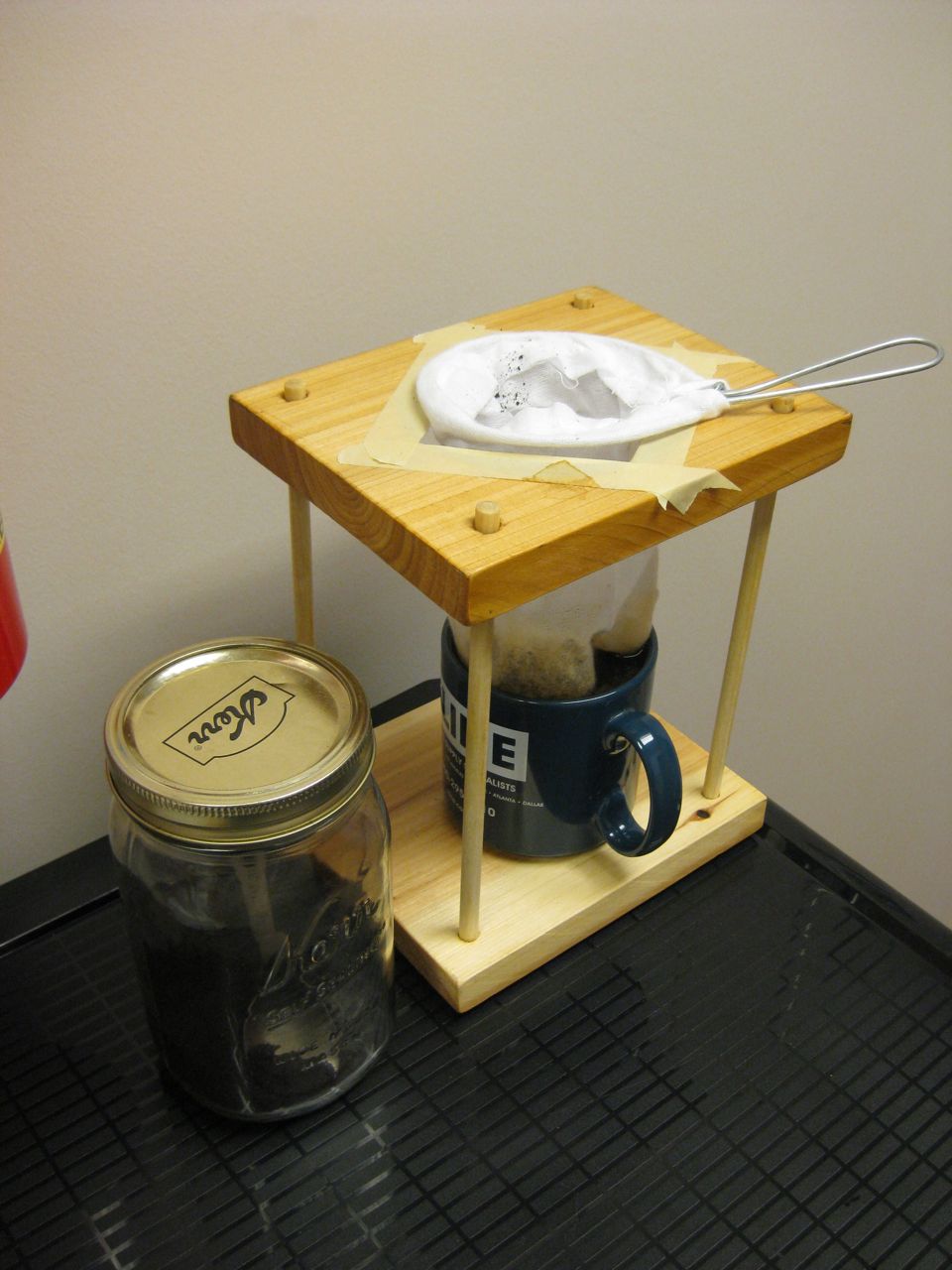
A Costa Rican drip coffee maker using a cloth filter.

Sharalds · Public domain
The chorreador is a coffee making device used in Costa Rica. It consists of a wooden stand that holds a cloth filter, called a bolsita, through which hot water leaches through coffee grounds and drips into a container. The device is notable for its simple, inexpensive construction and its reliance on a reusable cotton filter.
- Type
- Coffee making device
- Origin
- Costa Rica
- Materials
- Wooden stand, cotton bolsita, wire or wooden rim
- Related verb
- chorrear (to drip or trickle)
- Filter type
- Cloth (cotton bolsita)
Lore & Background
The chorreador's design is straightforward: a wooden stand supports an elongated cotton bolsita, shaped like a pocket, held open by a circular wire or wooden rim attached to a handle. The stand holds a coffee cup or pot on its base, and the bolsita hangs above the container. The device can be made at home with basic carpentry and sewing skills, or crafted by an artisan from decorative softwoods or hardwoods.
In use, fine to medium-fine ground coffee is spooned into a dry bolsita, which is suspended from the top of the stand. Boiling water is poured slowly over the grounds, and the liquid seeps through, dripping into the waiting container. The name chorreador relates to the Spanish verb chorrear, meaning to drip or trickle.
Care of the bolsita involves washing and drying it between each use, as a dry bolsita produces the best results. Soap or detergent is never used, as they would leave an aftertaste. Oils from the coffee grounds dye the cotton over time, but the taste remains unaffected; these oils can be removed by scrubbing with salt about once a month. A properly cared-for bolsita lasts many months.
Reader's Guide
The chorreador represents a traditional Costa Rican method of brewing coffee that emphasizes simplicity and reuse. Its cloth filter, the bolsita, is central to the process, requiring careful maintenance to avoid off-flavors. The device's construction from wood and cotton allows for both homemade and artisanal versions, reflecting a range of craftsmanship. The chorreador's reliance on a drip method connects it to broader coffee brewing techniques, such as drip brew, while its use of a cloth filter distinguishes it from paper-filter methods. Its significance lies in its cultural role in Costa Rica as an accessible, low-tech way to produce coffee, and its design has persisted due to the ease of cleaning and the longevity of the bolsita when properly cared for. The device's name, derived from the Spanish word for dripping, directly describes its operation.
Did You Know?
- Soap or detergent is never used to clean the bolsita because they would leave an aftertaste in the coffee.
- Oils from coffee grounds, such as caffeoyl, dye the cotton bolsita over time, but the taste of the coffee remains unaffected.
Gallery
Frequently Asked Questions
What is a chorreador?
It is a traditional Costa Rican coffee-brewing rig built around a simple wooden frame. The frame holds a cloth filter in place while hot water is poured over ground coffee, letting the brew trickle down into a cup or pot below.
How does the chorreador actually work?
Ground coffee is placed inside the cotton filter (the bolsita), which is stretched over the wooden stand's wire or wooden rim. You then pour hot water over the grounds, and the liquid slowly percolates through the cloth, collecting as brewed coffee in the vessel underneath.
What is the bolsita and why is it used instead of a paper filter?
The bolsita is a reusable cotton cloth that serves as the filter in the chorreador setup. Because it can be rinsed and reused, it keeps the whole device inexpensive and low-waste over many brews.
Where does the name 'chorreador' come from?
It is derived from the Spanish verb 'chorrear,' which means to drip or trickle steadily. The name simply describes the device's core action: coffee slowly trickling through the cloth into the container below.
What makes the chorreador distinct from a French press or a pour-over cone?
Its defining features are the wooden stand construction and the cloth filter, making it a very low-tech, budget-friendly option. It is especially tied to everyday Costa Rican home and rural coffee culture rather than café-style brewing.
More in Costa Rican cuisine 1-24
Spotted an error? Know more?
Reader corrections go straight into our review queue. Suggest an edit · How this site is sourced