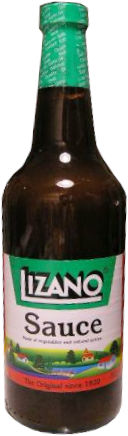
Lizano sauce
Costa Rican condiment developed around 1920.

Valereee · CC0
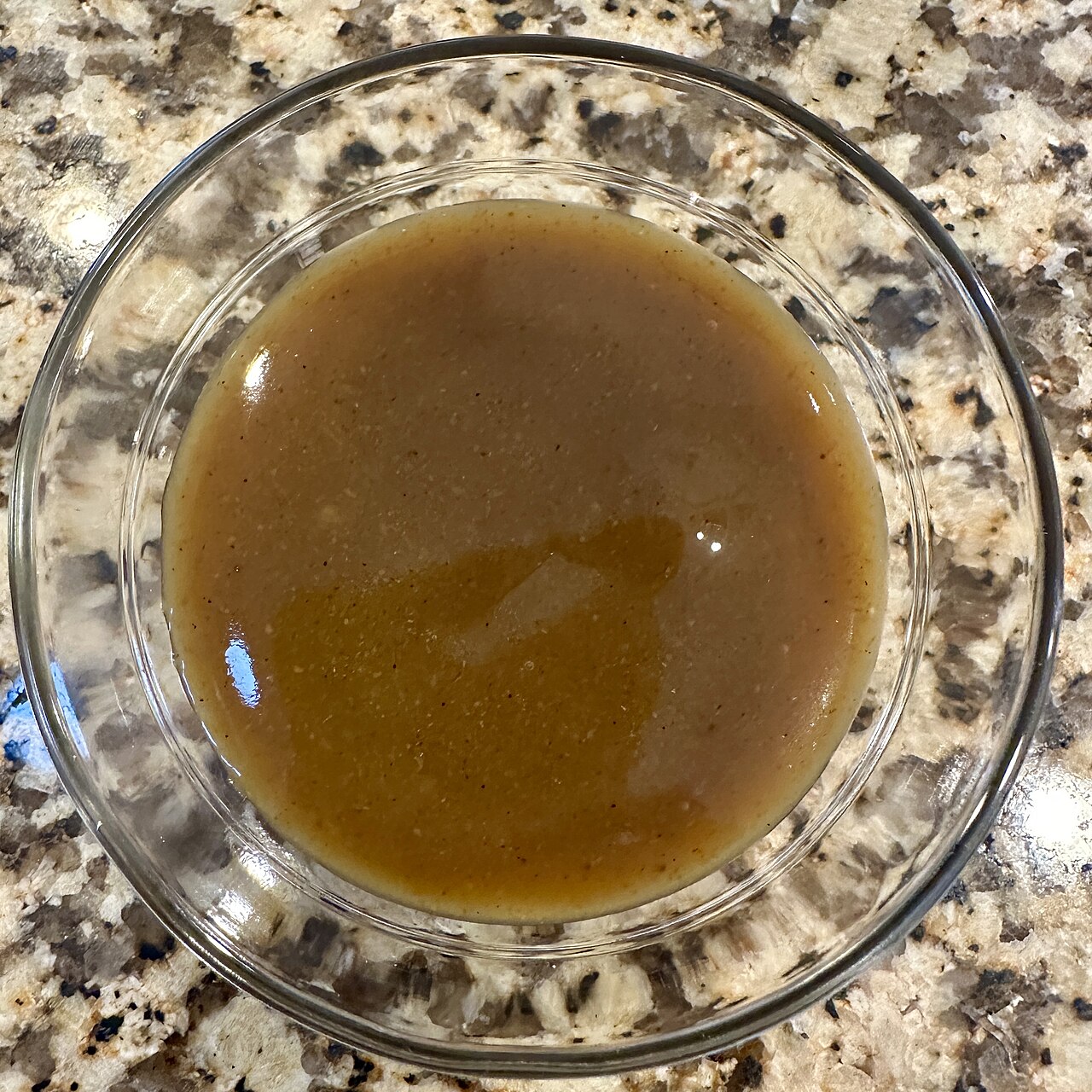
Lizano sauce, also called salsa Lizano, is a Costa Rican condiment first created around 1920 by Próspero Jiménez in his bar, not by the Lizano company itself, and now owned by Unilever. It is a thin, smooth, light brown sauce, similar to HP Sauce or Worcestershire sauce. It can be added during cooking or used at the table to season food, offering a slightly sweet and acidic taste with a mild spiciness from black pepper and cumin.
Its ingredients include water, sugar, salt, vegetables (onions, carrots, cauliflower, cucumbers), spices, pepper, mustard, turmeric, modified corn starch, hydrolyzed vegetable protein, and sodium benzoate. Many Costa Rican dishes are made with Lizano sauce, and it is found on nearly every restaurant table in the country. It is commonly used with gallo pinto and tamales, and pairs well with eggs, rice, beans, fish, cheese, curries, and as a meat marinade. The sauce is becoming more available across North America through online retailers.
The sauce was first made by Próspero Jiménez in his bar in Alajuela. After it became popular with locals and he noticed the success of imported bottled condiments, he approached Próspero Lizano, who owned a factory. Together they created the brand and its green label for marketing. In 1991, Best Foods bought the company, which was later acquired by Unilever. The condiment marked its 100th anniversary in 2020.
Quick Facts
- Producttype
- Condiment
- Currentowner
- Unilever
- Origin
- Costa Rica
- Introduced
- 1920
- Related
- Worcestershire sauce, Pickapeppa Sauce
- Previousowners
- 1920 - Lizano / 1991 - Best Foods
- Tagline
- es · ¡A su comida le da vida! (Brings life to your food)
Facts from the source article.
Lore & Background
The sauce was created initially around 1920 by Próspero Jiménez in his bar in Alajuela, not by the Lizano company. After success with the neighbors and acknowledging the success of imported bottled condiments, he approached Próspero Lizano who owned a factory, and then they established the brand and the green label for marketing. In 1991 Best Foods bought the company, and later were acquired by Unilever. In 2020, the condiment celebrated its 100th anniversary.
Reader's Guide
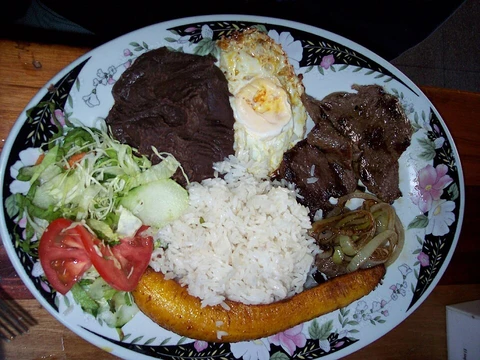
Lizano sauce is a staple of Costa Rican cuisine, ubiquitous on restaurant tables in its country of origin. It is commonly used with gallo pinto and tamales, and is also considered particularly complementary with eggs, rice, beans, fish, cheese, curries, and as a marinade for meat. Its ingredients include water, sugar, salt, vegetables (onions, carrots, cauliflower, cucumbers), spices, pepper, mustard, turmeric, modified corn starch, hydrolized vegetable protein, and sodium benzoate. The sauce is increasingly available commercially throughout North America through online retailers. Its creation by Próspero Jiménez and Próspero Lizano in 1920 marked the beginning of a brand that would become a national icon, later passing through corporate ownership to Unilever. The sauce's 100th anniversary in 2020 underscores its enduring role in Costa Rican food culture.
Origins: From a Bar in Alajuela to a National Brand
The story of salsa Lizano begins in a bar in Alajuela, where Próspero Jiménez first developed the condiment around 1920. His neighbors responded well to the sauce, and its local popularity caught his eye. Observing the commercial traction that imported bottled condiments were enjoying in the market, Jiménez saw an opportunity to move beyond his bar's walls. He approached Próspero Lizano, a factory owner whose surname would eventually become inseparable from the product. Together, the two men formalized the venture, establishing a brand identity and introducing the distinctive green label that would serve as the sauce's marketing face. What started as a barroom creation thus evolved into a structured commercial operation, laying the groundwork for what would become a defining element of Costa Rican dining culture. The partnership between a local creator and an industrialist set the trajectory for a product that would endure for generations and eventually cross multiple corporate ownership boundaries.
Flavor Profile and Ingredient Composition
Visually, salsa Lizano presents as a thin, smooth sauce with a light brown coloration, placing it in the same visual family as condiments such as HP Sauce or Worcestershire sauce. Its flavor profile rests on a delicate balance: a gentle sweetness paired with a bright acidity, underpinned by a subtle warmth contributed by black pepper and cumin. The full ingredient composition reveals a vegetable-forward base of onions, carrots, cauliflower, and cucumbers, combined with water, sugar, and salt. Spices, mustard, and turmeric add depth and color, while modified corn starch provides the thin, pourable consistency. Hydrolyzed vegetable protein contributes savory depth, and sodium benzoate serves as a preservative. The result is a versatile, all-purpose seasoning that is neither overwhelmingly pungent nor aggressively sweet, making it a forgiving addition to a wide range of dishes. Its smooth texture and moderate intensity allow it to complement rather than dominate, functioning as a subtle enhancer across many culinary contexts.
Culinary Role and Everyday Versatility
Within Costa Rican kitchens and dining rooms, salsa Lizano occupies a position of near-universal presence. It is not merely a garnish but an active ingredient, employed both during the cooking process and at the table, where diners season their plates to personal preference. Restaurant tables across the country routinely feature a bottle of the sauce, making it a standard fixture of the dining experience. Its most iconic pairings include gallo pinto and tamales, two staples of the national diet, yet its versatility extends well beyond those pairings. The sauce is considered particularly complementary to eggs, rice, beans, fish, cheese, and curries, and it also serves as a marinade for meat. This breadth of application means a single bottle can move from a breakfast plate to a dinner table, from a simple bean dish to a spiced curry. For many Costa Ricans, the green-labeled bottle is not an optional extra but a foundational element of how food is seasoned and enjoyed.
Corporate Transitions and Expanding Reach
Since its inception in 1920, salsa Lizano has passed through several corporate hands while maintaining its identity as a Costa Rican staple. In 1991, Best Foods acquired the Lizano company, bringing the condiment under a larger corporate umbrella. Best Foods was subsequently absorbed by Unilever, making the sauce part of one of the world's largest consumer goods conglomerates. Despite these ownership transitions, the product retained its green label and its entrenched place in Costa Rican households. In 2020, the brand marked its 100th anniversary, a milestone that underscored a full century of continuous presence in the country's culinary landscape. Beyond Costa Rica's borders, the sauce has begun to find a wider audience. It is increasingly available commercially throughout North America, primarily through online retailers, allowing diaspora communities and curious food enthusiasts to incorporate this distinctly Central American condiment into their own cooking.
Gallery
Frequently Asked Questions
Who is Lizano sauce?
Lizano sauce is a thin, light-brown Costa Rican condiment that first appeared around 1920, hand-mixed by Próspero Jiménez in his local bar rather than in a corporate lab. It later became a pantry fixture across the country.
What are Lizano sauce's powers and role in the kitchen?
It works as a versatile seasoning you can stir into a pot mid-cook or drizzle over a plate at the table, lending a sweet-tangy base with a gentle kick from black pepper and cumin. Fans most often reach for it alongside gallo pinto and tamales.
Why is Lizano sauce important to Costa Rican food culture?
It functions almost like a national condiment, showing up in kitchens from San José to rural towns as a quick way to add depth to everyday dishes. Its sheer ubiquity makes it a small but deeply felt part of what it means to eat Costa Rican food.
What's inside Lizano sauce, and how does it compare to other sauces?
Its base blends water, sugar, salt, vegetables such as onions and carrots, mustard, turmeric, and spices, with a light thickening from modified corn starch. In texture and flavor it sits in the same family as HP Sauce or Worcestershire, offering that sweet-sour-spicy profile in a smooth, pourable form.
More in Costa Rican cuisine 1-24
Spotted an error? Know more?
Reader corrections go straight into our review queue. Suggest an edit · How this site is sourced