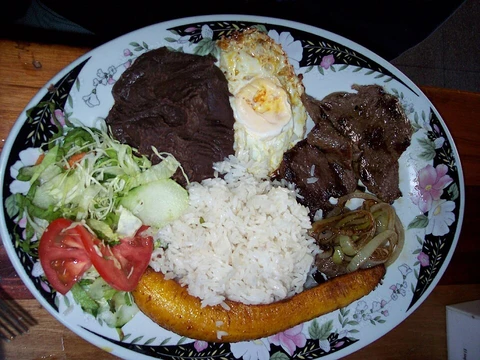
Enchilada
A Mexican rolled tortilla dish with savory sauce.

Missvain · CC BY 4.0
A corn tortilla rolled around a filling and topped with a savory sauce is the basic definition of an enchilada, a Mexican dish. The fillings can vary widely, including meats, cheese, beans, potatoes, vegetables, or combinations. The sauces range from chili-based options like salsa roja or various moles, to tomato-based sauces such as salsa verde, or cheese-based sauces like chile con queso.
The word "enchilada" comes from the Mexican Spanish verb *enchilar*, meaning "to add chili pepper to" or "to season with chili." The Royal Spanish Academy defines it specifically as a rolled maize tortilla stuffed with meat and covered with a tomato and chili sauce. The practice of rolling tortillas around other foods in Mexico goes back thousands of years. People in the Valley of Mexico's lake region traditionally ate corn tortillas folded or rolled around small fish. Bernal Díaz del Castillo, writing during the Spanish conquest, recorded a feast hosted by Hernán Cortés in Coyoacán that included foods served in corn tortillas. The native Nahuatl name for the flat corn bread was *tlaxcalli*, which the Spanish renamed *tortilla*. The Nahuatl word for enchilada is *chīllapītzalli*, combining *chīlli* (chili) and *tlapītzalli* (flute). The first Mexican cookbook, *El cocinero mexicano* (1831), and Mariano Galvan Rivera's *Diccionario de Cocina* (1845) both mention enchiladas.
Originally a Mexican street food, enchiladas were simply corn tortillas dipped in chili sauce and eaten without fillings. Today, many varieties exist, distinguished by sauces, fillings, or form.
Quick Facts
- Country
- Mexico
- Main Ingredient
- Tortillas, chili pepper sauce, meat
Facts from the source article.
Lore & Background
Enchiladas originated in Mexico, where people in the lake region of the Valley of Mexico traditionally ate corn tortillas folded or rolled around small fish. Writing at the time of the Spanish conquistadors, Bernal Díaz del Castillo documented a feast hosted by Hernán Cortés in Coyoacán that included foods served in corn tortillas. The native Nahuatl name for the flat corn bread was tlaxcalli; the Spanish gave it the name tortilla. The Nahuatl word for enchilada is chīllapītzalli, formed from words for 'chili' and 'flute'.
Reader's Guide
The enchilada is a foundational Mexican dish that has evolved from a simple street food—corn tortillas dipped in chili sauce without fillings—into a diverse family of preparations. Its significance lies in its deep roots in pre-Hispanic foodways and its adaptation across regions and borders. The first Mexican cookbook, El cocinero mexicano (1831), and Mariano Galvan Rivera's Diccionario de Cocina (1845) memorialized the dish. Varieties are distinguished by sauces (e.g., red chili, mole, salsa verde, cheese-based), fillings, and form. Outside Mexico, versions in Costa Rica, Honduras, Nicaragua, and Guatemala differ markedly, often resembling pastries, tostadas, or empanadas. The enchilada's legacy is its versatility and enduring place in Mexican cuisine and beyond.
Linguistic Roots and the Meaning of the Name
The word enchilada carries a layered linguistic heritage reflecting the deep cultural exchange between indigenous Mexico and the Spanish colonial world. In Mexican Spanish, the term is the past participle of enchilar, a verb meaning to add chili pepper to something, essentially describing the act of seasoning or decorating a dish with chili. The Royal Spanish Academy's definition for the Mexican usage specifies a rolled maize tortilla stuffed with meat and draped in a tomato-and-chili sauce.
Before Spanish arrived, the dish already had a name in Nahuatl: chīllapītzalli. This compound word fuses chīlli, the Nahuatl word for chili, with tlapītzalli, meaning flute, evoking the cylindrical shape of the rolled tortilla. The flat corn bread itself was called tlaxcalli by Nahuatl speakers; it was the Spanish who introduced the term tortilla. Thus, the very vocabulary surrounding enchiladas preserves a bilingual memory, with the indigenous root emphasizing the chili element and the Spanish adaptation broadening the concept into a wider culinary category.
Ancient Origins and Early Written Records
Enchiladas trace their roots to pre-Columbian Mexico, where the fundamental technique of wrapping food inside a corn tortilla stretches back thousands of years. In the lake region of the Valley of Mexico, communities traditionally folded or rolled their corn tortillas around small fish, creating an early ancestor of the modern dish. The practice was well established enough that, during the Spanish conquest, the chronicler Bernal Díaz del Castillo recorded a banquet hosted by Hernán Cortés in Coyoacán at which foods were served tucked inside corn tortillas, confirming the technique's prominence in indigenous feasting culture.
By the nineteenth century, as Mexican culinary traditions were being formally documented, enchiladas appeared in two landmark publications. The first Mexican cookbook, El cocinero mexicano, published in 1831, included the dish, and Mariano Galvan Rivera's Diccionario de Cocina followed in 1845 with its own reference. These early written records cemented enchiladas in the national culinary canon, transitioning them from an ancient everyday practice into a celebrated and codified element of Mexican gastronomy.
A Family of Regional Varieties
What began as a simple street food—corn tortillas dipped in chili sauce and eaten without fillings—has blossomed into an extraordinary family of regional preparations. The varieties are distinguished primarily by their sauces, fillings, and in one notable case, their physical form.
In Jalisco, enchilada tapatia carries the regional identity in its name. Michoacán contributes enchiladas placeras, a plaza-style version built around vegetables and poultry. The poblanas variant pairs soft corn tortillas stuffed with chicken and poblano peppers beneath oaxaca cheese. San Luis Potosi offers enchiladas potosinas, where cheese is folded into chili-spiced masa. In San Miguel de Allende, guajillo chilies are seared directly into tortillas in a frying pan to infuse flavor.
The suizas variant, named for Swiss immigrants who established dairies in Mexico, is crowned with a milk- or cream-based white sauce. New Mexico's enchiladas montadas break from the rolled form: corn tortillas are fried flat, then stacked with red or green sauce, chopped onion, shredded cheese, and a fried egg on top. Other distinctions include enfrijoladas topped with refried beans, entomatadas using tomato sauce, enchiladas verdes with salsa verde and poached chicken, and enjococadas layered with jocoque, queso panela, and chile poblano.
The Name Across Central America
Beyond Mexico's borders, the name enchilada has been claimed by dishes bearing little resemblance to the rolled tortilla original, revealing how one culinary concept can fracture into radically different expressions.
In Costa Rica, the enchilada is a small, spicy puff-pastry filled with diced potatoes seasoned with a Tabasco-like sauce, or with spicy chicken or minced meat. In Honduras, the dish abandons the rolled form: flat, fried corn tortillas are topped with ground beef, cabbage and tomato slices, a tomato sauce often blended with ketchup, butter, and cumin, and crumbled cheese—producing something resembling a tostada.
Nicaragua offers a version that echoes Mexican enchiladas more closely but still diverges. Corn tortillas are filled with ground beef and rice seasoned with chili, then folded, coated in egg batter, and deep-fried, giving the dish a resemblance to an empanada. It is typically served with a cabbage-and-tomato salad, either pickled or dressed in cream and tomato sauce.
Guatemala's interpretation layers a flat fried corn tortilla with fresh lettuce, a picado de carne of meat and diced vegetables, a curtido of cabbage, beets, onions, and carrots, sliced hard-boiled egg, thin white onion, mild red salsa, and queso seco or queso fresco with cilantro.
Gallery
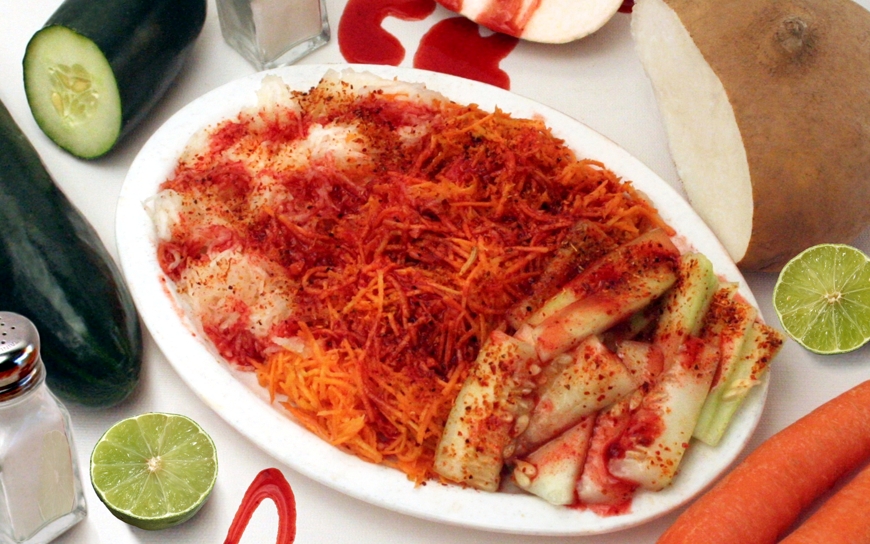
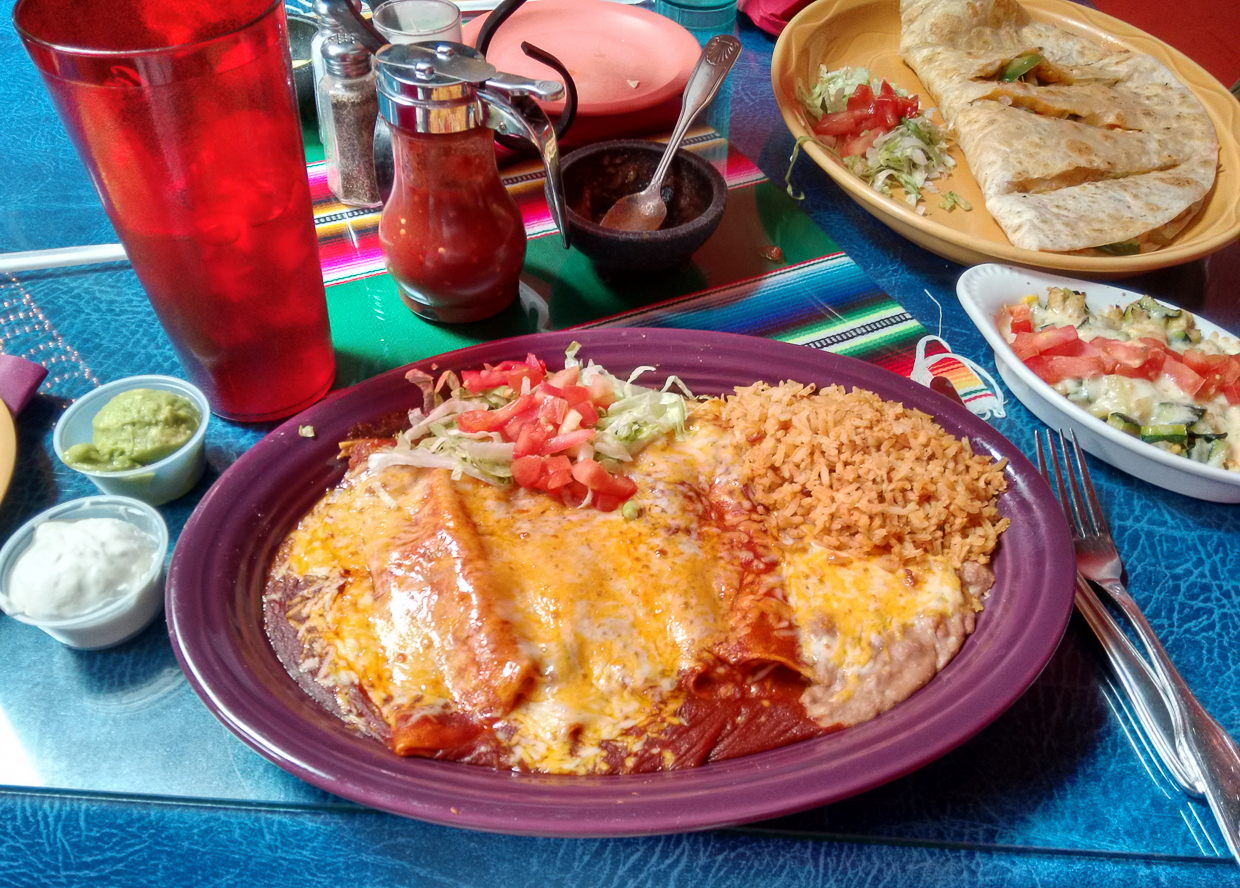
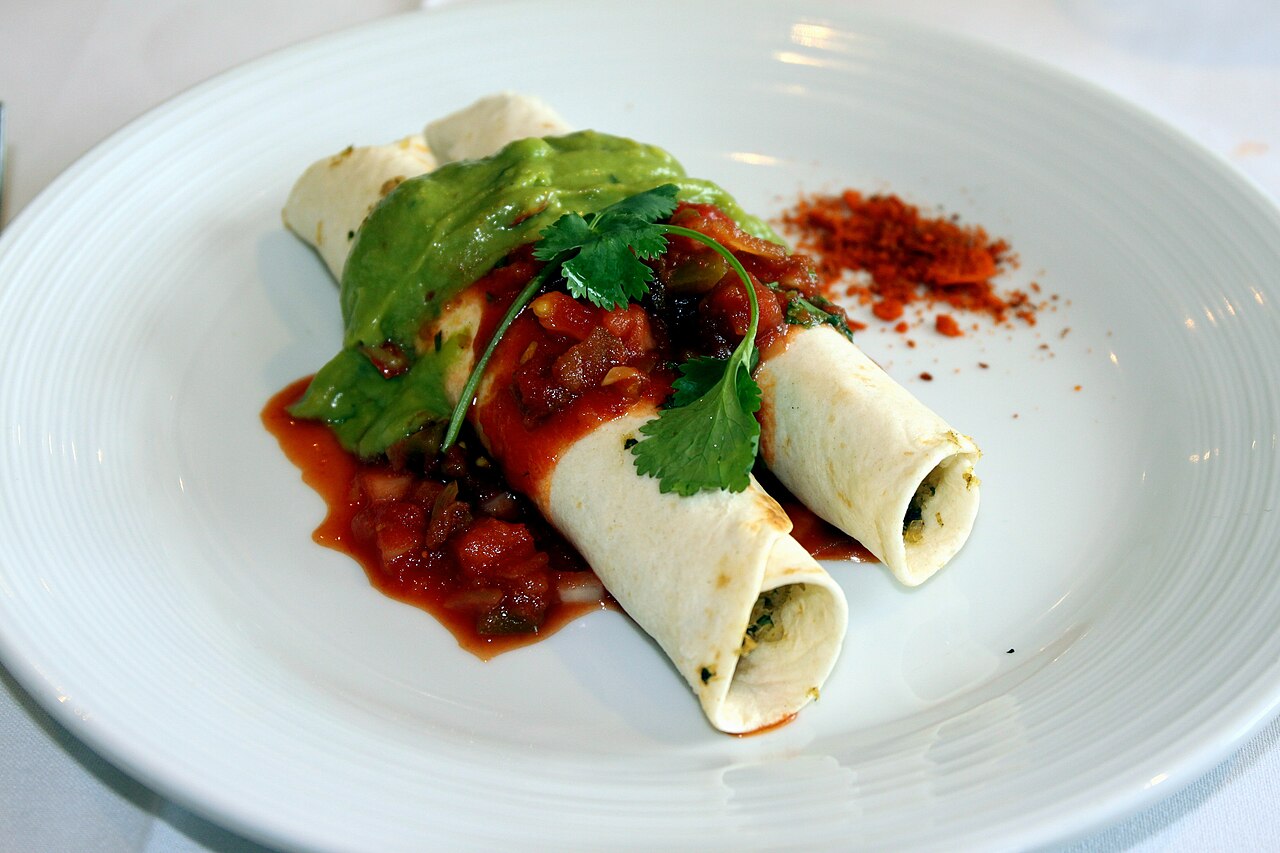
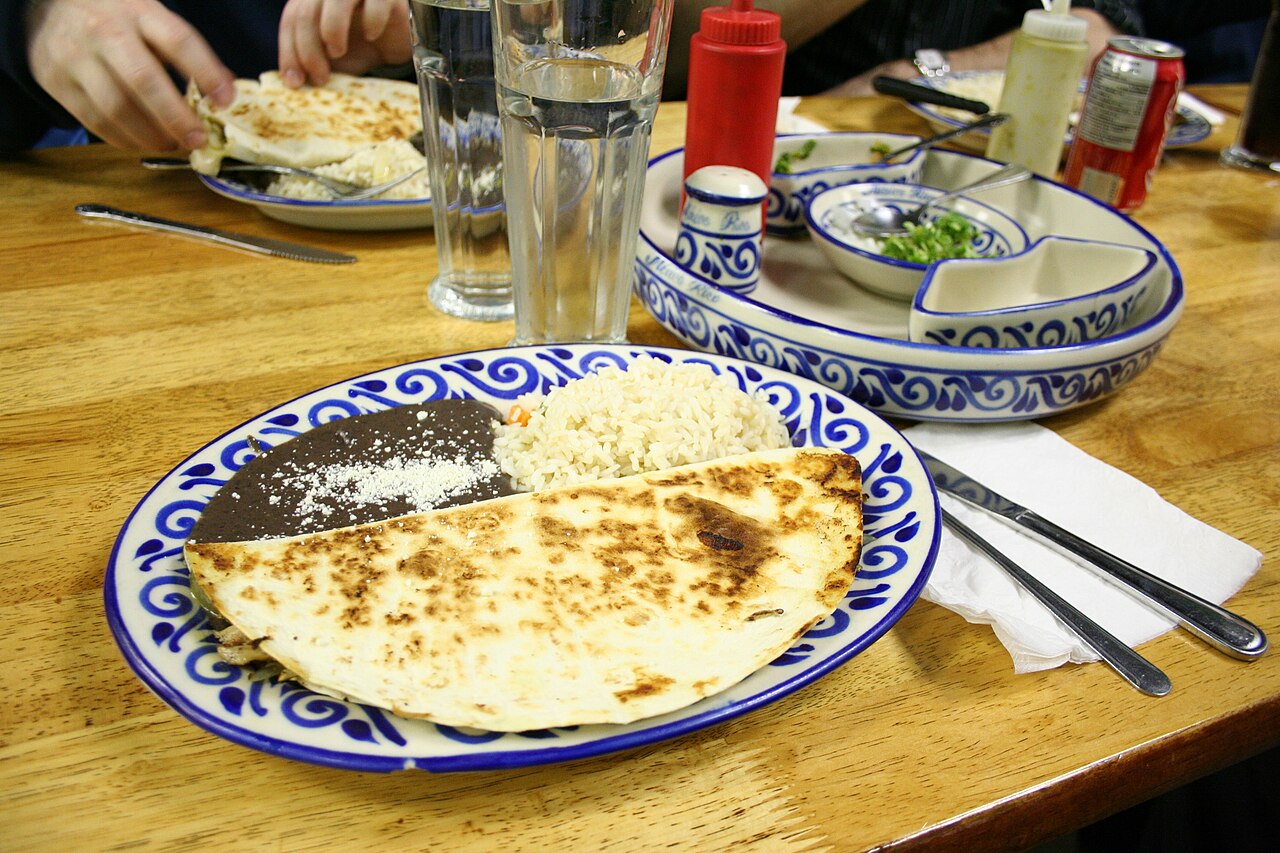
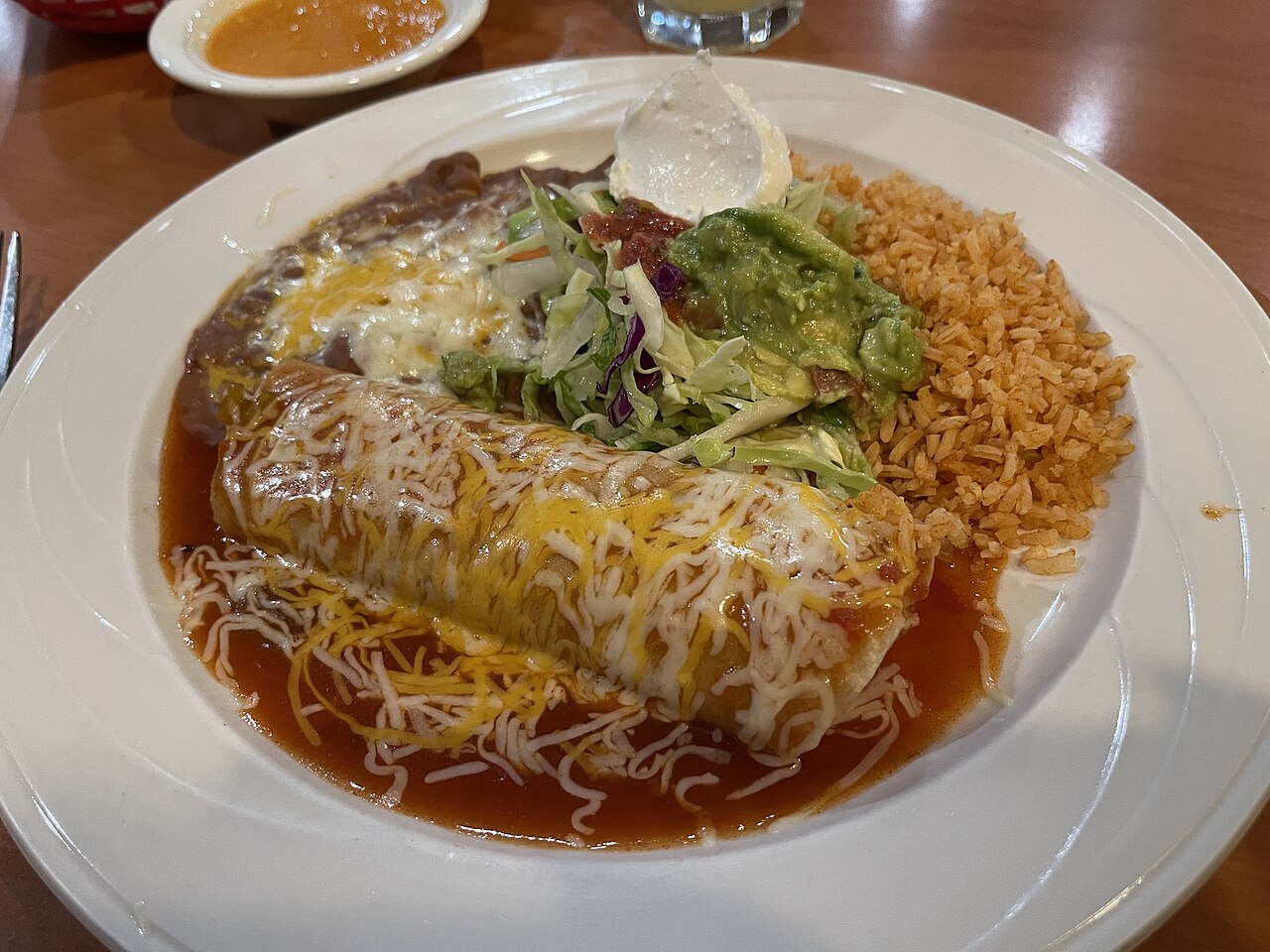
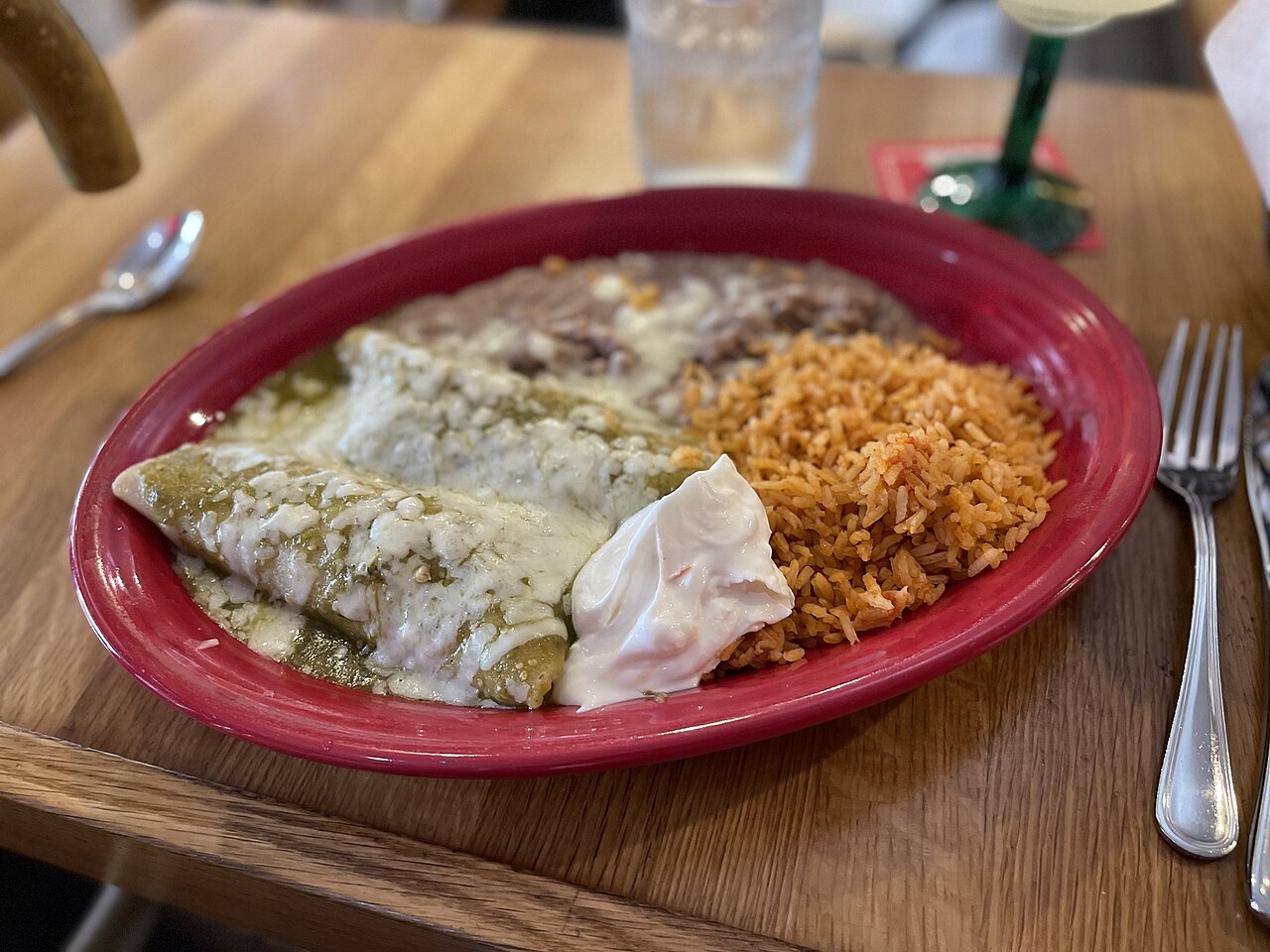
Frequently Asked Questions
What is an enchilada?
An enchilada is a rolled corn tortilla packed with a filling and smothered in a savory sauce. It is a Mexican dish that has become a staple across the broader Central American dining scene, including Costa Rica.
Where does the name 'enchilada' come from?
The term traces back to the Mexican Spanish verb 'enchilar,' meaning to season or add chili pepper. The older Nahuatl name for the dish was 'chīllapītzalli,' which also points to its chili-pepper heritage.
What can you put inside an enchilada?
Fillings are highly flexible: cooks use meats, cheeses, beans, potatoes, vegetables, or any mix of those. There is no single canonical stuffing, which is part of what makes the dish so adaptable.
What sauces go on top of an enchilada?
Options span chili-based sauces like salsa roja or various moles, tomato-based ones such as salsa verde, and cheese-based preparations like chile con queso. The sauce choice is often the main way a given enchilada is identified.
When was the enchilada first recorded in a cookbook?
The earliest known printed reference appears in 'El cocinero mexicano' in 1831. It was also catalogued in Mariano Galván Rivera's 'Diccionario de Cocina' in 1845, confirming the dish's long-established place in the region's food culture.
More in Costa Rican cuisine 1-24
Spotted an error? Know more?
Reader corrections go straight into our review queue. Suggest an edit · How this site is sourced