Yabiji
Japan's largest coral reef group, emerging as a phantom continent.

Yabiji, also known as Yaebiji, Yaebise, Yaebishi, Yapiji, and historically as Providence Reef, is the largest coral reef group in Japan. Located in the Miyako Islands, it comprises over 100 coral reefs and is notable for emerging above water several times a year, most visibly around March 3 of the lunar calendar. It was designated a Natural Monument of Japan in 2013.
Quick Facts
- Iucn Category
- III
- Location
- Miyako Islands, Okinawa Prefecture, Japan
- Nearest City
- Miyakojima
- Length Km
- 17
- Elevation
- 0
- Established
- March 27, 2013
Facts from the source article.
Lore & Background
Yabiji is centered roughly at 25°00′N 125°16′E, stretching between 5–6 km and 22 km north of Ikema Island. It measures about 17 km north-south and 6.5 km east-west, formed by a cluster of smaller reef groups centered on eight large reefs known as the Main Reef. Most reefs are named after parts of the human body, such as Kanamara (head), Du (torso), and Ifu (stomach), while others are named for animals like Budai (parrotfish). Local names include Irautsu (exile) and Fugausa (flea), totaling about 130 names. The structure is geographically consistent with the Miyako Islands' geology, and the lower part likely was dry land during the Last Glacial Period. Yabiji is usually below the sea surface but emerges during low spring tides, especially from spring to summer, leading to its nickname 'Phantom Continent.' Its intermittent land area during low tides is about one-tenth that of Miyako Island, while including submerged reefs, its area is about one-third.
Reader's Guide
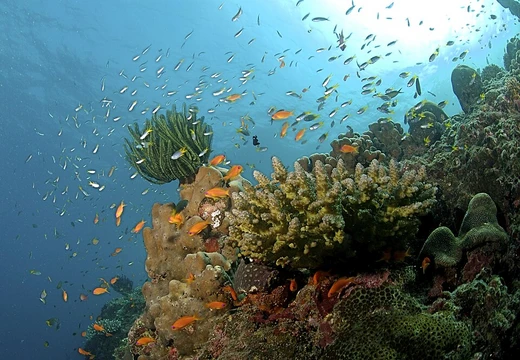
Yabiji's significance stems from its status as Japan's largest coral reef group and its cultural and ecological importance. The reef group has been a fishing ground since at least 1350, and a traditional event called Sanitsu occurs on March 3 of the lunar calendar, when women gather to drive off bad luck. Historically, the British sloop HMS Providence sank here in 1797, leading to the name Providence Reef on nautical charts. In 1902, the Japanese destroyer Shinonome ran aground but was refloated. The Geospatial Information Authority of Japan published a 1:25,000 topographic map in 1999, prompting the official name 'Yabiji.' In 2001, it was listed as one of Japan's 500 important wetlands, and in 2013 it was designated a Place of Scenic Beauty and Natural Monument. Tourist landing tours ran from 1983 to 2014, drawing 2,000–3,000 visitors annually, but ended in 2015 after ferry services were discontinued. Between 2008 and 2018, living coral decreased by an estimated 70% due to bleaching from rising water temperatures. The reef contains about 300 kinds of coral and is popular for freediving, scuba diving, snorkeling, and fishing.
Did You Know?
- Yabiji contains over 100 coral reefs, many named after body parts like Kanamara (head) and Du (torso).
- The largest annual tidal difference occurs on March 3 of the lunar calendar, around early April in the Gregorian calendar.
- Between 2008 and 2018, living coral in Yabiji decreased by an estimated 70% due to coral bleaching.
More in Coral Reefs, Part 2 1-24
Spotted an error? Know more?
Reader corrections go straight into our review queue. Suggest an edit · How this site is sourced