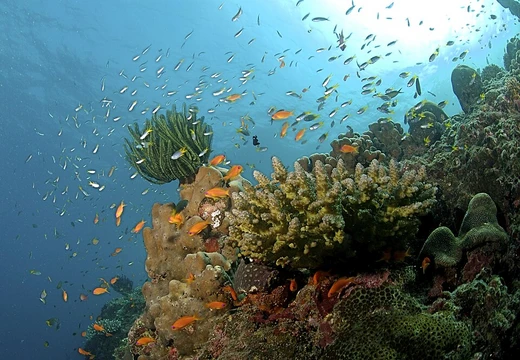
Miri-Sibuti Coral Reef National Park
Protected coral reef park off Borneo, popular for diving.

Miri-Sibuti Coral Reefs National Park is a marine protected area off the coast of Borneo in Sarawak, Malaysia. Spanning 186,930 hectares of ocean, it is a well-known destination for scuba diving. The park is among Malaysia’s most recently discovered dive spots and is the second-largest offshore national park in Sarawak, behind Luconia Shoal National Park.
The reefs lie at depths between 7 and 50 meters at their seaward edge, with typical underwater visibility ranging from 10 to 30 meters. The prime diving season runs from late March through November. Popular dive sites include Anemone Garden, Grouper Patch Reef, Atago Maru Wreck, and Seafan Garden, along with several other wreck dives.
The park supports a rich variety of marine life. Soft corals include leather corals, sea whips, bubble corals, staghorn corals, Dendronephthya, and Gorgonia sea fans. Sponges such as elephant ear sponges are also present. Fish species found here include clown fish, yellow and blueback fusiliers, angelfish, butterfly fish, sea perch, lizardfish, batfish, jackfish, barracudas, Napoleon wrasse, and sharks. Other creatures include feather stars, giant clams, nudibranchs, sea anemones, and seahorses.
Quick Facts
- Iucn Category
- II
- Location
- Sarawak, Malaysia
- Nearest City
- Miri
- Designation
- National park
- Designated
- 2007
- Governing Body
- Sarawak Forestry Corporation (SFC)
Facts from the source article.
Lore & Background
The Miri-Sibuti Coral Reefs National Park lies at depths ranging from 7 to 50 metres at the seaward edge, with an average visibility of 10 to 30 metres. The best time to dive is from late March through November each year. Popular diving sites include Anemone Garden, Grouper Patch Reef, Atago Maru Wreck and Seafan Garden, and there are also some wreck dives. The park is one of Malaysia’s most recently discovered diving locations and the second largest offshore/marine national park created in the state of Sarawak after Luconia Shoal National Park.
Reader's Guide
The Miri-Sibuti Coral Reefs National Park is significant as a protected area for coral reefs in Sarawak, Malaysia, off the island of Borneo. It is a popular dive destination, covering 186,930 hectares of water bodies. The park's reefs house a wide diversity of marine creatures, including soft corals such as leather corals, sea whips, bubble corals, staghorn corals, Dendronephthya and Gorgonia sea fans, as well as sponges like elephant ear sponges. Fish species include clown fish, yellow and blueback fusiliers, angelfish, butterfly fish, sea perch, lizardfish, batfish, jackfish, barracudas, Napoleon wrasse and sharks. Other creatures include feather stars, giant clams, nudibranches, sea anemone and sea horses. Its legacy lies in being one of Malaysia’s most recently discovered diving locations and the second largest offshore/marine national park in Sarawak, offering diverse marine life and wreck dives.
Did You Know?
- The park covers 186,930 hectares of water bodies.
- It is the second largest offshore/marine national park in Sarawak after Luconia Shoal National Park.
- The reefs house species such as Napoleon wrasse, barracudas, and sharks.
Gateway to Borneo's Marine Heritage
Miri-Sibuti Coral Reef National Park occupies a place within a constellation of protected areas that the city of Miri serves as the primary access point for. Situated in north-eastern Sarawak on the island of Borneo, Miri is a coastal city whose position near the Brunei border places it in a region of remarkable ecological range. The city, home to roughly 357,000 residents as of 2020, functions as the main tourist gateway not only to the coral reef park but also to Gunung Mulu National Park, Loagan Bunut National Park, Lambir Hills National Park, and Niah National Park. For visitors seeking to experience the marine environments of this stretch of Bornean coastline, Miri's urban infrastructure and coastal position make it the natural staging point. The park's inclusion in this broader network of protected sites underscores how the region's natural wealth extends well beyond its celebrated cave systems into the waters that lap against the coast.
A Coastal Setting on the Edge of Borneo
The Miri-Sibuti Coral Reef National Park draws its accessibility and context from the coastal geography of Miri itself. The city sprawls across 997.43 square kilometres in the north-eastern corner of Sarawak, Malaysia, positioned 798 kilometres northeast of Kuching and 329 kilometres southwest of Kota Kinabalu. This coastal location, near the border with Brunei, is what places the reef within reach of a major urban centre rather than a remote outpost. Before Miri's rapid growth following the 1910 drilling of its first oil well, the area was a modest settlement of scattered houses and a few wooden shops surrounded by mangrove and Nipah palm jungles. The transformation from that quiet fishing village into Sarawak's second-largest city created the roads, ports, and accommodation that now support the flow of visitors heading toward the coral reef and the other national parks the city fronts.
Tourism in the Shadow of Oil
While Miri is globally recognised as the birthplace of the Malaysian petroleum industry—a distinction rooted in the 1910 Royal Dutch Shell drilling and the 1909 signing of the first Sarawak Oil Mining Lease—the city's economic identity has broadened considerably. Today, tourism stands alongside timber and oil palm as one of Miri's major industries. The Miri-Sibuti Coral Reef National Park is a key component of this sector, forming part of a portfolio of protected areas that draws ecotourists to the region. The presence of Gunung Mulu National Park, with its record-breaking Sarawak Chamber, has cemented Miri's reputation as an ecotourism destination, and the coral reef park extends that appeal into the marine domain. The city's official city status, granted in 2005 as the first non-state-capital city in Malaysia to receive it, and the creation of the 26-acre Miri City Fan civic park reflect a broader civic investment in visitor experience that underpins the tourism economy the reef park feeds into.
Among Borneo's Conservation Crown Jewels
The Miri-Sibuti Coral Reef National Park is listed in the same breath as some of Borneo's most celebrated protected landscapes. In official and tourism contexts, it appears alongside Gunung Mulu National Park—a UNESCO World Heritage Site whose Sarawak Chamber is the largest known cave chamber in the world by area—alongside Loagan Bunut National Park, Lambir Hills National Park, and Niah National Park. Niah, in particular, carries deep historical significance: the West Mouth of Niah Cave, located 110 kilometres southwest of Miri, holds the oldest modern human skull in Southeast Asia, the 'Deep Skull' discovered by Tom Harrisson in 1958, dating to roughly 40,000 BC. The grouping of these sites under Miri's umbrella as a tourist gateway signals a region where conservation spans marine reefs, mountain forests, and prehistoric heritage. The coral reef park, though less internationally branded than its terrestrial counterparts, is an integral thread in this tapestry of protected natural and cultural wealth that the coastal city of Miri stewards and promotes.
Frequently Asked Questions
What is Miri-Sibuti Coral Reef National Park?
It is a marine protected area situated off the Borneo coastline in Sarawak, Malaysia, encompassing roughly 187,000 hectares of open ocean and reef. The park holds the distinction of being Sarawak's second-largest offshore national park, second only to Luconia Shoal National Park.
What are Miri-Sibuti Coral Reef National Park's powers or role?
The park functions as a living sanctuary that preserves its coral ecosystems while simultaneously serving as a world-class scuba diving destination. Its reefs drop from about 7 meters to 50 meters at the seaward edge, and divers typically enjoy 10 to 30 meters of underwater visibility.
Why is Miri-Sibuti Coral Reef National Park important to coral-reef fans?
It stands out as one of Malaysia's most recently discovered dive destinations, giving the Borneo reef scene a comparatively fresh chapter. Iconic sites such as Anemone Garden, Grouper Patch Reef, the Atago Maru Wreck, and Seafan Garden offer a wide variety of underwater landscapes within a single park.
Where exactly can fans find Miri-Sibuti Coral Reef National Park?
The park lies in the South China Sea just off the coast of Borneo, within the state of Sarawak, Malaysia. Its 186,930-hectare boundary stretches across a broad expanse of offshore waters and reef formations.
More in Coral Reefs, Part 2 1-24
Spotted an error? Know more?
Reader corrections go straight into our review queue. Suggest an edit · How this site is sourced